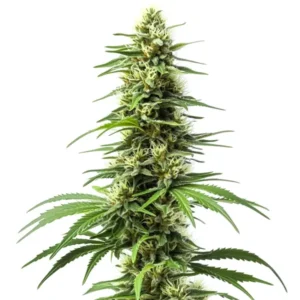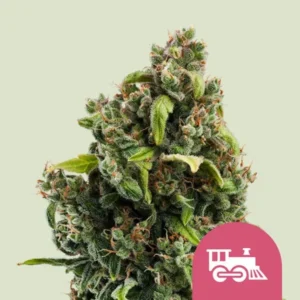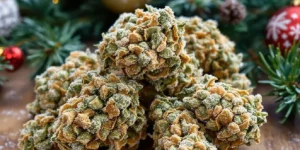


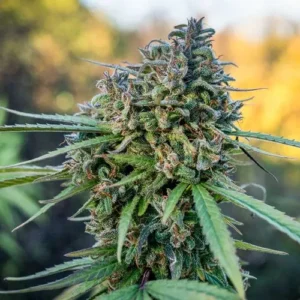
Himalaya Gold is an indica-dominant feminized photoperiod strain from Green House Seed Co. created from Nepalese × North Indian genetics. Sometimes searched as Himalayan Gold, this old-school cultivar stands out for vigorous branching, a short flowering period, strong outdoor performance, and an unusual ability to handle cooler nights and mountainous growing conditions.
The strain contains approximately 70% Indica and 30% Sativa genetics, with current breeder specifications placing THC at around 19.7%. Indoors, Himalaya Gold flowers in approximately 7–8 weeks. Outdoors, plants commonly reach around 160–190 cm and are generally ready by the end of September in the Northern Hemisphere.
Recommended Strains
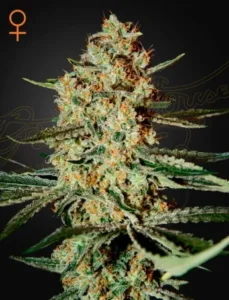
Himalaya Gold Seeds

|
THC | 19% - 20% (Medium) |

|
Lineage | Nepal x North Indian |

|
Type | Feminized |

|
Height | 5.74 ft | 1.75 m |

|
Yield Outdoor | 28.22 oz/plant | 800 g/plant |

|
Flowering Time | 7 - 8 weeks |

|
Phenotype | 70% Indica / 30% Sativa |

|
Effects | Relaxed, Creative, Hungry |

|
Flavors | Sweet, Spicy, Chocolate |
Pamir Gold
|
|
THC | 15% - 20% (Medium) |
|
|
Lineage | Western Himalayas Hybrid |
|
|
Type | Feminized |
|
|
Height | 5.74 ft | 1.75 m |

|
Yield | High |

|
Yield Indoor | 1.64 oz/ft² | 500 g/m² |
|
|
Yield Outdoor | 21.16 oz/plant | 600 g/plant |
|
|
Flowering Time | 7 - 9 weeks |
|
|
Phenotype | 50% Indica / 50% Sativa |
|
|
Effects | Giggly, Energetic, Relaxed |
|
|
Flavors | Pine, Floral, Earthy |
Himalaya Gold is particularly interesting for outdoor growers because its breeder specifically highlights its suitability for mountain areas, cold conditions, and demanding environments. Its long branches and dense flowers also make training and late-flowering branch support important parts of a successful grow.
You can find Himalaya Gold seeds and other genetics from Green House Seed Co. at Growlantis.
Himalaya Gold Grow Info
| Trait | Himalaya Gold |
|---|---|
| Genetics | Nepalese × North Indian |
| Seed type | Feminized photoperiod |
| Indica / Sativa | 70% Indica / 30% Sativa |
| THC | Approximately 19.7% |
| CBD | Approximately 0.25% |
| Flowering time | Approximately 7–8 weeks |
| Indoor yield | Published breeder references: approximately 500–850 g/m² |
| Outdoor height | Approximately 160–190 cm |
| Outdoor yield | Published breeder references: approximately 700–1,350 g/plant |
| Outdoor harvest | End of September |
| Training | LST and ScrOG |
| Climate strengths | Mountain areas, cooler nights and altitude |
| Main terpenes | α-Pinene, β-Pinene and Myrcene |
| Aroma / flavor | Spicy, acidic, herbal, pepper, clove and thyme |
| Reported effects | Creative mild mental high with balanced body relaxation |
The breeder’s current technical summary and extended description publish different yield figures. For that reason, the table shows the complete current breeder range instead of presenting one number as guaranteed production. Actual yield also depends strongly on plant size, light, root space, environment, climate, and overall plant health.
What Is the Himalaya Gold Strain?
Himalaya Gold is an old-school hybrid created from Nepalese and North Indian genetics. Rather than combining modern dessert or Cookies-family lines, it draws its identity from cannabis populations associated with mountainous regions of South Asia.
The result is a plant with a distinctive structure compared with many modern compact hybrids. Himalaya Gold develops long internodes, substantial branches, vigorous growth, and dense flowers while retaining a relatively short flowering period.
Its structure reflects characteristics associated with both sides of its genetic profile. Although the cultivar is 70% Indica, its vigor and long branching can look more Sativa-like than growers might expect from an Indica-dominant classification.
This combination of vigorous structure, short flowering, and environmental resilience is a major reason Himalaya Gold has remained particularly interesting for outdoor and mountain cultivation.
Himalaya Gold vs Himalayan Gold
Himalaya Gold is the official name of the seed line covered in this guide. However, growers frequently search for the cultivar as Himalayan Gold, particularly when referring to its geographic origin or mountain-growing characteristics.
In this context, Himalaya Gold and Himalayan Gold generally refer to the same Green House Seed Co. cultivar.
The spelling variation should not be confused with other strains that simply contain words such as Himalayan, Gold, Kush, or Runtz in their names. Those cultivars can have completely different genetics, flowering periods, cannabinoid levels, and cultivation requirements.
When comparing specifications, always confirm that the information refers specifically to the Nepalese × North Indian Himalaya Gold described here.
Himalaya Gold Genetics
The official Himalaya Gold genetics are Nepalese × North Indian.
These two lines give the cultivar a strong connection to mountainous cannabis populations rather than the heavily hybridized genetic backgrounds common in many newer strains.
The finished plant contains approximately 70% Indica and 30% Sativa genetics. Its relatively short flowering time reflects the Indica influence, while its long branches, vigorous growth, and ability to develop into a substantial outdoor plant show characteristics that growers often associate with more Sativa-like structures.
The breeder also emphasizes the plant’s ability to handle mountain conditions and colder nights, making its geographic background relevant to actual cultivation rather than simply part of the strain’s marketing story.
Is Himalaya Gold Indica or Sativa?
Himalaya Gold is an indica-dominant hybrid containing approximately 70% Indica and 30% Sativa genetics.
Its growth does not always resemble a short, compact Indica. The breeder describes long internodes, long branches, and vigorous development, which can give the plant a more open and energetic structure.
At the same time, Himalaya Gold retains a relatively short flowering period of approximately 7–8 weeks and produces dense, heavy flowers.
The breeder-reported effects also combine both sides of the hybrid. The mental component is described as mild, clear, and creative, while the body effect is more balanced, relaxed, and long lasting.
Himalaya Gold THC
Current breeder specifications place Himalaya Gold at approximately 19.7% THC, with around 0.25% CBD.
This figure is considerably more appropriate than older descriptions listing the cultivar at only 15–18% THC. Growlantis currently rounds the specification to approximately 19–20%, which is consistent with the official value.
The published percentage should still be treated as a reference rather than a guarantee that every harvested plant will test at exactly 19.7%.
Phenotype, light, environment, plant health, harvest maturity, drying, curing, and laboratory methodology can all influence the cannabinoid concentration measured in finished flowers.

Himalaya Gold Flowering Time
Himalaya Gold has a relatively short indoor flowering period of approximately 7–8 weeks. The breeder’s headline technical specification rounds this to eight weeks, while the detailed cultivar description gives a 7–8 week range.
This flowering period begins after an indoor plant is switched to 12 hours of light and 12 hours of uninterrupted darkness. It does not include germination or vegetative growth.
Because Himalaya Gold is photoperiod dependent, the grower determines how long vegetation lasts. A plant grown for three weeks in vegetation and another grown for six weeks can both require roughly the same 7–8 week flowering stage once the photoperiod is changed.
For this reason, a fixed seed-to-harvest calendar is less useful than planning around the plant’s actual size and the breeder’s verified flowering period.
Himalaya Gold Plant Height
Himalaya Gold is a vigorous cultivar that can develop considerable size, particularly outdoors.
The breeder’s current long-form description places outdoor plants at an average height of approximately 160–190 cm. It does not publish an equally precise indoor height range, instead describing the cultivar as a large plant with long internodes and long branches.
Indoor growers can control final size substantially through vegetative duration and training. A shorter vegetative period limits the canopy before flowering begins, while a longer period allows the plant’s natural branching to develop more extensively.
Low-Stress Training and ScrOG are particularly useful where vertical or lateral space needs to be managed without sacrificing productive branch development.
Growing Himalaya Gold Indoors
Himalaya Gold can perform very well indoors, but its long branches and vigorous structure mean canopy planning becomes important.
During vegetative development, growers can use a longer photoperiod such as 18/6 while the plant establishes roots, branches, and foliage. Flowering begins after the light schedule is changed to 12/12.
There is no fixed number of vegetative weeks that every Himalaya Gold plant needs. The correct switching point depends on available height, canopy coverage, root space, plant number, and the training strategy being used.
Because the breeder specifically recommends LST and ScrOG, indoor cultivation works best when the natural long branches are organized across the available light instead of being allowed to grow vertically without control.
Growing Himalaya Gold Outdoors
Outdoor cultivation is one of Himalaya Gold’s main strengths.
The breeder specifically highlights the cultivar for mountain areas and describes it as capable of handling colder nights and altitude particularly well. This makes it useful in environments where some more climate-sensitive hybrids may struggle.
Outdoor plants generally reach around 160–190 cm and can develop numerous large branches carrying dense flowers. Choose a location with strong direct sunlight, adequate root space, and well-draining soil so the plant can fully develop its vigorous structure.
As flowering progresses, the weight of the buds can place significant pressure on branches. Stakes, ties, or another support system can therefore become useful before the flowers reach full maturity.
Himalaya Gold in Mountain and Cooler Climates
Himalaya Gold has an unusually strong association with mountain cultivation.
Green House Seed Co. specifically highlights its resistance to cold nights and altitude, characteristics that fit its Nepalese and North Indian background. The breeder has historically positioned the cultivar as one of its strongest choices for outdoor growers in mountainous parts of Europe.
This resilience should not be interpreted as meaning that the plant prefers frost or extreme cold. Strong sunlight, healthy roots, and stable growing conditions still support better development.
Its advantage is that cooler nights and changing mountain conditions are less problematic than they can be for genetics developed primarily for consistently warm environments.
Himalaya Gold Yield
Himalaya Gold has high production potential, although the breeder’s current page contains two different sets of yield figures.
The headline technical specifications list up to 850 g/m² indoors and up to 1,350 g per plant outdoors. The extended description on the same official page gives more conservative figures of up to 500 g/m² indoors and approximately 700–800 g per plant outdoors.
For this reason, a realistic published breeder range is approximately 500–850 g/m² indoors and 700–1,350 g per outdoor plant.
These figures should not be interpreted as guaranteed harvest weights. Lighting, sunlight, root volume, vegetative duration, final plant size, training, climate, soil quality, nutrition, irrigation, and phenotype all influence actual production.
Himalaya Gold Outdoor Harvest Time
Himalaya Gold is generally ready by the end of September in the Northern Hemisphere.
This is significantly earlier than the late-October harvest timing sometimes associated with older descriptions of the strain.
The relatively early finish is particularly useful for outdoor and mountain growers because it reduces the amount of autumn weather the mature flowers need to endure.
The late-September breeder reference should still be used as a planning window rather than an automatic cutting date. Latitude, phenotype, seasonal temperatures, sunlight, and local weather can shift maturity somewhat.
As the end of September approaches, evaluate actual flower and trichome development before deciding on the final harvest day.
Germinating Himalaya Gold Seeds
Himalaya Gold seeds do not require a unique strain-specific germination method.
A controlled moist paper-towel method or suitable propagation medium can both work when seeds receive stable warmth, consistent moisture, and sufficient oxygen.
Keep the germination environment moist rather than saturated. Once the first root emerges, transfer the seed carefully into the chosen medium while avoiding unnecessary contact with the exposed root tip.
Young seedlings initially have limited root systems, so they require substantially less irrigation and nutrition than established vegetative plants.
For more detailed information about germination timing and early development, see how long cannabis seeds take to germinate.
Himalaya Gold Vegetative Growth
Himalaya Gold can develop rapidly during vegetation, producing long branches and considerable lateral growth.
Indoor growers can maintain a longer photoperiod such as 18/6 until the canopy reaches a suitable size for the available space. Because the cultivar is photoperiod dependent, vegetation does not need to end during a predetermined week.
This is the best stage for most structural training. Branches remain flexible, the plant has time to respond before flowering, and growers can organize the canopy before dense flowers make repositioning more difficult.
The objective should be to make productive use of Himalaya Gold’s natural branching rather than simply trying to keep the plant as short as possible.
Training Himalaya Gold
Himalaya Gold is particularly well suited to Low-Stress Training and Screen of Green.
Its long branches can be gradually directed outward to spread growth across a wider canopy. This reduces vertical dominance while allowing more flowering sites to receive useful light.
A ScrOG setup is especially practical indoors because branches can be distributed horizontally through a screen before the switch to flowering.
The breeder specifically recommends these methods, making them more relevant than adding generic training advice simply because a technique works on cannabis generally.
Major structural work should be completed during vegetation or very early flowering. Once flowers become dense and heavy, branch support and airflow become more important than continued aggressive canopy manipulation.
Himalaya Gold Flowering Development
After the switch to 12/12, Himalaya Gold begins its approximately 7–8 week flowering stage.
Its short flowering period is notable because the plant can display vigorous, almost Sativa-like structural characteristics while still finishing relatively quickly.
As bloom progresses, large flowers develop across the long branches and resin production increases. The flowers can become particularly dense and heavy toward maturity, which explains the breeder’s recommendation to provide support where necessary.
Major training should gradually give way to environmental stability, appropriate irrigation, good circulation, and structural support.
The flowering range should be used to identify when maturity monitoring becomes important, but the condition of the individual plant should determine the precise harvest date.
Feeding Himalaya Gold
Himalaya Gold does not require one universal strain-specific NPK formula.
During vegetative growth, use a nutrient program appropriate to the growing medium that supports healthy roots, stems, branches, and foliage. As flowering becomes established, transition toward a suitable bloom-oriented program according to the fertilizer system being used.
High yield potential does not mean the plant automatically benefits from extremely concentrated nutrients.
Feeding strength should reflect root volume, substrate, water quality, plant size, and actual response. Monitor leaf color, leaf tips, development rate, and overall plant condition rather than treating one fixed nutrient calendar as a requirement of Himalaya Gold genetics.
Watering Himalaya Gold
Himalaya Gold should be watered according to actual root-zone conditions rather than a predetermined schedule.
Young plants initially use relatively little water because their root systems occupy only a small area. Established plants with long branches and larger canopies naturally consume considerably more.
Container size, growing medium, temperature, humidity, light intensity, airflow, and root volume all influence how quickly moisture is used.
Allow sufficient oxygen to return to the root zone between irrigations instead of maintaining constantly saturated conditions.
Large outdoor plants can develop substantial water demand during warm periods, but good drainage remains important even when the cultivar is growing in mountain or cooler environments.
Pest Resistance, Airflow and Flower Support
Himalaya Gold is specifically recognized by its breeder for its resilience in demanding outdoor environments, including tolerance of cold nights, altitude, and pressure from pests and diseases.
That resilience does not mean the plant is immune to cultivation problems. Its flowers can become exceptionally dense and heavy, so stagnant moisture around mature buds should still be avoided.
Good spacing and circulation help air move around the branches, particularly after rain or during humid conditions. Indoors, ventilation should remove excess moisture rather than relying on circulation fans alone.
Branch support can also become increasingly important late in flowering because heavily loaded stems may bend under the weight of mature flowers.
Himalaya Gold Effects
Green House Seed Co. describes Himalaya Gold as producing a creative, mild mental high combined with a balanced and long-lasting body feeling.
The cerebral component is described as clear enough to remain active and productive, while the body effect adds a more relaxing character.
This mixed experience fits the cultivar’s 70% Indica and 30% Sativa profile without reducing its effects to heavy sedation.
Individual responses can still differ according to dose, tolerance, phenotype, cannabinoid composition, and finished flower quality.
These descriptions should therefore be treated as general breeder-reported characteristics rather than evidence that Himalaya Gold treats stress, pain, insomnia, anxiety, or other medical conditions.
Himalaya Gold Flavor and Terpenes
Himalaya Gold has a distinctive old-school aromatic profile that differs from many sweeter modern hybrids.
The breeder describes the flavor and aroma as spicy, acidic, and herbal, with characteristics reminiscent of pepper, cloves, thyme, and mixed spices.
The most expressed terpenes identified by Green House Seed Co. are α-Pinene, β-Pinene, and Myrcene.
These compounds help explain the pine, herbal, spicy, and earthy dimensions of the cultivar’s aroma. Exact concentrations can still vary between individual plants and growing conditions, so the breeder’s terpene list should be treated as a characteristic profile rather than one guaranteed quantitative ratio.

Common Problems When Growing Himalaya Gold
Using an Incorrect Flowering Time
Himalaya Gold is currently described by its breeder as flowering in approximately 7–8 weeks, with eight weeks used in the technical summary. Treating it as an 8–9 week cultivar unnecessarily extends the primary planning range and can create inconsistencies between the product page, grow guide, and breeder specifications.
Expecting a Late-October Outdoor Harvest
The current breeder specification places outdoor maturity at the end of September in the Northern Hemisphere. Planning around late October can create a full month of unnecessary exposure to autumn weather. Use late September as the main seasonal reference while confirming actual maturity before harvesting.
Following a Fixed Week-by-Week Vegetative Calendar
Himalaya Gold is photoperiod dependent, so the grower controls the length of vegetative growth indoors. A plant does not need to remain in vegetation until Week 8 or begin flowering in Week 9. Base the transition to 12/12 on canopy size, roots, available space, and training instead.
Failing to Support Heavy Branches
Himalaya Gold develops long branches and can produce exceptionally dense flowers. Outdoor plants in particular can become heavily loaded late in the season. Preparing stakes, ties, or other structural support before branches begin bending is easier and safer than trying to correct damaged stems close to harvest.
Treating Yield Figures as Guaranteed
The breeder currently publishes different yield figures in its technical summary and extended description. These range from approximately 500–850 g/m² indoors and 700–1,350 g per outdoor plant. Actual production depends heavily on plant size, light, root space, climate, training, irrigation, nutrition, and phenotype.
FAQs About Himalaya Gold Strain
How long does Himalaya Gold take to flower?
Himalaya Gold generally flowers for about 7–8 weeks indoors, with Green House’s technical summary rounding this to eight weeks. Because it is a photoperiod cultivar, that figure covers flowering only, not germination or vegetation. Indoor growers control when bloom begins by switching the light schedule to 12/12.
Is Himalaya Gold indica or sativa?
Himalaya Gold is an indica-dominant hybrid with approximately 70% Indica and 30% Sativa genetics. Its Nepalese × North Indian background produces vigorous branching and a short flowering period, while the breeder describes the effects as a creative, mild mental high combined with a balanced, long-lasting body feeling.
How much does Himalaya Gold yield?
Current Green House material publishes two different yield references for Himalaya Gold. Across those official figures, indoor production ranges from about 500 to 850 g/m², while outdoor production ranges from roughly 700 to 1,350 g per plant. Actual harvests depend on plant size, light, roots, climate, and overall growing conditions.
How tall does Himalaya Gold grow?
Green House’s current long-form description places outdoor Himalaya Gold plants at an average of about 160–190 cm. The breeder does not publish one equally precise indoor height, but describes the plant as large, with long internodes and long branches. Indoor growers can manage that structure with LST or ScrOG.
When is Himalaya Gold harvested outdoors?
Himalaya Gold is generally ready outdoors by the end of September in the Northern Hemisphere according to the current breeder specification. Local latitude, phenotype, seasonal weather, and plant development can shift the precise date, so growers should use late September as a planning reference while confirming actual flower and trichome maturity before harvest.
Is Himalaya Gold good for outdoor growing?
Yes. Himalaya Gold is particularly well suited to outdoor cultivation. Green House specifically highlights it for mountain areas and its ability to handle cold nights and altitude, while also describing resistance to pests and diseases. Large outdoor plants may need branch support because mature flowers can become exceptionally dense and heavy.