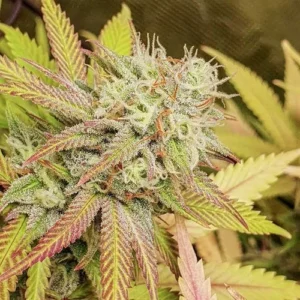


Mimosa EVO is an indica-dominant feminized photoperiod strain from Barney’s Farm created by crossing Mimosa with Orange Punch. It combines vigorous growth, strong branching, very high yield potential, dense resinous flowers, and a citrus-heavy profile built around tropical lemon, orange, and berry notes.
The strain is classified as 60% Indica and 40% Sativa. Current specifications place indoor flowering at approximately 65–70 days, indoor height at 100–120 cm, outdoor height at 180–220 cm, and yields at around 700–800 g/m² indoors and up to 2,000 g per plant outdoors under favorable conditions.
Recommended Strains
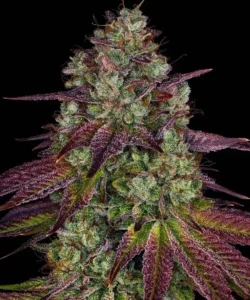
Mimosa Evo

|
THC | 30% - 31% (High) |

|
Lineage | Mimosa x Orange Punch |

|
Type | Feminized |

|
Height | 6.56 ft | 2 m |

|
Yield Outdoor | 70.55 oz/plant | 2000 g/plant |

|
Flowering Time | 9 - 10 weeks |

|
Phenotype | 60% Indica / 40% Sativa |

|
Effects | Happy, Uplifted, Relaxed |

|
Flavors | Fruity, Citrus, Orange |

Mimosa X Orange Punch
|
|
THC | 30% - 31% (High) |
|
|
Lineage | Mimosa Evo x Orange Punch |
|
|
Type | Feminized |
|
|
Height | 5.41 ft | 1.65 m |
|
|
Yield Outdoor | 52.91 oz/plant | 1500 g/plant |
|
|
Flowering Time | 7 - 8 weeks |
|
|
Phenotype | 65% Indica / 35% Sativa |
|
|
Effects | Euphoric, Happy, Uplifted |
|
|
Flavors | Citrus, Candy, Orange |
You can find Mimosa EVO seeds and other genetics from Barney’s Farm at Growlantis.
Mimosa EVO Grow Info
| Trait | Mimosa EVO |
|---|---|
| Genetics | Mimosa × Orange Punch |
| Seed type | Feminized photoperiod |
| Indica / Sativa | 60% Indica / 40% Sativa |
| THC | Around 30% |
| Indoor flowering | 65–70 days |
| Indoor height | 100–120 cm |
| Indoor yield | 700–800 g/m² |
| Outdoor height | 180–220 cm |
| Outdoor yield | Up to 2,000 g/plant |
| Outdoor harvest | 3rd–4th week of October |
| Flavor | Tropical lemon, orange citrus, berry |
| Aroma | Fruit punch, citrus, tangerine |
| Reported effects | Happy, uplifting, relaxing |
The figures above represent breeder potential and reference ranges rather than guaranteed results. Final height, cannabinoid content, yield, and harvest timing can still vary with phenotype and growing conditions.
What Is Mimosa EVO Strain?
Mimosa EVO is an enhanced citrus-focused hybrid based on Mimosa and Orange Punch genetics. The Mimosa parent traces back to the well-known Clementine × Purple Punch combination, while Orange Punch adds another layer of citrus character and contributes to the cultivar’s productive growth.
The finished plant leans slightly toward the Indica side at 60%, although its structure and reported effects combine characteristics commonly associated with both sides of the hybrid. Growers can expect substantial lateral development, dense flower production, and enough vigor to create a large productive canopy when root space and lighting allow.
Mimosa EVO should not be confused with Mimosa, Mimosa Auto, or Mimosa x Orange Punch. These are related names and genetics but can have different flowering times, heights, yields, and cultivation requirements.
Is Mimosa EVO Indica or Sativa?
Mimosa EVO is classified as 60% Indica and 40% Sativa, making it a slightly Indica-dominant hybrid.
The classification does not mean the plant necessarily behaves like a compact pure Indica. Mimosa EVO can develop considerable branch mass and becomes particularly large outdoors, where plants can reach approximately 180–220 cm under favorable conditions.
Its reported effects also combine both sides of the hybrid. The breeder describes Mimosa EVO as happy, uplifting, and relaxing rather than exclusively sedating.
The 60/40 ratio is best treated as a description of the breeding line rather than an exact predictor of how every phenotype will grow or how every consumer will respond.
Growing Mimosa EVO Indoors
Mimosa EVO combines high production potential with a relatively manageable indoor height of approximately 100–120 cm.
Because it is a photoperiod cultivar, indoor growers control when flowering begins. An 18/6 light schedule is a common option during vegetative growth, followed by 12 hours of light and 12 hours of uninterrupted darkness when the desired canopy size has been reached.
There is no fixed number of vegetative weeks required for Mimosa EVO. Growers working in a smaller space can initiate flowering earlier, while larger rooms can support a longer vegetative period and a broader canopy.
The plant’s ability to produce substantial yields means that canopy organization matters. Giving productive branches adequate light and maintaining enough spacing for airflow is generally more valuable than simply allowing unrestricted vertical growth.
Mimosa EVO Plant Height
Current specifications place Mimosa EVO at approximately 100–120 cm indoors and 180–220 cm outdoors.
Indoor height can be controlled substantially through vegetative duration and training. Plants switched to flowering earlier generally remain smaller, while a longer vegetative stage allows additional branches and root mass to develop before the flowering stretch begins.
Outdoor plants have much more opportunity to express their natural size. With substantial root space and strong sunlight, Mimosa EVO can exceed two meters and develop a wide productive canopy.
Growers should plan horizontal space as well as vertical clearance. A plant capable of producing a very large outdoor harvest also needs enough room for its branches to expand without becoming tightly crowded.
Training Mimosa EVO
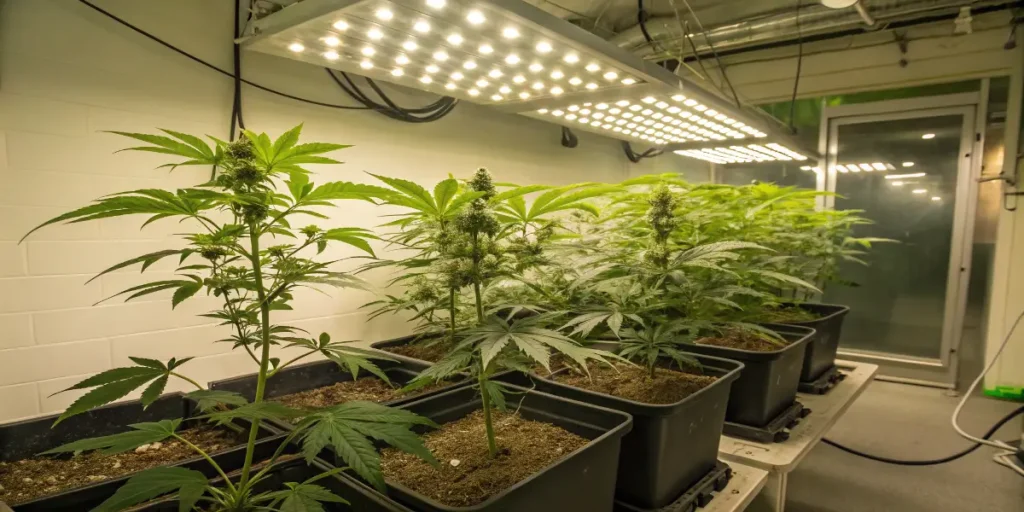
Mimosa EVO can benefit from low-stress training when vigorous branches begin creating an uneven canopy. Flexible shoots can be positioned outward during vegetative growth to expose more flowering sites to direct light while preventing one section of the plant from dominating the available height.
Topping can also be used during healthy vegetative development to encourage several main branches. A ScrOG setup can help distribute this growth across a wider horizontal area, particularly in indoor spaces where controlling canopy height improves light distribution.
Training should remain purposeful. The objective is to create a balanced canopy with productive branches and good air movement, not to apply as many techniques as possible.
Complete most major structural work before flowering becomes advanced, when stems remain flexible and flowers have not yet added significant weight.
Mimosa EVO Flowering Time
Mimosa EVO has an indoor flowering time of approximately 65–70 days, equivalent to roughly nine to ten weeks after the switch to 12/12.
This figure refers specifically to the flowering period. It does not include germination or vegetative growth.
Because Mimosa EVO is photoperiod dependent, total seed-to-harvest time varies from grow to grow. One cultivator may switch a smaller plant into flowering after a short vegetative period, while another may spend considerably longer developing a larger canopy before initiating bloom.
Both plants can still require approximately the same 65–70 days of flowering.
For a broader explanation of development after the photoperiod changes, see the Growlantis guide to the cannabis flowering stage week by week.
Mimosa EVO Yield
Mimosa EVO has particularly high breeder-listed yield potential.
Indoors, current specifications place production at approximately 700–800 g/m² under favorable conditions. Outdoors, large plants can produce up to approximately 2,000 g per plant.
Those numbers should not be interpreted as guaranteed harvest weights. Indoor production depends on usable canopy area, lighting, plant number, root volume, vegetative development, training, environmental stability, nutrition, irrigation, and phenotype.
The outdoor figure assumes a large, well-developed plant with substantial root space and strong light. A plant grown in a smaller container or partially shaded position will have very different production potential.
The most useful way to interpret these figures is as an indication that Mimosa EVO has high genetic production potential when its environment allows the plant to develop fully.
Growing Mimosa EVO Outdoors
Mimosa EVO is particularly notable outdoors because of its potential size and yield. Plants can reach approximately 180–220 cm, meaning growers need to account for substantial vertical and lateral development.
A suitable location should provide strong direct sunlight, good drainage, sufficient root space, and enough distance between plants for air to move through the mature canopy.
The current outdoor harvest reference is around the third to fourth week of October in the Northern Hemisphere. Growers in areas with wet or cold autumn weather should consider whether local conditions remain favorable long enough for the plant to complete its flowering period.
Large outdoor plants can also develop heavily loaded branches as harvest approaches. Supporting branches with stakes or another suitable structure can help prevent mature flowers from pulling stems downward or into neighboring growth.
Mimosa EVO Outdoor Yield
Mimosa EVO’s outdoor yield potential reaches approximately 2,000 g per plant under favorable breeder conditions.
That number is possible only when the plant is given enough space and time to develop a very large structure. Root restriction, limited direct sunlight, late planting, poor weather, irrigation problems, or plant stress can substantially reduce final production.
The breeder’s 180–220 cm outdoor height range helps put the yield figure into context. Mimosa EVO is capable of becoming a substantial plant rather than simply producing unusually large yields from a compact structure.
For growers with limited outdoor space, final plant size should therefore be considered before choosing the location and container.
Mimosa EVO Grow Diary: What to Expect
A Mimosa EVO grow diary is most useful when it follows actual plant development instead of assigning an arbitrary number of vegetative weeks. Because this is a photoperiod strain, the vegetative period remains under the grower’s control, while the 65–70 day flowering stage provides the more reliable chronological reference.
Germination and Seedling Stage
Mimosa EVO does not require a unique germination technique. Stable warmth, moisture, oxygen, and careful handling remain the main priorities while the seed opens and develops its first root.
The paper towel method can be used, with the surrounding material kept consistently moist rather than saturated. Once the root emerges, the seed should be transferred carefully into the chosen growing medium.
Young seedlings initially have very small root systems, so avoid repeatedly saturating an entire large container before roots have expanded into the surrounding medium.
For a more detailed explanation, see how long cannabis seeds take to germinate.
Vegetative Growth
Vegetative duration depends on the size of plant the grower wants to create. Under a longer light schedule such as 18/6, Mimosa EVO develops the roots and branches that will later support its large flowers.
This is the best period for most topping, low-stress training, or screen preparation. Branches remain flexible, and the plant has time to resume vigorous development before the reproductive stage becomes established.
Rather than switching to flowering on a predetermined week, use canopy size, available height, root development, and branch structure to determine when the plant is ready.
Flowering Days 1–21
After the switch to 12/12, Mimosa EVO begins its flowering transition. Continued stretch is normal while flowering sites become increasingly visible across the main and lateral branches.
Training should become progressively lighter during this period. Minor branch positioning can still help maintain an even canopy, but major topping or aggressive structural changes are better completed before flowering.
Growers should also begin paying closer attention to air movement through the developing canopy as branch density increases.
Flowering Days 22–49
During the middle portion of flowering, flowers begin adding considerably more mass and resin. Mimosa EVO’s citrus and fruit-punch aroma also becomes increasingly noticeable as development progresses.
The weight of the flowers may begin placing more pressure on productive branches, particularly on larger plants. Support can be introduced where stems begin leaning excessively.
Environmental stability becomes increasingly important as flower density rises. Airflow should reach through the canopy without continuously blasting the same flowers with strong direct wind.
Flowering Days 50–70
The final section of Mimosa EVO’s flowering window is primarily about maturation rather than major structural intervention.
Flowers continue increasing in density and resin coverage while tropical lemon, orange, berry, tangerine, and fruit-punch characteristics become more pronounced.
Use the 65–70 day breeder window as a reference for when to begin evaluating maturity closely. Individual plants can still finish at slightly different rates, so the calendar should guide inspection rather than determine the exact harvest day automatically.
Feeding Mimosa EVO
Mimosa EVO does not require one universal strain-specific nutrient formula.
Feeding should reflect the growing medium, fertilizer formulation, water quality, container size, root development, growth stage, and actual condition of the plant.
Vegetative plants require enough nutrition to support vigorous foliage, roots, and branches. As flowering becomes established, a bloom-oriented nutrient program appropriate to the cultivation system can be introduced.
The plant’s high yield potential does not mean that continually increasing nutrient concentration will automatically improve production. Excess fertilizer can create stress just as nutrient deficiencies can restrict growth.
Monitor leaf color, tips, development rate, and overall plant condition rather than following rigid nutrient ratios presented as unique requirements of Mimosa EVO.
Watering Mimosa EVO
Watering should follow root-zone conditions rather than a predetermined calendar.
Young Mimosa EVO plants consume relatively little water because their root systems occupy only a small section of the container. Mature flowering plants with large canopies can consume considerably more.
Container size, substrate, light intensity, temperature, humidity, root volume, and plant size all influence how quickly the growing medium dries.
Allow enough air to return to the root zone between irrigations instead of maintaining permanently saturated conditions.
Outdoor plants approaching two meters can develop substantial water demand during warm and sunny weather, but good drainage remains essential even when consumption is high.
Airflow During Mimosa EVO Flowering
Mimosa EVO can produce large, dense flowers, so maintaining an open canopy becomes increasingly important during later flowering.
Good circulation should move air gently through, above, and below the branches. Ventilation should simultaneously remove warm and humid air from the growing environment.
A humidity reading taken away from the canopy may not accurately represent conditions between heavily developed branches or inside dense flowering sites.
Early training and sensible plant spacing help reduce these stagnant areas before they become difficult to manage.
When to Harvest Mimosa EVO
Indoor Mimosa EVO plants generally approach maturity after approximately 65–70 days of flowering.
Use this range as the point at which close maturity assessment becomes particularly important rather than as an automatic cutting date.
Phenotype and environmental conditions can cause individual plants to finish at slightly different rates. Evaluate overall flower development and trichome maturity before deciding when to harvest.
Outdoors, harvest generally falls around the third to fourth week of October in the Northern Hemisphere. Local weather, latitude, planting date, and phenotype can still move the exact finishing date.
Growers should monitor autumn conditions closely because a large, mature outdoor plant can become increasingly vulnerable to prolonged wet weather near harvest.
Mimosa EVO Strain Review: Growth, Effects and Flavor
From a cultivation perspective, Mimosa EVO stands out primarily for its combination of manageable indoor height and unusually high yield potential. Indoors, the 100–120 cm height range makes the plant easier to control than its outdoor size might suggest, while 700–800 g/m² represents substantial production potential.
Outdoors, the experience changes considerably. Plants can approach or exceed two meters and need significantly more root and canopy space to take advantage of the strain’s potential.
The breeder describes the finished effects as happy, uplifting, and relaxing. These characteristics should be understood as general reported effects rather than guaranteed experiences for every consumer.
Its flavor profile centers on tropical lemon and orange citrus with berry notes, while the aroma combines fruit punch, citrus, and tangerine.
Mimosa EVO THC
Mimosa EVO is a high-THC strain, with current breeder specifications placing potency at around 30% THC and some regional specifications slightly higher.
The exact cannabinoid concentration of an individual harvest can still differ from the published reference. Phenotype, lighting, plant health, environmental conditions, harvest timing, drying, curing, and laboratory methodology all influence measured results.
For that reason, the breeder figure should be treated as an indication of the cultivar’s high potency potential rather than a guarantee that every Mimosa EVO plant will test at exactly the same percentage.
Mimosa EVO Flavor and Aroma
Mimosa EVO has a strongly fruit-driven sensory profile.
The breeder describes the flavor as a combination of tropical lemon, orange citrus, and berry, while the aroma emphasizes fruit punch, citrus, and tangerine.
The citrus characteristics reflect the Mimosa and Orange Punch breeding background, while the berry element adds sweetness to the sharper lemon and orange profile.
Expression can vary somewhat between individual plants and growing environments. Harvest maturity, drying, and curing also influence how clearly the final aromatic characteristics are retained.
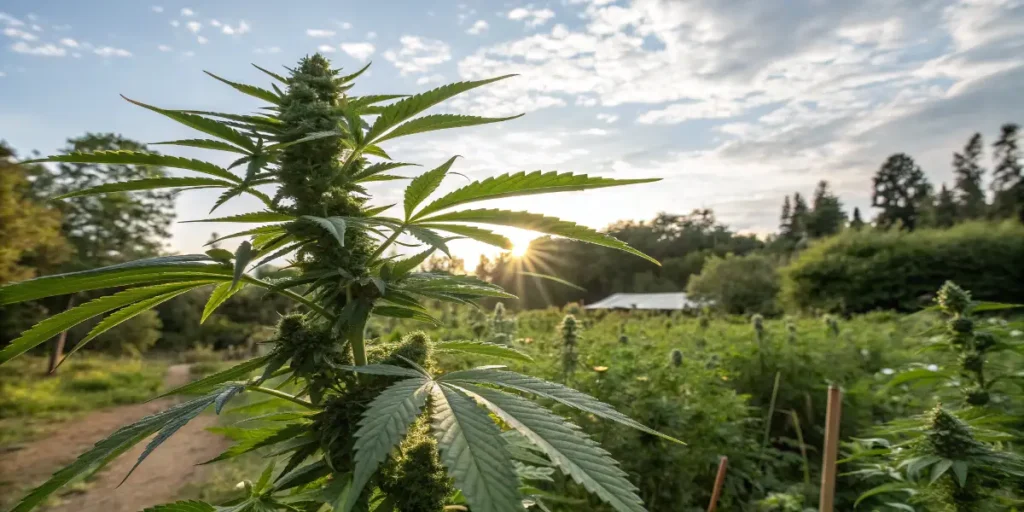
Mimosa EVO vs Mimosa x Orange Punch
Mimosa EVO and Mimosa x Orange Punch should not be treated as interchangeable strain names.
Mimosa EVO is bred from Mimosa × Orange Punch. The separate Mimosa x Orange Punch commercial cultivar available through Growlantis is a different selection with its own specifications and cultivation behavior.
This distinction matters when comparing grow reports because flowering times, heights, yields, and other figures from one cultivar should not automatically be applied to the other.
Growers cultivating the separate cross can use the dedicated Mimosa x Orange Punch grow guide rather than the Mimosa EVO timings in this article.
Common Problems When Growing Mimosa EVO
Following a Fixed 15-Week Lifecycle
Mimosa EVO is a photoperiod cultivar, so the grower determines how long vegetation lasts. The breeder specifies 65–70 days of flowering, not a mandatory six-week vegetative stage followed by harvest during week fifteen. Use plant size and available space to decide when to initiate the 12/12 flowering cycle.
Underestimating Outdoor Size
A Mimosa EVO plant can reach approximately 180–220 cm outdoors and develop substantial lateral growth. Growers planning for a compact plant may run out of space or struggle to support heavily loaded branches. Outdoor location and spacing should therefore account for both final height and canopy width.
Treating High Yield Potential as a Guaranteed Harvest
The 700–800 g/m² indoor and 2,000 g outdoor figures represent potential under favorable conditions. Lighting, roots, plant size, environment, training, nutrition, irrigation, climate, plant health, and phenotype all influence final production. Genetic potential cannot compensate for limiting growing conditions.
Using an Excessively Rigid Feeding Schedule
Mimosa EVO’s production potential does not require one exact nutrient formula. A feeding program should be adjusted to the growing medium, fertilizer system, water quality, and actual plant response. More nutrients do not automatically create larger flowers and can reduce plant performance when concentrations become excessive.
Confusing Mimosa EVO With Related Mimosa Strains
Mimosa EVO, Mimosa, Mimosa Auto, and Mimosa x Orange Punch are related names but should not be treated as one cultivar. Confirm the exact seed line before applying flowering time, height, yield, light-cycle, or harvest information from another Mimosa grow report.
FAQs About Mimosa EVO
How long does Mimosa EVO take to flower?
Mimosa EVO currently has a breeder-listed indoor flowering period of approximately 65–70 days after the switch to 12/12. This does not include germination or vegetative growth. Because Mimosa EVO is photoperiod dependent, total seed-to-harvest time varies according to how long the grower keeps the plant in vegetation.
What yield can Mimosa EVO produce?
Mimosa EVO is listed at approximately 700–800 g/m² indoors and up to 2,000 g per plant outdoors under favorable conditions. These figures represent genetic potential rather than guaranteed harvest weights. Actual production depends on light, canopy size, root space, environment, irrigation, nutrition, training, plant health, and phenotype.
Is Mimosa EVO indica or sativa?
Mimosa EVO is a slightly indica-dominant hybrid containing approximately 60% Indica and 40% Sativa genetics. Despite the Indica majority, the plant can develop substantial size outdoors and the reported effects include uplifting characteristics alongside relaxation. The ratio describes the breeding line rather than an exact prediction of every phenotype.
How tall does Mimosa EVO grow outdoors?
Mimosa EVO can reach approximately 180–220 cm outdoors under favorable conditions. Final size depends on root volume, planting time, sunlight, climate, nutrition, training, and phenotype. Because mature plants can also develop broad canopies and heavy branches, growers should provide enough horizontal space and consider structural support before late flowering.
What is the THC level of Mimosa EVO?
Mimosa EVO is a high-potency cultivar with current specifications around 30% THC, although published regional breeder figures vary slightly. Individual plants may test differently because phenotype, cultivation environment, light, harvest timing, drying, curing, and laboratory methodology can all influence the final measured cannabinoid concentration.
What should a Mimosa EVO grow diary look like?
A useful Mimosa EVO grow diary should follow developmental stages rather than impose a fixed total lifecycle. Vegetative duration depends on the grower’s space and goals, while flowering lasts approximately 65–70 days. Track germination, vegetative structure, the 12/12 transition, early and mid-flower development, maturation, and actual harvest readiness.