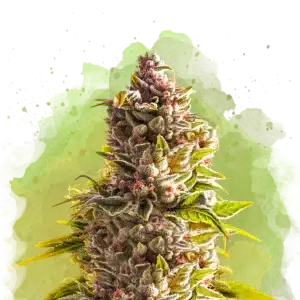



Black Widow
Black Widow is a 70% indica feminized strain combining Colombian Gold, Thai, and Mexican genetics. With 16–20% THC, it delivers uplifting, euphoric, relaxing, and hunger-inducing effects alongside sweet, earthy, and pungent flavors. Plants reach approximately 4.59 feet, with flowering completed in around 8–10 weeks.

|
THC | 16% - 20% (Medium) |

|
Lineage | Colombian Gold x Thai x Mexican |

|
Type | Feminized |

|
Height | 4.59 ft | 1.4 m |

|
Yield | High |

|
Yield Indoor | 1.8 - 1.97 oz/ft² | 550 - 600 g/m² |

|
Yield Outdoor | 28.22 - 42.33 oz/plant | 800 - 1200 g/plant |

|
Flowering Time | 8 - 10 weeks |

|
Phenotype | 70% Indica / 30% Sativa |

|
Effects | Hungry, Calming, Uplifted |

|
Flavors | Sweet, Earthy, Pungent |
Choose seed quantity
PROMO
Get 3x Scrambler Haze seeds FREE on $90+ orders.
Use code: SCRAMBLER3
Learn more
Lineage and Origin of Black Widow
Black Widow is a feminized cannabis strain with a genetic lineage combining Colombian Gold, Thai, and Mexican genetics. This three-way heritage brings together genetics from South America and Southeast Asia in an indica-dominant cultivar.
For growers selecting seeds by lineage, Black Widow offers a genetic background built from three established cannabis lines rather than a simple two-parent cross, resulting in a cultivar with substantial indoor and outdoor production potential.
Is Black Widow Sativa or Indica?
Black Widow is 70% indica and 30% sativa, making it a clearly indica-dominant cannabis strain.
Its plants reach approximately 4.59 feet (1.4 m), giving cultivators a useful reference when planning their growing space. This moderate stature makes Black Widow manageable indoors while still providing enough development for its high-yielding profile.
Black Widow Effects
Black Widow combines uplifting, euphoric, relaxing, and hunger-inducing effects, with THC levels ranging from 16% to 20%.
Its reported experience starts on a more uplifting and euphoric note before developing into greater physical relaxation. Increased appetite is another characteristic associated with its effect profile, adding a distinct element beyond its combination of mental uplift and calm.
Black Widow Flavor
Black Widow has a sweet, earthy, and pungent flavor and aroma profile.
Sweetness provides contrast to its deeper earthy qualities, while a pungent character gives the profile greater intensity. Together, these elements create a layered combination rather than a flavor dominated by a single characteristic.
How to Germinate Black Widow Seeds
As Black Widow is supplied as feminized seeds, growers can plan their cultivation around female plants from the beginning rather than managing the male-plant selection associated with regular seeds. Once established, allow sufficient growing space for plants that can reach approximately 4.59 feet while developing toward the substantial flower production associated with this cultivar.
Black Widow Flowering Time
Black Widow has a flowering period of approximately 8 to 10 weeks, combining a moderate flowering window with substantial production potential.
During the later stages, growers should pay particular attention to environmental stability as the flowers develop. Maintaining appropriate airflow and humidity becomes especially relevant when working toward the dense, productive flowering structure described for this cultivar.
Indoor and Outdoor Growing Conditions
Black Widow can be cultivated indoors or outdoors and offers considerable production potential in either environment. Indoor plants can produce approximately 1.8–1.97 oz/ft² (550–600 g/m²), while outdoor yields can reach around 28.22–42.33 oz (800–1,200 g) per plant.
Indoor growers can use topping or Low-Stress Training (LST) to manage plant development and improve light distribution across the canopy. The original cultivation information recommends temperatures of approximately 70–85°F, with careful humidity management during flowering. Outdoors, Black Widow is associated with warm conditions and long periods of sunlight.
Black Widow Terpene Breakdown
The terpene profile described for Black Widow includes myrcene, caryophyllene, limonene, pinene, and linalool, adding several aromatic layers to its sweet, earthy, and pungent character.
Myrcene contributes earthy and musky qualities, while caryophyllene adds spicy and peppery notes. Limonene introduces a citrus element, pinene contributes its characteristic fresh pine aroma, and linalool adds a softer floral quality.
Best Climate and Where to Grow Black Widow in the U.S.
Black Widow is associated with temperate to Mediterranean-style climates, with plenty of warmth and sunlight supporting outdoor cultivation. The original growing information places its preferred temperature range at approximately 70–85°F.
Stable conditions are preferable, while humidity management becomes particularly important during flowering. Indoor cultivation gives growers greater control over these variables when local outdoor conditions are less suitable.
Top U.S. Cities for Growing Black Widow
Locations listed for growing Black Widow include San Diego, Denver, Portland, Santa Cruz, Seattle, Sacramento, and Las Vegas. Actual outdoor suitability depends on seasonal and local conditions, and growers should consider applicable cannabis cultivation laws before starting a grow.
Reviews
There are no reviews yet. Be the first one to write one.
Write a review
Black Widow offers substantial production potential, with indoor yields of approximately 1.8–1.97 oz/ft² (550–600 g/m²) and outdoor production reaching around 28.22–42.33 oz (800–1,200 g) per plant. Actual results will depend on environmental conditions and cultivation management throughout the growing cycle.
Black Widow has a flowering period of approximately 8 to 10 weeks. During the later stages of flowering, growers should pay particular attention to airflow and humidity as the flowers develop. Its moderate flowering window combines with high listed yields in both indoor and outdoor cultivation environments.
Black Widow is associated with temperate to Mediterranean conditions and a temperature range of approximately 70–85°F. Plants reach around 4.59 feet and can be cultivated indoors or outdoors. Indoor growers can also use techniques such as topping or Low-Stress Training to manage development and improve canopy light distribution.
Related products