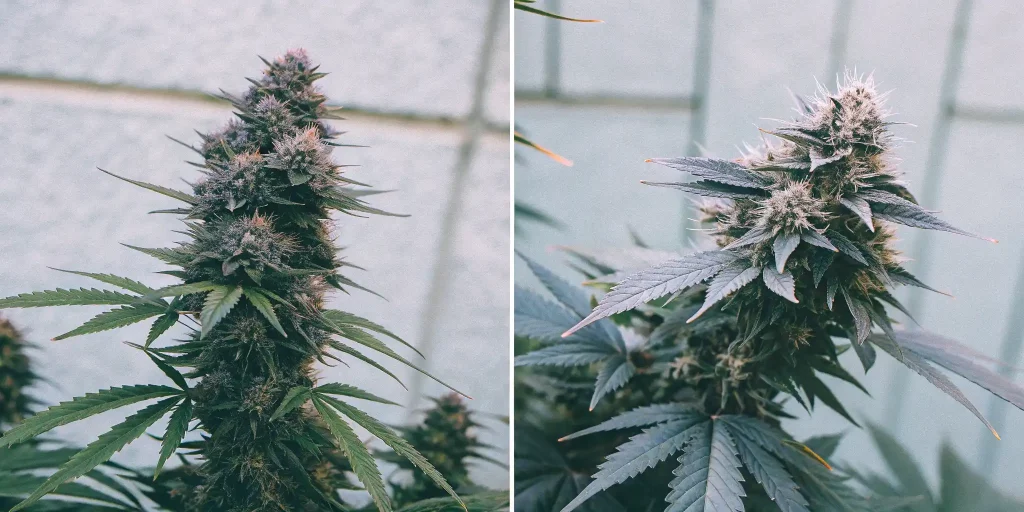

Autoflower cannabis flowers without requiring a seasonal change in day length, giving growers a faster, less controllable life cycle. Photoperiod cannabis flowers in response to day length and lets growers control the vegetative period indoors. Autoflowers generally favor speed and simplicity, while photoperiod plants offer more control over size, training, cloning and recovery time.
Autoflower vs photoperiod at a glance
| Feature | Autoflower | Photoperiod |
|---|---|---|
| Flowering trigger | Photoperiod-insensitive; flowers without a short-day trigger | Responds to day length |
| Indoor light-cycle change | Not required to initiate flowering | Usually changed to 12/12 to induce flowering |
| Total grow time | Generally shorter | Variable; grower controls vegetative duration indoors |
| Plant size | Often more compact | Highly adjustable through vegetative time |
| Yield per plant | Often lower because plants have less time to grow | Greater potential when given a longer vegetative period |
| Training flexibility | Less recovery time before flowering | Greater flexibility because veg can be extended |
| Cloning | Possible but usually impractical | Well suited to cloning and mother plants |
| Outdoor use | Useful where seasons are short or day length is challenging | Dependent on cultivar flowering response and season |
| Beginner-friendly | Simple flowering schedule but less room to recover from mistakes | More light management but more time to correct mistakes |
| Potency | Depends on genetics and cultivation | Depends on genetics and cultivation |
Neither type is universally better. The choice depends much more on time, space, control and cultivation goals than on a simple quality ranking.
Recommended Strains
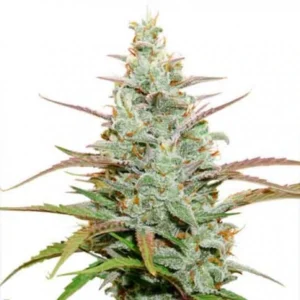
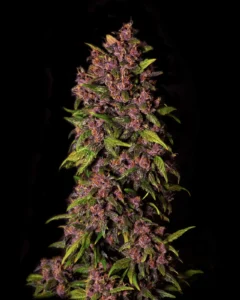
Auto Mokum´s Tulip

|
THC | 15% - 20% (Medium) |

|
Lineage | (Gelato x Sherbert) x Auto Colorado Cookies |

|
Type | Autoflowering |

|
Height | 4.59 ft | 1.4 m |

|
Yield | High |

|
Yield Indoor | 1.31 - 1.64 oz/ft² | 400 - 500 g/m² |

|
Life Cycle | 11 - 12 weeks |

|
Phenotype | 50% Indica / 50% Sativa |

|
Effects | Powerful, Giggly, Happy |

|
Flavors | Sweet, Floral, Cream, Fruity |
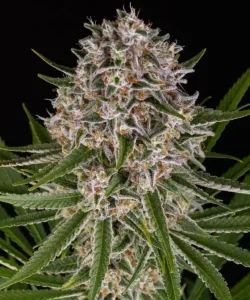
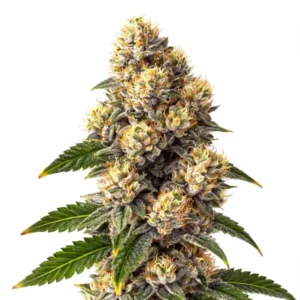
Gmo Auto
|
|
THC | 24% - 25% (High) |
|
|
Lineage | OGM x BF Super Auto #1 |
|
|
Type | Autoflowering |
|
|
Height | 4.27 ft | 1.3 m |
|
|
Yield | High |
|
|
Yield Indoor | 1.64 - 1.97 oz/ft² | 500 - 600 g/m² |

|
Yield Outdoor | 7.05 - 10.58 oz/plant | 200 - 300 g/plant |
|
|
Life Cycle | 10 - 11 weeks |
|
|
Phenotype | 80% Indica / 20% Sativa |
|
|
Effects | Euphoric, Uplifted, Relaxed, Focused |
|
|
Flavors | Spicy, Garlic, Diesel, Sweet, Earthy |
What is an autoflower cannabis plant?
An autoflower is cannabis with photoperiod-insensitive flowering. Instead of needing progressively longer nights to start reproduction, the plant moves toward flowering largely on its own developmental timeline. Growers often describe this as flowering “based on age.”
Traditionally, autoflowering genetics have been linked to Cannabis ruderalis populations adapted to short growing seasons at northern latitudes. That explanation is useful historically, but modern genetics paints a more detailed picture.
Researchers have identified several genomic regions involved in photoperiod insensitivity. A 2022 study mapped a major locus called Autoflower1, while a 2024 study identified another region, Autoflower2, containing an important FLOWERING LOCUS T ortholog called CsFT1. Separate research linked photoperiod-insensitive flowering in drug-type cannabis to variation in the circadian regulator CsPRR37. Research published in 2026 identified additional genomic markers tied to auto-, early- and late-flowering cannabis, which further shows that flowering behavior can’t be reduced to one simple “ruderalis gene.”
For growers, though, the practical outcome is simple: an autoflower doesn’t need a 12-hour dark period to begin flowering.
What is a photoperiod cannabis plant?
Photoperiod cannabis is sensitive to day length. Cannabis is generally considered a short-day plant, meaning flowering is promoted once nights get long enough. Outdoors, that change happens naturally as summer moves toward autumn, though the exact flowering response varies a lot between cultivars and geographic origins.
Indoors, growers commonly keep photoperiod plants under long days during vegetative growth, then switch to roughly 12 hours of light and 12 hours of darkness to give a strong flowering signal. That doesn’t mean every cultivar biologically needs exactly 12 hours of darkness; the critical photoperiod varies genetically. The 12/12 schedule is just a simple, reliable indoor strategy across many drug-type cultivars.
The biggest practical difference is control. A photoperiod plant can generally stay vegetative under a sufficiently long photoperiod, so the grower decides when it’s large enough to flower.
Autoflower vs photoperiod: the biggest difference
The most important difference is who controls the transition to flowering.
With a photoperiod plant indoors, the grower has substantial control. If the plant is too small, recently transplanted or recovering from training, the vegetative phase can usually be extended before flowering starts.
An autoflower doesn’t offer the same flexibility. Once its developmental program is heading toward flowering, changing the light timer won’t reset it into an extended vegetative period.
That single difference affects nearly everything else: plant size, training, cloning, recovery from stress and total crop time. It’s more useful than the common simplification that “autos are for beginners and photoperiods are for experts.” Both can be easy or difficult, just for different reasons.
Which grows faster: autoflower or photoperiod?
Autoflowers generally finish faster, seed to harvest.
Many commercial autoflowers are advertised at roughly 8–12 weeks from germination, though actual crop time depends on genetics and growing conditions. Photoperiod crop time is inherently more variable, since the grower controls how long plants stay vegetative indoors. A small plant might get only a short vegetative period, while a grower trying to fill a large canopy might extend it considerably longer. Flowering itself also varies by cultivar.
That means claims like “autoflowers always take 10 weeks and photoperiods always take 16 weeks” are too rigid. The defensible version is simpler: autoflowers usually finish sooner because they move into flowering automatically, while photoperiod plants give the grower more control over how long the whole crop lasts.
Which produces more yield?
Photoperiod plants generally have an edge in yield per plant when growers use their ability to extend vegetative growth. The reason is straightforward: more time in vegetative growth means a larger root system, more branches and a bigger canopy before reproductive growth starts.
Autoflowers have a shorter developmental window. If an auto stays small in its first few weeks because of environmental or root-zone problems, the grower can’t just add another month of vegetative growth to make up for it.
A 2026 greenhouse study directly compared high-THC autoflower and photoperiod production. In that experiment, the autoflowers finished faster but produced smaller plants, less total biomass and lower THC content than the photoperiod plants. That supports the general tradeoff between speed and individual plant size, but it shouldn’t be turned into a universal yield percentage. Genetics, density, lighting, crop duration and production system can all substantially change yield per square foot and yield per year.
Can autoflowers yield more over a year?
Potentially, because yield per plant and yield per unit of time are different metrics.
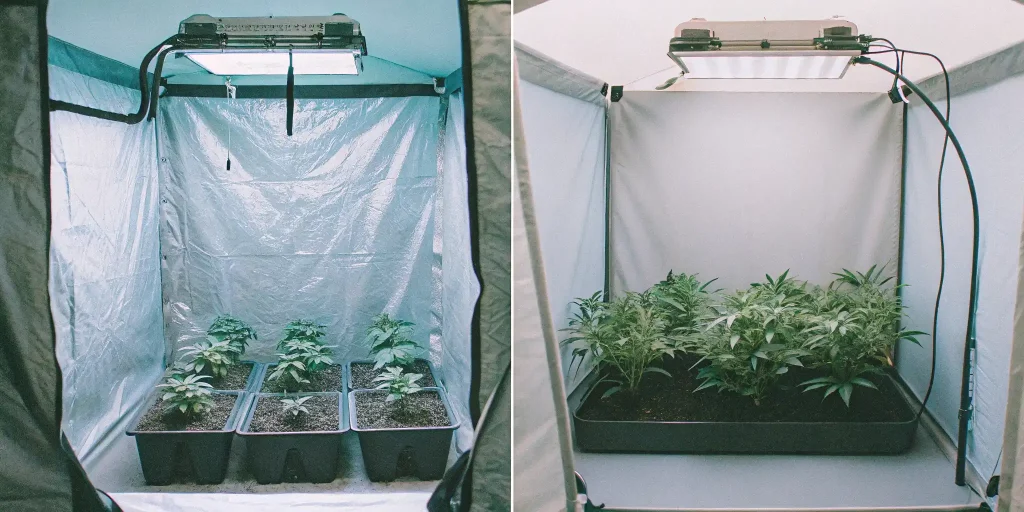
A photoperiod plant may produce considerably more flower in one harvest, while a faster autoflower schedule may allow additional cycles in the same facility or growing season. Plant density complicates the comparison further, since several smaller autos can occupy the same area that might otherwise hold fewer, larger photoperiod plants.
So the more useful question usually isn’t just “which plant yields more?” For commercial or highly optimized cultivation, yield per square foot, yield per day, energy input, labor requirement and number of turns per year matter more, and the answer changes depending on which of those you’re optimizing for.
Autoflower vs photoperiod potency
Photoperiod cannabis isn’t inherently more potent just because it vegetates longer. That claim shows up frequently in cultivation guides, but cannabinoid concentration isn’t simply a function of how many weeks a plant stays vegetative. Genetics strongly influence cannabinoid potential, while light, nutrition, environment, harvest stage and other production variables shape the final result.
There’s a historical reason for the reputation, though. Early photoperiod-insensitive cannabis material often had relatively low cannabinoid concentrations, and a 2024 genetic study notes the historical association between autoflowering genotypes, lower cannabinoid content and weaker flower characteristics. Modern breeders, however, have repeatedly crossed the autoflowering trait into drug-type genetic backgrounds. A better buying decision is to compare the specific genetics and breeder data rather than assume seed type alone predicts THC.
Do photoperiod plants develop better terpenes?
Not automatically. A longer vegetative stage produces a larger plant, but that doesn’t automatically mean a richer terpene profile in the harvested flowers. Terpenes and other aromatic compounds depend on genotype, flower development, environmental conditions, harvest timing, drying, curing and storage.
So the idea that photoperiod plants develop stronger cannabinoid and terpene profiles simply because their cycle is longer doesn’t hold up. A high-quality autoflower can produce an excellent aromatic profile, while a poorly grown or poorly stored photoperiod flower can lose much of its aroma. Autoflower vs photoperiod is a flowering-response distinction, not a quality grade.
Autoflower vs photoperiod light schedules
This is one of the clearest practical differences between the two.
Autoflowers can flower under long-day conditions because flowering doesn’t depend on a conventional short-day signal. Research populations have even been grown under long-day or continuous-light conditions specifically to identify photoperiod-insensitive plants. Growers commonly keep autoflowers under one consistent long-day lighting schedule from seed through harvest instead of switching to 12/12.
Photoperiod plants work differently. Indoors, long days maintain vegetative growth, while a change to a strong short-day schedule, commonly 12/12, induces flowering. That gives photoperiod growers an extra control lever, but it’s also one more variable to manage.
Which is better for training?
Photoperiod plants offer considerably more timing flexibility for training. Topping, mainlining, repeated pruning and aggressive canopy manipulation all temporarily redirect growth, and with a photoperiod plant, the grower can extend vegetative time if the plant needs to recover or the canopy isn’t ready yet.
Autoflowers have a fixed developmental window, so a major setback early on can eat up a meaningful chunk of the vegetative period. That doesn’t mean autoflowers can never be topped or trained aggressively; experienced growers sometimes do so successfully with vigorous genetics and good timing. The real difference is risk tolerance.
Low-stress training is popular with autos because it can reshape the canopy without requiring much recovery. Photoperiod plants simply give growers a bigger margin for experimentation.
Can you clone autoflower plants?
Technically, cannabis tissue can be cloned regardless of whether the original plant is photoperiod-sensitive. Practically, autoflower cloning is rarely useful.
A cutting from an autoflower doesn’t restart the plant’s developmental clock from seed. It stays the same age-related flowering type as the mother, leaving little time for the cutting to root, establish itself and grow before flowering catches up to it.
Photoperiod plants are much better suited to conventional cloning. A desirable photoperiod plant can be kept vegetative as a mother while genetically identical cuttings are taken repeatedly, which is particularly valuable for growers who want to preserve a specific phenotype or keep production uniform across crops. For long-term cultivar preservation, photoperiod has the clear advantage.
Autoflower vs photoperiod for indoor growing
Both work well indoors, but they suit different operating styles.
Autoflowers simplify part of indoor cultivation because growers don’t need to change the photoperiod to trigger flowering, and their generally shorter crop cycles and compact size suit limited spaces. Photoperiod plants offer more control: a grower can keep plants small by shortening vegetative time, or fill a much larger canopy by extending it. Training can continue until the desired shape is reached, and selected plants can be cloned for later cycles.
If control and repeatability matter most to you, photoperiod usually makes more sense. If short cycles and a simpler flowering schedule matter more, autoflower is probably the better fit.
Autoflower vs photoperiod outdoors
Autoflowers have a genuine advantage in regions where the natural growing season or autumn weather causes problems. Because they don’t need shortening days to start flowering, they can finish before autumn conditions turn unfavorable, and multiple outdoor cycles may be possible in climates with a long enough frost-free season.
Photoperiod plants rely more on latitude and seasonal day length. Some cultivars start flowering relatively early, while others stay vegetative for much longer. Modern genetic research confirms substantial variation in photoperiod sensitivity and flowering time among cannabis populations, reflecting adaptation to different environments. That means outdoor growers should look at a specific cultivar’s finishing behavior, not just whether the seed package says photoperiod.
Which handles growing mistakes better?
Photoperiod plants usually offer more recovery time, but that doesn’t make them inherently tougher plants. If an indoor photoperiod plant gets overwatered, transplanted poorly or stressed during training, the grower can often delay flowering until it recovers.
An autoflower doesn’t offer the same calendar flexibility. A setback in the first few weeks can permanently reduce plant size, since flowering keeps approaching regardless. On the other hand, autoflowers eliminate mistakes tied to timing the flip and can be simpler in setups where running separate vegetative and flowering schedules would be inconvenient.
So “beginner-friendly” depends on the beginner. Autoflowers are simpler to schedule but less forgiving of early setbacks. Photoperiod plants involve more light management but give the grower more time to fix mistakes.
Do autoflowers need less nutrients?
Not as a universal rule. Smaller, faster plants may use fewer total resources over their shorter lifetime, but that doesn’t mean every autoflower needs weaker fertilizer. Nutrient demand depends on biomass, genotype, growth stage, root environment, growing medium, irrigation strategy and environmental conditions. Photoperiod plants don’t automatically need heavy feeding just because they can grow larger, either.
The better approach is to manage root-zone nutrition using measurements like EC, pH, plant response and substrate conditions, rather than picking a nutrient concentration based solely on whether a seed is auto or photoperiod.
Which is better for small grow spaces?
Autoflowers can be convenient where vertical space is limited, since many cultivars stay relatively compact and their vegetative duration can’t be extended indefinitely.
But plant size isn’t determined by flowering type alone. Photoperiod plants can also be kept small by shortening the vegetative period and training appropriately, and some modern autoflowers can grow considerably larger than the stereotypical tiny ruderalis-derived plant. For a small tent, the real variables are cultivar architecture, container size, light footprint, plant count and how much canopy management you’re willing to do. Autoflowers just make final height less controllable through vegetative timing.
Autoflower vs feminized: they aren’t opposites
A common source of confusion is comparing autoflower and feminized as though they’re competing categories, but they describe different things. Autoflower versus photoperiod is about flowering response. Feminized versus regular is about sex distribution in the seeds.
That means a seed can be feminized and autoflowering, or feminized and photoperiod. Regular autoflower seeds exist too. When buying cannabis seeds, check both characteristics instead of assuming “feminized” means photoperiod.
Autoflower vs photoperiod: which should you choose?
Choose autoflower when speed and flowering independence matter most. They’re particularly useful for short outdoor seasons, compact rotations and growers who’d rather not manage a light-cycle transition.
Choose photoperiod when control matters most. They’re easier to keep as mother plants, clone repeatedly, train aggressively and hold in vegetative growth until the canopy reaches the size you want.
For maximum yield from an individual plant, photoperiod normally has more potential, since vegetative growth can be extended. For potency, aroma and overall flower quality, there’s no defensible rule saying one category always wins. The genetics and cultivation of the actual cultivar matter more than the category.
Key takeaway
The fundamental difference between autoflower and photoperiod cannabis is how flowering gets regulated. Autoflowers are photoperiod-insensitive and move into flowering without the grower shortening the day; photoperiod plants respond to day length, which lets indoor growers control when vegetative growth ends.
That makes autos attractive for faster cycles and seasonal flexibility, while photoperiod plants give more control over plant size, training, cloning and recovery time. Current genetic research also shows autoflowering is more complex than the old explanation of simply adding Cannabis ruderalis, with multiple loci now identified in the flowering-time and photoperiod-insensitivity pathways.
Neither is universally superior. The best choice depends on what you want to control.
FAQs about autoflower vs photoperiod cannabis
What is the main difference between autoflower and photoperiod cannabis?
Autoflower cannabis flowers without needing the short-day signal that conventional photoperiod plants require. Photoperiod cannabis responds to day length, so indoor growers can keep plants vegetative under long days and then induce flowering with a shorter schedule, commonly 12/12. This gives photoperiod growers more control over plant size and timing.
Are autoflowers faster than photoperiod plants?
Generally, yes. Autoflowers usually have shorter seed-to-harvest cycles because their vegetative period can’t be extended indefinitely. Photoperiod crop duration depends partly on how long the grower keeps plants vegetative before starting flowering. Exact timelines still vary a lot by cultivar, environment and cultivation strategy.
Do photoperiod plants yield more than autoflowers?
Photoperiod plants generally have greater yield potential per plant because growers can extend vegetative growth and build a larger canopy before flowering. A 2026 greenhouse comparison also found smaller plants and less biomass from its autoflower treatment. That said, faster autoflower cycles and higher plant density can change yield-per-area or annual-production comparisons.
Are photoperiod strains stronger than autoflowers?
Not necessarily. Early autoflowering genetics developed a reputation for lower cannabinoid concentrations, but modern breeding has folded photoperiod-insensitive flowering into many drug-type genetic backgrounds. Final potency depends on the particular genetics and growing conditions rather than the flowering mechanism alone. A longer vegetative stage doesn’t automatically mean a higher THC percentage.
Are autoflowers easier for beginners?
They simplify flowering because no light-cycle change is required, but that doesn’t make them easier overall. Their short developmental window gives growers less time to recover from early stress or poor growth. Photoperiod plants need more light management but can stay vegetative longer while a beginner fixes problems or builds the canopy they want.
Can autoflowers be cloned?
Autoflower plants can technically be propagated from cuttings, but cloning is usually impractical, since the cutting keeps the plant’s age-related flowering behavior and has little time to establish before flowering. Photoperiod plants are far better suited to maintaining mother plants and producing repeated, genetically identical cuttings.