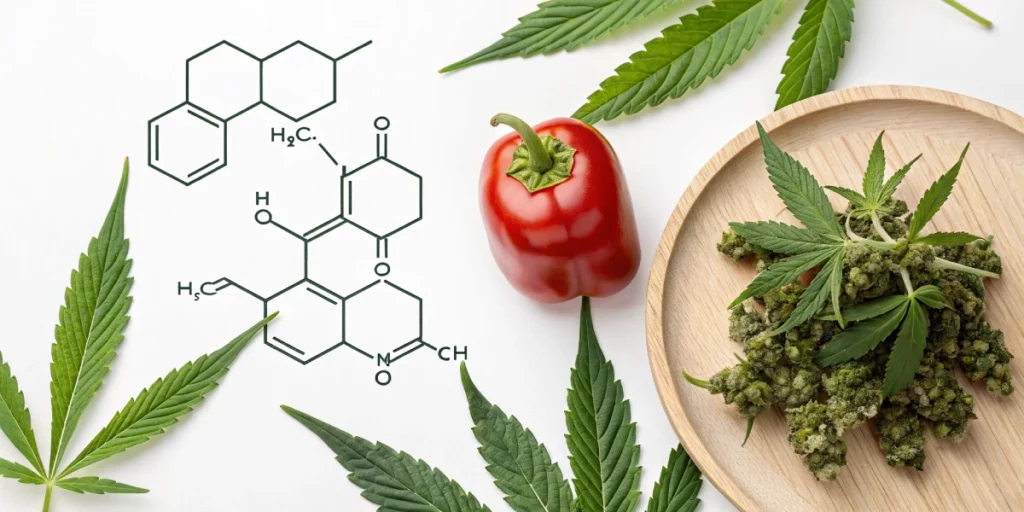

The “pepper terpene” in cannabis usually refers to beta-caryophyllene (β-caryophyllene or BCP), a spicy, woody sesquiterpene also found in black pepper, cloves, oregano, and other plants. Unlike most terpenes, beta-caryophyllene can activate cannabinoid CB2 receptors, but that does not mean caryophyllene-rich cannabis has proven medical effects or that every peppery strain contains high levels.
What Is the Pepper Terpene?
When cannabis smells peppery, spicy, woody or slightly clove-like, beta-caryophyllene is one of the compounds that may be contributing to that aroma.
Recommended Strains
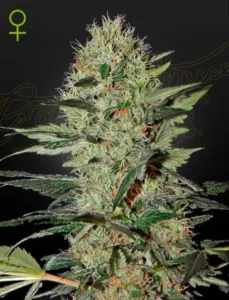
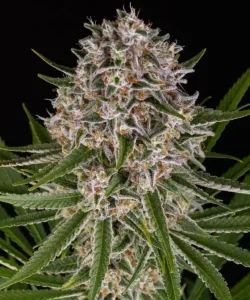
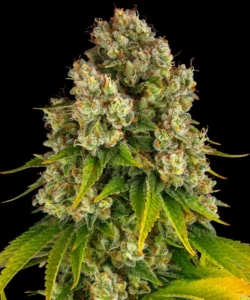
Exodus Cheese Auto

|
THC | 19% - 20% (Medium) |

|
Lineage | Exodus Cheese x Ruderalis |

|
Type | Autoflowering |

|
Height | 2.79 ft | 0.85 m |

|
Yield Outdoor | 3.53 oz/plant | 100 g/plant |

|
Life Cycle | 8 - 9 weeks |

|
Phenotype | 50% Indica / 50% Sativa |

|
Effects | Relaxed, Calming, Happy, Tingly |

|
Flavors | Cheese, Pungent, Skunk |
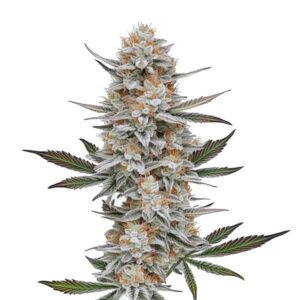
Cheese Autoflower
|
|
THC | 18% - 20% (Medium) |
|
|
Lineage | Cheese x BF Super Auto #1 |
|
|
Type | Autoflowering |
|
|
Height | 3.44 ft | 1.05 m |

|
Yield | High |

|
Yield Indoor | 1.47 - 1.64 oz/ft² | 450 - 500 g/m² |
|
|
Yield Outdoor | 5.29 - 7.76 oz/plant | 150 - 220 g/plant |
|
|
Life Cycle | 9 - 11 weeks |
|
|
Phenotype | 70% Indica / 30% Sativa |
|
|
Effects | Relaxed, Happy, Energetic, Creative |
|
|
Flavors | Earthy, Pungent, Cheese, Skunk |
Beta-caryophyllene is a naturally occurring bicyclic sesquiterpene, often abbreviated as BCP. It is found in hundreds of plant species and occurs in the essential oils of black pepper, cloves, oregano, cinnamon, basil, hops and Cannabis sativa.
Calling it the “pepper terpene” is therefore useful shorthand.
It is not, however, its scientific name.
The current Growlantis article repeatedly capitalizes “Pepper Terpene” as though it were a formally recognized individual compound. It should instead introduce the search term immediately and then use beta-caryophyllene, β-caryophyllene, BCP or simply caryophyllene throughout the rest of the article.
Is Beta-Caryophyllene What Makes Black Pepper Spicy?
Not exactly.
Black pepper contains beta-caryophyllene, and that volatile compound contributes to its aromatic profile. Recent analyses of Piper nigrum essential oils have found beta-caryophyllene to be one of their major sesquiterpenes.
But the sharp burning or pungent sensation of black pepper comes primarily from piperine.
Piperine is an alkaloid rather than a terpene and activates sensory pathways responsible for black pepper’s characteristic pungency.
The distinction is:
Beta-caryophyllene → spicy, woody aroma
Piperine → pungent, biting sensation
They both occur in black pepper, but they are chemically different compounds with different sensory roles.
What Does Beta-Caryophyllene Smell Like?
Beta-caryophyllene is generally associated with peppery, woody, spicy and warm aromas.
That explains why cannabis products containing appreciable amounts of it may be described as peppery or spicy.
However, one terpene rarely determines the complete smell of cannabis.
Cannabis flower contains mixtures of volatile compounds, and caryophyllene may occur alongside limonene, myrcene, pinene, humulene and many other terpenes and non-terpene aroma compounds.
Large-scale analysis of commercial cannabis has identified a recurring chemotype characterized by relatively high caryophyllene and limonene, illustrating that caryophyllene commonly appears as part of a broader chemical profile rather than in isolation.
So smelling pepper does not prove that beta-caryophyllene is the dominant terpene.
A laboratory terpene panel is needed to know the actual concentration.
Is Caryophyllene a Terpene or a Cannabinoid?
Chemically, beta-caryophyllene is a terpene — specifically a sesquiterpene.
What makes it unusual is its interaction with the endocannabinoid system.
A landmark 2008 study found that (E)-beta-caryophyllene binds selectively to the CB2 cannabinoid receptor and acts as a functional CB2 agonist. The researchers measured negligible activity at CB1, the receptor more closely associated with THC’s psychoactive effects.
This is why beta-caryophyllene is sometimes called a dietary cannabinoid or phytocannabinoid despite having a terpene chemical structure.
That terminology can be confusing.
The clearest explanation is:
Beta-caryophyllene is chemically a terpene that also interacts directly with a cannabinoid receptor.
Does Beta-Caryophyllene Get You High?
No evidence suggests that beta-caryophyllene produces a THC-like high.
Its established cannabinoid-receptor activity is primarily at CB2 rather than CB1. The original receptor study found selective CB2 agonism, and subsequent reviews have continued to distinguish BCP from CB1-active psychoactive cannabinoids.
That does not mean a caryophyllene-rich cannabis product is non-intoxicating.
If the same flower contains THC, the THC can still produce intoxication.
The important distinction is that beta-caryophyllene itself should not be described as the ingredient responsible for the cannabis high.
What Does Beta-Caryophyllene Do to CB2 Receptors?
Beta-caryophyllene acts as a selective agonist of CB2 receptors.
The original research measured a binding affinity of approximately 155 nM and demonstrated CB2-mediated cellular signaling. In animal experiments, some anti-inflammatory responses also disappeared when CB2 receptors were genetically absent, strengthening the evidence that BCP can act through this receptor.
This receptor interaction is genuinely unusual and scientifically interesting.
But it is also where cannabis content often overreaches.
A receptor mechanism does not establish that smoking a cannabis strain containing caryophyllene will treat inflammation, anxiety, pain, depression or another condition in humans.
Those are different levels of evidence.
What Are the Potential Benefits of Beta-Caryophyllene?
Beta-caryophyllene has been investigated for anti-inflammatory, analgesic, metabolic, neurological and other biological effects.
Much of the mechanistic evidence comes from cell and animal research, including experiments investigating CB2-dependent inflammatory and pain pathways.
Some human studies of isolated or formulated beta-caryophyllene have also been conducted. For example, small randomized trials have examined applications involving gastrointestinal symptoms, food-related behaviors and delayed-onset muscle soreness. These studies are interesting but involve specific purified formulations, doses and populations; they do not validate broad health claims for caryophyllene-rich cannabis flower.
For Growlantis, I would therefore avoid claims such as:
“caryophyllene relieves pain”
“caryophyllene treats anxiety”
“caryophyllene reduces inflammation when you smoke it”
or
“high-caryophyllene strains provide therapeutic effects.”
The defensible statement is that beta-caryophyllene has biologically interesting CB2 activity and is under active investigation for potential therapeutic applications.
Beta-Caryophyllene vs Caryophyllene Oxide
These are related but different compounds.
Beta-caryophyllene (BCP) is the hydrocarbon terpene most relevant to the “pepper terpene” query.
Caryophyllene oxide (BCPO) is an oxygenated product that can form through oxidation of beta-caryophyllene.
Importantly, they do not behave identically. Reviews of their pharmacology note that beta-caryophyllene interacts with CB2 receptors, while caryophyllene oxide does not share the same cannabinoid-receptor binding profile.
So the two names should not be treated as interchangeable.
Storage and oxygen exposure can also change beta-caryophyllene chemistry over time, which is one reason volatile profiles can evolve after harvest. A recent review specifically notes beta-caryophyllene’s susceptibility to autoxidation into caryophyllene oxide.
Beta-Caryophyllene vs Humulene
Beta-caryophyllene and alpha-humulene are closely related sesquiterpenes that often occur together in plants.
Humulene was historically called alpha-caryophyllene, which can create additional naming confusion.
The two compounds have different molecular structures and should be treated as separate terpenes.
Natural beta-caryophyllene is commonly found alongside alpha-humulene as well as small amounts of other caryophyllene isomers and oxidation products.
So a terpene analysis listing both “caryophyllene” and “humulene” is not listing the same molecule twice.
Is Beta-Caryophyllene Common in Cannabis?
Yes.
The original CB2 research identified beta-caryophyllene as a significant component of Cannabis sativa essential oil, and modern commercial testing confirms that caryophyllene is one of the major terpenes encountered across U.S. cannabis samples.
But its concentration varies.
One plant may have caryophyllene as a dominant terpene, another may contain it at a lower concentration, and a third may have a substantially different volatile profile.
That variability matters when discussing “high-caryophyllene strains.”
Which Cannabis Strains Have High Caryophyllene?
Do not rely on strain names alone.
The current article claims that Sour Diesel, Runtz and Gelato consistently produce the “Pepper Terpene” and even says that independent testing verifies this. Those claims are much stronger than the evidence provided.
A large chemical analysis of commercial cannabis found that products sharing strain names can show variable terpene chemistry and that commercial labels do not consistently correspond to underlying chemical profiles.
That means a particular batch of Sour Diesel, Gelato or another named cultivar may contain substantial caryophyllene, while another producer’s version may not.
If someone specifically wants cannabis high in beta-caryophyllene, the most reliable method is:
check the batch-specific laboratory terpene panel.
Look for beta-caryophyllene, β-caryophyllene, (E)-caryophyllene or sometimes simply caryophyllene on the certificate of analysis.
Can Growers Increase Beta-Caryophyllene Levels?
Genetics strongly influence a plant’s chemical potential, while cultivation environment and post-harvest handling can also affect the final volatile profile.
But there is no validated universal cultivation recipe that lets growers selectively “turn up” beta-caryophyllene.
The existing article suggests that manipulating light intensity, temperature and humidity allows growers to optimize Pepper Terpene production. That goes beyond the evidence.
Growers can optimize overall plant health and preserve volatile compounds during harvest and storage, but promising that particular environmental adjustments reliably increase one terpene is too precise without cultivar-specific experimental evidence.
If caryophyllene content matters, select genetics based on repeated chemical testing and verify the actual harvested material with analytical testing.
Does Black Pepper Change a Cannabis High?
There is a popular cannabis claim that smelling or chewing black pepper can reduce an uncomfortable THC high.
Beta-caryophyllene is sometimes proposed as an explanation because of its CB2 activity.
However, CB2 binding by isolated beta-caryophyllene does not demonstrate that eating pepper reliably reverses THC intoxication in humans.
Black pepper also contains piperine and numerous other volatile compounds, further complicating the mechanism.
So I would not present black pepper as a clinically validated remedy for cannabis anxiety or overconsumption.
The chemistry behind the claim is interesting; the claimed treatment effect remains unproven.
Pepper Terpene: Bottom Line
The pepper terpene is beta-caryophyllene, usually abbreviated BCP.
It is a naturally occurring sesquiterpene found in black pepper, cannabis, cloves, oregano, cinnamon and many other plants. Its peppery, woody aroma makes it an important contributor to some cannabis volatile profiles.
What makes beta-caryophyllene particularly unusual is that it also functions as a selective agonist at cannabinoid CB2 receptors, despite being chemically classified as a terpene.
That receptor activity is scientifically established.
Broad medical benefits from smoking or consuming caryophyllene-rich cannabis are not.
And if you want to know whether a particular cannabis product is genuinely high in the pepper terpene, a batch-specific terpene analysis is far more reliable than its strain name.

FAQs About the Pepper Terpene
What terpene smells like black pepper?
Beta-caryophyllene, commonly called caryophyllene or BCP, is strongly associated with peppery, woody and spicy aromas and occurs naturally in both black pepper and cannabis. However, black pepper contains many volatile compounds, so its complete aroma does not come from caryophyllene alone.
Is beta-caryophyllene the same as pepper?
No. Beta-caryophyllene is one chemical component found in black pepper and many other plants. Black pepper also contains piperine, which is an alkaloid responsible for much of its pungent burning sensation. Caryophyllene primarily contributes to the plant’s volatile aromatic profile.
Is caryophyllene a cannabinoid?
Chemically, beta-caryophyllene is a sesquiterpene. It is sometimes called a dietary cannabinoid because it selectively binds to and activates CB2 cannabinoid receptors. Unlike THC, it has negligible CB1 activity and is not known to produce a THC-like psychoactive high.
What are the effects of beta-caryophyllene?
Beta-caryophyllene has demonstrated CB2 receptor activity and numerous biological effects in experimental studies. Human research exists but remains limited and application-specific. These findings are not sufficient to claim that caryophyllene-rich cannabis reliably treats pain, inflammation, anxiety or other medical conditions.
Which cannabis strains have the most caryophyllene?
There is no reliable permanent ranking by strain name. Commercial cannabis sold under the same name can vary in cannabinoid and terpene composition between producers and batches. To find high-caryophyllene cannabis, check a recent laboratory terpene panel for the actual product rather than relying solely on names such as Gelato or Sour Diesel.
Is piperine a terpene?
No. Piperine is an alkaloid and is principally responsible for black pepper’s pungent or burning sensation. Beta-caryophyllene is a terpene in black pepper’s volatile oil and contributes more to its aromatic, spicy character. The two compounds are chemically and functionally different.