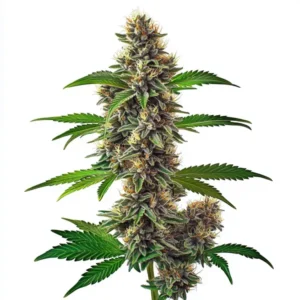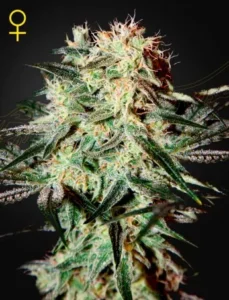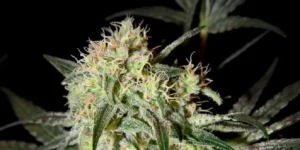


Papaya Cookies Auto is a sativa-dominant autoflower from Fast Buds created from Papaya genetics from Oni Seeds and Cookies Auto F5. The current commercial line is an F5 feminized autoflower classified as 60% Sativa and 40% Indica, with up to 29% THC and an approximately 8–9 week total lifecycle.
Current Papaya Cookies Auto seeds reach approximately 70–120 cm tall and produce around 450–550 g/m² indoors or 50–150 g per plant outdoors. Fast Buds classifies the plant as an XL autoflower and specifically highlights its rapid growth, internodal spacing and suitability for training.
Recommended Strains
Papaya Cookies Auto

|
THC | 25% - 27% (High) |

|
Lineage | (Cookies x Papaya) x Ruderalis |

|
Type | Autoflowering |

|
Height | 3.28 ft | 1 m |

|
Yield | High |

|
Yield Indoor | 1.47 - 1.8 oz/ft² | 450 - 550 g/m² |

|
Life Cycle | 9 - 10 weeks |

|
Phenotype | 40% Indica / 60% Sativa |

|
Effects | Energetic, Happy, Relaxed |

|
Flavors | Cookie, Sweet, Tropical |

Papaya
|
|
THC | 16% - 25% (High) |
|
|
Lineage | Jack Herer x Skunk#1 |
|
|
Type | Feminized |
|
|
Height | 3.94 ft | 1.2 m |
|
|
Yield | Medium |
|
|
Yield Indoor | 1.31 - 1.47 oz/ft² | 400 - 450 g/m² |
|
|
Flowering Time | 8 - 9 weeks |
|
|
Phenotype | 40% Indica / 60% Sativa |
|
|
Effects | Euphoric, Relaxed, Uplifted |
|
|
Flavors | Sweet, Mango, Tropical |
| Papaya Cookies Auto Grow Info | Current specification |
|---|---|
| Breeder | Fast Buds |
| Genetics | Papaya (Oni Seeds) × Cookies Auto F5 |
| Seed type | F5 Feminized Autoflower |
| Sativa / Indica | 60% Sativa / 40% Indica |
| THC | Up to 29% |
| CBD | <1% |
| Total lifecycle | 8–9 weeks |
| Height | 70–120 cm |
| Indoor yield | 450–550 g/m² |
| Outdoor yield | 50–150 g/plant |
| Size | XL Autoflower |
| Environment | Indoor / Outdoor / Greenhouse / Mixlight |
| Flavor | Cookie, Papaya, Sweet |
Papaya Cookies Auto Genetics
Papaya Cookies Auto combines Papaya genetics from Oni Seeds with Cookies Auto F5 to create an F5 feminized autoflower.
This current breeder specification is more precise than older descriptions that identify the cultivar simply as Cookies × Papaya × Ruderalis. The final commercial line maintains automatic flowering while combining a tropical Papaya profile with Cookies-derived sweetness and structure.
Papaya Cookies Auto is also an award-winning modern autoflower, having taken second place in the Best New Strain category at the 2024 Autoflower World Cup.
Growers interested in other genetics from the same breeder can browse the wider Fast Buds seed collection.
Is Papaya Cookies Auto Indica or Sativa?
Papaya Cookies Auto is 60% Sativa and 40% Indica, making it moderately sativa dominant.
Its structure remains relatively manageable for an autoflower but can develop substantial height and branching, which is why Fast Buds classifies it as an XL plant rather than an especially small automatic cultivar.
The genetic ratio describes the commercial seed line itself. Final plant shape can still vary with root space, light, training and early plant health, while reported effects can differ according to individual response and the chemistry of a particular harvest.
How Much THC Does Papaya Cookies Auto Have?
Fast Buds currently lists Papaya Cookies Auto at up to 29% THC.
That figure replaces the older 25–27% range still displayed in the current Growlantis product table and the 18–24% figure found in the older grow guide.
The wording “up to” is important because 29% represents breeder-listed potency potential rather than a guarantee that every harvested flower will test at exactly that concentration.
Phenotype, light, plant health, maturity and post-harvest handling can all affect measured cannabinoid levels.
Papaya Cookies Auto Flavor and Aroma
Papaya Cookies Auto combines papaya, cookie and sweet flavors.
Fast Buds describes the profile as ripe papaya fruit with a creamy cookie-dough finish. The tropical component remains dominant, while the sweeter baked-cookie character becomes more noticeable behind it.
This sensory profile is more reliable than assigning the strain one universal dominant-terpene hierarchy. The current technical specification does not provide a quantitative table establishing myrcene, caryophyllene and limonene as the definitive dominant compounds.
For a general strain description, the verified papaya, cookie and sweet profile should therefore remain the primary reference.
How Long Does Papaya Cookies Auto Take to Grow?
Papaya Cookies Auto completes its full seed-to-harvest lifecycle in approximately 8–9 weeks.
This is not a flowering period added after several weeks of vegetative growth. As an autoflower, the plant develops continuously from seedling growth through pre-flower, flowering and ripening according to age and development.
Individual plants can finish slightly differently depending on phenotype and conditions, but the current Fast Buds specification remains 8–9 weeks.
Drying and curing happen after harvest and should be treated as separate post-harvest processes rather than additional weeks in the cultivation lifecycle.

Does Papaya Cookies Auto Need a 12/12 Light Cycle?
No. Papaya Cookies Auto does not need a 12/12 light schedule to begin flowering.
Its autoflowering genetics control the transition according to age and development. There is no need to wait until week seven and then shorten the photoperiod to trigger bloom.
This is an important correction to older Papaya Cookies Auto grow content that applies photoperiod cultivation logic to an autoflower.
Maintain an appropriate autoflower light schedule throughout the cycle and allow the flowering transition to occur naturally rather than attempting to initiate it with 12/12.
Papaya Cookies Auto Height and Plant Structure
Fast Buds currently lists Papaya Cookies Auto at approximately 70–120 cm, or 28–47 inches.
The breeder classifies it as an XL autoflower and describes rapid growth with generous internodal spacing. Plants can stretch noticeably during the transition into pre-flower, making early canopy planning useful where vertical space is limited.
The current Growlantis one-meter figure therefore understates the full breeder range.
Final height still depends on root volume, lighting, plant density, training and early stress. A healthy plant given enough root and canopy space can develop toward the upper end of the published range.
Growing Papaya Cookies Auto Indoors
Papaya Cookies Auto is currently listed at approximately 450–550 g/m² indoors.
Its 70–120 cm height and relatively generous internodal spacing make it suitable for indoor training without requiring an especially tall grow room.
Because the complete lifecycle lasts only 8–9 weeks, strong early development matters. Severe overwatering, root damage or excessive feeding can reduce final size because the plant cannot simply remain in vegetation for several extra weeks to recover.
Focus on healthy roots, even light access and a well-distributed canopy rather than attempting to force rapid growth through aggressive inputs.
Growing Papaya Cookies Auto Outdoors
Outdoor Papaya Cookies Auto is currently listed at approximately 50–150 g per plant.
Because flowering is automatic, plants do not need to wait for shortening autumn days before entering bloom. This makes it possible to position the short 8–9 week cycle within a favorable part of the outdoor season.
Final production depends strongly on sunlight, root space, weather and early plant health.
The upper 150 g figure should therefore be treated as breeder-listed production potential rather than a guaranteed harvest from every plant.
The same 70–120 cm general height range provides a useful planning reference for outdoor spacing.
Papaya Cookies Auto Yield
Current breeder specifications list Papaya Cookies Auto at 450–550 g/m² indoors and 50–150 g per plant outdoors.
The indoor figure is expressed by canopy area because plant density varies between setups. Outdoor production is expressed per plant because individual root and canopy space differ considerably.
These figures describe production potential rather than guaranteed harvests.
Light, root development, early plant health, plant density, training and environmental conditions can all influence final production. The short 8–9 week lifecycle also means that setbacks early in the grow can have a larger effect on final yield than they might with a photoperiod plant.
How to Germinate Papaya Cookies Auto Seeds
Papaya Cookies Auto does not require a unique strain-specific germination method.
Seeds need stable warmth, consistent moisture and enough oxygen without remaining permanently saturated. A damp paper-towel method allows growers to observe taproot emergence, while direct germination in a suitable growing medium reduces the amount of later handling.
Once the root appears, transfer the seed carefully and avoid unnecessary disturbance during establishment.
Because the plant has a fast overall lifecycle, minimizing early stress is particularly useful.
The cannabis seed germination guide provides more detail on managing moisture and temperature during this stage.
Early Growth and Automatic Pre-Flower
Papaya Cookies Auto should not be assigned a rigid grower-controlled vegetative stage.
Early growth focuses on roots, leaves and branches before the plant moves naturally toward pre-flower according to age.
Fast Buds specifically notes strong growth and noticeable stretching during the pre-flower transition. This makes early structure management useful before flowers begin gaining significant mass.
Because the lifecycle is short, setbacks can leave limited time for recovery. Avoid chronic overwatering, severe root disturbance and unnecessarily aggressive training during the first part of the cycle.
The goal is consistent growth rather than forcing the plant to meet one artificial week-by-week schedule.
Papaya Cookies Auto Grow Diary: Breeder-Documented Milestones
Fast Buds does not currently provide a complete official week-by-week diary for Papaya Cookies Auto, so a universal weekly calendar would go beyond the available data.
The breeder does provide several useful development milestones. The complete cycle takes approximately 8–9 weeks, the plant can stretch considerably during the pre-flower transition, and developing buds can begin producing noticeable exotic-fruit aroma around week five.
Those observations are useful for understanding the cultivar’s pace without pretending that every seed must reach exactly the same stage on the same day.
Use the breeder lifecycle together with the development of the individual plant rather than a rigid 12- or 14-week schedule.

Training Papaya Cookies Auto
Papaya Cookies Auto is particularly well suited to plant training because Fast Buds describes generous internodal spacing and substantial pre-flower stretch.
Gentle low-stress training can reposition branches and spread growth across the available canopy before flowering becomes advanced.
Fast Buds also specifically recommends SCROG where growers need to control height and encourage lateral branching. This can be useful in spaces where a plant approaching 120 cm would otherwise become difficult to manage.
The short lifecycle still favors restraint. Training should help structure the plant rather than create unnecessary recovery time, and high-stress techniques should not be treated as mandatory for reaching the breeder’s yield specifications.
Feeding Papaya Cookies Auto
Papaya Cookies Auto does not require one universal strain-specific NPK formula.
Nutrition should be adapted to the growing medium, fertilizer system, water quality, root volume, plant size and visible response.
There is no need to automatically use a nitrogen-heavy formula early and then aggressively increase phosphorus and potassium when flowers appear.
The breeder specifically notes that the fast lifecycle leaves relatively little recovery time after serious setbacks. Conservative adjustments are therefore more useful than chasing rapid growth through excessive fertilizer concentration.
Burned leaf tips, unusually dark foliage or stalled development provide better feedback than a rigid Papaya Cookies Auto feeding calendar.
Watering Papaya Cookies Auto
Water demand changes quickly throughout an 8–9 week autoflower lifecycle.
Young seedlings with limited roots need substantially less water than mature 70–120 cm plants. This makes one fixed irrigation schedule inappropriate.
In containers, substrate moisture and pot weight can provide useful information about actual demand. Avoid keeping the root zone permanently saturated, particularly during early development.
The autoflower watering guide explains how water demand changes as automatic plants develop larger root systems and flowering canopies.
Airflow and Canopy Management
Papaya Cookies Auto’s branching and eventual flower mass make canopy airflow worth monitoring as the cycle progresses.
The objective is gentle movement through and around the canopy rather than excessive wind directed at one area.
Flowers can maintain a more humid internal microclimate than the surrounding room, particularly when leaves and branches create stagnant spaces. Training that improves spacing can therefore support both light access and circulation.
The guide to microbial risk in cannabis growing explains how persistent moisture, dense flowers and poor airflow can interact during flowering.
Common Papaya Cookies Auto Growing Problems
One major avoidable mistake is treating Papaya Cookies Auto like a photoperiod cultivar. It does not require a week-seven switch to 12/12.
Early overwatering can also slow root development during a lifecycle that leaves relatively little recovery time. Excessive nutrient concentration can create a similar problem.
Height can become another consideration because healthy plants may reach 120 cm and can stretch noticeably during pre-flower. Early branch positioning or an appropriate training setup can help where vertical space is restricted.
Finally, avoid treating older 25–27% THC, one-meter height or 9–10 week specifications as the current breeder data.
When to Harvest Papaya Cookies Auto
Fast Buds currently gives Papaya Cookies Auto an approximately 8–9 week seed-to-harvest lifecycle.
Use this timing as the primary planning reference while assessing the maturity of the individual plant. Phenotype and growing conditions can produce some variation around any breeder range.
As harvest approaches, inspect flower and trichome development rather than cutting automatically because a particular calendar day has arrived.
There is no need to require one universal percentage of amber trichomes for every plant.
Drying and curing begin after harvest and should not be counted as extra weeks within the 8–9 week cultivation cycle.
Papaya Cookies Auto Effects
Fast Buds describes Papaya Cookies Auto as producing a joyful, clear-headed cerebral effect combined with noticeable physical relaxation.
Current breeder user reports most frequently include happiness and relaxation, with creative and energetic effects also commonly reported.
These descriptions remain subjective rather than guaranteed outcomes. Papaya Cookies Auto reaches up to 29% THC, indicating substantial potency potential, but cannabinoid percentage alone cannot determine exactly how every person will respond.
Dose, tolerance and the complete chemical composition of an individual harvest can all affect the experience.
Papaya Cookies Auto FAQs
How long does Papaya Cookies Auto take from seed to harvest?
Papaya Cookies Auto currently finishes in approximately 8–9 weeks from seed to harvest. That is the complete autoflower lifecycle, not a flowering period added after several weeks of vegetation. Individual plants can vary slightly with environment and phenotype, but the breeder’s current technical range is 8–9 weeks.
How much THC does Papaya Cookies Auto have?
Fast Buds currently lists Papaya Cookies Auto at up to 29% THC. Growlantis still shows an older 25–27% range in its product table, so that should be updated. The published percentage describes breeder-listed potency potential rather than guaranteeing that every harvested flower will test at exactly 29%.
Is Papaya Cookies Auto Indica or Sativa?
Papaya Cookies Auto is a sativa-dominant autoflower classified as 60% Sativa and 40% Indica. Its current genetics are Papaya from Oni Seeds crossed with Cookies Auto F5. The ratio describes the commercial seed line, while phenotype, growing conditions and individual response can still influence structure and reported effects.
How much does Papaya Cookies Auto yield?
Current breeder specifications list Papaya Cookies Auto at approximately 450–550 g/m² indoors and 50–150 g per plant outdoors. These values describe production potential rather than guaranteed harvests. Light, root space, early plant health, training, environmental conditions and the short autoflower lifecycle can all influence final yield.
How tall does Papaya Cookies Auto grow?
Papaya Cookies Auto currently reaches approximately 70–120 cm, or about 28–47 inches. Fast Buds classifies it as an XL autoflower, so the current Growlantis one-meter figure is too restrictive. Final size can vary with root volume, lighting, training, plant density and stress during its rapid lifecycle.
Does Papaya Cookies Auto need a 12/12 light cycle?
No. Papaya Cookies Auto is an autoflower and does not require a 12/12 light-cycle switch to begin flowering. The transition occurs according to age and development. Growlantis’ current week-seven instruction to change to 12/12 should therefore be removed and replaced with an autoflower-appropriate continuous light-schedule explanation.