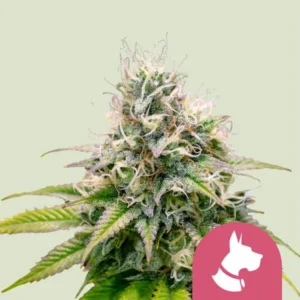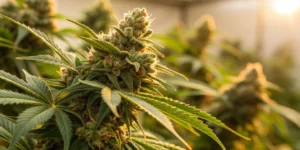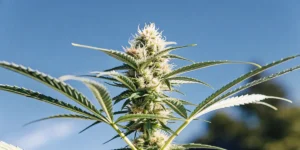


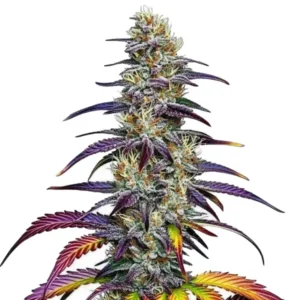
Blue Mystic is an indica-dominant feminized photoperiod strain from Royal Queen Seeds created by crossing Oregon Blueberry with Northern Light. It combines compact indoor growth, sweet fruit and candy flavors, a relatively short flowering period, and a strongly physical effect profile.
The strain contains approximately 80% Indica and 20% Sativa genetics, with THC reaching up to 18%. Indoors, Blue Mystic generally reaches 60–100 cm and can produce approximately 375–425 g/m². Outdoors, plants become much larger at around 180–220 cm and can yield approximately 400–450 g per plant under favorable conditions.
Recommended Strains
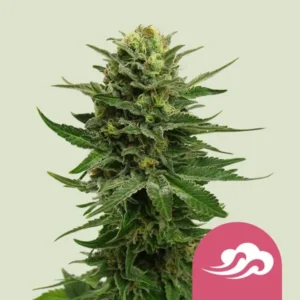
Blue Mystic

|
THC | 18% - 19% (Medium) |

|
Lineage | Oregon Blueberry x Northern Light |

|
Type | Feminized |

|
Height | 5.91 ft | 1.8 m |

|
Yield | Medium |

|
Yield Indoor | 1.23 - 1.39 oz/ft² | 375 - 425 g/m² |

|
Yield Outdoor | 14.11 - 15.87 oz/plant | 400 - 450 g/plant |

|
Flowering Time | 8 - 9 weeks |

|
Phenotype | 80% Indica / 20% Sativa |

|
Effects | Relaxed |

|
Flavors | Candy, Fruity |
Blue Dream
|
|
THC | 17% - 24% (High) |
|
|
Lineage | Blueberry x Haze |
|
|
Type | Feminized |
|
|
Height | 6.56 ft | 2 m |
|
|
Yield | High |
|
|
Yield Indoor | 1.97 oz/ft² | 600 g/m² |
|
|
Yield Outdoor | 17.64 - 24.69 oz/plant | 500 - 700 g/plant |
|
|
Flowering Time | 8 - 10 weeks |
|
|
Phenotype | 50% Indica / 50% Sativa |

|
Medical | Fatigue, Muscle Spasms, Stress |
|
|
Effects | Happy, Relaxed, Talkative |
|
|
Flavors | Berry, Blueberry, Mango, Sweet |
Blue Mystic flowers for approximately 55–60 days indoors and is generally ready outdoors during October. Most importantly, this is a photoperiod cultivar rather than an autoflower, so indoor flowering begins after the light schedule is changed to 12/12.
You can find Blue Mystic seeds and other genetics from Royal Queen Seeds at Growlantis.
Blue Mystic Strain Grow Info
| Trait | Blue Mystic |
|---|---|
| Genetics | Oregon Blueberry × Northern Light |
| Seed type | Feminized photoperiod |
| Indica / Sativa | 80% Indica / 20% Sativa |
| THC | Up to 18% |
| CBD | Medium |
| Flowering time | 55–60 days |
| Indoor height | 60–100 cm |
| Indoor yield | 375–425 g/m² |
| Outdoor height | 180–220 cm |
| Outdoor yield | 400–450 g/plant |
| Outdoor harvest | October |
| Flavor | Candy, fruity |
| Reported effect | Strong physical stone |
These specifications describe the Royal Queen Seeds Blue Mystic line currently sold through Growlantis. Individual plants can still vary according to phenotype, environment, vegetative duration, root space, training, and overall plant health.
What Is the Blue Mystic Strain?
Blue Mystic is a classic indica-dominant photoperiod hybrid created from Oregon Blueberry and Northern Light. Its genetic background combines the fruit-driven characteristics associated with Blueberry with the compact structure and heavily physical character of Northern Light.
The strain is especially notable for how differently it behaves indoors and outdoors. In controlled indoor environments, Blue Mystic remains unusually short at approximately 60–100 cm and produces relatively little vertical stretch. Outdoors, the same cultivar can reach 180–220 cm when given sufficient root space, sunlight, and seasonal development.
Blue Mystic should not be confused with Blue Mystic Auto. The strain covered in this guide requires a photoperiod change to begin flowering, while the separate autoflowering version progresses according to age.
Blue Mystic Genetics
The official Blue Mystic genetic background is Oregon Blueberry × Northern Light.
The Blueberry side contributes much of the cultivar’s sweet fruit character, while Northern Light reinforces its compact indoor structure and strong Indica influence. Together, they produce a cultivar containing approximately 80% Indica and 20% Sativa genetics.
This lineage also explains why Blue Mystic should not be described as a balanced hybrid. Its growth pattern and breeder-reported effect profile both lean much more strongly toward the Indica side.
Growers should also avoid mixing this lineage with Blue Mystic Auto genetics. Blue Mystic Auto introduces a separate autoflowering parent and follows a completely different cultivation timeline.
Is Blue Mystic Indica or Sativa?
Blue Mystic is an indica-dominant hybrid containing approximately 80% Indica and 20% Sativa genetics.
Its indoor growth strongly reflects that classification. Plants remain compact, develop limited vertical stretch, and respond well when growth is encouraged outward to create a wider canopy.
The breeder describes the finished effect primarily as a strong physical stone rather than a clear-headed, energetic, or strongly cerebral experience. Individual responses can still vary according to dose, tolerance, phenotype, cannabinoid concentration, and finished flower quality.
The 80/20 classification should therefore remain consistent across the product page, grow guide, tables, and FAQs.
Blue Mystic THC
Blue Mystic reaches up to approximately 18% THC according to the current Royal Queen Seeds specification.
This makes it a moderate-potency cultivar compared with many newer high-THC hybrids. Older or retailer-specific ranges extending into the low 20s should not replace the current breeder figure without equivalent analytical support.
Measured cannabinoid concentration can still vary according to phenotype, lighting, plant health, growing conditions, harvest maturity, drying, curing, and laboratory methodology.
For that reason, the 18% figure should be treated as the current genetic reference rather than a guarantee that every plant will produce identical results.
Blue Mystic Flowering Time
Blue Mystic has an official indoor flowering period of approximately 55–60 days, equivalent to roughly eight to nine weeks after flowering begins.
This timeframe does not include germination or vegetative growth. Blue Mystic is photoperiod dependent, so indoor growers determine the length of vegetation and then initiate flowering by switching the light schedule to 12 hours of light and 12 hours of uninterrupted darkness.
The current technical flowering range should be the main planning reference. Actual flower maturity should still determine the final harvest date, as environmental conditions and phenotype can cause small differences between individual plants.

Blue Mystic Plant Height
Blue Mystic shows a major difference between indoor and outdoor height.
Indoors, plants generally remain around 60–100 cm, making Blue Mystic particularly practical for cultivation where vertical clearance is limited. The breeder describes the plant as short and compact, with relatively little stretching compared with many other photoperiod cultivars.
Outdoors, Blue Mystic can become much larger and reach approximately 180–220 cm.
Final plant size depends on vegetative duration, root volume, training, lighting, climate, and phenotype. Indoor growers can control height further by choosing when to initiate flowering and by encouraging more lateral growth during vegetation.
Growing Blue Mystic Indoors
Blue Mystic is particularly well suited to indoor cultivation because of its naturally compact growth pattern.
During vegetative development, an 18/6 light schedule allows the plant to establish its roots and branch structure. Once the canopy has reached an appropriate size for the available space, changing to 12/12 initiates flowering.
Because Blue Mystic stretches relatively little, growers do not need to switch to flowering extremely early simply to prevent excessive height. Royal Queen Seeds specifically recommends allowing the plant enough vegetative development to build additional lateral mass before the flowering transition.
Under favorable conditions, indoor production reaches approximately 375–425 g/m². Canopy width and light distribution are therefore important because much of Blue Mystic’s productive potential comes from building outward rather than relying on vertical stretch.
Growing Blue Mystic Outdoors
Blue Mystic can be cultivated outdoors, but its seasonal requirements deserve more attention than its compact indoor appearance might suggest.
Outdoor plants can reach approximately 180–220 cm and produce around 400–450 g per plant under favorable conditions. They also need enough seasonal time to continue flowering into October.
Current breeder information is somewhat mixed regarding climate classification. The technical sheet lists Blue Mystic for short summers, while the longer cultivation description emphasizes warm Mediterranean or California-like conditions and warns about colder northern environments.
In practical terms, growers should choose an outdoor location with strong sunlight and enough warmth and weather stability to carry healthy flowers through the October harvest period without prolonged exposure to cold, wet conditions.
Blue Mystic Yield
Blue Mystic offers moderate yield potential while remaining very compact indoors.
Current technical specifications place indoor production at approximately 375–425 g/m². Outdoors, plants can produce approximately 400–450 g each under favorable conditions.
These figures represent breeder-listed potential rather than guaranteed harvest weights. Indoor yield depends on lighting, usable canopy area, vegetative duration, root space, training, environment, irrigation, and nutrition.
Outdoor production additionally depends on sunlight, climate, soil or container volume, plant size, seasonal conditions, and phenotype.
Because Blue Mystic produces little indoor stretch, giving the plant enough time to develop useful lateral growth before flowering can improve the amount of productive canopy available later.
Germinating Blue Mystic Seeds
Blue Mystic does not require a unique strain-specific germination method.
Seeds need stable warmth, moisture, oxygen, and careful handling while the first root emerges. A controlled moist paper-towel method or another suitable propagation medium can both work when conditions remain consistent.
Once germinated, the seedling can be transferred carefully into the chosen growing medium. Because Blue Mystic is a photoperiod strain rather than an autoflower, growers have more flexibility if the young plant needs additional time to establish before later training or flowering.
For broader germination guidance, see how long cannabis seeds take to germinate.
Blue Mystic Vegetative Growth
Vegetative growth is especially important with Blue Mystic because the cultivar does not stretch dramatically after flowering begins.
Indoor growers can maintain an 18/6 photoperiod while allowing roots, stems, and lateral branches to develop. There is no universal number of vegetative weeks that every Blue Mystic plant needs.
The breeder recommends giving the plant slightly more vegetative development than growers might initially expect from such a compact cultivar. The objective is to build enough lateral canopy before the 12/12 transition to compensate for the limited vertical expansion that follows.
Canopy size, available grow space, root development, and plant number should therefore determine when flowering begins rather than a rigid week-by-week calendar.
Training Blue Mystic
Blue Mystic’s short structure makes it particularly well suited to training that encourages lateral rather than vertical growth.
Royal Queen Seeds specifically recommends pinching or topping the plant to promote a bushier form. When performed during healthy vegetative growth, topping can reduce dominance of the central stem and encourage several productive branches.
Low-Stress Training can then spread those branches outward to improve light distribution across the canopy. This combination is especially useful because Blue Mystic naturally stretches very little once flowering begins.
The goal should be to use the plant’s compact genetics to create a wide, productive canopy rather than repeatedly applying training techniques without a clear structural purpose.
Blue Mystic Flowering Development
After the switch to 12/12, Blue Mystic enters an approximately 55–60 day flowering stage.
Because vertical stretch is relatively limited, much of the canopy structure should already be established before the photoperiod change. During early flowering, developing sites become increasingly visible while branches continue only modest structural expansion.
As bloom progresses, Blue Mystic develops dense flowers and its sweet fruit and candy character becomes more pronounced. Major structural training becomes less useful once buds gain weight, so later flowering should focus primarily on stable conditions, appropriate irrigation, branch support where necessary, and good airflow.
The breeder’s flowering range provides the timeline, but actual plant maturity should determine the exact harvest date.
Feeding Blue Mystic
Blue Mystic does not require one universal strain-specific NPK formula.
During vegetative growth, use a nutrient program appropriate to the chosen growing medium that supports healthy roots, stems, leaves, and lateral branch development. Once flowering has been initiated, transition toward an appropriate bloom-oriented program according to the fertilizer system being used.
There is no need to impose one fixed weekly sequence of nitrogen, phosphorus, or potassium changes simply because the plant reaches a particular age.
Nutrient concentration should instead reflect substrate, water quality, root volume, plant size, and visible response. Moderate genetic potency also does not mean the plant requires weaker or stronger feeding by default.
Watering Blue Mystic
Blue Mystic should be watered according to actual root-zone conditions rather than a fixed timetable.
Young plants initially use relatively little water because their root systems occupy only a small area. Established plants consume increasingly larger volumes as the root system and canopy develop.
Container size, substrate, temperature, humidity, light intensity, and airflow all influence irrigation frequency.
Allow enough oxygen to return to the root zone between waterings rather than maintaining permanently saturated conditions. Outdoor Blue Mystic plants can become much larger than indoor specimens, so their water demand may rise substantially during warm summer weather.
Airflow Around Blue Mystic Flowers
Blue Mystic develops dense Indica-style flowers, so good airflow becomes increasingly useful during the second half of flowering.
Indoor circulation should move air gently through, above, and below the canopy while ventilation removes accumulated heat and moisture. A wide, bushy plant can create stagnant areas between branches if lateral growth becomes excessively crowded.
Topping and canopy training during vegetation can help by creating useful spacing before flowers become dense.
Outdoor growers should also monitor prolonged autumn rain as October approaches, especially in regions where temperatures begin falling before the plant has completed maturation.
Blue Mystic Outdoor Harvest Time
Blue Mystic generally reaches outdoor maturity during October in the Northern Hemisphere.
The current breeder specification does not provide one exact week of the month, so October should remain the principal planning reference instead of inventing an early- or late-October date.
Latitude, phenotype, seasonal temperatures, sunlight, and local weather can shift final maturity.
As October approaches, growers should evaluate actual flower and trichome development while monitoring rainfall and cold conditions. The final harvest decision should combine plant maturity with the short-term weather outlook rather than relying on the calendar alone.
Blue Mystic Effects
Royal Queen Seeds describes Blue Mystic primarily as producing a strong physical stone.
This is much closer to its 80% Indica genetic profile than descriptions portraying the strain as predominantly clear-headed, energetic, creative, or focused. The experience is generally associated with heavy physical relaxation and a more deeply stoned character.
Individual responses can still vary according to dose, tolerance, phenotype, cannabinoid profile, and finished flower quality.
These effects should therefore be treated as breeder-reported characteristics rather than guaranteed outcomes or claims that Blue Mystic treats stress, pain, insomnia, or other medical conditions.

Blue Mystic Flavor and Aroma
Blue Mystic is strongly associated with sweet fruit and candy-like flavors, reflecting its Oregon Blueberry genetic background.
The breeder describes its aromatic character as intensely fresh and fruity, with Blueberry-influenced sweetness forming a much stronger part of the profile than the citrus-and-herbal description found in some older content.
Individual phenotypes can still express slightly different nuances inherited from Blueberry and Northern Light, while harvest maturity, drying, and curing also affect the finished aroma.
For a general strain guide, candy and fruit are therefore the most reliable primary flavor descriptors.
Blue Mystic vs Blue Mystic Auto
Blue Mystic and Blue Mystic Auto are separate cultivars with different genetics and cultivation requirements.
The Blue Mystic covered in this guide is a feminized photoperiod strain created from Oregon Blueberry × Northern Light. It contains approximately 80% Indica and 20% Sativa genetics, reaches up to 18% THC, and flowers for around 55–60 days after the switch to 12/12.
Blue Mystic Auto combines Blue Mystic with Short Rider genetics. It is 60% Indica and 40% Sativa, contains approximately 15–17% THC, and completes its entire automatic lifecycle in roughly 9–11 weeks from seed to harvest.
The two timelines should never be used interchangeably.
Blue Mystic Strain Review
From a cultivation perspective, Blue Mystic’s strongest characteristic is its compact indoor structure.
Plants remain around 60–100 cm while still producing approximately 375–425 g/m² under favorable conditions. Its limited stretch can be particularly useful where vertical clearance is restricted, although growers should compensate by developing enough lateral growth before the flowering switch.
Outdoors, Blue Mystic behaves very differently and can reach 180–220 cm while producing approximately 400–450 g per plant.
Its 55–60 day flowering period, sweet fruit profile, and heavily physical character make it a distinctive old-school Indica hybrid rather than a modern high-THC or rapid autoflowering cultivar.
Common Problems When Growing Blue Mystic
Confusing Blue Mystic With Blue Mystic Auto
Blue Mystic is a feminized photoperiod strain, while Blue Mystic Auto is a separate autoflowering cultivar. The photoperiod version requires a change to 12/12 to initiate bloom and flowers for 55–60 days. Applying the Auto’s seed-to-harvest timeline to Blue Mystic creates an inaccurate cultivation schedule.
Switching to Flowering According to Plant Age
There is no fixed week when Blue Mystic must begin flowering indoors. The grower controls the transition by changing the photoperiod to 12/12. Canopy size, roots, available height, plant number, and training should determine the switching point rather than a generic Week 6 or Week 7 calendar.
Underdeveloping the Canopy Before Flowering
Blue Mystic has relatively little stretch once flowering starts. Switching a very small plant to 12/12 can therefore leave less productive canopy than expected. Allowing useful lateral growth during vegetation and using topping or LST can help make better use of the strain’s naturally compact structure.
Using the Wrong THC Range
The current Royal Queen Seeds specification places Blue Mystic at up to 18% THC. Older descriptions extending the cultivar to 24% should not be treated as the current standard. Cannabinoid results can vary, but the breeder’s present technical data should remain the primary reference for the guide.
Expecting Outdoor Plants to Stay One Meter Tall
Blue Mystic is extremely compact indoors, but outdoor plants are officially listed at approximately 180–220 cm. Growers planning an outdoor crop should therefore provide substantially more space than the indoor 60–100 cm range suggests, particularly when plants receive a long vegetative season and unrestricted root development.
FAQs About Blue Mystic
What is the Blue Mystic flowering time?
Blue Mystic flowers for approximately 55–60 days after indoor plants are switched to 12/12, equivalent to roughly eight to nine weeks. Because it is a photoperiod strain, this period does not include germination or vegetation. Growers control when flowering begins according to canopy size and available space.
Is Blue Mystic indica or sativa?
Blue Mystic is strongly Indica dominant, containing approximately 80% Indica and 20% Sativa genetics. Its Oregon Blueberry × Northern Light lineage produces a compact indoor plant with relatively little stretch. Royal Queen Seeds describes its effect primarily as a strong physical stone rather than an energetic or strongly cerebral experience.
How much does Blue Mystic yield?
Blue Mystic can produce approximately 375–425 g/m² indoors and 400–450 g per plant outdoors under favorable conditions. These figures represent breeder-listed potential rather than guaranteed harvests. Lighting, sunlight, root space, vegetative duration, training, irrigation, nutrition, environment, climate, and phenotype all influence actual production.
How tall does Blue Mystic grow?
Blue Mystic generally reaches only 60–100 cm indoors but can grow to approximately 180–220 cm outdoors. Indoor growers can control final size further through vegetative duration and training. Its limited indoor stretch makes topping or lateral canopy development especially useful when growers want to maximize productive space before flowering.
Is Blue Mystic an autoflower?
No. The Blue Mystic covered in this guide is a feminized photoperiod strain and requires a change to 12/12 to initiate flowering indoors. Blue Mystic Auto is a separate cultivar with different genetics, potency, height, yield, and lifecycle specifications, so cultivation data for the two versions should not be mixed.
What is the THC level of Blue Mystic?
Royal Queen Seeds currently lists Blue Mystic at up to approximately 18% THC. This is more conservative than some older retailer ranges extending above 20%. Actual measured potency can vary with phenotype, lighting, environment, harvest maturity, drying, curing, and laboratory methodology, so the breeder figure should remain the main reference.