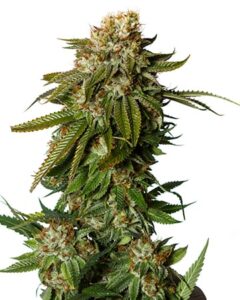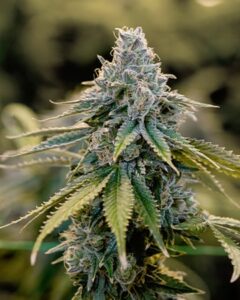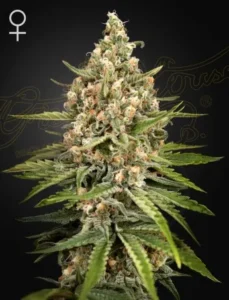
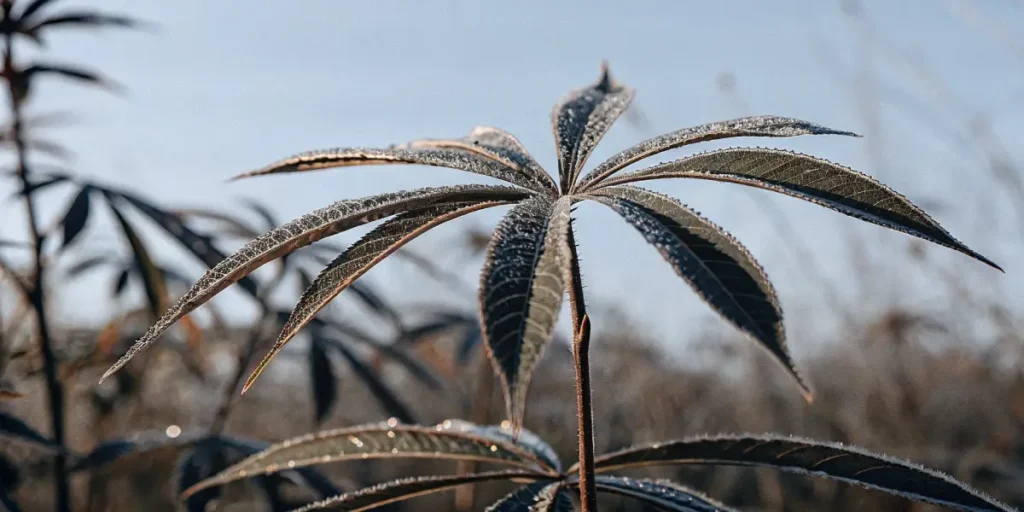

A weed plant with 5 leaves is usually completely normal. More precisely, cannabis produces compound leaves that can contain five leaflets, or “fingers,” radiating from one stalk. Leaflet number changes as the plant develops and can vary between plants, so five leaflets alone do not indicate poor health, maturity, sex, potency, or a particular cannabis strain.
Does a Weed Plant Normally Have 5 Leaves?
Yes. Cannabis leaves commonly have five leaflets, although five is not the only normal number.
Recommended Strains
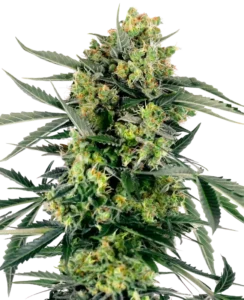
Blue Berry Skittlez Auto

|
THC | 12% - 14% (Low) |

|
Lineage | Blueberry x NL#5 x Skunk Kush x Durban x Ruderalis |

|
Type | Autoflowering |

|
Height | 2.62 ft | 0.8 m |

|
Yield | Low |

|
Yield Indoor | 0.39 - 0.66 oz/ft² | 120 - 200 g/m² |

|
Life Cycle | 10 - 12 weeks |

|
Phenotype | 60% Indica / 40% Sativa |

|
Effects | Relaxed, Tingly |

|
Flavors | Berry, Citrus, Diesel, Earthy |
Dream Sherbet Auto
|
|
THC | 18% - 20% (Medium) |
|
|
Lineage | Girl Scout Cookies x Pink Panties x Ruderalis |
|
|
Type | Autoflowering |
|
|
Height | 4.92 ft | 1.5 m |
|
|
Yield | High |
|
|
Yield Indoor | 1.64 oz/ft² | 500 g/m² |

|
Yield Outdoor | 24.69 - 26.46 oz/plant | 700 - 750 g/plant |
|
|
Life Cycle | 7 - 8 weeks |
|
|
Phenotype | 70% Indica / 30% Sativa |
|
|
Effects | Relaxed |
|
|
Flavors | Sweet, Earthy |
The familiar cannabis “leaf” is technically a palmately compound leaf. What many people call five leaves are actually five individual leaflets connected to a single petiole.
Botanical research describes Cannabis sativa leaves as palmately compound and documents considerable variation in leaflet number within a single plant. Mature foliage is commonly described with roughly 5–9 leaflets, although plants can produce fewer or more depending on developmental stage and genotype.
So seeing five fingers on a cannabis leaf is not unusual and, by itself, is not a reason to change how the plant is being managed.
Why Does My Cannabis Plant Have Five-Leaflet Leaves?
One major reason is normal plant development.
Cannabis does not emerge from the seed already producing the large multi-fingered leaves associated with mature plants. Leaf complexity changes as the shoot develops.
In one detailed morphological study, the developmental sequence looked like this:
| Position in the studied plants | Number of leaflets observed |
|---|---|
| First true leaf | 1 |
| Second true leaf | 3 |
| Third and fourth nodes | 5 |
| Fifth node | 7 |
| Sixth and later vegetative nodes | Up to 9 |
| Later developmental stages | Leaflet number decreased again |
This is an observed developmental pattern from specific plants under controlled conditions, not a schedule every cannabis plant must follow. Different accessions can progress through these stages at different rates.
The important takeaway is simpler: five leaflets are part of normal cannabis leaf development.
Is a Five-Leaf Cannabis Plant Still a Seedling?
It can be, but leaflet count alone does not define the seedling stage.
Young cannabis plants typically begin with cotyledons, followed by increasingly complex true leaves. Five-leaflet leaves can therefore appear relatively early as the plant transitions toward more established vegetative growth.
However, you should not use “five fingers” as an exact age marker.
Leaf development differs with genetics and growing conditions, and research demonstrates that leaflet number also changes later in the plant’s life cycle.
Instead of determining age from a single leaf, look at the whole plant: number of nodes, overall size, new growth and developmental stage.
Will Cannabis Leaves Go From 5 to 7 or 9 Leaflets?
Often, yes.
As juvenile cannabis plants develop, newly formed leaves frequently become more complex. A five-leaflet leaf may be followed by leaves containing seven, nine or occasionally even more leaflets.
Research published in New Phytologist describes this as a pronounced heteroblastic progression: cannabis leaf shape changes substantially from juvenile to adult development, and leaflet number generally rises along the shoot before changing again later.
There is no requirement that every plant move through exactly:
1 → 3 → 5 → 7 → 9
at identical nodes.
That sequence is useful for understanding the general pattern, not for diagnosing plants against a rigid template.
Is It Bad If Mature Cannabis Leaves Only Have 5 Fingers?
Not necessarily.
A mature cannabis plant can produce five-leaflet leaves without anything being wrong.
Cannabis leaflet number is variable enough that counting fingers should never be used alone to diagnose plant health. Some leaves on the same plant can contain different numbers of leaflets, and leaflet morphology also changes with developmental position.
What matters more is whether other symptoms are appearing.
If five-leaflet leaves are:
- normally shaped;
- appropriately colored;
- continuing to expand;
- accompanied by healthy new growth;
then the number five itself is not a problem.
If the plant is also showing yellowing, necrosis, severe deformation, stalled growth or other symptoms, investigate those signs separately rather than blaming the number of leaflets.
For example, persistent discoloration has multiple possible causes, which are better addressed in a guide specifically about yellow cannabis leaves during the vegetative stage.
Does a 5-Leaf Weed Plant Mean It Is Healthy?
No. Five leaflets are a morphological feature, not a health test.
The original version of this article treats the five-leaf stage as evidence that a cannabis plant is adapting well and developing healthily. That goes too far.
A healthy plant can produce five-leaflet leaves, but so can a plant experiencing other unrelated problems.
Likewise, producing seven or nine leaflets does not automatically prove that nutrition, irrigation, light and root conditions are optimal.
Leaflet number and plant health should therefore be evaluated separately.
Does Having 5 Leaves Tell You the Cannabis Strain?
No.
You cannot reliably identify White Widow, Northern Lights, Blue Dream or another cultivar merely because a leaf has five leaflets.
Cannabis leaf morphology does contain genetic information, and researchers have demonstrated measurable shape differences between accessions. But leaflet number also changes substantially within the same plant during development, which makes simple finger counting unsuitable for cultivar identification.
For this reason, statements such as “White Widow is a five-leaf strain” are misleading.
Many unrelated cannabis plants can produce five-leaflet leaves.
Does Five Leaves Mean Indica or Sativa?
No.
A five-leaflet cannabis leaf cannot reliably tell you whether a plant is “indica,” “sativa,” or a hybrid.
Cannabis leaf morphology varies genetically, but it also varies with developmental stage. Modern cannabis populations additionally have extensive breeding and genetic admixture, making simple visual classifications less reliable than traditional stereotypes suggest.
Five fingers are therefore not a useful indica-versus-sativa test.
The same principle applies to six, seven or nine leaflets: leaflet count alone does not establish a plant’s ancestry or expected effects.
Does a Cannabis Leaf Always Have an Odd Number of Leaflets?
Odd leaflet numbers such as 3, 5, 7 and 9 are common, but cannabis does not follow that pattern without exception.
The detailed life-cycle study discussed above even documented an eight-leaflet leaf during a developmental transition before subsequent leaves returned to odd numbers.
Individual leaves can also develop asymmetrically or differ from neighboring foliage.
So a leaf that does not fit the familiar textbook silhouette is not automatically abnormal.
If you are curious about unusual leaflet counts, Growlantis also covers the related question of a 6 leaf plant.
Is Every Plant With Five Leaflets Cannabis?
Definitely not.
Several unrelated plants produce palmately compound foliage with five leaflets.
One of the most common examples is Virginia creeper (Parthenocissus quinquefolia). Virginia Tech describes its leaves as having three to seven leaflets, usually five, with toothed margins.
That makes “five leaves + serrated edges” insufficient for identification.
Cannabis vs. Virginia Creeper
| Feature | Cannabis | Virginia creeper |
|---|---|---|
| Growth habit | Upright annual herb | Woody climbing vine |
| Leaf structure | Palmately compound | Palmately compound |
| Leaflet number | Variable, commonly 5–9 on developed leaves | Usually 5 |
| Leaflet shape | Generally narrow to lanceolate | Broader, often ovate |
| Margins | Serrated | Toothed |
| Climbing tendrils | No | Yes |
| Adhesive discs | No | Yes |
University of Maryland Extension describes Virginia creeper as a woody vine that climbs using tendrils with adhesive discs, which provides a much stronger identification clue than simply counting leaflets.
How Can You Identify a Cannabis Plant With Five Leaflets?
Use multiple characteristics instead of relying on one feature.
Cannabis commonly has:
- palmately compound leaves;
- narrow, pointed leaflets;
- clearly serrated margins;
- leaves arranged oppositely on lower nodes and increasingly alternately farther up the mature stem;
- an upright herbaceous growth habit rather than climbing tendrils.
Scientific morphological descriptions of Cannabis sativa commonly report linear-to-lanceolate leaflets with serrated margins and pointed tips.
Even these characteristics should be considered together.
Color is particularly weak evidence. Cannabis does not need to be a specific shade of “vibrant green” to be cannabis, and many unrelated species also have green serrated foliage.
Do Five-Leaflet Leaves Affect Yield or Potency?
There is no basis for predicting yield or potency from having five leaflets.
Leaflet number describes leaf morphology. Yield and cannabinoid production depend on numerous other variables, including genotype, plant development, environment and cultivation conditions.
A plant with seven or nine leaflets should not automatically be considered more vigorous, productive or potent than one currently producing five.
Likewise, switching from seven leaflets to five does not by itself mean that production potential has declined.
Count leaflets if you are interested in plant morphology, but do not use the number as a performance metric.
FAQs
Is it normal for a weed plant to have 5 leaves?
Yes. What looks like five leaves is usually one compound cannabis leaf made up of five leaflets. Five-leaflet leaves are a normal part of cannabis development. Plants can later produce seven, nine or other leaflet counts, and variation can also occur between leaves on the same plant.
Why does my weed plant only have 5 leaves?
Five leaflets alone are not evidence of a problem. Cannabis changes leaf shape as it develops, and five-leaflet foliage can occur naturally at several developmental positions. Evaluate the plant’s overall growth and other symptoms rather than assuming it should always produce seven or nine fingers.
Will my cannabis plant grow more than 5 leaves?
It may produce new leaves with seven, nine or more leaflets as vegetative development progresses. However, the exact pattern varies by genotype and developmental stage. A published life-cycle study observed increasing leaflet numbers early in development followed by decreasing numbers again later.
Does a 5-leaf cannabis plant mean indica?
No. Five leaflets cannot reliably identify a cannabis plant as indica, sativa or hybrid. Leaflet number varies throughout development and within individual plants. Although genetics influence leaf morphology, simple finger counting does not provide enough information to determine ancestry or predict cannabinoid effects.
What plant looks like weed and has 5 leaves?
Virginia creeper is a common example. It usually produces five toothed leaflets from a single point, which can superficially resemble cannabis. Unlike cannabis, however, Virginia creeper is a woody vine that climbs using tendrils and adhesive discs.
Are 5-leaf cannabis leaves a sign of a healthy plant?
Not by themselves. Five leaflets are a normal morphological pattern, but they do not prove that a plant is healthy. Judge health from overall growth plus symptoms such as discoloration, wilting, deformation, root problems or stalled development rather than using leaflet count as a health indicator.