

Full Extract Cannabis Oil, or FECO, is a highly concentrated cannabis extract intended to retain a broad range of cannabinoids and other plant compounds rather than isolate a single cannabinoid. FECO is usually thick and dark and may contain substantial THC, although composition varies. It is often compared with RSO, but neither term represents one universally standardized formulation.
What Is FECO?
FECO stands for Full Extract Cannabis Oil. It is a concentrated cannabis extract designed to preserve a broader chemical profile than highly refined products such as THC distillate or cannabinoid isolates.
Recommended Strains
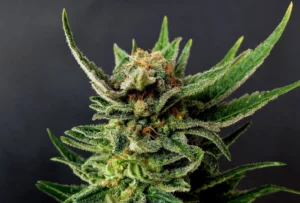
Gypsy Kush

|
THC | 16% - 18% (Medium) |

|
Lineage | Afghan x Ginger Ale x Black Domina |

|
Type | Feminized |

|
Height | 4.43 ft | 1.35 m |

|
Yield | High |

|
Yield Indoor | 1.64 oz/ft² | 500 g/m² |

|
Yield Outdoor | 22.93 oz/plant | 650 g/plant |

|
Flowering Time | 9 - 10 weeks |

|
Phenotype | 50% Indica / 50% Sativa |

|
Effects | Balanced |

|
Flavors | Sweet, Spicy, Floral |
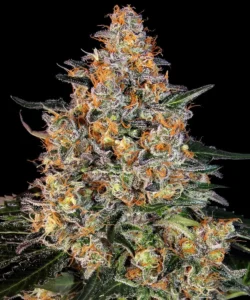
Bubba Kush Strain
|
|
THC | 29% - 30% (High) |
|
|
Lineage | Afghan Kush Landrace x OG Kush |
|
|
Type | Feminized |
|
|
Height | 5.74 ft | 1.75 m |
|
|
Yield Outdoor | 52.91 oz/plant | 1500 g/plant |
|
|
Flowering Time | 8 - 9 weeks |
|
|
Phenotype | 70% Indica / 30% Sativa |
|
|
Effects | Euphoric, Relaxed, Calming |
|
|
Flavors | Hashish, Sweet, Earthy, Spicy |
Depending on the starting material and manufacturing process, FECO can contain THC, CBD, minor cannabinoids, terpenes and other compounds extracted from cannabis. The finished oil is typically thick, sticky and dark brown or nearly black, although appearance alone cannot tell you its cannabinoid content or quality.
The word “full” is important. FECO is intended to extract a wide range of plant constituents rather than purify one compound to very high concentration. However, “full extract” and “full spectrum” are industry terms rather than guarantees that every molecule originally present in the plant survives extraction in its original concentration.
FECO at a Glance
| Feature | FECO |
|---|---|
| Full name | Full Extract Cannabis Oil |
| Product type | Concentrated cannabis extract |
| Typical appearance | Thick, dark oil |
| Main cannabinoids | Depends on starting material; often THC and/or CBD |
| Intoxicating? | Usually if it contains substantial THC |
| Full spectrum? | Generally intended to retain a broad plant profile |
| Same as RSO? | Closely related terms, sometimes used interchangeably |
| Same as distillate? | No |
| Potency | Can be very high; check the product label |
| Common formats | Syringes, capsules, oral oils, edibles and some topical products |
What Does “Full Extract” Mean?
A full extract aims to preserve a wider range of cannabis compounds than an isolate or highly refined distillate. Weedmaps describes FECO and Full Spectrum Cannabis Oil as terms commonly used for extracts intended to retain the plant’s broader cannabinoid and terpene profile.
That does not mean every FECO has the same composition. Extraction conditions, plant material, temperature, processing and storage can all change what remains in the finished oil.
A THC-rich cultivar can produce THC-dominant FECO, while CBD-rich material can produce a very different product. The word FECO therefore describes the type of extract, not one standardized THC-to-CBD ratio.
Is FECO the Same as RSO?
FECO and Rick Simpson Oil, or RSO, are closely related and the terminology is inconsistent across the cannabis industry.
Both generally describe thick, concentrated, whole-plant cannabis oils produced by extracting compounds from plant material and removing most of the extraction solvent. Some producers distinguish the products according to the solvent or processing method used, while others use FECO and RSO almost interchangeably.
For that reason, statements such as “RSO always uses one solvent and FECO always uses another” are too absolute.
The practical approach is to inspect the actual product. Look at its cannabinoid content, ingredients, extraction information and intended route of administration rather than assuming everything labeled FECO or RSO has identical chemistry.
FECO vs Distillate
FECO and cannabis distillate are very different products.
FECO is generally made with the goal of retaining a broad range of compounds from the plant. Its appearance is often dark and its composition can be chemically complex.
Distillate, by contrast, undergoes substantial refinement to concentrate particular cannabinoids. THC distillate, for example, may contain very high concentrations of THC while many other original plant compounds have been removed.
Neither approach is inherently “better.” They are different extract formats designed for different purposes.
Claims that FECO must produce superior effects simply because it contains more plant compounds go beyond what current clinical evidence can establish.
FECO vs Cannabis Tincture
A tincture and FECO may begin with similar extraction principles, but their final forms differ substantially.
A cannabis tincture generally contains cannabinoids dissolved in alcohol, glycerin or another liquid carrier. It remains fluid enough to measure with a dropper.
FECO is much more concentrated because most of the extraction liquid has been removed, leaving a thick resinous extract.
This means the same physical amount of FECO can contain considerably more cannabinoids than a dilute tincture.
The two terms should therefore not be used interchangeably.
FECO vs CBD Oil
CBD oil usually describes a product formulated primarily around cannabidiol. Depending on the product, the CBD may come from full-spectrum extract, broad-spectrum extract or CBD isolate mixed with a carrier oil.
FECO describes the extraction format rather than one cannabinoid.
A FECO product can theoretically be CBD-rich, THC-rich or contain both.
Someone looking specifically to avoid intoxication should therefore never assume that FECO is equivalent to CBD oil. The actual THC amount on the label is what matters.
How Potent Is FECO?
FECO can be extremely concentrated, but there is no universal potency.
The final cannabinoid concentration depends on the plant material and manufacturing process. Two products sold as FECO could contain very different amounts of THC and CBD.
This makes product labeling particularly important. Look for cannabinoid information expressed in measurements such as milligrams per gram, milligrams per milliliter or total milligrams in the package.
Cannabis extracts can contain far more THC than dried flower, and Health Canada warns that high-THC extracts increase the likelihood of impairment and adverse effects.
Potency should therefore never be estimated from the oil’s color, thickness or the size of a drop.
Does FECO Get You High?
A THC-rich FECO product can produce substantial intoxication.
THC can affect attention, memory, coordination, reaction time and perception, and higher exposure generally increases the likelihood of unwanted effects such as anxiety or panic.
A CBD-dominant FECO containing very little THC would behave differently, which is why the term FECO alone does not tell you whether a particular product will be strongly intoxicating.
Always check the THC concentration.
This is especially important because concentrated oils can deliver a large amount of THC in a very small physical volume.
How Is FECO Used?
Commercial FECO products can be formulated for different routes of administration, including oral products, capsules, edibles, products intended for use in the mouth and some topical preparations.
The correct route depends on the product itself.
FECO should not automatically be described as something that can be used interchangeably under the tongue, swallowed or applied to the skin. Formulation, ingredients and intended use matter.
If a regulated product provides instructions, follow those rather than assuming all concentrated cannabis oils work identically.
For medical use, Health Canada recommends considering the actual THC and CBD concentrations and product formulation with a healthcare professional rather than choosing cannabis solely by product name.

How Long Does FECO Take to Work?
Timing depends primarily on how the product is used.
When cannabis is eaten or swallowed, Health Canada reports that effects may begin in approximately 30 minutes to 2 hours, with the strongest effects developing around 2 to 4 hours later. Effects commonly last around 4 to 8 hours, although they can persist longer in some people.
Cannabis products specifically designed to dissolve under the tongue or against oral tissues can begin acting sooner. Health Canada gives an approximate onset of 15 to 40 minutes for this route, with effects potentially lasting much longer than inhaled cannabis.
Those figures are general cannabis guidance rather than FECO-specific guarantees. Individual metabolism, food, THC amount, medications and product formulation can all affect timing.
Is FECO “Full Spectrum”?
FECO is generally intended to be a full-spectrum extract, but the phrase needs some nuance.
A cannabis plant contains cannabinoids, terpenes, flavonoids, lipids, pigments and many other compounds. Extraction does not necessarily preserve every compound in precisely the same ratio found in the living plant.
Some volatile terpenes, for example, can be lost during processing.
Therefore, “full spectrum” is best interpreted as an extraction philosophy: preserving a broad chemical profile rather than intentionally isolating one cannabinoid.
It should not be interpreted as a promise that the finished extract contains every original plant molecule unchanged.
What Is the Entourage Effect?
The entourage effect is the hypothesis that multiple cannabis compounds may interact in ways that influence the overall pharmacological experience.
It is commonly used to explain why some consumers prefer full-spectrum products over isolated THC or CBD.
However, this concept is often presented much more confidently in cannabis marketing than the evidence justifies.
Research continues into interactions between cannabinoids, terpenes and other compounds, but there is not enough clinical evidence to conclude that every full-spectrum FECO product is inherently more therapeutic or effective than an isolate or distillate.
The chemical complexity is real. A guaranteed superior medical effect is not.
What Is FECO Used For?
People use concentrated cannabis oils for a wide range of reasons, including recreational use and attempts to manage symptoms such as pain, nausea, appetite problems or sleep difficulties.
That does not establish FECO itself as an approved treatment for those conditions.
In particular, there is very little clinical research evaluating FECO as a standardized product. Most medical cannabis research concerns particular cannabinoids, pharmaceutical cannabinoid preparations or cannabis products with defined THC and CBD concentrations.
Health Canada currently states that there is not enough scientific information to recommend one specific cannabis product for a particular health condition.
This distinction is important because anecdotal reports about FECO should not be presented as clinical proof.
Does FECO Treat Cancer?
There is no reliable clinical evidence that FECO cures cancer.
Cannabinoids have been investigated extensively in laboratory and animal research, and some cannabinoid medicines have recognized roles in managing specific cancer-treatment side effects.
That is different from demonstrating that concentrated cannabis oil treats cancer itself.
The National Cancer Institute states that the FDA has not approved cannabis or cannabinoids as a cancer treatment. It also notes that highly concentrated THC and CBD oils promoted as cancer cures have not been established as safe and effective anticancer therapies in clinical trials.
Dronabinol and nabilone are FDA-approved for chemotherapy-related nausea and vomiting in certain patients, but those are standardized medicines—not evidence that FECO cures cancer.
Anyone undergoing cancer treatment should discuss cannabis products with their oncology team because concentrated cannabinoids can potentially interact with other medicines.
Is FECO Good for Pain, Anxiety or Inflammation?
These claims also require caution.
Cannabis and individual cannabinoids have been studied for several symptoms and conditions, but the strength of evidence differs substantially depending on the indication, product and dose.
That evidence cannot automatically be transferred to FECO.
A product containing high levels of THC may also produce anxiety rather than reduce it in some people.
For this reason, describing FECO as a general treatment for chronic pain, anxiety, arthritis, inflammatory bowel disease or depression is too broad.
A medical claim should be based on evidence for the actual condition and product being used.
Can FECO Be Used Topically?
Some commercial cannabis preparations containing concentrated extracts are formulated for topical use.
However, simply placing any FECO product directly on the skin is not necessarily equivalent to using a professionally formulated cannabis topical.
Ingredients, concentration and skin compatibility matter.
Health Canada notes that topical cannabis products can produce localized reactions such as itching or rash.
Topical application also should not be assumed to deliver proven pain, arthritis, eczema or psoriasis treatment simply because cannabinoids are present.
Use a product according to its intended formulation and labeling.
Can You Make FECO at Home?
FECO is commonly associated with solvent-based extraction, but detailed home extraction instructions are not appropriate for a general consumer guide.
Concentrated cannabis extraction may involve highly flammable alcohol or other solvents. Improper evaporation can create fire hazards, and poorly controlled processing can leave unwanted residues or contaminants in the finished extract.
The safer option is a regulated, professionally manufactured product where legal, particularly when cannabinoid concentration and residual-solvent testing are available.
The important educational point is simply that FECO is produced by extracting compounds from cannabis and concentrating the resulting extract after removal of the processing solvent.
A consumer does not need a step-by-step solvent procedure to understand what FECO is.
How Should FECO Be Stored?
Follow the manufacturer’s instructions whenever they are available.
In general, concentrated cannabis products should be kept securely closed, protected from unnecessary heat and light and stored somewhere children and pets cannot access them.
The original packaging is useful because it preserves information about cannabinoid concentration, ingredients and intended use.
Do not transfer a highly concentrated THC extract into an unlabeled container.
Because such a small amount of concentrate can contain substantial THC, accidental ingestion may produce significant intoxication.

FECO Safety and Side Effects
FECO’s concentration is one of its defining characteristics and also one of its main safety considerations.
THC-containing cannabis can cause dizziness, drowsiness, anxiety, panic, impaired concentration, confusion and impaired coordination. Individual responses vary, sometimes considerably, even between separate occasions of use.
Cannabis can also interact with medications, which is particularly relevant for people using prescription drugs or undergoing treatment for serious medical conditions.
Do not drive or operate dangerous equipment while impaired.
Anyone considering concentrated cannabis for a health condition should discuss it with a qualified healthcare professional, especially when other medications are involved.
FECO vs RSO vs Distillate: Quick Comparison
| Product | Basic Idea | Chemical Profile |
|---|---|---|
| FECO | Concentrated whole-plant-style extract | Broad |
| RSO | Closely related concentrated cannabis oil | Broad; terminology varies |
| THC distillate | Highly refined concentrate | Primarily targeted cannabinoids |
| CBD isolate | Purified CBD | Very narrow |
| Tincture | Cannabinoids dissolved in liquid carrier | Varies |
These categories describe processing and formulation, not guaranteed medical effects.
What Is FECO? Key Takeaway
FECO, or Full Extract Cannabis Oil, is a highly concentrated cannabis extract intended to preserve a broad range of compounds rather than isolate one cannabinoid.
It is usually dark and thick and may contain very high concentrations of THC, although the exact cannabinoid profile depends on the starting material and manufacturer.
FECO and RSO overlap considerably, and their names are not standardized enough to assume a fixed difference between every product.
The most useful information comes from the actual label: THC, CBD, other cannabinoid concentrations, ingredients and intended route of administration.
FECO should also not be presented as a proven cure for cancer or a universal treatment for pain, anxiety, inflammation or other medical conditions.
FAQs About FECO
What is FECO?
FECO stands for Full Extract Cannabis Oil. It is a concentrated cannabis extract intended to retain a broad range of cannabinoids and other plant compounds instead of isolating only THC or CBD. FECO is usually thick and dark, but its exact potency and chemical composition depend on the starting cannabis material and manufacturing process.
Is FECO the same as RSO?
FECO and RSO are closely related concentrated cannabis oils, and some producers use the terms interchangeably. Others distinguish them according to solvent choice or processing technique. Because there is no universal industry standard separating every FECO from every RSO, cannabinoid content, ingredients and manufacturing information are more reliable than the product name alone.
Does FECO get you high?
THC-rich FECO can produce substantial intoxication because concentrated cannabis oils may contain large amounts of THC in a small volume. CBD-dominant FECO may behave differently. The term FECO itself does not specify potency, so always check the actual THC and CBD amounts rather than estimating strength from the oil’s appearance or texture.
What is FECO used for?
People use FECO recreationally and for various symptom-management purposes, but FECO itself is not a standardized medicine with proven effectiveness for every condition attributed to it online. Research on cannabis varies greatly by disease, cannabinoid and formulation. Product choice for medical purposes should therefore be discussed with an appropriate healthcare professional.
Is FECO a cancer treatment?
No clinical evidence establishes FECO as a cure for cancer. The National Cancer Institute states that cannabis and cannabinoids have not been FDA-approved as cancer treatments. Certain cannabinoid medicines are approved for specific chemotherapy-related side effects, but that is different from using concentrated cannabis oil to treat the underlying cancer itself.
How long does FECO take to work?
Timing depends on formulation and route. Swallowed cannabis can begin producing effects in roughly 30 minutes to two hours and may peak two to four hours later. Products specifically designed for absorption under the tongue may act sooner. THC concentration, metabolism, food, medications and individual sensitivity can all substantially change the timing.