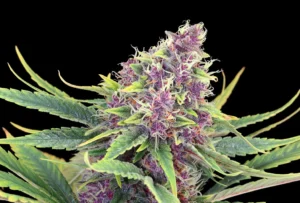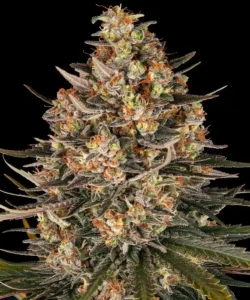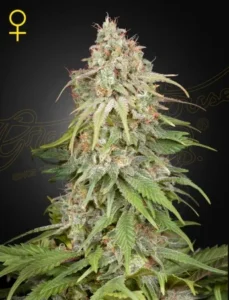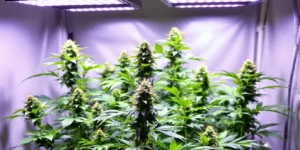


Gorilla Zkittlez is an indica-dominant cannabis hybrid that combines genetics from the Gorilla/GG4 family with Zkittlez, also increasingly called Original Z. The strain is known for vigorous branching, dense resinous flowers, fruity aromas, and a relatively short flowering period for a high-yielding photoperiod hybrid.
If you love that sweet, candy-like Zkittlez flavour, there is a fast way to grow it. Our Zkittlez Auto brings the tropical-fruit sweetness and relaxing effect of the line into a compact, self-flowering plant, a good pick for small tents, short seasons and anyone who wants a quick, colourful harvest.
Recommended Strains

Gorilla Z OG

|
THC | 26% - 27% (High) |

|
Lineage | GG4 x Original Z |

|
Type | Feminized |

|
Height | 5.25 ft | 1.6 m |

|
Yield Outdoor | 70.55 - 88.19 oz/plant | 2000 - 2500 g/plant |

|
Flowering Time | 8 - 9 weeks |

|
Phenotype | 60% Indica / 40% Sativa |

|
Effects | Powerful, Relaxed, Creative |

|
Flavors | Fruity, Berry, Pine |

Gorilla Z OG Auto
|
|
THC | 25% - 28% (High) |
|
|
Lineage | Gorilla x Zkittlez x Ruderalis |
|
|
Type | Autoflowering |
|
|
Height | 3.94 ft | 1.2 m |

|
Yield | High |

|
Yield Indoor | 1.8 - 2.13 oz/ft² | 550 - 650 g/m² |
|
|
Life Cycle | 8 - 9 weeks |
|
|
Phenotype | 70% Indica / 30% Sativa |
|
|
Effects | Relaxed, Happy, Sleepy |
|
|
Flavors | Fruity, Spicy, Woody |
However, Gorilla Zkittlez is not produced by only one breeder. Barney’s Farm, Original Sensible Seeds, PowerStrains, and other seed companies offer their own selections under the Gorilla Zkittlez or Gorilla Z name. Their genetics are closely related, but flowering time, height, yield, and THC specifications are not identical.
For that reason, this guide focuses on the characteristics shared by photoperiod Gorilla Zkittlez lines while identifying breeder-specific figures wherever they differ.
Growlantis currently carries a Barney’s Farm selection on its Gorilla Z OG product page.
Gorilla Zkittlez Grow Info at a Glance
The commercial Gorilla Zkittlez versions compared here are feminized photoperiod hybrids with a slight Indica dominance and flowering periods of roughly eight to nine weeks. The exact numbers depend on the breeder, which is why growers should check their original seed pack before using one specification as a fixed target.
| Breeder | Genetics | Indica / Sativa | Flowering | Indoor Height | Indoor Yield | THC |
|---|---|---|---|---|---|---|
| Barney’s Farm | GG4 × Original Z | 60% / 40% | 55–65 days | 100–140 cm | 700–800 g/m² | Up to 26% on current Spanish specification |
| Original Sensible Seeds | Gorilla Glue #4 × Zkittlez | 60% / 40% | 60–65 days | 100–160 cm | Around 600 g/m² | Up to 24% |
| PowerStrains | Gorilla Power × Zkittlez | 60% / 40% | 56–63 days | 100–150 cm | 650–700 g/m² | Around 24% |
These differences are large enough that a Gorilla Zkittlez grow should always be planned around the breeder rather than the strain name alone.
Gorilla Z, Gorilla Z OG and Gorilla Zkittlez: Are They the Same?
The naming around Gorilla Zkittlez has changed in recent years. Barney’s Farm still uses Gorilla Zkittlez in some markets while using Gorilla Z in others. Growlantis currently labels its corresponding product Gorilla Z OG.
For the Barney’s Farm line, these names refer to a closely related GG4 × Original Z breeding line. However, Gorilla Zkittlez is also used by other breeders, so the name by itself does not guarantee that two seed packs contain exactly the same selection.
When comparing grow reports, flowering times, THC values, or yields, check the breeder first. This is more reliable than assuming every plant called Gorilla Z, Gorilla Z OG, Gorilla Skittles, or Gorilla Zkittlez will behave identically.
Gorilla Zkittlez Genetics
The genetic concept behind Gorilla Zkittlez is the combination of a resin-heavy Gorilla line with the sweet fruit characteristics associated with Zkittlez.
Barney’s Farm currently identifies its version as GG4 × Original Z. Original Sensible Seeds uses Gorilla Glue #4 × Zkittlez, while PowerStrains identifies its selection as Gorilla Power × Zkittlez.
These lines share a similar breeding direction but should not be treated as genetically identical.
The Gorilla side is associated with heavy resin production and sturdy flower development, while the Zkittlez side contributes the sweet, fruit-focused sensory profile that defines much of the cultivar’s identity.
Growers interested in these genetic families can also explore Growlantis’ pages for GG4 and Zkittlez, while keeping in mind that those pages represent their own commercial selections rather than necessarily the exact parental plants used by every Gorilla Zkittlez breeder.
Growing Gorilla Zkittlez Indoors
Gorilla Zkittlez is well suited to indoor cultivation because most verified photoperiod versions remain within a manageable medium height when their vegetative period is controlled.
The breeder references compared here place indoor height at approximately 100–160 cm. Barney’s Farm currently lists the shortest range at 100–140 cm, while Original Sensible Seeds extends its range to 160 cm.
An 18/6 light schedule is a common option during vegetative growth. Because Gorilla Zkittlez is photoperiod-dependent, flowering can then be initiated indoors by switching to 12 hours of light and 12 hours of uninterrupted darkness.
There is no universal number of vegetative weeks that every Gorilla Zkittlez plant should receive. The correct time to switch depends on available vertical space, branch development, root volume, plant number, and the breeder selection being cultivated.
Growers working in a low tent should initiate flowering before the canopy occupies all available height, because plants normally continue stretching during the transition into bloom.

Gorilla Zkittlez Outdoor Grow
Outdoor cultivation was one of the strongest search intents previously associated with this guide, and Gorilla Zkittlez is capable of developing into a considerably larger plant outdoors than under a controlled indoor vegetative period.
A suitable outdoor position should provide strong direct sunlight, adequate root space, good drainage, and enough separation between plants for air to move through the canopy.
The exact final size and harvest window depend on the breeder. Barney’s Farm currently lists outdoor plants at approximately 140–180 cm, while Original Sensible Seeds gives a range of approximately 120–180 cm.
Outdoor harvest generally falls around late September to October among the breeder versions reviewed here. Local latitude, seasonal temperatures, rainfall, phenotype, and planting date can still move the actual harvest date.
Because Gorilla Zkittlez produces dense, resinous flowers, late-season weather deserves particular attention. Persistent rain or high humidity around mature flowers can create very different conditions inside the canopy from those measured in open air.
Gorilla Zkittlez Flowering Time
Gorilla Zkittlez generally has a flowering period of roughly eight to nine weeks, but breeder-specific figures provide a more accurate planning reference.
Barney’s Farm currently lists 55–65 days of flowering. Original Sensible Seeds lists 60–65 days, while PowerStrains gives 56–63 days.
These figures refer to the flowering stage, not the complete lifecycle from germination. Gorilla Zkittlez is a photoperiod strain, so growers determine how long the vegetative stage lasts before switching indoor plants to 12/12.
During early flowering, continued stretch and branch development are normal. As bloom progresses, flowers become denser and resin coverage increases. The breeder timeline is useful for planning, but individual plants should still be inspected before harvest rather than cut automatically on a fixed day.
For a broader look at what changes during bloom, see the Growlantis guide to the cannabis flowering stage week by week.
Gorilla Zkittlez Yield
Yield is another specification that should not be presented as universal.
Barney’s Farm currently lists approximately 700–800 g/m² indoors for its Gorilla Zkittlez selection. Original Sensible Seeds lists approximately 600 g/m², while PowerStrains gives approximately 650–700 g/m².
Outdoor figures vary even more. Barney’s Farm lists potential production of up to 2,000–2,500 g per plant under favorable conditions, whereas Original Sensible Seeds gives a much more conservative reference of approximately 700 g per plant.
That difference demonstrates why breeder yield numbers should be used for comparison rather than interpreted as a prediction of what every grower will harvest.
Actual Gorilla Zkittlez yield depends on canopy area, vegetative duration, lighting, root volume, climate, training, irrigation, nutrition, plant health, and phenotype.
Training Gorilla Zkittlez
Gorilla Zkittlez usually develops a sturdy main structure with productive lateral branches, making it suitable for canopy training when indoor height or light distribution needs to be controlled.
Low-stress training can be used during vegetative growth to move dominant branches outward and expose more of the canopy to direct light. Topping can also be useful when a grower wants several main growth points rather than allowing one central stem to dominate.
A ScrOG setup is particularly relevant for plants that develop numerous strong lateral branches. The screen allows those branches to be distributed horizontally while maintaining a more even canopy.
Training should solve a structural problem rather than becoming an objective in itself. If a plant already develops an open, balanced canopy, repeated topping, pruning, and bending may create unnecessary stress without improving the final result.
Complete most major structural work during vegetative growth or early transition rather than waiting until branches are carrying developed flowers.
Germinating Gorilla Zkittlez Seeds
Gorilla Zkittlez does not require a unique strain-specific germination technique. Stable warmth, moisture, oxygen, and careful handling are more important than the cultivar name during this stage.
The paper towel method is one option, while seeds can also be started in an appropriate propagation medium. The germination environment should remain moist without leaving the seed permanently saturated.
Once the first root emerges, handle it carefully and transfer the seed into the chosen medium without damaging the exposed root tip.
Young plants have small root systems, so they should not be watered as if the entire final container were already occupied by roots.
For a more detailed explanation, see how long cannabis seeds take to germinate.
Vegetative Growth
During vegetative growth, Gorilla Zkittlez establishes the root system and branch structure that will support flowering.
An indoor photoperiod such as 18/6 allows the grower to control how large the plants become before flowering begins. A short vegetative period produces smaller plants, while additional time allows roots and branches to expand before the switch to 12/12.
The breeder matters when planning final dimensions. A Barney’s Farm plant listed at 100–140 cm indoors should not automatically be managed according to a grow report from another selection that regularly reaches 150–160 cm.
This is the best stage for most topping, low-stress training, and ScrOG preparation. Allow the plant enough time to resume vigorous growth after any significant structural work before flowering becomes established.
Flowering Gorilla Zkittlez
Once indoor plants are switched to 12/12, Gorilla Zkittlez begins its reproductive transition and continues developing vertically before focusing progressively more energy on flower production.
As buds increase in size, the cultivar’s characteristic resin production becomes more visible. Dense flower clusters and strong branching can create a productive canopy, but they also make spacing and air movement increasingly important.
Avoid assuming that a high-yielding cultivar needs maximum-strength bloom nutrients. Flower development depends on the complete growing environment, and excessive feeding cannot compensate for poor light, weak roots, inadequate airflow, or environmental stress.
As the plant approaches its breeder-specific flowering window, monitor actual maturity rather than relying only on the calendar.

Feeding Gorilla Zkittlez
There is no verified universal Gorilla Zkittlez nutrient formula requiring one exact NPK ratio.
The previous version of this guide recommended specific ratios such as 4-2-3 during vegetative growth and 2-4-5 during flowering. Those numbers should not be presented as breeder-specific requirements.
Feed according to the substrate, nutrient system, water quality, root volume, plant size, and visible response.
Vegetative plants need sufficient nutrition to support leaves, stems, and roots, while flowering nutrition normally shifts as flower development becomes the main priority. That shift does not mean that continuously increasing phosphorus and potassium will automatically increase yield.
Leaf-tip burn, excessively dark foliage, stalled growth, or other changes can indicate that nutrient concentration needs adjustment.
Watering Gorilla Zkittlez
Watering frequency should be based on root-zone conditions rather than a fixed schedule.
A young Gorilla Zkittlez plant cannot use water at the same rate as a mature plant filling a large container. Irrigation demand increases as root volume, leaf area, temperature, and light exposure increase.
Allow the medium to retain enough air between irrigations instead of keeping the root zone continuously saturated. Good drainage is important both indoors and outdoors.
Outdoor plants can consume substantially more water during hot weather, particularly when grown directly in the ground or in large containers, but high demand does not eliminate the need for oxygen around the roots.
Airflow and Dense Gorilla Zkittlez Buds
Gorilla Zkittlez is widely selected for dense, resinous flowers, which makes canopy airflow especially relevant during later flowering.
Good circulation should move air gently above, through, and below the canopy. The objective is to prevent stagnant humid pockets rather than direct maximum fan power at the plants.
Ventilation and circulation perform different jobs. Fans move air inside the grow space, while extraction removes warm and humid air from it. One cannot completely replace the other.
Avoid assuming the strain is automatically resistant to mold simply because one breeder or grow report describes it as robust. Flower structure, humidity, air movement, rainfall, temperature, and plant spacing all affect disease risk.
When to Harvest Gorilla Zkittlez
Indoor harvest generally approaches the end of the breeder’s flowering range, which for the versions compared here falls between approximately 55 and 65 days.
That range should guide inspection rather than act as an automatic harvest date.
Individual phenotypes can mature at slightly different speeds, and environmental conditions can also affect development. Evaluate overall flower maturity and trichome development alongside the breeder timeline.
Outdoor plants generally approach maturity from late September into October, depending on breeder and climate.
Barney’s Farm currently places its outdoor harvest around the third to fourth week of September in its technical specification, while older descriptive material and other breeders extend the expected window into early October.
Is Gorilla Zkittlez Indica or Sativa?
The verified Gorilla Zkittlez versions compared in this guide are Indica-dominant hybrids, commonly listed at approximately 60% Indica and 40% Sativa.
Barney’s Farm, Original Sensible Seeds, and PowerStrains all currently use this 60/40 classification for their photoperiod versions.
That consistency does not mean every seed sold under the Gorilla Zkittlez name will necessarily use the same percentage. The cultivar name is used by several breeders, and future or less common selections may differ.
The ratio is also better understood as a breeder classification than as an exact genomic measurement or a guarantee of how every plant will grow or affect every consumer.
Gorilla Zkittlez THC and Effects
Potency varies by breeder and selection.
Barney’s Farm currently lists 26% THC in the technical specification for its Spanish Gorilla Zkittlez page, while some of its current U.S. material gives higher figures for Gorilla Z. Original Sensible Seeds lists up to approximately 24%, and PowerStrains also places its selection around 24%.
These figures should be treated as breeder reference values rather than guaranteed laboratory results from every plant.
Across breeder descriptions, the effect profile generally combines a strong initial cerebral component with substantial physical relaxation. Individual responses can still vary according to dose, tolerance, phenotype, cannabinoid composition, and finished flower quality.
Gorilla Zkittlez should not be presented as a treatment for anxiety, pain, insomnia, depression, or other medical conditions simply because individual users report those experiences.
Gorilla Zkittlez Flavor and Aroma
Sweet fruit is the characteristic most consistently associated with Gorilla Zkittlez.
The Zkittlez or Original Z side contributes candy-like, berry, and tropical-fruit characteristics, while Gorilla-derived genetics can add earthier, woody, or heavier background notes.
Exact profiles vary between breeder selections. Barney’s Farm currently emphasizes fruit, berries, and pine, while Original Sensible Seeds describes tropical fruit with a chocolate undertone. PowerStrains primarily describes its version as strongly fruity.
This variation is another reason not to present one exact terpene profile as universal unless laboratory data from the specific breeder selection is available.
Gorilla Zkittlez vs Gorilla Zkittlez Auto
Photoperiod Gorilla Zkittlez and Gorilla Zkittlez Auto should not be cultivated according to the same schedule.
The photoperiod versions covered in this guide require a change in day length indoors to initiate flowering. The grower controls the vegetative period and then switches the plants to 12/12.
Autoflowering versions flower according to age and do not require that light-cycle change. Their seed-to-harvest timelines, heights, yields, and genetics can also differ substantially.
If you are growing the automatic version, use the dedicated Gorilla Zkittlez Auto grow guide instead of applying the photoperiod timings from this article.
Common Problems When Growing Gorilla Zkittlez
Using Specifications From the Wrong Breeder
This is the most important Gorilla Zkittlez-specific mistake. Several breeders sell plants under the same or very similar names, and their flowering time, THC, height, yield, and even exact parental labels differ. Always identify the breeder before applying numerical specifications from another grow report or seed catalog.
Letting the Indoor Plant Grow Too Tall Before Flowering
Photoperiod Gorilla Zkittlez continues developing during the flowering transition. Growers with limited vertical space should initiate bloom while enough headroom remains rather than waiting until the vegetative canopy has almost reached the lighting system.
Overcrowding the Canopy
Gorilla Zkittlez can produce substantial lateral branching and dense flowers. Training should create light exposure and airflow rather than simply fitting the maximum number of branches into one area. An overly dense canopy can restrict circulation around mature flowers even when the room itself appears well ventilated.
Following a Fixed Feeding Formula
There is no universal breeder requirement for Gorilla Zkittlez to receive an exact NPK ratio. Nutrient strength should reflect the medium, water quality, fertilizer system, growth stage, and actual plant response rather than a rigid formula copied from a generic strain guide.
Treating Breeder Yield as a Guarantee
Breeder figures describe potential under favorable conditions. Final production depends on canopy size, lighting, root volume, environment, vegetative time, training, irrigation, nutrition, phenotype, and plant health. Differences between breeders also make a single universal Gorilla Zkittlez yield figure misleading.

FAQs About Gorilla Zkittlez
Are all Gorilla Zkittlez seeds the same?
Not necessarily. Gorilla Zkittlez is a strain name used by several breeders. Verified versions from Barney’s Farm, Original Sensible Seeds, and PowerStrains share Gorilla and Zkittlez ancestry, but their exact parent labels and specifications differ. Always check the breeder before using a flowering time, yield, height, or THC figure.
What is the Gorilla Zkittlez flowering time?
Most verified photoperiod Gorilla Zkittlez versions finish in roughly eight to nine weeks, but the exact breeder figure varies. Barney’s Farm currently lists 55–65 days, Original Sensible Seeds lists 60–65 days, and PowerStrains lists 56–63 days. Use the specification for your seed pack and confirm maturity before harvest.
Is Gorilla Zkittlez good for an outdoor grow?
Gorilla Zkittlez can perform well outdoors when given strong sunlight, enough root space, good drainage, and protection from prolonged wet weather. Breeder harvest windows generally fall around late September to October. Because dense, resinous flowers can retain moisture, airflow and weather monitoring become especially important as outdoor plants approach maturity.
How much does Gorilla Zkittlez yield?
Yield depends strongly on the breeder and growing conditions. Current breeder references range from about 600 to 800 g/m² indoors for the versions compared in this guide. Outdoor figures vary even more. Treat breeder yields as potential under favorable conditions, not as guaranteed results for every plant or cultivation setup.
Is Gorilla Zkittlez indica or sativa?
The verified Gorilla Zkittlez versions compared here are all indica-dominant hybrids, commonly listed around 60% Indica and 40% Sativa. However, that ratio should not be treated as universal for every seed sold under the name. Breeder identity remains important because different selections can produce different structures, potency levels, and flowering behavior.
Is Gorilla Zkittlez Auto the same as Gorilla Zkittlez?
No. Gorilla Zkittlez Auto is an autoflowering version with a different lifecycle and does not require a 12/12 light change to begin flowering. This guide focuses on photoperiod Gorilla Zkittlez. Growers using an automatic version should follow breeder-specific seed-to-harvest timing rather than the flowering schedule used for photoperiod plants.