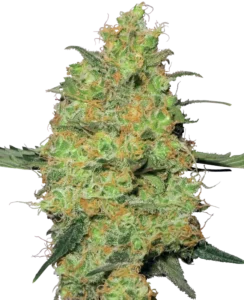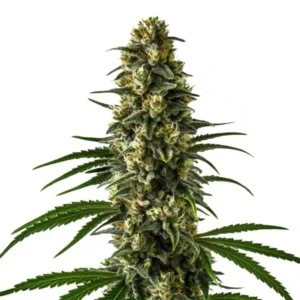


Blue Dream is a feminized photoperiod cannabis strain built around Blueberry and Haze-family genetics. However, there is no single commercial Blue Dream seed line, and the versions currently available differ in their exact Haze parent, Sativa/Indica ratio, THC, plant size and outdoor production.
Current photoperiod lines generally flower in approximately 56–70 days, or about 8–10 weeks. Published THC levels range from 16% to 28%, while indoor yield specifications remain relatively consistent at around 550–650 g/m². Outdoors, the differences are much larger, with line-specific production figures ranging from roughly 500 g to as much as 3,000 g per plant.
Recommended Strains
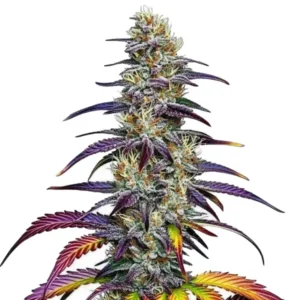
Blue Dream

|
THC | 17% - 24% (High) |

|
Lineage | Blueberry x Haze |

|
Type | Feminized |

|
Height | 6.56 ft | 2 m |

|
Yield | High |

|
Yield Indoor | 1.97 oz/ft² | 600 g/m² |

|
Yield Outdoor | 17.64 - 24.69 oz/plant | 500 - 700 g/plant |

|
Flowering Time | 8 - 10 weeks |

|
Phenotype | 50% Indica / 50% Sativa |

|
Medical | Fatigue, Muscle Spasms, Stress |

|
Effects | Happy, Relaxed, Talkative |

|
Flavors | Berry, Blueberry, Mango, Sweet |
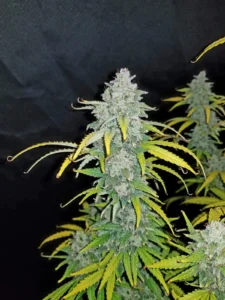
Blue Dream Autoflower
|
|
THC | 22% - 23% (Medium) |
|
|
Lineage | Blue Dream x Ruderalis |
|
|
Type | Autoflowering |
|
|
Height | 3.94 ft | 1.2 m |
|
|
Yield | High |
|
|
Yield Indoor | 1.47 - 1.97 oz/ft² | 450 - 600 g/m² |
|
|
Life Cycle | 9 - 11 weeks |
|
|
Phenotype | 25% Indica / 75% Sativa |
|
|
Effects | Happy, Creative, Relaxed |
|
|
Flavors | Cherry, Berry, Lemon, Pine |
| Blue Dream Grow Info | Current seed-line range |
|---|---|
| Genetics | Blueberry × Haze-family genetics |
| Seed type | Feminized photoperiod |
| Indica / Sativa | 50/50 to 60% Sativa / 40% Indica |
| THC | 16–28%, depending on seed line |
| Flowering time | Approx. 56–70 days / 8–10 weeks |
| Indoor height | Varies by seed line; not every version publishes a separate figure |
| Outdoor height | Tall; one current line can reach up to 400 cm |
| Indoor yield | 550–650 g/m² |
| Outdoor yield | 500–3,000 g/plant depending on seed line |
| Outdoor harvest | Early to the third week of October, depending on line |
| Common flavors | Berry, blueberry, sweet, fruity, earthy, herbal |
| Common reported effects | Happy, creative, focused, energetic, relaxed |
Growers comparing Blue Dream with other fruit-forward genetics can also explore the wider selection of Blue cannabis strain varieties, but specifications should always be checked for the exact seed line rather than assumed from the strain name alone.
Blue Dream Genetics
Blue Dream is generally associated with Blueberry crossed with Haze genetics, but the precise parentage differs between current commercial versions. Some lines use Blueberry × Haze, another uses Blueberry × Haze #1, while others use Blueberry × Super Silver Haze.
That variation matters because these are related versions of Blue Dream rather than one genetically identical cultivar sold by multiple companies. Differences in flowering time, cannabinoid specifications, plant size and yield should therefore be expected.
All of the Blue Dream versions covered in this guide are feminized photoperiod plants. Indoor growers control when flowering begins by changing the day length rather than waiting for the plant to flower automatically at a predetermined age.
Which Blue Dream Seed Line Are You Growing?
Identifying the exact Blue Dream seed line is important before planning the grow. The current 17–24% THC Blue Dream differs from the 16–20% Blue Dream line, while another Blue Dream Fem reaches higher published THC levels and the current Blue Dream Strain has substantially different indoor and outdoor height specifications.
The same principle applies to yield. One current line lists 500–700 g per plant outdoors, another up to 1,200 g, while a much larger outdoor version publishes considerably higher potential. Check the exact product before treating any specification as your expected result.
Is Blue Dream Indica or Sativa?
Blue Dream cannot accurately be assigned one universal Indica/Sativa ratio across every current seed line. The available versions range from a balanced 50% Indica / 50% Sativa hybrid to approximately 60% Sativa / 40% Indica.
The best general description is therefore a hybrid that ranges from balanced to moderately sativa dominant depending on the genetics being grown.
That difference also explains why descriptions of Blue Dream sometimes appear contradictory. A 50/50 version and a 60/40 version can legitimately carry the same commercial strain name while showing somewhat different structure and effects.
How Much THC Does Blue Dream Have?
Current photoperiod Blue Dream seed lines publish THC levels ranging from approximately 16% to 28%.
At the lower end, one version is listed at 16–20%. Another publishes 17–24%, while higher-potency versions reach approximately 26% and 28%. This makes a single statement such as “Blue Dream contains 24% THC” inaccurate when discussing the strain generally.
Published THC levels should also be treated as genetic specifications rather than guaranteed laboratory results from every harvested plant. Phenotype, plant health, lighting, maturity and post-harvest handling can all influence the final cannabinoid concentration.
Blue Dream Flavor and Aroma
Berry sweetness is the most consistent sensory theme across current Blue Dream lines. Blueberry, sweet fruit and broader berry notes appear repeatedly, reflecting the Blueberry side of the genetic family.
Beyond that shared foundation, individual lines diverge. Depending on the version, secondary descriptions include mango, earth, herbs, pine, floral notes, apple or spice.
That variation is another reason not to combine every published terpene list into one supposedly universal Blue Dream chemical profile. The common berry character is well established, while the finer aromatic details should be tied to the exact genetics.
Does Blue Dream Have One Terpene Profile?
No single terpene profile should be treated as definitive for every Blue Dream seed line. Different current versions publish different combinations of compounds, and some provide considerably more terpene information than others.
For a general grow guide, it is more accurate to describe the verified sensory overlap between the available lines rather than merging multiple breeder terpene lists. Sweet berry and fruit characteristics are common, while earthy, herbal, pine, floral and spicy notes vary between versions.

Blue Dream Flowering Time
Current photoperiod Blue Dream lines generally flower for approximately 56–70 days, or around 8–10 weeks, depending on the version.
This is one of the most important distinctions to understand when planning a Blue Dream grow. Flowering time does not mean total time from seed to harvest. Because these plants are photoperiodic, indoor growers choose how long the vegetative stage lasts before changing the light schedule.
After the desired plant size and canopy have developed, an indoor transition to approximately 12 hours of light and 12 hours of uninterrupted darkness initiates flowering. From that point, the line-specific flowering range becomes the main calendar reference.
If you want a broader view of how cannabis develops after the light-cycle change, the flowering stage week-by-week guide covers the main structural changes that occur as flowers form and mature.
Blue Dream Height and Plant Structure
Blue Dream should generally be treated as a plant with significant vertical potential, but one universal height figure would be misleading.
One current seed line has a separate indoor specification of approximately 100–120 cm and can reach up to 400 cm outdoors. Other versions publish final heights around 150–200 cm or simply classify the plant as tall without providing separate indoor and outdoor measurements.
Indoor growers should therefore plan around their exact genetics and available vertical clearance rather than assuming that every Blue Dream finishes at two meters.
The plant’s tendency toward vigorous vertical and lateral growth also makes canopy management useful. Leaving enough space for flowering stretch is particularly important when plants have been allowed a long vegetative period.
Growing Blue Dream Indoors
Indoor yield is one area where the current Blue Dream lines are relatively consistent. Published specifications fall around 550–650 g/m² under suitable conditions.
That range still represents yield potential rather than a guaranteed harvest. Lighting, canopy coverage, plant density, vegetative duration, root volume, environmental stability and overall plant health all influence how closely an individual grow approaches the published figures.
Blue Dream’s height makes space management particularly important. The flowering transition should begin while enough vertical clearance remains for additional growth. Growers using taller seed lines should not wait until the canopy has already filled the entire available space before changing the photoperiod.
Rather than prescribing one temperature, humidity percentage or lamp wattage as uniquely correct for Blue Dream, maintain an environment appropriate for healthy cannabis growth and adjust it according to the actual canopy, equipment and plant response.
Growing Blue Dream Outdoors
Outdoor Blue Dream is where the differences between seed lines become especially important. Current published yield figures range from approximately 500–700 g per plant in one version to around 600 g, up to 1,200 g and, in an especially large outdoor line, as much as 3,000 g per plant under favorable conditions.
Plant size varies just as dramatically. One current version can reach approximately four meters outdoors, while others publish substantially smaller final heights. Root space, sunlight, vegetative season length and genetics therefore have a major impact on the final structure.
Outdoor harvest generally falls between early October and the second or third week of October, depending on the seed line. Local latitude, weather and phenotype can move the actual finishing point, so check the specification for the exact version being grown.
Large plants also need enough horizontal spacing. Even when a Blue Dream line is described as resistant to certain fungal problems, dense overlapping branches can still create humid microclimates as flowering progresses.
Blue Dream Yield
Current indoor Blue Dream specifications generally cluster between 550 and 650 g/m², making the indoor production range relatively straightforward to describe.
Outdoor yield is much less uniform. Current line-specific figures span approximately 500 to 3,000 g per plant, and that range should not be reduced to a misleading average.
The exceptionally high upper figures belong to genetics capable of becoming very large outdoors. A smaller Blue Dream plant grown in a container cannot reasonably be expected to perform like a multi-meter plant with extensive root space in favorable outdoor conditions.
For meaningful yield planning, match the number to the exact seed line and then consider how closely the planned environment resembles the conditions required for that plant to reach its published potential.
How to Germinate Blue Dream Seeds
Blue Dream does not require a unique strain-specific germination technique. Seeds need controlled moisture, suitable warmth and enough oxygen while avoiding prolonged saturation.
A damp paper-towel method can be used to observe root emergence before transplanting, while direct germination in a suitable starting medium reduces the amount of handling. Whichever method is chosen, the aim is consistent moisture rather than soaking the seed continuously.
Once a root has emerged, transfer the seed carefully and avoid damaging the new taproot. The cannabis seed germination temperature and humidity guide covers environmental management and the differences between common starting methods in more detail.
Vegetative Growth
Blue Dream is photoperiodic, so there is no universal four-, five- or six-week vegetative stage. Indoor growers decide when flowering begins.
That flexibility is useful but also creates one of the main cultivation challenges. A tall Blue Dream plant allowed to vegetate for too long may become difficult to manage once flowering stretch begins.
Use vegetative growth to establish the amount of canopy the available space can support. Plants in smaller environments can be transitioned earlier, while growers with more vertical and horizontal room may allow additional development.
The objective should be a healthy root system and useful branch structure rather than reaching a predetermined week on a calendar.
Training Blue Dream
Training is particularly relevant to Blue Dream because several current seed lines are tall and respond well to canopy management.
Low-stress training can reposition vigorous branches horizontally and spread growth across the available footprint. Topping during vegetative growth is another practical option where the plant is healthy and has enough recovery time before flowering.
ScrOG is also a reasonable strategy for taller Blue Dream lines because a screen can distribute branches across a wider area while controlling vertical growth. Some line-specific breeder guidance explicitly recommends this approach.
Later in flowering, support can become more important than continued training. Heavy lateral branches may benefit from a trellis, stakes or ties as flower mass increases.

Flowering Development
The first part of flowering is a transition rather than an immediate stop in vegetative growth. Blue Dream can continue adding height as flowering sites establish, making earlier canopy planning especially useful.
During mid flowering, the priority shifts increasingly toward keeping the canopy organized while flowers gain mass. Branches that were spread successfully during vegetative growth should have enough separation for light and air to penetrate the plant structure.
In late flowering, use the expected timeline for the exact seed line as a reference while inspecting actual flower maturity. Avoid assuming that every Blue Dream must be harvested on exactly the same day simply because the products share a name.
Feeding Blue Dream
Blue Dream does not have one universal strain-specific nutrient schedule.
Feeding requirements depend on the growing medium, fertilizer system, water quality, container size, root development and the actual response of the plant. A vigorously growing plant may consume more nutrients than a smaller one, but that does not mean every Blue Dream should automatically receive a heavy feed.
During flowering, follow the nutrient system being used rather than assuming that large increases in phosphorus or potassium will automatically increase bud size, resin or terpene production.
Leaf-tip burn, excessively dark foliage, progressive discoloration or stalled growth provide more useful information than a generic Blue Dream feeding calendar.
Watering Blue Dream
Avoid watering Blue Dream according to a rigid schedule such as every two or three days. Water demand changes continuously as roots and canopy size develop.
In container grows, substrate moisture and pot weight are generally more useful indicators than the calendar. Allow adequate drainage and avoid keeping the root zone permanently saturated.
Outdoor water demand can become considerably higher when a tall Blue Dream plant develops a large canopy during warm weather. Even then, irrigation should respond to soil conditions and weather rather than an arbitrary daily amount.
Reducing water near harvest should not be presented as a guaranteed method for increasing flavor, resin or potency.
Airflow and Mold Risk
Mold resistance differs between Blue Dream seed lines. Some current versions are specifically described as resistant to mildew or fungal problems, while another breeder warns growers to watch for mildew.
This means Blue Dream should not be described universally as either mold resistant or mold sensitive.
Regardless of genetics, large flowering plants benefit from enough spacing to prevent extremely congested branches. Air should be able to move through the canopy rather than only across the top of the plants.
As flowers become denser, inspect internal sections of the canopy and avoid assuming that a room-level humidity measurement represents conditions inside every flower.
Common Blue Dream Growing Problems
Excessive height is one of the most predictable practical problems, particularly indoors. Growers should account for flowering stretch before changing the light schedule and use training where necessary to keep productive growth within the usable light footprint.
Overwatering and overfeeding are broader cultivation problems rather than unique Blue Dream weaknesses. Diagnose them from actual root-zone and plant symptoms instead of assuming the strain requires a predetermined watering or fertilizer schedule.
Outdoor growers also need to account for scale. A seed line capable of becoming several meters tall can require substantial root space, branch support and canopy spacing, while a smaller line may have very different requirements.
Pest and fungal susceptibility should be evaluated according to the exact genetics rather than assigning one universal resistance rating to Blue Dream.
Blue Dream vs Blue Dream Auto
The Blue Dream covered in this guide is feminized photoperiod cannabis. Indoor growers control when flowering starts by changing the day length.
Blue Dream Auto is different. Autoflowering lines contain genetics that allow flowering to begin according to plant age instead of requiring the same photoperiod transition.
That changes the entire cultivation timeline. For example, one current Blue Dream Auto line completes its full seed-to-harvest cycle in approximately 9–10 weeks, whereas 8–10 weeks in a photoperiod Blue Dream usually refers only to flowering.
Height and yield are also different, so autoflower specifications should never be transferred into this guide simply because both products contain “Blue Dream” in the name.
When to Harvest Blue Dream
Indoor harvest timing depends on the seed line, with current flowering specifications ranging approximately from 56 to 70 days.
Outdoors, current references generally place Blue Dream harvest in October, from around the beginning of the month through the second or third week depending on the genetics.
These dates provide planning windows rather than mandatory harvest days. As the expected period approaches, inspect actual flower development and trichome maturity rather than cutting automatically because a particular number of days has passed.
Avoid applying one rigid trichome ratio to every Blue Dream phenotype. Plant maturity, seed line and desired harvest characteristics can vary.
Blue Dream Effects
Effects differ somewhat between current Blue Dream lines, but recurring breeder descriptions include happy, creative, focused, energetic, uplifting, sociable and relaxing characteristics.
Because the current genetics range from balanced 50/50 hybrids to 60% Sativa lines and from 16% to 28% published THC, it is reasonable to expect meaningful variation between versions.
Individual response also varies with dose, tolerance and the chemical profile of the harvested flowers. These descriptions should therefore be treated as reported characteristics rather than guaranteed outcomes or medical benefits.

Blue Dream FAQs
How long does Blue Dream take to flower?
Current photoperiod Blue Dream seed lines generally flower in about 56–70 days, or roughly 8–10 weeks, depending on the version. This figure refers only to flowering. Total seed-to-harvest time is longer because the grower decides how long the plant remains in vegetative growth before switching the indoor light cycle.
How much does Blue Dream yield outdoors?
Outdoor Blue Dream yield varies dramatically by seed line. Current published figures range from about 500–700 g per plant in one line to 1,200 g and even 3,000 g per plant in others. These are breeder specifications under favorable conditions, not guaranteed harvests, so the exact version matters greatly.
Is Blue Dream Indica or Sativa?
Blue Dream is not genetically identical across every current seed line. Some versions are listed as balanced 50/50 hybrids, while others are approximately 60% Sativa and 40% Indica. The safest description is a hybrid that ranges from balanced to moderately sativa-dominant, depending on the specific genetics being grown.
How much THC does Blue Dream have?
Published THC levels vary substantially between current Blue Dream seed lines. Current official figures extend from about 16–20% in one version to 17–24%, up to 26%, and 28% in another. A single THC percentage should therefore never be presented as universal for every Blue Dream seed sold under the same name.
How tall does Blue Dream grow?
Blue Dream is generally a tall photoperiod plant, but exact height depends on the seed line and growing environment. One current line is listed at 100–120 cm indoors and up to 400 cm outdoors, while others publish final heights around 150–200 cm or simply classify the plant as tall.