
Cannabichromene (CBC) is a naturally occurring, non-intoxicating phytocannabinoid found in Cannabis sativa. It forms mainly from cannabichromenic acid (CBCA) after decarboxylation and does not produce the THC-like high associated with CB1 activation. CBC has shown anti-inflammatory, analgesic, dermatological, and neurological activity in preclinical research, but human evidence remains limited and no therapeutic benefit is clinically established.
What is cannabichromene (CBC)?
Cannabichromene, usually abbreviated CBC, is one of the many phytocannabinoids produced by Cannabis sativa. It was identified in the 1960s and belongs to the same broad chemical family as THC, CBD, CBG, and CBN, although its molecular structure and pharmacology are different.
Recommended Strains
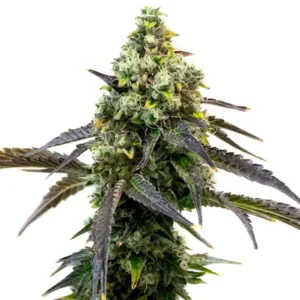
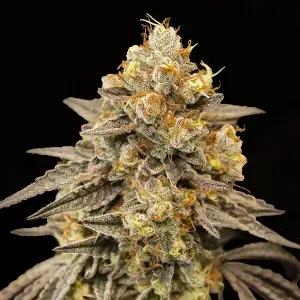
Cafe Racer

|
THC | 25% (High) |

|
Lineage | Grandaddy Purple x GSC |

|
Type | Feminized |

|
Height | 6.23 ft | 1.9 m |

|
Yield | Medium |

|
Yield Indoor | 1.15 - 1.47 oz/ft² | 350 - 450 g/m² |

|
Yield Outdoor | 24.69 - 28.22 oz/plant | 700 - 800 g/plant |

|
Flowering Time | 8 - 10 weeks |

|
Phenotype | 30% Indica / 70% Sativa |

|
Medical | Fatigue, Muscle Spasms, Stress |

|
Effects | Happy, Relaxed, Talkative |

|
Flavors | Citrus, Earthy, Grape |
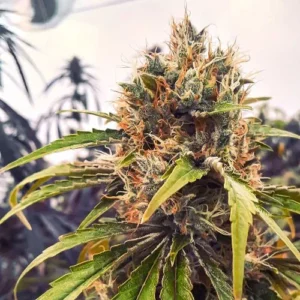
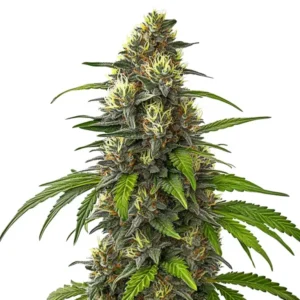
CBG-Force
|
|
Lineage | Research Genetics |
|
|
Type | CBG Feminized |
|
|
Height | 3.94 ft | 1.2 m |
|
|
Yield | Medium |
|
|
Yield Indoor | 1.31 - 1.47 oz/ft² | 400 - 450 g/m² |
|
|
Yield Outdoor | 17.64 oz/plant | 500 g/plant |
|
|
Flowering Time | 7 - 9 weeks |
|
|
Phenotype | 60% Indica / 40% Sativa |
|
|
Effects | Happy, Relaxed |
|
|
Flavors | Sweet, Fruity, Earthy, Vanilla |
CBC is usually described as a minor cannabinoid because it tends to occur at lower concentrations than dominant cannabinoids such as THC or CBD in most modern cannabis products. That doesn’t mean it’s biologically unimportant, and researchers have become increasingly interested in CBC because laboratory and animal studies suggest activity across several molecular targets.
The important distinction is that scientific interest isn’t the same as demonstrated clinical benefit. Much of what appears online about CBC currently extrapolates far beyond what has actually been tested in humans.
Is CBC psychoactive?
CBC is generally described as non-intoxicating because it doesn’t produce the characteristic THC-like high associated with strong activation of CB1 receptors in the brain.
Calling it completely “non-psychoactive” is less precise. A compound can influence biological pathways involving the nervous system without producing intoxication. The better consumer-facing distinction is that CBC is not known to cause the typical euphoric cannabis high produced by delta-9 THC.
This doesn’t automatically make CBC safer than THC or establish that isolated CBC can be used freely without side effects. Its human pharmacology and safety profile remain much less thoroughly characterized than those of better-studied cannabinoids.
How is CBC made in the cannabis plant?
Cannabis doesn’t primarily synthesize large quantities of neutral CBC directly. Its biosynthetic pathway begins with cannabigerolic acid (CBGA), an important precursor used by the plant to produce several cannabinoid acids.
CBGA can be converted by specialized enzymes into THCA, CBDA, or cannabichromenic acid (CBCA). CBCA can subsequently lose carbon dioxide through decarboxylation, producing neutral CBC. Heat can accelerate this conversion, although decarboxylation can also occur gradually through processing and storage.
The relationship can be simplified as:
CBGA → CBCA → CBC
That pathway also explains why CBC and CBG shouldn’t be treated as interchangeable compounds. CBG comes from decarboxylated CBGA, whereas CBC is downstream of CBCA.
CBC vs THC
The most obvious difference between CBC and THC is intoxication.
Delta-9 THC strongly engages CB1 receptors and can produce euphoria, altered perception, impaired memory, changes in coordination, and other characteristic cannabis effects. CBC has very different receptor activity and doesn’t appear to produce the same THC-like intoxicating state.
That doesn’t mean CBC is simply “THC without the high.” The two molecules have different pharmacological profiles, and research into CBC remains much less developed.
It’s therefore misleading to advertise CBC primarily as a way to obtain all of THC’s therapeutic benefits without psychoactive effects. Those equivalent therapeutic benefits haven’t been established.
CBC vs CBD
CBC and CBD are both generally considered non-intoxicating phytocannabinoids, but they’re different molecules with different receptor profiles and very different levels of research.
CBD has been studied extensively in humans and has approved pharmaceutical applications for specific seizure disorders. CBC research, by comparison, remains dominated by cellular experiments, animal studies, receptor assays, and early pharmacokinetic work.
They also shouldn’t be assumed to work synergistically simply because both appear in cannabis. Some experiments have examined CBC and CBD together, but that isn’t enough to establish that combining them reliably produces stronger effects in humans.
CBC vs CBG
CBC and CBG share a biosynthetic connection through CBGA but are chemically distinct cannabinoids.
CBGA is converted directly into several cannabinoid acids, including CBCA. Decarboxylation of CBGA yields CBG, while decarboxylation of CBCA yields CBC. Their pharmacological targets also differ, so products rich in CBG shouldn’t automatically be described as CBC-rich.
This is particularly relevant to the current article, which features a CBG-specific cultivar as though it provided evidence about CBC. A product being bred for one minor cannabinoid doesn’t demonstrate meaningful concentrations of another.

How does CBC work in the body?
CBC pharmacology is more complicated than the common claim that it simply “binds to receptors that control pain and inflammation.”
Laboratory studies have found activity involving TRPA1 and other transient receptor potential channels, while research into cannabinoid receptors has produced a more nuanced picture. Some experiments indicate selective CB2 activity, particularly for the naturally relevant (-)-CBC enantiomer, while direct CB1 activity appears comparatively weak.
A 2026 review summarizes CBC as having relatively limited conventional CB1/CB2 engagement alongside significant activity at several TRP channels and possible indirect effects on endocannabinoid signaling.
These receptor experiments help researchers understand possible mechanisms. They don’t by themselves show that taking CBC treats pain, inflammation, anxiety, or another condition in people.
What are the potential benefits of CBC?
CBC has attracted research interest for inflammation, pain, skin biology, neurological processes, mood, antimicrobial activity, and several other areas. However, nearly all of those proposed benefits remain preclinical.
The appropriate wording is therefore “potential effects being investigated,” not “CBC benefits” presented as proven therapeutic outcomes. The most recent comprehensive review emphasizes this translational gap and identifies the lack of clinical efficacy data as one of the central limitations in CBC research.
CBC and inflammation
Animal research provides some evidence that CBC can affect inflammatory responses. For example, a mouse study involving experimentally induced arthritis found changes in swelling when CBC and CBD were investigated individually and together. The combination produced stronger effects on some outcomes, but the experiment involved mice rather than patients with arthritis.
More recent animal research continues to examine minor cannabinoids in inflammatory and neuropathic pain models, reinforcing that this remains an active preclinical field rather than an established treatment indication.
It would therefore be inappropriate to tell readers that CBC can currently be used to manage arthritis or chronic inflammatory disease.
CBC and pain
CBC has produced antinociceptive or pain-related effects in some animal experiments, but evidence is mixed and strongly dependent on the model, dose, and experimental design.
Older mouse research, for example, found relatively weak analgesic effects from CBC compared with THC and also examined interactions between the two cannabinoids.
These findings justify continued investigation. They don’t establish an effective human CBC dose, prove superiority to conventional analgesics, or justify describing CBC as a clinically validated pain reliever.
CBC and acne or skin health
One frequently cited CBC study investigated cultured human sebocytes, cells involved in producing skin sebum. Researchers found that CBC influenced lipid production and inflammatory responses under experimental conditions, leading them to propose CBC and several other phytocannabinoids as candidates for further acne research.
That’s promising laboratory evidence, but it wasn’t a clinical trial involving people with acne.
The current article turns this finding into a suggestion that CBC can be incorporated into topical products for treating skin conditions. I’d stop one step earlier: CBC has shown potentially relevant effects in cultured skin cells, and clinical studies would be needed to establish whether those effects translate into useful acne treatments.
CBC and neurogenesis
CBC is sometimes marketed as a cannabinoid that “promotes neurogenesis.” That description overstates what has actually been demonstrated.
A 2013 experiment exposed mouse adult neural stem/progenitor cells to CBC in vitro and found changes in cell viability and differentiation-related signaling. Later cellular work has also reported changes in molecular markers associated with neuronal differentiation.
Neither experiment showed that consuming CBC causes new brain cells to form in humans or prevents neurodegenerative disease.
That distinction should be explicit because the current article jumps from cellular research to possible “brain health” and neurodegenerative-disease benefits.
CBC and depression or mood
There’s emerging preclinical interest in CBC and mood, but evidence remains far too preliminary to recommend it for depression.
A 2025 study reported antidepressant-like behavioral effects in a mouse stress model alongside computational analyses of potential molecular targets. The researchers themselves emphasized the need for further laboratory and clinical assessment.
That’s very different from saying CBC has a “stabilizing effect on mood,” as the current page does. CBC shouldn’t currently be presented as a treatment or complementary therapy for depression or anxiety.
What does human research on CBC show?
Human CBC data exist, but they’re extremely limited compared with CBD or THC.
One randomized pilot study measured CBC pharmacokinetics in 43 participants who received a cannabis oil containing CBC alongside much larger amounts of CBD and smaller amounts of THC. Researchers were able to characterize CBC concentrations in blood and how exposure changed with dose.
Importantly, that was principally a pharmacokinetic study, not proof that CBC treats pain, inflammation, acne, depression, or another condition.
The distinction matters because saying “CBC has been studied in humans” can sound much stronger than the actual evidence. We know something about how CBC is absorbed and measured in people; we don’t yet have robust clinical evidence establishing therapeutic efficacy for the conditions commonly associated with it online.
Does CBC have an entourage effect with THC or CBD?
Possibly, but it hasn’t been clinically established.
The “entourage effect” proposes that combinations of cannabinoids, terpenes, or other cannabis constituents may sometimes behave differently from isolated compounds. CBC has been examined alongside THC and CBD in preclinical experiments, including animal inflammation studies.
However, a review of minor-cannabinoid pharmacology notes that definitive experimental support for broad cannabis synergy claims remains limited.
The current article goes much further, stating that CBC amplifies CBD’s anti-inflammatory effects and moderates THC-related anxiety or paranoia. Those statements should be removed unless human trials eventually demonstrate those specific outcomes.
Are there CBC-rich cannabis strains?
CBC concentration varies among cannabis plants, but there’s no simple list of famous commercial strains that can reliably guarantee high CBC.
Cannabinoid composition reflects genetics as well as plant development, growing conditions, harvest, processing, and the specific phenotype being tested. Commercial cannabis strain names aren’t reliable enough to guarantee an exact cannabinoid profile across different breeders and batches.
That means White Widow, Girl Scout Cookies, Runtz, or any other famous strain shouldn’t be described as CBC-rich without batch-specific laboratory evidence.
The current article recommends White Widow Auto, Girl Scout Cookies, Lemon Tree x Zkittlez, Runtz Auto, Cafe Racer, and CBG Force in a CBC guide without demonstrating meaningful CBC concentrations in those products. I’d remove all of them.
If someone specifically wants a CBC-rich product, a cannabinoid laboratory report showing measured CBC or CBCA is much stronger evidence than the strain name.
Can growing conditions increase CBC?
Cannabinoid production is influenced by both genetics and environment, but there’s no simple cultivation recipe that reliably turns an ordinary cultivar into a CBC-rich one.
The existing article suggests manipulating light, nutrients, watering, pruning, harvest timing, and other cultivation variables to “maximize CBC.” Those recommendations are too speculative without a CBC-producing genotype and analytical measurements.
Genetics determine whether the plant has the biochemical potential to produce substantial CBCA in the first place. Environmental conditions can influence cannabinoid expression, but growers can’t confirm CBC concentration by observing trichomes or plant appearance.
If CBC is the actual breeding objective, chemical testing throughout selection is far more informative than generic cultivation optimization.
Is CBC safe?
CBC’s safety profile in humans isn’t characterized well enough to make strong claims about long-term use, ideal doses, pregnancy, interactions, or risks in specific medical populations.
The small human pharmacokinetic study demonstrates that CBC can be measured following oral administration in a multi-cannabinoid preparation, but it doesn’t establish comprehensive safety for isolated CBC at every dose or over long periods.
The 2026 scientific review specifically identifies toxicology, drug interactions, formulation, and limited clinical translation as areas requiring further research.
For that reason, the absence of THC-like intoxication shouldn’t be translated into “CBC is safe.”
Can you take CBC every day?
There isn’t enough evidence to establish an evidence-based daily CBC regimen.
The current article recommends incorporating CBC tinctures, topicals, edibles, or vapes into a wellness routine and says consistency can increase effectiveness. That recommendation has no established clinical basis.
Researchers haven’t yet determined standardized therapeutic doses for isolated CBC across specific conditions, nor is there robust evidence that taking it consistently produces greater health benefits.
CBC may eventually have useful pharmaceutical or wellness applications. For now, those applications remain areas of investigation rather than established protocols.
Cannabichromene (CBC): bottom line
Cannabichromene is a real and scientifically interesting minor cannabinoid, but its reputation has moved faster than the clinical evidence.
CBC is produced mainly through decarboxylation of CBCA, which itself derives from CBGA. It’s not known to produce the characteristic THC-like high and interacts with molecular targets including TRP channels and, under some experimental conditions, CB2 receptors.
Preclinical research has produced interesting findings involving inflammation, pain, sebaceous skin cells, neuronal models, and mood-related animal experiments. Human pharmacokinetic data also exist.
What’s still missing is robust clinical evidence showing that isolated CBC safely and effectively treats those conditions in people.
That makes the most accurate description of CBC straightforward: promising, biologically active, non-intoxicating, and still understudied.

FAQs about cannabichromene (CBC)
What is cannabichromene (CBC)?
Cannabichromene, or CBC, is a naturally occurring phytocannabinoid produced by Cannabis sativa. It develops primarily when cannabichromenic acid, or CBCA, undergoes decarboxylation. CBC is generally found at lower concentrations than THC or CBD and is considered a minor cannabinoid, although abundance varies considerably among cannabis chemovars.
Does CBC get you high?
CBC isn’t known to produce the characteristic intoxicating high associated with delta-9 THC. Its interaction with CB1 receptors is much weaker and pharmacologically different from THC. However, “non-intoxicating” is more precise than assuming CBC has no effects on the nervous system at all, because its pharmacology involves several biological targets.
What are the benefits of CBC?
CBC has shown potentially relevant anti-inflammatory, analgesic, dermatological, neurological, and other effects in laboratory and animal studies. Those findings make it an interesting research compound, but they don’t establish equivalent medical benefits in humans. Robust clinical efficacy trials are still lacking, so therapeutic claims should remain preliminary.
Is CBC better than CBD?
There’s no evidence that CBC is generally better than CBD. They’re different cannabinoids with different pharmacology and dramatically different research bases. CBD has considerably more human clinical evidence, while much of the interest in CBC still comes from cellular, receptor, animal, and early pharmacokinetic studies.
Is CBC good for pain and inflammation?
Animal studies have reported pain- and inflammation-related effects from CBC, including experiments involving inflammatory models and combinations with CBD or THC. These results justify further research but don’t establish CBC as a clinically proven treatment for arthritis, chronic pain, or inflammatory disease in humans.
Are there cannabis strains high in CBC?
Some cannabis plants can produce more CBCA and CBC than others, but commercial strain names don’t guarantee high CBC concentrations. Genetics, phenotype, cultivation, harvest, and processing all affect final chemistry. If CBC content matters, use batch-specific cannabinoid testing rather than assuming that a familiar strain name indicates a CBC-rich product.