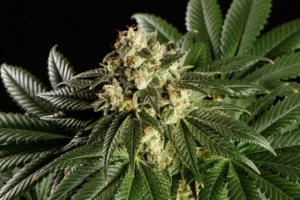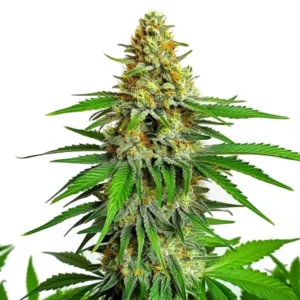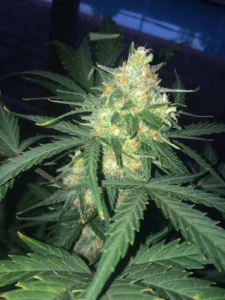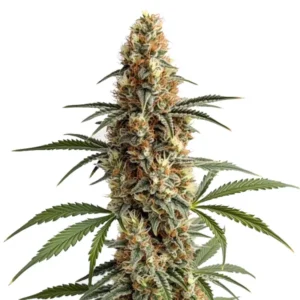
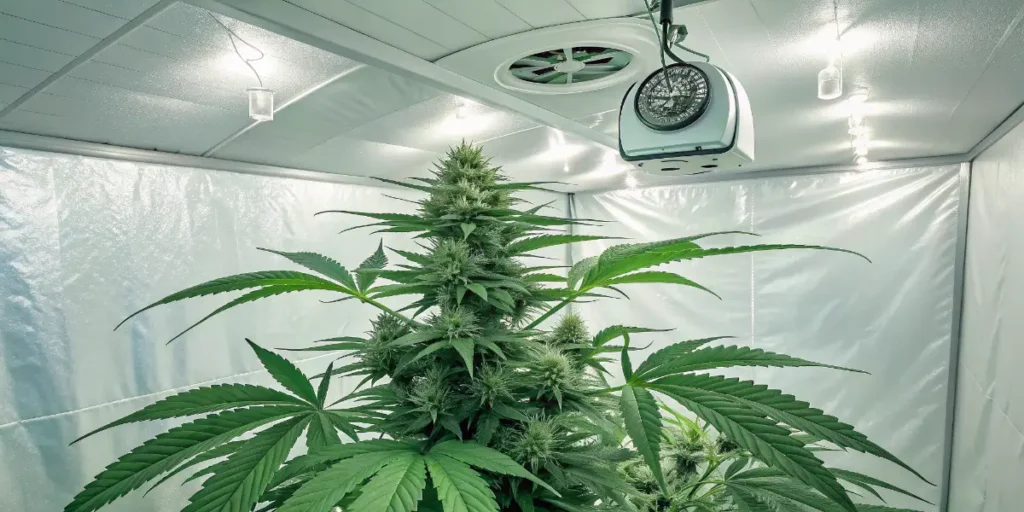

Fat Bastard Auto is a high-potency autoflowering hybrid from Blimburn Seeds created from Goldmember × Monkey Spunk × Ruderalis genetics. It combines a balanced 50% Indica and 50% Sativa profile with rapid automatic flowering, substantial yield potential, and a fruity-skunk flavor profile.
Unlike the photoperiod Fat Bastard, this version does not need a change to a 12/12 light schedule to begin flowering. Fat Bastard Auto completes its entire lifecycle in approximately 8–10 weeks from seed to harvest, making it particularly useful for growers who want a fast indoor cycle or multiple outdoor harvests during a long season.
Recommended Strains
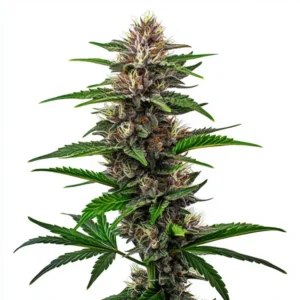
Fat Bastard

|
THC | 30% - 38% (High) |

|
Lineage | Goldmember x Monkey Spunk |

|
Type | Feminized |

|
Height | 4.92 ft | 1.5 m |

|
Yield | High |

|
Yield Indoor | 1.31 - 1.97 oz/ft² | 400 - 600 g/m² |

|
Yield Outdoor | 24.69 - 31.75 oz/plant | 700 - 900 g/plant |

|
Flowering Time | 8 - 10 weeks |

|
Phenotype | 50% Indica / 50% Sativa |

|
Medical | Anxiety, Fatigue, Migraines |

|
Effects | Euphoric, Powerful, Relaxed |

|
Flavors | Fruity, Skunk |
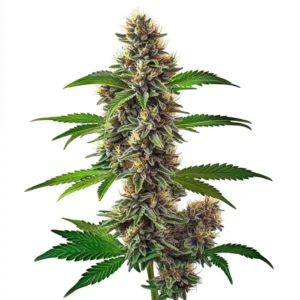
Fat Bastard Auto
|
|
THC | 30% - 38% (High) |
|
|
Lineage | Goldmember x Monkey Spunk x Ruderalis |
|
|
Type | Autoflowering |
|
|
Height | 4.92 ft | 1.5 m |
|
|
Yield | High |
|
|
Yield Indoor | 1.31 - 1.97 oz/ft² | 400 - 600 g/m² |
|
|
Yield Outdoor | 4.41 - 10.58 oz/plant | 125 - 300 g/plant |
|
|
Life Cycle | 8 - 10 weeks |
|
|
Phenotype | 50% Indica / 50% Sativa |
|
|
Medical | Anxiety, Fatigue, Migraines |
|
|
Effects | Euphoric, Powerful, Relaxed |
|
|
Flavors | Fruity, Skunk |
Current specifications place THC at approximately 30–38%, height at around 1.5 m, indoor yield at 400–600 g/m², and outdoor production at approximately 125–300 g per plant under favorable conditions.
You can find Fat Bastard Auto seeds and other genetics from Blimburn Seeds at Growlantis.
Fat Bastard Auto Grow Info
| Trait | Fat Bastard Auto |
|---|---|
| Genetics | Goldmember × Monkey Spunk × Ruderalis |
| Seed type | Autoflowering |
| Indica / Sativa | 50% Indica / 50% Sativa |
| THC | 30–38% |
| Life cycle | Approximately 8–10 weeks from seed to harvest |
| Height | Around 1.5 m |
| Indoor yield | 400–600 g/m² |
| Outdoor yield | 125–300 g/plant |
| Climate | Temperate |
| Outdoor harvest | Multiple cycles possible in suitable seasons |
| Recommended indoor light cycle | 18/6 or 20/4 |
| Training | Low-Stress Training |
| Flavor | Fruity, skunk |
| Listed terpenes | Humulene, Caryophyllene, Myrcene |
| Reported effects | Euphoric, powerful, relaxed |
These figures represent the genetic potential and current specifications of the Fat Bastard Auto seed line sold through Growlantis. Actual height, yield, cannabinoid levels, and finishing time can still vary according to phenotype and cultivation conditions.
What Is Fat Bastard Auto?
Fat Bastard Auto is the autoflowering version of the Fat Bastard genetic line. Its lineage combines Goldmember and Monkey Spunk with Ruderalis genetics, which introduce the automatic flowering trait.
This means Fat Bastard Auto transitions toward flowering according to age rather than waiting for seasonal day length or an indoor switch from 18/6 to 12/12. The plant can therefore remain under the same indoor light schedule throughout its complete lifecycle.
Its automatic growth pattern is one of the most important characteristics to understand before cultivation. A photoperiod plant can remain in vegetation while a grower corrects training mistakes or develops a larger canopy. An autoflower continues progressing according to age, so unnecessary stress during the first few weeks can reduce the time available for later growth.
Fat Bastard Auto combines that fast lifecycle with a balanced hybrid structure, substantial THC potential, and relatively high yield for an autoflowering cultivar.
Fat Bastard Auto Genetics
The official Fat Bastard Auto genetics are Goldmember × Monkey Spunk × Ruderalis.
Goldmember and Monkey Spunk form the genetic foundation of the original Fat Bastard line, while Ruderalis introduces the ability to flower automatically without depending on a change in day length.
The resulting cultivar is classified as an even 50% Indica and 50% Sativa hybrid.
This balanced genetic profile produces a plant that combines robust branching and dense flower development with enough vertical growth to reach approximately 1.5 m under favorable conditions.
The Ruderalis component changes the cultivation strategy significantly. Fat Bastard Auto should not be treated as a smaller photoperiod plant. Its limited lifecycle means early root development, gentle training, and avoiding unnecessary recovery periods become particularly important.
Is Fat Bastard Auto Indica or Sativa?
Fat Bastard Auto is a balanced hybrid containing approximately 50% Indica and 50% Sativa genetics.
Neither side is officially dominant. Its growth and reported effects combine characteristics associated with both genetic groups rather than fitting cleanly into one category.
The plant develops a robust central structure with productive side branches and can reach approximately 1.5 m, making it larger than some compact autoflowers while remaining manageable in suitable indoor spaces.
The breeder describes the effects as euphoric, powerful, and relaxing. This mixture is consistent with a balanced hybrid rather than a strongly Indica- or Sativa-dominant cultivar.
Fat Bastard Auto Flowering Time and Life Cycle
Fat Bastard Auto completes its full lifecycle in approximately 8–10 weeks from seed to harvest.
This is an important distinction. The 8–10 week figure should not be interpreted as eight to ten weeks of flowering after a separate vegetative stage. Germination, early vegetative development, the transition into flower, and final maturation all occur within this overall automatic lifecycle.
Flowering begins according to the plant’s age and genetics rather than a change to 12/12.
Individual plants can develop slightly faster or slower depending on phenotype, environment, root health, stress, light, and general growing conditions. The breeder’s 8–10 week range should therefore guide planning while actual flower maturity determines the final harvest date.
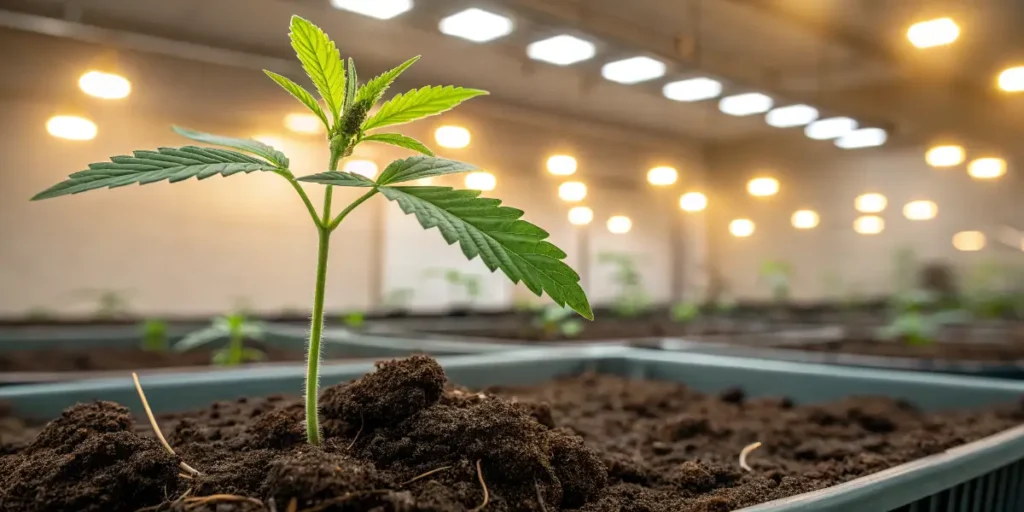
Fat Bastard Auto 8–10 Week Growth Timeline
Fat Bastard Auto develops rapidly, so its lifecycle is better understood as a series of overlapping stages rather than a long vegetative period followed by a separate flowering schedule. The following timeline is approximate and should be used to understand the rhythm of the cultivar rather than as a rigid weekly instruction.
Weeks 1–2: Germination and Early Establishment
The first part of the cycle is focused on germination, root establishment, and early leaf development. Because Fat Bastard Auto has limited time to recover from setbacks, avoiding overwatering, root damage, excessive feeding, and unnecessary transplant stress during this stage is especially important.
Once the seedling becomes established, growth can accelerate quickly. The objective during these first weeks is not to force maximum growth through heavy feeding, but to create stable conditions that allow roots and foliage to develop without interruption.
Weeks 3–4: Rapid Growth and Early Transition
During the next part of the lifecycle, Fat Bastard Auto can increase rapidly in height and branch development while beginning its transition toward reproduction.
This is the most useful period for gentle Low-Stress Training if canopy shaping is needed. Bending flexible branches outward can expose additional growth sites to useful light without creating the longer recovery period associated with topping or other high-stress techniques.
Growers should watch the plant itself rather than waiting for one exact calendar day. Individual phenotypes can show preflowers and stronger flowering development somewhat earlier or later.
Weeks 5–7: Main Flower Development
By the middle of the cycle, flower production becomes the plant’s main developmental priority. Bud sites increase in size and resin production becomes more noticeable as the plant redirects resources away from rapid structural expansion.
Canopy management should become progressively gentler. Avoid major structural training once the flowers are established and focus instead on stable lighting, appropriate irrigation, balanced nutrition, and adequate airflow around the increasingly dense canopy.
The fruity and skunky aroma also becomes more pronounced during this part of the cycle.
Weeks 8–10: Maturation and Harvest
During the final portion of the breeder’s 8–10 week lifecycle, flower development shifts increasingly toward maturation.
The exact harvest day should not be determined by the calendar alone. Use the 8–10 week range to know when close observation becomes particularly important, then evaluate overall flower development and trichome maturity before harvesting.
Some plants may be ready toward the beginning of the range while others require additional time to complete maturation.
Best Light Cycle for Fat Bastard Auto
Fat Bastard Auto does not require a switch to 12/12 to flower.
Indoors, an 18/6 or 20/4 light schedule can be maintained from seed to harvest. Both approaches give the plant a long daily photosynthetic period while retaining several hours of darkness.
An 18/6 schedule is a practical choice for many indoor grows because it provides substantial daily light while reducing energy use compared with 20/4. A 20/4 schedule provides four additional hours of light and can also be used successfully when the environment and lighting intensity are appropriate.
The important point is consistency. Unlike the photoperiod Fat Bastard, there is no need to shorten the day length to trigger flowering.
Growing Fat Bastard Auto Indoors
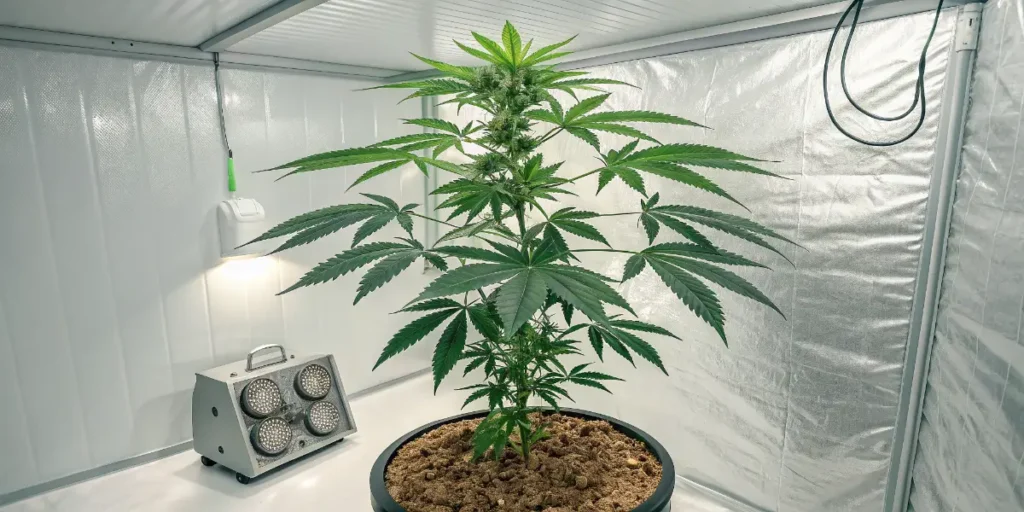
Fat Bastard Auto performs well indoors because its complete lifecycle is short and its final size remains manageable relative to many photoperiod cultivars.
The plant can reach approximately 1.5 m, so growers should still provide enough vertical clearance for lighting and airflow rather than assuming every autoflower stays extremely short.
Indoor production is listed at approximately 400–600 g/m² under favorable conditions.
A well-aerated growing medium and stable root environment are especially useful during the early part of the cycle. Because the plant progresses automatically, root problems that significantly slow development during the first few weeks cannot simply be compensated for by extending vegetation.
Good canopy organization, consistent lighting, and moderate Low-Stress Training can help make efficient use of the available grow area without unnecessarily slowing the plant.
Growing Fat Bastard Auto Outdoors
Fat Bastard Auto can also be cultivated successfully outdoors and is officially associated with temperate growing conditions.
Its short 8–10 week seed-to-harvest cycle means growers do not need to wait for the traditional autumn photoperiod harvest associated with feminized seasonal strains.
In climates with a sufficiently long warm season, more than one Fat Bastard Auto crop can potentially be completed. An early crop can be started once frost risk has passed, while another may be started later in summer if enough suitable weather remains for the complete lifecycle.
Choose a location with strong direct sunlight, suitable drainage, and protection from severe wind, cold, or prolonged extreme weather.
Outdoor production is listed at approximately 125–300 g per plant, with final yield depending heavily on sunlight, root space, temperature, plant health, and phenotype.
Fat Bastard Auto Height
Fat Bastard Auto reaches approximately 1.5 m under favorable conditions.
That size makes it a relatively substantial autoflower rather than an extremely compact dwarf plant.
Indoor height depends on light, root volume, container size, phenotype, and early plant health. Low-Stress Training can reduce the prominence of the main stem and distribute growth more horizontally when vertical clearance is limited.
Outdoor plants may also approach the breeder height reference when they receive strong sunlight and uninterrupted early development.
Because the plant’s lifecycle cannot be extended indefinitely, final height should be managed through good early conditions and gentle canopy shaping rather than late aggressive pruning.
Best Pot Size and Transplant Strategy
Fat Bastard Auto benefits from minimizing root disturbance during its short early development window.
A final container in the range of approximately 3–5 gallons, or 11–19 liters, provides enough root space for substantial growth while avoiding an unnecessary late transplant.
Planting the germinated seed directly into its intended final container can help prevent transplant shock during the limited vegetative portion of the lifecycle.
If a smaller starter container is used, any transplant should be performed early and carefully before roots become heavily restricted.
The main principle is to prevent avoidable pauses in root development. A photoperiod plant can often recover and remain in vegetation longer, whereas an autoflower continues progressing toward flowering regardless of temporary stress.
Training Fat Bastard Auto
Low-Stress Training is the most appropriate primary training method for Fat Bastard Auto.
Once the plant has developed enough healthy growth, flexible branches can be gently bent and secured outward to expose more of the canopy to direct light. This can reduce dominance of the main stem while improving light distribution to additional flowering sites.
High-stress techniques such as topping are less attractive for this cultivar because they require recovery time. Fat Bastard Auto has a fixed lifecycle and cannot simply remain in vegetation until it has fully recovered.
That does not mean the plant should never be touched. Light leaf tucking and minimal selective removal of genuinely obstructive growth can be useful, but aggressive training should not become the centerpiece of the grow.
Fat Bastard Auto Yield
Fat Bastard Auto is classified as a high-yielding autoflower.
Indoors, current specifications give approximately 400–600 g/m² under favorable conditions.
Outdoors, plants can produce approximately 125–300 g each.
These ranges should be treated as genetic potential rather than guaranteed harvest weights. Indoor yield depends on usable canopy area, lighting, root space, plant density, environmental stability, nutrition, irrigation, training, and phenotype.
Outdoor production depends particularly heavily on direct sunlight, weather, planting date, root development, and uninterrupted growth during the short lifecycle.
Avoid using yield figures from the photoperiod Fat Bastard when planning this autoflower. The two versions have different lifecycle and outdoor production specifications.
Germinating Fat Bastard Auto Seeds
Fat Bastard Auto can be germinated using a controlled moist paper-towel method or another suitable propagation technique.
The main priorities are consistent warmth, moisture, oxygen, and careful handling once the taproot appears.
Blimburn’s current germination guidance places the preferred temperature range around 21–26°C. Keep the germination material moist rather than saturated and avoid repeatedly handling or exposing emerging roots.
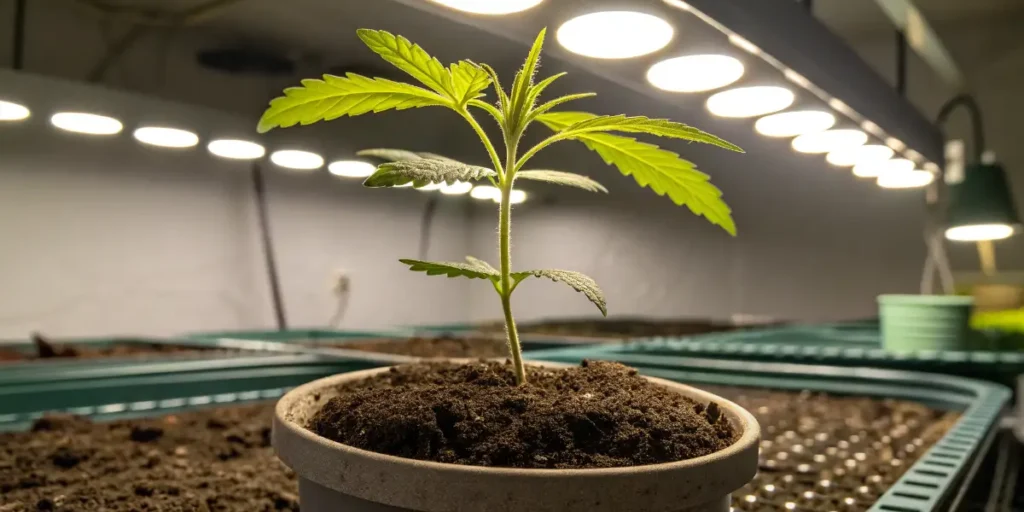
Once germination is complete, move the seed carefully into the intended growing medium. Because this is an autoflower, preparing the final container before germination can reduce the need for later root disturbance.
For more detailed information on germination timing, see how long cannabis seeds take to germinate.
Feeding Fat Bastard Auto
Fat Bastard Auto does not require one universal strain-specific NPK schedule.
Start nutrition according to the growing medium and the actual development of the plant rather than immediately using the maximum strength suggested on a fertilizer label.
Young autoflowers have relatively small root systems and a short early growth window, so overfeeding can create stress precisely when uninterrupted development matters most.
As flowering becomes established, transition toward a suitable bloom-oriented nutrient program for the cultivation system being used. Nutrient strength should increase only when plant size and visible response justify it.
High THC and yield potential do not mean Fat Bastard Auto needs extreme nutrient concentrations. Stable development is more useful than trying to force growth through excessive feeding.
Watering Fat Bastard Auto
Fat Bastard Auto should be watered according to root-zone conditions rather than a predetermined daily schedule.
Seedlings initially use relatively little water even when planted directly into a large final container. Saturating the entire pot repeatedly before the root system has expanded can leave the growing medium wet for unnecessarily long periods.
Water gradually around the developing root zone and increase volume as plant size and root development progress.
Container size, substrate, temperature, humidity, lighting, and airflow all influence how quickly moisture is consumed.
Allow enough oxygen to return to the root zone between irrigations and avoid treating a consistently wet medium as evidence that the plant has enough water.
Airflow During Fat Bastard Auto Flowering
Fat Bastard Auto develops dense, resinous flowers, making airflow increasingly important during the second half of its short lifecycle.
Gentle circulation should move air through, above, and below the canopy while ventilation removes accumulated heat and humidity from indoor environments.
Avoid packing branches so closely together that moisture remains trapped around developing buds.
Low-Stress Training performed earlier in the cycle can help create a more open canopy that improves both light exposure and circulation.
Outdoor growers should similarly monitor prolonged rain or humid conditions during late flowering.
When to Harvest Fat Bastard Auto
Fat Bastard Auto generally reaches harvest maturity within approximately 8–10 weeks from seed.
That lifecycle should be used as a planning reference rather than an automatic cutting date.
As the final weeks approach, evaluate overall bud development and inspect trichome maturity. Increasing numbers of cloudy trichomes indicate advancing maturity, while the appearance of amber trichomes reflects further development.
The preferred harvest point depends partly on the characteristics the grower wants from the finished flowers.
Do not harvest solely because the calendar reaches week eight. Plants that developed more slowly due to phenotype or environmental conditions may need additional time toward the upper end of the breeder range.
Fat Bastard Auto THC
Fat Bastard Auto is listed at approximately 30–38% THC, making potency one of the cultivar’s defining characteristics.
Published THC figures represent genetic potential and reference testing rather than a guarantee that every plant will reach exactly the same cannabinoid concentration.
Final measured THC can vary according to phenotype, lighting, plant health, environmental conditions, harvest maturity, drying, curing, and laboratory methodology.
The high published range should therefore be understood as a characteristic of the genetic line rather than a target that can be guaranteed through one particular feeding, lighting, or training technique.
Fat Bastard Auto Effects
Fat Bastard Auto is described as producing euphoric, powerful, and relaxing effects.
Its balanced 50% Indica and 50% Sativa genetic profile corresponds with an experience that combines an uplifting or euphoric component with stronger physical relaxation as the effects develop.
Individual experiences can vary according to dose, tolerance, phenotype, cannabinoid composition, and finished flower quality.
These descriptions should therefore be treated as general breeder-reported characteristics rather than guaranteed outcomes.
Fat Bastard Auto should not be presented as treating anxiety, fatigue, migraines, pain, or other medical conditions solely on the basis of strain descriptions or terpene content.
Fat Bastard Auto Flavor and Terpenes
Fat Bastard Auto has a fruity and skunky flavor profile.
The current breeder specification also lists Humulene, Caryophyllene, and Myrcene among the terpenes associated with the strain.
These compounds contribute to the aromatic complexity of the finished flowers, but terpene expression can still vary with phenotype, environment, harvest maturity, drying, and curing.
It is therefore more useful to treat the breeder’s terpene list as part of the cultivar’s expected profile rather than assume every harvested plant will contain the compounds in exactly the same concentrations or order.
Fat Bastard Auto vs Fat Bastard
Fat Bastard Auto and Fat Bastard share a closely related genetic foundation but require different cultivation strategies.
The photoperiod Fat Bastard combines Goldmember × Monkey Spunk. Fat Bastard Auto adds Ruderalis genetics, which allow flowering to begin according to age rather than a change in light schedule.
This changes the meaning of the cultivation timeline significantly. The photoperiod version has an approximately 8–10 week flowering period after flowering is initiated. Fat Bastard Auto completes its entire lifecycle in approximately 8–10 weeks from seed to harvest.
Indoor growers can also keep the Auto under 18/6 or 20/4 throughout the cycle instead of switching to 12/12.
If you are growing the photoperiod version, use the dedicated Fat Bastard grow guide rather than the automatic timeline described here.
Common Problems When Growing Fat Bastard Auto
Confusing the 8–10 Week Life Cycle With Flowering Time
Fat Bastard Auto’s 8–10 week specification describes the complete period from seed to harvest, not eight to ten weeks of bloom after a separate vegetative phase. Treating it like a photoperiod strain can lead to incorrect timelines, unnecessary light-cycle changes, and cultivation decisions that do not match its automatic development.
Using High-Stress Training
Fat Bastard Auto has limited time to recover from topping and other high-stress techniques. Because flowering begins according to age, a long recovery period reduces the time available for productive growth. Gentle LST is a better default because it improves canopy exposure while minimizing interruptions to the cultivar’s short lifecycle.
Transplanting Too Late
Late transplant stress can temporarily slow root and canopy development during an important part of the cycle. Preparing an appropriate final container before germination reduces this risk. If transplanting is necessary, complete it early and carefully rather than waiting until the plant is already transitioning toward flowering.
Overfeeding During Early Growth
High potency and yield potential do not mean young Fat Bastard Auto plants need strong fertilizer immediately. Small seedlings have limited root systems and can be stressed by excessive nutrient concentration. Begin moderately and increase feeding according to plant development, medium, water quality, and visible response rather than following an aggressive fixed schedule.
Using the Wrong Yield Figures
Current Fat Bastard Auto specifications are 400–600 g/m² indoors and 125–300 g per plant outdoors. The photoperiod Fat Bastard has different outdoor production potential, so its figures should not be copied into an autoflower grow plan simply because the two cultivars share most of their name and genetic background.
FAQs About Fat Bastard Auto
How long does Fat Bastard Auto take from seed to harvest?
Fat Bastard Auto completes its full lifecycle in approximately 8–10 weeks from seed to harvest. This timeframe includes seedling development, vegetative growth, flowering, and maturation rather than describing flowering alone. Individual plants can finish somewhat earlier or later depending on phenotype, root health, lighting, environment, and cultivation stress.
What is the best light cycle for Fat Bastard Auto?
Fat Bastard Auto can be grown indoors under either an 18/6 or 20/4 light schedule throughout its complete lifecycle. It does not need a switch to 12/12 because flowering begins automatically according to age. The choice between the two schedules depends on lighting intensity, energy use, environment, and grower preference.
How much does Fat Bastard Auto yield?
Current specifications place Fat Bastard Auto at approximately 400–600 g/m² indoors and 125–300 g per plant outdoors under favorable conditions. These figures represent genetic potential rather than guaranteed harvests. Lighting, sunlight, root space, plant health, training, nutrition, irrigation, environment, and phenotype all influence final production.
Is Fat Bastard Auto indica or sativa?
Fat Bastard Auto is a balanced hybrid containing approximately 50% Indica and 50% Sativa genetics. Its lineage combines Goldmember, Monkey Spunk, and Ruderalis. The breeder describes its reported effects as euphoric, powerful, and relaxing, while its plant structure combines robust branching with relatively manageable autoflowering growth.
How tall does Fat Bastard Auto grow?
Fat Bastard Auto can reach approximately 1.5 m under favorable conditions, making it larger than many compact autoflowers. Final height varies with phenotype, root volume, lighting, environment, and early plant health. Growers with limited vertical space can use gentle Low-Stress Training to spread branches horizontally without imposing unnecessary recovery stress.
Should Fat Bastard Auto be topped?
Low-Stress Training is the safer default for Fat Bastard Auto because the plant has a fixed, rapid lifecycle and limited time to recover from high-stress techniques. Topping can temporarily slow development, potentially reducing productive growth before flowering advances. Gentle bending and branch positioning can improve canopy exposure without requiring the same recovery period.