

There is no scientifically proven best strain for gaming, and THC should not be expected to improve reaction time or competitive performance. For players who already use cannabis, strains such as Blue Dream, Jack Herer, OG Kush, GG4 and Northern Lights are popular choices for different subjective experiences, from creative immersion to slower, relaxed single-player sessions.
What Makes a Weed Strain Good for Gaming?
The best cannabis strain for gaming depends less on finding a mythical “gamer strain” and more on what kind of session you want. Someone playing a story-heavy RPG may prefer a very different subjective experience from someone relaxing with a building game, exploring an open world or playing a fast competitive shooter.
Recommended Strains
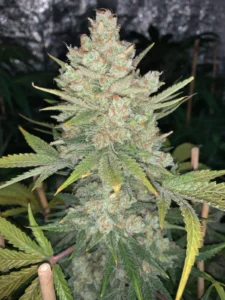
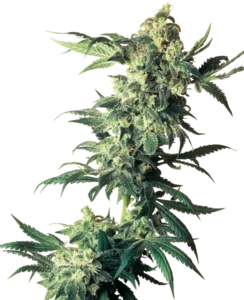
OG Kush Auto

|
THC | 23% - 24% (High) |

|
Lineage | OG Kush x Ruderalis |

|
Type | Autoflowering |

|
Height | 3.28 ft | 1 m |

|
Yield | High |

|
Yield Indoor | 1.47 - 1.8 oz/ft² | 450 - 550 g/m² |

|
Life Cycle | 9 weeks |

|
Phenotype | 80% Indica / 20% Sativa |

|
Effects | Powerful, Sedative |

|
Flavors | Pine, Herbal, Pepper |
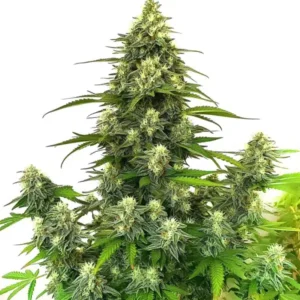
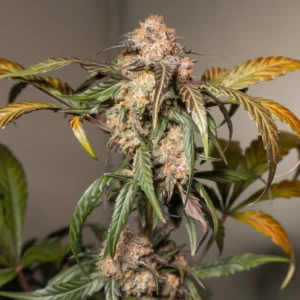
GG4 Auto
|
|
THC | 18% - 24% (High) |
|
|
Lineage | GG4 x Ruderalis Auto |
|
|
Type | Autoflowering |
|
|
Height | 3.28 ft | 1 m |
|
|
Yield | High |
|
|
Yield Indoor | 1.31 - 1.97 oz/ft² | 400 - 600 g/m² |

|
Yield Outdoor | 17.64 - 26.46 oz/plant | 500 - 750 g/plant |
|
|
Life Cycle | 8 - 10 weeks |
|
|
Phenotype | 40% Indica / 60% Sativa |

|
Medical | Fatigue, Muscle Spasms, Stress |
|
|
Effects | Happy, Relaxed, Talkative |
|
|
Flavors | Fruity, Pine |
Cannabis users frequently describe individual strains with terms such as creative, relaxed, energetic or sleepy, but those descriptions are subjective. THC dose, cannabinoid composition, previous cannabis use, tolerance, setting and individual response can all influence the experience. Commercial cannabis strain names also do not guarantee identical chemistry or identical effects from one producer or batch to another.
For that reason, the selections below should be understood as editorial gaming pairings based on commonly reported strain profiles, not evidence that a particular cultivar will increase your skill.
Best Strains for Gaming at a Glance
| Strain | Best fit | Commonly reported profile | Competitive gaming? |
|---|---|---|---|
| Blue Dream | Open worlds and creative games | Creative, euphoric, happy | Not proven to help |
| Jack Herer | Exploration and creative games | Focused, energetic, creative | THC may still impair performance |
| OG Kush | Casual evening gaming | Relaxed, sleepy | Better suited to slower sessions |
| GG4 | Immersive single-player sessions | Relaxed, heavy, sleepy | Poor fit if reaction speed matters |
| Northern Lights | Cozy and low-pressure gaming | Relaxed, sleepy | Better for relaxed play |
These effect descriptions come primarily from consumer reports rather than controlled trials comparing cannabis strains during gaming. For example, Leafly users most commonly report creative and happy effects with Blue Dream, focused and energetic effects with Jack Herer, and more relaxed or sleepy profiles with OG Kush, GG4 and Northern Lights.
1. Blue Dream — Best Overall for Immersive Gaming
Blue Dream is a sensible first pick for this list because its consumer reputation sits between energetic and relaxing extremes. Leafly’s large user dataset most commonly associates it with creative, euphoric and happy effects rather than heavy sedation.
That profile makes it an intuitive editorial match for open-world games, sandbox titles, exploration games and RPGs where the attraction is getting absorbed in the environment rather than maximizing split-second performance. A player might prefer this type of profile for wandering through Skyrim, designing in Minecraft or spending a long evening exploring a narrative game.
That does not mean Blue Dream has been shown to improve gaming concentration. The better way to describe it is that its widely reported effects may appeal to people who prefer a more upbeat or creative subjective experience while gaming.
2. Jack Herer — Best for Creative and Exploratory Games
Jack Herer has one of the stronger consumer reputations for an energetic rather than heavily sedating experience. On Leafly, thousands of user reports most frequently associate Jack Herer with feeling focused, energetic and creative.
That makes it a natural pairing for creative games, simulation titles, exploration, building games and other sessions where the player wants an active rather than sleepy atmosphere. It may also appeal more than heavier strains for social games where staying engaged with conversation is part of the experience.
The important caveat is that “focused” in strain reviews is not the same as objectively improved cognitive performance. Controlled human research on acute THC exposure generally finds impairment rather than improvement across cognitive domains including working memory, processing speed and executive function.
So Jack Herer can reasonably be called a popular choice for gamers seeking an energetic subjective profile, but not a performance enhancer.
3. OG Kush — Best for Chilled Evening Gaming
OG Kush Auto fits a different kind of gaming session. Rather than positioning it as the “perfect gaming companion” for alertness, as the current article does, I would treat OG Kush as an option for people seeking a slower and more relaxed evening.
Large numbers of consumer reports characterize OG Kush primarily as relaxing, with sleepy and hungry also ranking among its most commonly reported effects. That profile makes more editorial sense for turn-based games, slower RPGs, casual co-op or familiar games where performance pressure is low.
It is a much weaker recommendation for competitive shooters, fighting games or ranked play. If precise timing and rapid decision-making are the priority, increasing intoxication is more likely to work against those goals than improve them.
4. GG4 — Best for Deep, Low-Pressure Immersion
GG4 Auto is another strain I would keep from the original article, but for almost the opposite reason currently given.
The existing copy says GG4 provides a “sharp mental edge” and can improve quick thinking in competitive games. Consumer data does not make that a convincing characterization. GG4, also known as Original Glue, is much more commonly reported as relaxed and sleepy, and its reputation is associated with a comparatively heavy experience.
That makes it more plausible as an editorial recommendation for cinematic games, atmospheric horror, slow exploration, narrative adventures or late-night single-player sessions where immersion matters more than reaction speed.
For ranked competitive gaming, it would be near the bottom of this particular list.
5. Northern Lights — Best for Relaxed and Cozy Gaming
Northern Lights is probably the clearest option here for gamers specifically looking for a calm, low-pressure session.
Consumer reports collected by Leafly most frequently characterize Northern Lights as sleepy and relaxed. That lends itself more naturally to cozy games, farming simulators, turn-based strategy, slower RPGs or replaying familiar favorites than to frantic competitive multiplayer.
The current article says Northern Lights “enhances concentration” and is ideal for long strategy sessions. I would remove the concentration claim. Feeling calmer and performing better cognitively are not the same outcome, and there is no good evidence that Northern Lights specifically improves strategic thinking.
Its place on this ranking is therefore simple: it has a strong consumer reputation for relaxation, which some adult cannabis users may prefer during casual gaming.

Is Sativa or Indica Better for Gaming?
Neither label can reliably tell you which cannabis product will be best for gaming.
The traditional advice that “sativa equals focus and energy” while “indica equals relaxation” is much too simplistic. Modern commercial cannabis has undergone extensive hybridization, and research has found that indica/sativa labels do not consistently correspond to clear underlying genetic or chemical divisions.
The same limitation applies to strain names. Two products carrying the same name can differ in cannabinoids and terpene chemistry, so choosing exclusively from the word “sativa,” “indica,” or even “Blue Dream” gives you less information than examining the actual batch.
For gaming, the measured THC concentration and your own response are likely more useful considerations than whether a package says sativa or indica.
Does Weed Actually Improve Gaming Performance?
There is no convincing evidence that cannabis improves video-game performance, and the available cognitive evidence points in the opposite direction for several abilities important to competitive play.
A meta-analysis covering 80 publications found acute THC-related impairment in measures including tracking and divided attention. Another meta-analysis of 52 experimental studies found small-to-moderate acute impairments across attention, executive function, processing speed, verbal learning, working memory and other domains.
A broader meta-review similarly concluded that acute cannabis intoxication produces small-to-moderate deficits across several neurocognitive domains.
That means statements like “improves reaction times,” “sharpens concentration” or “gives you the edge in competitive gaming” should not appear on this page.
Someone may subjectively feel more immersed, entertained or relaxed while playing. That is different from playing better.
THC Dose Matters More Than Finding the Perfect Strain
For someone who already consumes cannabis, dose may make a bigger practical difference than chasing a particular strain name.
Higher THC exposure generally produces greater intoxication, while the magnitude of impairment varies with dose, time after consumption, previous cannabis exposure and the particular skill being tested. A very strong version of a supposedly “focused” strain can therefore be less compatible with gaming than a lower-THC product the person already understands.
This is another reason the original article’s repeated implication that higher THC creates better immersion or gaming performance should disappear. More THC does not automatically mean a better gaming session.
Best Strain for Competitive Gaming
If the objective is maximum reaction speed, aim, memory, decision-making and consistency, there is no cannabis strain I would recommend as a performance tool.
Competitive gaming relies heavily on precisely the cognitive and psychomotor domains that acute THC can impair. Research does not support a strain-specific exception where OG Kush, GG4 or another cultivar reliably reverses that relationship.
For casual players who already use cannabis legally, the better question is therefore not “Which strain will increase my K/D ratio?” but “Which subjective profile fits the type of low-stakes game session I enjoy?”
That framing satisfies the gaming intent without making a scientifically unsupported performance claim.
Best Strain for RPGs and Open-World Games
For long RPGs and open-world games, Blue Dream or Jack Herer would be my editorial picks from this group.
Both are commonly described by users with more creative or energetic terminology than Northern Lights, OG Kush or GG4. That can make them appealing for gamers who want an active, exploratory atmosphere rather than a heavily sedating one.
The match is subjective. Neither has been experimentally demonstrated to increase immersion, creativity or performance inside video games.
Best Strain for Casual and Cozy Games
For casual gaming, Northern Lights is the most natural choice on this list, with OG Kush as another option.
Both have strong consumer associations with relaxation rather than stimulation. For low-pressure games where there is no requirement for sharp reactions or complex multitasking, some experienced consumers may prefer that kind of profile.
Again, “relaxed” should not be rewritten as “better concentration.” The point of the pairing is mood, not measurable skill enhancement.
How to Choose a Cannabis Strain for Gaming
Start with the actual product rather than a stereotype about its name. Look at THC and CBD content, consider how familiar you are with that potency, and use a terpene analysis when one is available. Treat consumer effect descriptions as clues rather than guarantees because individual responses vary significantly.
It is also worth remembering that a strain name does not lock in one chemical profile. A Blue Dream flower from one producer may differ substantially from another product sold under the same name. The name is useful context; the batch-specific chemistry tells you more about what you actually have.
For gaming specifically, avoid equating stronger intoxication with greater immersion or better play. If you notice that timing, memory, attention or coordination deteriorate, changing to an even stronger “gaming strain” is unlikely to solve the underlying problem.
Best Strain for Gaming: Final Verdict
If I had to choose one best strain for gaming from a purely editorial perspective, Blue Dream is the most versatile option because consumer reports commonly place it on the creative and upbeat side without the strong sleepy reputation associated with strains such as Northern Lights or GG4.
Jack Herer is another logical option for people who prefer an energetic profile, while OG Kush, GG4 and Northern Lights fit better with relaxed, low-pressure gaming.
None of them should be marketed as improving reaction time, aim, strategic thinking or competitive performance.
The most defensible way to build this page is to match reported subjective profiles to different gaming moods, while being clear that acute THC can impair some of the cognitive functions gaming depends on.
FAQs About the Best Strains for Gaming
What is the best strain for gaming?
There is no scientifically proven best gaming strain. Blue Dream is a reasonable editorial all-rounder because consumers commonly report creative and happy effects, while Jack Herer is associated with a more energetic profile. These reports describe subjective experiences and do not demonstrate improved reaction time, focus or gaming performance.
What strain is best for gaming and focus?
Jack Herer is frequently described by consumers as focused, energetic and creative, making it a popular candidate for this type of list. However, controlled research on acute THC exposure generally shows cognitive impairment rather than improved focus. A “focused” strain review therefore should not be interpreted as evidence of better objective performance.
Is sativa or indica better for gaming?
Neither category reliably predicts gaming effects. Indica and sativa are broad commercial labels that do not consistently describe the underlying chemistry of modern cannabis. For someone who already consumes cannabis, batch-specific THC and CBD content, individual response and desired level of intoxication are more useful considerations than the indica/sativa label alone.
Does weed improve reaction time in video games?
Research does not support cannabis as a reaction-time enhancer. Acute THC has been associated with impairment in several driving-related cognitive and psychomotor skills, including tracking and divided attention, while broader meta-analyses find deficits across multiple cognitive domains. Feeling more immersed does not necessarily mean reacting more quickly.
Is Northern Lights good for gaming?
Northern Lights can make sense for relaxed, low-pressure gaming because consumer reports commonly describe it as sleepy and relaxing. It is less convincing as a choice for competitive play requiring quick reactions and sustained attention. There is no evidence that Northern Lights itself improves concentration or strategic thinking.
Is GG4 good for gaming?
GG4 can suit immersive, slow-paced or late-night single-player sessions for people who already enjoy its commonly reported relaxing profile. It would not be my first choice for fast competitive gaming because consumer reports frequently characterize it as heavy and sleepy, and THC should not be expected to improve reaction speed.