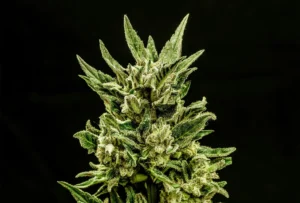
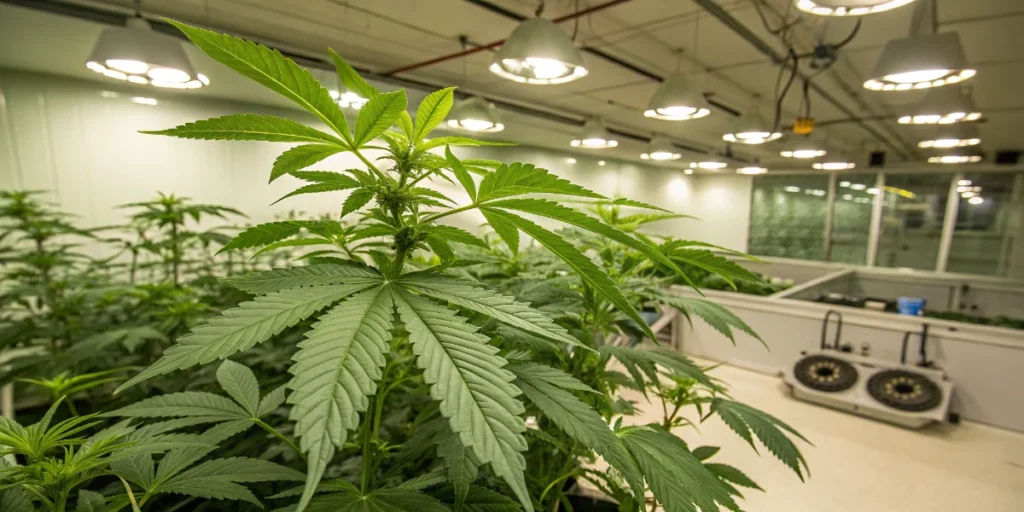

Disease-resistant cannabis strains are genetics that show lower susceptibility to specific pathogens under defined conditions. Research has identified cannabis lines with resistance to powdery mildew and substantial cultivar-to-cultivar differences in susceptibility to Botrytis and other diseases. However, resistance is pathogen-specific, and no cannabis seed or strain should be treated as universally immune to mold, mildew or root disease.
What Does Disease Resistance Mean in Cannabis?
Disease resistance means that a particular cannabis genotype can restrict infection or disease development more effectively than a susceptible genotype exposed to the same pathogen.
Recommended Strains
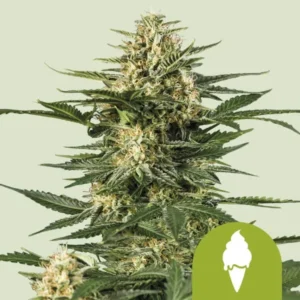
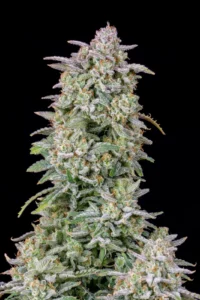
Green Gelato Auto

|
THC | 23% - 24% (High) |

|
Lineage | Green Gelato x Cookies Auto |

|
Type | Autoflowering |

|
Height | 3.61 ft | 1.1 m |

|
Yield | Medium |

|
Yield Indoor | 1.23 - 1.47 oz/ft² | 375 - 450 g/m² |

|
Yield Outdoor | 3.53 - 6.17 oz/plant | 100 - 175 g/plant |

|
Life Cycle | 7 - 8 weeks |

|
Phenotype | 40% Indica / 55% Sativa / 5% Ruderalis |

|
Effects | Focused, Relaxed |

|
Flavors | Candy, Earthy, Fruity |
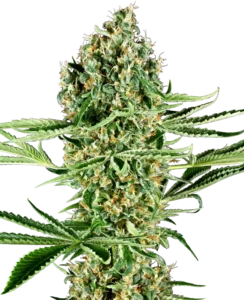
White Widow Weed Strain
|
|
THC | 26% - 27% (High) |
|
|
Lineage | Brazilian x South Indian |
|
|
Type | Feminized |
|
|
Height | 5.58 ft | 1.7 m |
|
|
Yield Outdoor | 31.75 oz/plant | 900 g/plant |
|
|
Flowering Time | 8 - 9 weeks |
|
|
Phenotype | 60% Indica / 40% Sativa |
|
|
Effects | Sedative, Powerful, Relaxed |
|
|
Flavors | Spicy, Woody, Sweet, Earthy |
That definition is important because “disease resistant” is often used much more loosely in cannabis marketing. A plant that performs well during humid weather is not automatically resistant to every fungal disease. Likewise, a cultivar that resists powdery mildew could still be susceptible to Botrytis bud rot, Fusarium, Pythium or another pathogen.
Cannabis research demonstrates exactly this type of variation. In greenhouse observations comparing several genotypes, individual cultivars showed different responses depending on the pathogen. One genotype could be relatively tolerant of one disease while being much more susceptible to another.
Disease resistance should therefore always answer two questions: resistant to what pathogen, and under what conditions?
Does “Organic Cannabis Seed” Mean Disease-Resistant?
No. Organic and disease-resistant describe different characteristics.
Organic seed refers primarily to the production and certification system under which the seed was produced. USDA organic standards address matters such as permitted inputs, production methods and the requirement for organic planting stock where commercially available. Disease and pest resistance are separate varietal characteristics that growers may consider when choosing among seed options.
An organic seed can carry disease-resistant genetics, but it can also be highly susceptible. A conventionally produced seed can likewise carry valuable resistance genes.
For this reason, growers concerned about disease pressure should prioritize documented genetic resistance, adaptation to their environment and breeder evidence rather than assuming that the word “organic” offers protection.
Which Cannabis Diseases Can Genetics Help Resist?
The strongest cannabis-specific genetic evidence currently concerns powdery mildew.
Powdery mildew caused by Golovinomyces ambrosiae is among the most important fungal diseases affecting cannabis and hemp. Researchers have identified multiple genetic mechanisms associated with resistance, including the PM1 resistance locus, a major susceptibility-associated locus involving CsMLO1, and the more recently characterized PM2 resistance locus.
Other diseases also show substantial genotype effects. Research comparing cannabis cultivars has documented differences in susceptibility to Botrytis cinerea bud rot, while recent USDA/Cornell screening has also identified cannabis germplasm with consistently low susceptibility to Septoria leaf spot.
That makes disease-resistance breeding a real and increasingly evidence-based part of cannabis genetics rather than merely a seed-company marketing concept.
Powdery Mildew-Resistant Cannabis Genetics
Powdery mildew currently provides some of the clearest examples of genetically documented cannabis resistance.
Early mapping research identified an experimental cannabis line called PNW39 carrying a dominant resistance locus named PM1. In the experiments, this locus provided complete resistance to the G. ambrosiae isolate used by the researchers and could be tracked with molecular markers during breeding.
A later study identified another important mechanism involving CsMLO1. Researchers crossed the resistant cultivar FL 58 with susceptible TJ’s CBD and found a major-effect region on chromosome 1 associated with powdery mildew resistance. FL 58 contained a mutation affecting CsMLO1, a candidate susceptibility gene, and researchers developed markers capable of distinguishing resistant and susceptible genotypes.
Research published in 2025 added another resistance locus, PM2, located on chromosome 9. PM2 strongly suppressed powdery mildew infection and sporulation, and associated genetic markers were developed for use in breeding populations.
These findings are much stronger evidence than a breeder simply describing a commercial strain as “mold resistant.”
Cannabis Genetics With Low Powdery Mildew Susceptibility
A large Cornell and USDA germplasm trial published in 2026 provides some of the most useful recent evidence.
Researchers evaluated dozens of Cannabis sativa accessions, breeding lines and commercial cultivars under inoculated field conditions across two seasons. They observed substantial variation both between entries and among individual plants within some entries, confirming that powdery mildew susceptibility is strongly influenced by genotype.
FL 58 again appeared among the least susceptible entries. Other material showing consistently low disease included Fibror 79, the breeding line GVA-H-23-1142, and, in the second season, entries including USO 31 and Enectarol. USDA summarized the work as identifying ten accessions with resistance across both years.
These examples are scientifically useful, but they should not be turned immediately into a consumer “top 10 seed strains” list. Several are hemp accessions or breeding material rather than high-THC commercial cultivars, and resistance observed in a defined trial does not guarantee identical performance against every powdery mildew population.
Commercial Strain Names and Disease Resistance
Commercial cannabis names need particular caution.
A grower may encounter White Widow, Jack Herer or another familiar name from multiple breeders, but the shared label does not guarantee that all versions are genetically identical. For disease resistance, what matters is the actual genotype being sold rather than the historical reputation attached to the cultivar name.
Research does provide some interesting commercial examples. A study comparing six high-THC cannabis genotypes reported relatively low Botrytis susceptibility in the tested Jack Herer, Black Cherry and Death Bubba plants. Death Bubba also showed low powdery mildew susceptibility in that particular comparison, while Black Cherry was rated low-to-medium.
That does not establish that every seed or clone sold worldwide as Jack Herer or Death Bubba will reproduce those findings.
The responsible wording is that the tested genotype showed lower susceptibility, not that the strain name itself guarantees resistance.
Disease Resistance vs Mold Resistance
“Mold-resistant cannabis” is a useful consumer phrase, but scientifically it groups together several very different problems.
Powdery mildew and Botrytis bud rot, for example, involve different pathogens and disease processes. Resistance to one does not necessarily provide resistance to the other. The same applies to root pathogens such as Pythium and Fusarium.
Some commercial seed catalogs classify cultivars broadly as mold-resistant, typically based on breeder observations, plant architecture, outdoor performance or flowering characteristics. These classifications can be useful starting points, but even commercial sellers generally acknowledge that no strain is completely mold-proof.
When possible, distinguish between documented pathogen resistance and a broader breeder claim of good performance in humid or difficult conditions.
Does Bud Structure Affect Mold Risk?
Plant architecture can influence the microenvironment around cannabis flowers, even when the plant does not carry a specific resistance gene.
Dense inflorescences can retain a different temperature and relative humidity than the surrounding greenhouse air. Cannabis research has measured consistently higher humidity within flower tissues compared with ambient conditions, demonstrating why the immediate bud microclimate matters for microbial development.
More open architecture may therefore make moisture management easier, while extremely dense flowers can create a more challenging environment when humidity is high.
That is not the same as genetic immunity. Architecture is one component of disease risk, while true resistance involves the plant’s biological interaction with a pathogen.
A good disease-resistant cultivar can still develop disease if environmental pressure becomes sufficiently severe.
Genetics Cannot Replace Environmental Control
Choosing resistant genetics reduces risk; it does not eliminate the need for disease management.
Cannabis pathogen research consistently emphasizes the interaction between genotype, environment and pathogen pressure. Humidity within dense canopies, infected plant material, air movement, sanitation and seasonal conditions can all influence disease development.
Air circulation provides a particularly good example. Controlled cannabis experiments found that increased air movement around developing inflorescences reduced humidity within the flowers and was associated with lower microbial populations.
The best strategy is therefore layered: start with suitable genetics, then manage the environment so the pathogen has fewer opportunities to establish and spread.
Powdery Mildew Resistance Is Not Necessarily Permanent
Even genetically strong resistance should not automatically be treated as permanent or universal.
Plant resistance genes interact with pathogen populations. Researchers studying cannabis powdery mildew continue to investigate the genetic diversity and virulence mechanisms of G. ambrosiae precisely because resistance can depend on whether the pathogen carries factors capable of overcoming a particular plant defense. A 2026 genome study of the pathogen identified numerous candidate effector proteins that could become relevant to future resistance breeding.
This is common in plant pathology: breeders frequently seek multiple resistance mechanisms rather than relying indefinitely on one gene.
For cannabis growers, it means that claims such as “100% powdery mildew resistant” should be treated cautiously unless they refer to a defined experimental pathogen population.
What Is MLO-Based Powdery Mildew Resistance?
Some of the most interesting cannabis resistance research involves MLO susceptibility genes.
Rather than adding a conventional resistance gene that recognizes a pathogen, another strategy is to remove or disrupt a gene that powdery mildew uses to infect the plant.
Cannabis researchers identified CsMLO1 and CsMLO4 as strong candidates involved in powdery mildew susceptibility. Later genetic mapping linked a disrupted CsMLO1 allele in FL 58 to resistance.
MLO-based resistance has attracted particular interest because similar mechanisms provide durable powdery mildew resistance in several other crops. Cannabis researchers are now considering both conventional breeding and modern genetic approaches for incorporating these resistance mechanisms into improved cultivars.
This is where the future of genuinely disease-resistant cannabis is likely to differ substantially from today’s largely reputation-based strain lists.
What Should Growers Look for When Buying Disease-Resistant Seeds?
Start with specificity.
A breeder saying “resistant to powdery mildew” provides more useful information than simply writing “strong genetics” or “disease resistant.” Better still is evidence showing how the cultivar was evaluated, what pathogen was involved and under what environmental pressure.
Consistency also matters. The 2026 powdery mildew screening found considerable variation within some cannabis populations, meaning individual plants carrying the same accession or cultivar label could differ in susceptibility.
For seed-grown plants, that makes genetic uniformity especially relevant. A resistant parent in the pedigree does not necessarily mean every seed will inherit the same level of resistance unless the trait has been reliably stabilized or selected.
If disease risk is a major concern, look for breeder data rather than adjectives.
Can Autoflowering Cannabis Be More Disease-Resistant?
Autoflowering itself is not a disease-resistance mechanism.
Autoflower genetics alter flowering behavior, not immunity to fungi or bacteria. An autoflower may happen to carry valuable resistance traits, but those traits need to come from its broader genetic background.
A shorter lifecycle can sometimes reduce how long an outdoor plant is exposed to adverse late-season weather, which can indirectly change disease risk. That is an escape strategy rather than biological resistance.
A susceptible autoflower can still develop powdery mildew or Botrytis.
For that reason, the current article should not describe Green Gelato Auto or Forbidden Runtz Auto as disease-resistant simply because they are autoflowers or commercially described as hardy.
Can Organic Growing Improve Disease Resistance?
Organic cultivation and genetic resistance should be kept conceptually separate.
Organic systems can use cultural, biological and mechanical disease-management practices, and USDA organic standards explicitly emphasize these approaches before approved crop-protection inputs are considered.
Good soil management, sanitation, airflow and appropriate biological controls may reduce disease pressure.
But they do not convert a genetically susceptible cannabis cultivar into a genetically resistant one.
Likewise, an organically produced seed does not inherit extra disease resistance simply because prohibited synthetic treatments were not used during seed production.
The strongest approach is to combine appropriate genetics with appropriate cultivation practices, whether the operation is organic or conventional.
Does Crop Rotation With Different Cannabis Strains Prevent Disease?
Not in the way the current article suggests.
Changing from one cannabis strain to another is still growing the same plant species. For pathogens capable of infecting multiple cannabis cultivars, simply rotating Green Gelato into White Widow does not break the host cycle.
True disease-management crop rotation is most useful when a susceptible crop is replaced by a suitable non-host crop, reducing the opportunities for certain pathogens to reproduce.
This matters particularly for soil-associated problems.
Rotating commercial strain names is genetic diversification, not conventional crop rotation.
Disease-Resistant Cannabis Strains: The Bottom Line
Disease-resistant cannabis genetics are real, and modern research is beginning to identify the actual genes behind them.
Powdery mildew provides the strongest example. Researchers have identified PM1, PM2 and CsMLO1-associated resistance mechanisms and have developed genetic markers that can help breeders transfer resistance into new cannabis populations.
Large germplasm screenings also show that susceptibility differs substantially among cannabis genetics, while studies of high-THC cultivars demonstrate genotype-dependent differences in Botrytis and powdery mildew susceptibility.
What growers should avoid is turning those findings into simplistic claims that an organic seed, famous strain name or autoflowering plant is automatically disease-resistant.
Choose genetics based on evidence for the specific pathogen you are trying to manage, then combine those genetics with good environmental and sanitation practices.
No seed removes disease risk entirely.
FAQs About Disease-Resistant Cannabis Strains
What cannabis strains are resistant to powdery mildew?
Research has identified strong powdery mildew resistance in genetics including FL 58 and experimental lines carrying PM1 or PM2 resistance loci. Recent field screening also found low susceptibility in entries such as Fibror 79, USO 31 and Enectarol. These results apply to the tested genetics and conditions rather than every commercially named strain.
Are organic cannabis seeds more disease-resistant?
No. Organic describes how seeds or crops are produced under an organic standard; it does not guarantee genetic resistance to disease. USDA guidance actually lists organic status and characteristics such as disease resistance separately. An organic seed may carry resistant genetics, but the resistance comes from the genotype rather than its organic designation.
Are any cannabis strains completely mold-proof?
No cannabis strain should be considered universally mold-proof. Genetic resistance is usually pathogen-specific, and disease development also depends on environmental conditions and pathogen pressure. A cultivar resistant to powdery mildew may still be vulnerable to Botrytis, root pathogens or other diseases, while severe environmental pressure can challenge even resistant plants.
Is White Widow disease-resistant?
Some breeders describe versions of White Widow as hardy or mold-resistant, but that does not establish universal disease resistance for everything sold under the White Widow name. Resistance should ideally be demonstrated for a defined genotype against a specific pathogen. The current Growlantis article does not provide evidence supporting its broad White Widow disease-resistance claim.
What makes cannabis resistant to powdery mildew?
Several genetic mechanisms are now documented. Cannabis researchers have identified dominant resistance loci such as PM1 and PM2, as well as resistance associated with disruption of the susceptibility gene CsMLO1. These discoveries allow breeders to use molecular markers to select resistant plants more reliably.
Can disease-resistant genetics prevent bud rot?
They can reduce susceptibility if the genotype has genuine resistance or tolerance to Botrytis cinerea, but genetics cannot eliminate environmental risk. Cannabis studies show significant genotype differences in Botrytis susceptibility while also showing that flower microclimate, humidity and airflow influence disease and microbial development.