
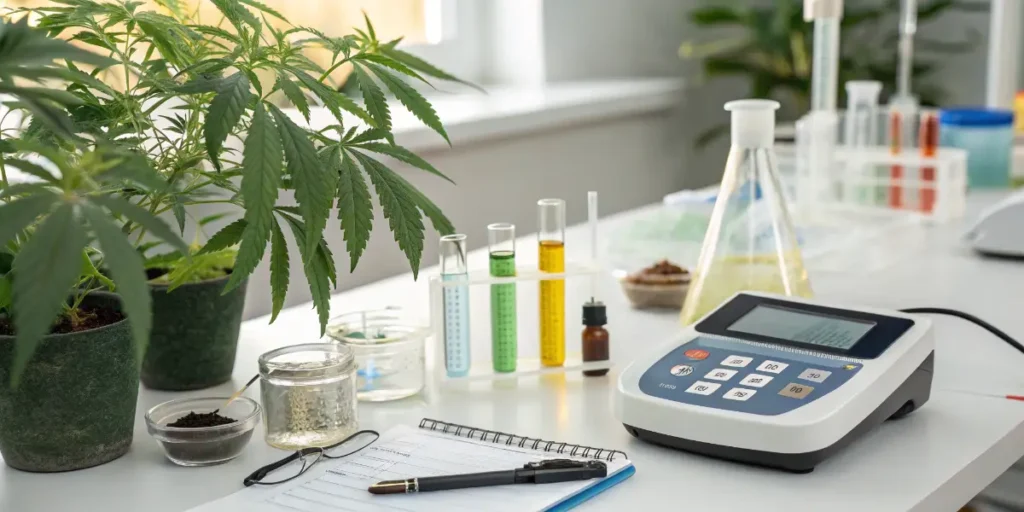

Plant sap readings have become an invaluable tool for cannabis growers aiming to optimize their crop health and yield. By analyzing the sap, growers can gain insights into the nutritional status of their plants, allowing for precise adjustments in feeding strategies. This practice can significantly impact the quality and potency of strains such as Super OG Kush, Green Gelato Auto, and Blue Gelato 41 from Growlantis.
Super OG Kush is known for its robust growth and high THC content, making sap analysis crucial to ensure it receives adequate nutrients for peak performance. Similarly, Green Gelato Auto, with its auto-flowering trait and impressive yield potential, benefits from nutrient fine-tuning via sap readings. Blue Gelato 41, appreciated for its balanced cannabinoid profile and rich terpene content, thrives when sap analysis guides nutrient management, ensuring optimal growth conditions.
Recommended Strains
Super OG Kush

|
THC | 22% - 23% (Medium) |

|
Lineage | Lemon Thai x Hindu Kush x Black Domina |

|
Type | Feminized |

|
Height | 4.43 ft | 1.35 m |

|
Yield | High |

|
Yield Indoor | 1.97 oz/ft² | 600 g/m² |

|
Yield Outdoor | 28.22 oz/plant | 800 g/plant |

|
Flowering Time | 8 - 9 weeks |

|
Phenotype | 70% Indica / 30% Sativa |

|
Effects | Relaxed |

|
Flavors | Fruity, Spicy, Earthy |

Green Gelato Auto
|
|
THC | 23% - 24% (High) |
|
|
Lineage | Green Gelato x Cookies Auto |
|
|
Type | Autoflowering |
|
|
Height | 3.61 ft | 1.1 m |
|
|
Yield | Medium |
|
|
Yield Indoor | 1.23 - 1.47 oz/ft² | 375 - 450 g/m² |
|
|
Yield Outdoor | 3.53 - 6.17 oz/plant | 100 - 175 g/plant |
|
|
Life Cycle | 7 - 8 weeks |
|
|
Phenotype | 40% Indica / 55% Sativa / 5% Ruderalis |
|
|
Effects | Focused, Relaxed |
|
|
Flavors | Candy, Earthy, Fruity |
Recognizing plant sap readings in cannabis involves measuring parameters like nutrient concentration, pH levels, and electrical conductivity (EC) within the sap. These metrics provide a snapshot of the plant’s health, helping growers make informed decisions. In this guide, we’ll examine how to interpret these readings and apply the insights to enhance the cultivation of your favorite strains.
How Plant Sap Readings Work
Plant sap analysis is akin to performing a blood test on humans. It reveals the real-time nutrient status of the plant, allowing growers to address deficiencies or toxicities before they impact yield. This proactive approach is especially beneficial for cannabis strains like Super OG Kush and Green Gelato Auto, which have specific nutrient requirements.
Sap readings involve extracting the liquid from the plant’s vascular system, typically from the petiole or the stem. The extracted sap is then analyzed for its nutrient content, pH, and EC. This data can reflect the immediate nutrient uptake, providing a more accurate picture than traditional soil tests.
For beginners, it’s essential to understand that sap readings should be taken at consistent intervals to monitor trends over time. This regular monitoring can help prevent issues and optimize the growth environment for strains like Blue Gelato 41, which requires a balanced nutrient approach to maximize its complex flavor profile.
Recognizing plant sap readings in cannabis goes beyond simple extraction; it involves a holistic evaluation of the plant’s nutritional dynamics. By comparing sap readings over time, growers can observe how their plants respond to environmental changes and nutrient adjustments. This knowledge can be particularly valuable when cultivating strains like Super OG Kush, where precision in nutrient delivery can significantly influence THC levels and overall plant vigor.
Interpreting Cannabis Sap Analysis Results
The results from sap analysis can initially seem overwhelming. However, Recognizing the key metrics can empower growers to make targeted adjustments. Nutrient levels are typically expressed in parts per million (ppm), and deviations from optimal ranges indicate potential issues.
For instance, if Super OG Kush shows low nitrogen levels in the sap, it might lead to stunted growth. Adjusting the nutrient feed to increase nitrogen can rectify this. Conversely, high potassium levels in Green Gelato Auto could indicate a risk of nutrient lockout, necessitating an adjustment in feeding practices.
Importance of Plant Sap pH in Cannabis
The pH level of plant sap is a critical indicator of nutrient availability. Cannabis plants generally thrive in a slightly acidic environment, with a sap pH of around 5.8 to 6.2. Deviations from this range can affect nutrient uptake and overall plant health.
For Blue Gelato 41, maintaining the correct sap pH ensures that its rich terpene profile develops fully. If the sap pH is too high, essential nutrients like iron and magnesium may become unavailable, affecting the plant’s growth and flavor.
Nutrient Management Through Sap Readings
Effective cannabis nutrient management through sap readings involves adjusting fertilization practices based on the sap analysis. This dynamic approach ensures that plants receive the right balance of nutrients at each growth stage.
For strains like Super OG Kush, which has a vigorous growth pattern, sap readings can guide the application of nutrients to support its rapid development. Green Gelato Auto, being an auto-flowering strain, benefits from a tailored nutrient schedule that aligns with its shorter growth cycle.
Regular sap analysis helps identify nutrient imbalances early, allowing for timely interventions. For example, a deficiency in calcium, a common issue in cannabis cultivation, can be quickly addressed by adjusting the nutrient solution, ensuring robust cell wall development and overall plant vigor.
Recognizing plant sap readings in cannabis also aids in adjusting nutrient formulations as plants transition from one growth phase to another. For instance, during the shift from vegetative growth to flowering, sap analysis can highlight the need to reduce nitrogen levels while boosting phosphorus and potassium levels. This targeted approach ensures that strains like Blue Gelato 41 develop dense buds with enhanced resin production, ultimately improving yield and quality.
Decoding Sap Electrical Conductivity (EC) in Cannabis
Electrical conductivity (EC) measures the concentration of dissolved salts in the plant sap. It reflects the overall nutrient load and is a key parameter in plant health. High EC values can indicate excessive fertilization, leading to nutrient burn.
For Blue Gelato 41, maintaining an optimal EC ensures that the plant’s complex cannabinoid and terpene profiles develop without the stress of nutrient imbalances. Adjusting the nutrient solution based on sap EC readings helps prevent over-fertilization and supports healthy growth.
Analyzing Mineral Content from Cannabis Sap
Sap analysis also provides insights into the mineral content of cannabis plants, including macronutrients like nitrogen, phosphorus, and potassium, as well as micronutrients such as zinc and boron. These elements are crucial for various physiological processes.
Monitoring the mineral content in Super OG Kush through sap analysis ensures that the plant receives the right nutrients to support its potent THC production. Similarly, Green Gelato Auto requires balanced mineral nutrition to achieve its impressive yield potential and resin output.

Applying Sap Analysis to Different Growth Stages
Recognizing plant sap readings in cannabis is not just about identifying current issues but also about proactive management throughout the plant’s life cycle. Each growth stage has unique nutritional needs, and sap analysis can guide nutrient adjustments accordingly.
During the vegetative stage, cannabis plants focus on building structure. For strains like Super OG Kush, ample nitrogen is crucial for leaf and stem development. Sap readings can help ensure that nitrogen levels are sufficient to support robust growth.
In the flowering stage, the focus shifts to supporting bud development. Green Gelato Auto, with its auto-flowering nature, requires a nutrient shift to enhance resin production. Sap analysis can guide the transition from vegetative to bloom nutrients, optimizing the plant’s yield and potency.
By using sap analysis to tailor feeding strategies for each growth phase, growers can enhance the overall performance of their plants. For instance, as Blue Gelato 41 moves into the flowering stage, sap readings can indicate the need for increased potassium to support bud development. This proactive adjustment ensures that the plant’s energy is effectively directed towards producing potent and aromatic flowers, maximizing both yield and quality.
Real-Life Examples of Sap Analysis in Action
Consider a scenario where a grower notices yellowing leaves on their Blue Gelato 41 plants. Sap analysis reveals a magnesium deficiency, prompting an adjustment in the nutrient solution. Within a week, the plants show signs of recovery, demonstrating the effectiveness of sap-guided nutrient management.
Another example involves Super OG Kush, where sap readings indicate high sodium levels. The grower flushes the root zone to reduce sodium concentration, preventing potential nutrient lockout and ensuring healthy growth.
Tips for Consistent Sap Analysis
Consistency is key when performing sap analysis. Use clean tools to avoid contamination and take samples at the same time of day to ensure accurate comparisons. It’s also advisable to keep detailed records of sap readings over time, noting any changes in nutrient management practices.
For growers of Green Gelato Auto, regular sap analysis can help fine-tune the nutrient regimen, ensuring optimal growth conditions regardless of environmental changes or plant stressors. By staying vigilant, growers can maximize the genetic potential of their plants.
Maximizing Yield and Potency with Sap Insights
Plant sap readings offer a window into the nutrient dynamics within cannabis plants, allowing growers to make informed decisions that directly impact yield and potency. Strains like Super OG Kush, known for its high THC levels, benefit from precise nutrient adjustments guided by sap analysis.
For Green Gelato Auto, optimizing nutrient delivery through sap insights can enhance resin production, resulting in a more potent end product. Similarly, Blue Gelato 41’s complex flavor profile can be preserved and enhanced by maintaining balanced nutrition throughout its growth cycle.
Recognizing plant sap readings in cannabis enables growers to implement a strategic nutrient management plan that adapts to the plant’s changing needs. By continuously monitoring and adjusting based on sap insights, the cultivation of strains like Super OG Kush can lead to increased THC content and improved overall quality. This approach also allows growers to meet the specific demands of Green Gelato Auto and Blue Gelato 41, ensuring each strain reaches its full genetic potential.
Practical Steps for Implementing Sap Analysis
Start by selecting a reliable sap analysis service or invest in a portable sap extractor. Familiarize yourself with the process and establish a routine for sampling and analysis. Consistent monitoring will provide valuable insights into your plants’ health and nutrient status.
For those growing Super OG Kush, Green Gelato Auto, or Blue Gelato 41, using sap analysis as a regular part of your cultivation strategy can lead to healthier plants and better harvests. Take the time to interpret the results and adjust your nutrient management plan accordingly.
Leveraging Technology for Better Results
Technological advancements have made sap analysis more accessible to home growers. Portable devices and digital analysis tools provide quick results, enabling timely interventions. Embrace these technologies to stay ahead in cannabis cultivation.
By integrating these tools into your growing practices, you can ensure that strains like Green Gelato Auto and Blue Gelato 41 are cultivated with precision, maximizing their genetic potential and delivering top-quality cannabis products.
FAQ
What is the benefit of plant sap readings in cannabis?
Sap readings provide a real-time snapshot of a plant’s nutritional status, allowing growers to make precise adjustments to their feeding regimen. This is particularly beneficial for optimizing the growth and yield of cannabis strains like Super OG Kush and Green Gelato Auto. By monitoring nutrient levels, pH, and electrical conductivity, growers can prevent deficiencies and toxicities that might otherwise impact plant health and potency.
How often should sap analysis be conducted?
Regular sap analysis is recommended, especially during critical growth stages. For strains like Blue Gelato 41, consistent monitoring can help maintain the delicate balance of nutrients needed for its rich terpene profile. Conducting sap analysis every two to four weeks can provide a holistic view of nutrient uptake and help guide timely interventions.
Can sap analysis help improve cannabis potency?
Yes, by ensuring that cannabis plants receive the right nutrients at the right time, sap analysis can enhance cannabinoid and terpene production, directly impacting potency and flavor. Strains like Super OG Kush, known for high THC levels, can benefit from nutrient adjustments informed by sap analysis to reach their full potential.
Is sap analysis suitable for all cannabis strains?
Sap analysis is beneficial for a wide range of cannabis strains, including auto-flowering varieties like Green Gelato Auto. It offers insights that can be tailored to the specific needs of each strain, ensuring optimal growth conditions and maximizing yield. By recognizing the unique nutritional requirements of each strain, growers can achieve better results.
What equipment is needed for plant sap analysis?
To conduct plant sap analysis, growers will need a sap extractor, test kits or access to a lab for nutrient analysis, and tools for measuring pH and electrical conductivity. Some portable devices offer integrated solutions for home use. Investing in quality equipment or services can provide accurate data to guide effective nutrient management for strains like Blue Gelato 41.