
PCR can support cannabis strain validation by amplifying specific DNA regions that contain informative genetic markers. However, PCR alone cannot look at an unknown plant and automatically identify its commercial strain name. Reliable cultivar authentication requires validated markers, reference samples or databases, adequate sampling and appropriate genetic analysis, often using SSRs, ISSRs, SNP panels or sequencing-derived markers.
PCR is powerful precisely because names tell you so little, a problem we unpack in are strain names scientifically reliable? Once identity is confirmed, the next question is consistency over time, and that is exactly what our cannabinoid stability research examines: how potency and terpene profile hold up through storage, processing and repeated production runs.
Recommended Strains
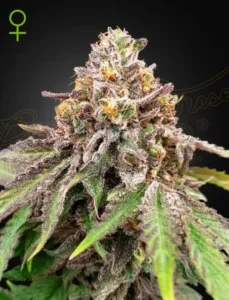
Blue Haze X Gelato 41 Auto

|
THC | 21% - 22% (Medium) |

|
Lineage | Blue Haze x Gelato 41 Auto |

|
Type | Autoflowering |

|
Height | 3.94 ft | 1.2 m |

|
Yield Outdoor | 3.53 oz/plant | 100 g/plant |

|
Life Cycle | 10 - 11 weeks |

|
Phenotype | 60% Indica / 40% Sativa |

|
Effects | Giggly, Creative, Relaxed |

|
Flavors | Lime, Cheese |
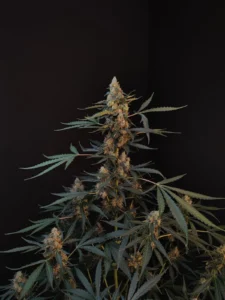
Northern Lights Auto
|
|
THC | 21% - 22% (Medium) |
|
|
Lineage | Northern Lights x Ruderalis |
|
|
Type | Autoflowering |
|
|
Height | 3.28 ft | 1 m |

|
Yield | High |

|
Yield Indoor | 1.64 - 1.97 oz/ft² | 500 - 600 g/m² |
|
|
Life Cycle | 9 weeks |
|
|
Phenotype | 70% Indica / 30% Sativa |
|
|
Effects | Sedative, Powerful, Relaxed |
|
|
Flavors | Fruity, Spicy, Pepper |
What Is PCR in Cannabis Genetic Testing?
PCR, or Polymerase Chain Reaction, is a laboratory technique used to make many copies of a selected region of DNA. Amplifying that region makes it easier to detect, measure or compare genetic variation that would otherwise be difficult to analyze from a small biological sample.
In cannabis research, PCR can be incorporated into several different types of genetic tests. Some assays examine simple sequence repeats, others target known SNPs, while techniques such as ISSR-PCR generate patterns across multiple regions of the genome.
The key point is that PCR is an amplification technology, not a complete strain-identification system by itself.
If a laboratory wants to determine whether an unknown sample matches a known cultivar, it first needs genetic features capable of discriminating that cultivar from other samples and a reliable reference against which the unknown DNA can be compared.
How Does PCR Help Validate a Cannabis Strain?
Cannabis cultivar validation generally relies on comparing genetic fingerprints.
Imagine a producer maintains a clonally propagated cultivar called Cultivar A. A laboratory can first characterize authentic reference plants and identify genetic markers that consistently distinguish those plants from Cultivars B, C and D.
PCR-based assays can then amplify those informative regions in future samples. If the resulting genetic profile matches the validated reference within the limits of the assay, the laboratory gains evidence that the sample belongs to the same genetic line.
This approach works much better with clonally maintained material than with loosely defined commercial names propagated from genetically variable seeds.
A 2025 study demonstrated this principle by sequencing 32 cannabis cultivars, identifying informative SNPs and developing a reduced 20-SNP genotyping panel. The researchers showed that small panels of carefully selected markers could discriminate most of the cultivars tested, while also emphasizing the need for greater sampling to account for variability within cultivars.
PCR Does Not Automatically Know a Strain Name
One of the most important limitations is that DNA does not contain labels such as “Blue Dream,” “Northern Lights” or “Bruce Banner.”
A PCR machine cannot amplify DNA from an unknown leaf and independently conclude that it belongs to a particular commercial strain unless the assay has already been developed and validated against appropriate reference material.
This distinction matters because commercial cannabis naming is inconsistent. Research comparing cannabis genetics has repeatedly found that plants sold under the same name can sometimes be genetically different, while samples with different names can be surprisingly similar.
One influential genome-wide study found that strain names did not always correspond reliably with genetic identity. Among same-name comparisons examined in the study, some samples were genetically closer to differently named cannabis than to other samples carrying their own name.
PCR can therefore test genetic similarity to a reference. It cannot make unreliable commercial naming conventions scientifically reliable.
PCR Methods Used in Cannabis Identification
Different PCR-based approaches answer different genetic questions.
| Method | What It Examines | Potential Use |
|---|---|---|
| SSR-PCR | Short tandem-repeat markers | Cultivar fingerprinting |
| ISSR-PCR | Regions between simple sequence repeats | Genetic similarity and differentiation |
| SNP genotyping | Specific single-base variants | Targeted cultivar discrimination |
| qPCR | Target DNA with real-time measurement | Specific genes, alleles or diagnostic targets |
| KASP | Allele-specific PCR-based SNP genotyping | High-throughput fingerprinting |
| PCR + sequencing | Amplified regions followed by sequencing | More detailed variant identification |
There is no universally accepted PCR panel that identifies every cannabis cultivar in existence.
The appropriate method depends on whether the goal is distinguishing clonal cultivars, identifying genetic similarity, verifying a particular allele, determining chemotype-associated genetics or answering another specific question.
SSR Markers for Cannabis Cultivar Identification
Simple Sequence Repeats, or SSRs, are short DNA sequences in which small motifs repeat several times. The number of repeats can differ between individuals, creating genetic markers useful for fingerprinting.
PCR can amplify these loci, after which laboratories compare the resulting allele sizes.
A recent study involving three high-THC medicinal cannabis cultivars tested 12 SSR primers and identified several loci with useful discriminatory variation. The authors concluded that SSR markers can contribute to cultivar identification, but also stressed that broader validation involving additional cultivars and markers is still required.
That is a much more realistic description than saying PCR “ensures strain authenticity.”
It provides useful genetic evidence when the marker set has enough discriminatory power.
ISSR-PCR and Cannabis Genetic Similarity
Inter-Simple Sequence Repeat PCR, or ISSR-PCR, amplifies DNA located between repeated sequence regions and can generate distinctive banding patterns from different samples.
The technique has been used in cannabis genetic fingerprinting for decades, and new research continues to refine it.
A 2026 study analyzed 48 cannabis samples representing 24 strains using ten ISSR primers. No individual primer successfully classified every strain, but combining the resulting patterns allowed researchers to calculate genetic similarity and distinguish identical individuals, individuals from the same strain and genetically different strains with much greater confidence.
This is a useful illustration of why multiple markers matter. Genetic authentication rarely depends on one magical DNA sequence.
SNP Panels and Modern Cannabis Authentication
Single-Nucleotide Polymorphisms, or SNPs, are positions in the genome where individual plants can differ by a single DNA base.
Because SNPs occur in enormous numbers across the cannabis genome, researchers can use whole-genome sequencing to identify highly informative variants and then convert a small subset into cheaper targeted assays.
The 2025 BMC Genomics study is a good example. Researchers first sequenced 32 cultivars, mined the genomes for discriminating SNPs and then built a smaller PCR-compatible panel. With appropriate marker selection, the reduced system could differentiate nearly all cultivars during laboratory validation.
This workflow shows where PCR is especially valuable: sequencing discovers informative genetic differences, while targeted assays make routine testing more practical.
PCR vs NGS for Cannabis Strain Validation
PCR and Next-Generation Sequencing are complementary rather than competing technologies.
NGS can examine thousands or millions of positions across the genome, making it powerful for discovering variants, studying population relationships and developing reference datasets. The disadvantage is that whole-genome analysis generates much more data and generally requires more bioinformatics than a small targeted assay.
PCR-based testing focuses on selected genetic regions. Once researchers already know which markers distinguish the cultivars of interest, a targeted assay can be faster and more efficient for routine screening.
A typical workflow might therefore use NGS or whole-genome sequencing during marker discovery, followed by targeted PCR-based genotyping for subsequent identity checks.
For a detailed explanation of the sequencing side, Growlantis’ guide to NGS for cannabis strains can complement this article.
Can PCR Confirm That Two Cannabis Plants Are the Same Clone?
DNA testing can provide very strong evidence that two samples share the same genotype when enough informative markers are examined.
This is particularly useful in clonal production systems. If a cultivar is maintained through cuttings, plants descended from the same original clone should normally have extremely similar inherited DNA profiles.
A mismatch at multiple validated genetic markers can indicate that material has been mislabeled, substituted or otherwise does not match the expected reference.
However, the strength of the conclusion depends on the marker panel. Testing one or two poorly discriminating loci provides much less evidence than a validated multi-marker fingerprint.
laboratories therefore need to know the probability that unrelated cultivars could coincidentally share the observed marker profile.
Can PCR Prove a Seed Is Genetically Identical to Its Parent?
No.
Seeds are produced through sexual reproduction and inherit combinations of DNA from their parents. Siblings from the same cross can therefore be genetically different from one another and from either parent.
This is especially important for cannabis strain validation.
A breeder can legitimately sell multiple seeds from the same cultivar or cross even though those seeds do not produce genetically identical plants. A PCR test should not interpret normal seed-derived variation as automatic evidence that a cultivar is fake.
Clonal cultivars are much easier to define genetically because vegetative propagation preserves essentially the same genotype.
For seed populations, authentication requires a population-based reference rather than expecting every individual to produce one identical fingerprint.
Can PCR Predict THC or CBD Levels?
Not precisely.
PCR can identify genetic variants associated with cannabinoid biosynthesis, including genes related to THCA and CBDA synthases. Such information can help characterize broad chemotype potential.
But genetic potential is not the same as the final cannabinoid concentration of harvested flower.
THC and CBD concentrations are influenced by genetics, plant development, environment, cultivation and post-harvest factors. A PCR result therefore cannot replace chemical analysis such as HPLC when the question is how much THC or CBD a finished product actually contains.
The strongest quality-control systems may combine genotyping with chemical profiling rather than treating one as a substitute for the other. A recent medicinal-cannabis study specifically argued for combining SSR genetic fingerprints with chemical characterization when standardizing clonal cultivars.
Can PCR Verify Terpenes, Yield or Effects?
PCR cannot directly confirm that a strain will have a particular aroma, yield or psychoactive effect.
A genetic marker may eventually be associated with a trait, but that does not mean a general cultivar-identification panel measures the trait itself.
This is a major problem in the current version of the article, which suggests that PCR can confirm the aromatic profile, THC standards and desirable characteristics of specific Growlantis strains.
A genetic identity test can establish similarity to a reference genotype. It does not automatically measure the plant’s terpene concentration, flower yield or final cannabinoid potency.
Those questions require their own analytical methods and phenotypic data.
Can PCR Detect Genetic Mutations?
PCR can detect a mutation when the assay targets a known variant.
For example, if researchers know that a particular SNP occurs at a specific genomic position, an allele-specific PCR assay can distinguish the alternative versions of that locus.
That is different from screening the entire genome for previously unknown mutations.
Traditional targeted PCR examines only the regions the assay was designed to amplify. Mutations elsewhere in the genome may remain completely invisible.
Whole-genome sequencing provides much broader variant discovery when comprehensive mutation detection is the actual objective.
What Samples Can Be Used for Cannabis DNA Testing?
Fresh leaf material is generally convenient because it provides relatively intact plant DNA, but genetic analysis can also be attempted on other cannabis material.
Sample quality matters.
Processing, drying, storage and contamination can reduce DNA quality and affect assay performance. In the 2025 SNP-panel study, assay performance was better with DNA extracted from fresh material than with dried commercial flower, although researchers were still able to generate useful genotyping information from dried samples.
This is another reason that cultivar authentication should include validated laboratory procedures rather than assuming every sample type behaves identically.
What PCR Can and Cannot Validate
PCR-based cannabis testing is most useful when the question is clearly defined.
It can help determine whether a sample matches a known genetic reference, differentiate cultivars represented in a validated marker database, identify known genetic variants and support breeding or clonal quality-control programs.
It cannot independently prove that a commercial strain name is historically correct, guarantee exact THC concentration, predict yield, confirm aroma or effects, or identify every possible cannabis cultivar without an appropriate reference.
Those limits do not make PCR ineffective. They make the results scientifically interpretable.
Is PCR Cannabis Strain Validation Standard Practice?
Not yet in the sense of having one universally accepted system used across the cannabis industry.
Cannabis genetics research is advancing rapidly, and SSR, ISSR, SNP and sequencing-based approaches have all demonstrated potential for cultivar differentiation.
However, standardized methods and comprehensive reference databases remain limited. Recent studies continue to describe marker development and validation as an active research area rather than a solved industry standard.
The situation is improving as more cultivars are sequenced and larger reference datasets become available, but a commercial claim that a strain is “PCR certified” should still explain exactly what was tested, which markers were used and what reference the sample was compared against.
PCR for Cannabis Strain Validation: Key Takeaway
PCR is a valuable component of cannabis genetic authentication, but it should not be described as a machine that automatically identifies strain names.
Its real power comes from amplifying informative genetic markers. SSRs, ISSRs and SNP-based assays can generate fingerprints that distinguish cultivars or compare an unknown sample with validated reference material.
Modern research shows that relatively small marker panels can sometimes discriminate among selected cannabis cultivars, particularly when those markers were first identified through broader genomic analysis. At the same time, intra-cultivar variation, inconsistent strain naming and incomplete reference databases remain important limitations.
The most credible cannabis validation programs therefore combine good sampling, validated genetic markers, reliable reference material and—when relevant—chemical testing.
FAQs About PCR and Cannabis Strain Validation
How does PCR validate cannabis strains?
PCR amplifies selected DNA regions containing genetic markers that can be compared with validated reference samples. If multiple informative markers match the expected fingerprint, the results can support cultivar identity. PCR cannot independently identify a commercial strain name without an established reference database or marker profile against which the unknown DNA is compared.
Can PCR identify any cannabis strain?
No. PCR can identify or differentiate only what the assay was designed and validated to examine. A laboratory needs informative markers and appropriate reference samples or databases. Because cannabis naming and genetics are inconsistent across the market, there is currently no universal PCR test capable of reliably identifying every commercial strain.
What genetic markers are used for cannabis strain identification?
Cannabis genetic fingerprinting can use SSRs, ISSRs and SNPs, among other marker systems. SSR and ISSR assays compare variable repeated DNA regions, while SNP panels examine selected single-base differences. Modern studies increasingly use whole-genome sequencing to discover informative SNPs and then convert them into smaller targeted genotyping panels for routine analysis.
Is PCR better than NGS for cannabis strain testing?
Neither is universally better. NGS examines far more of the genome and is useful for discovering variants and studying genetic relationships. PCR is more targeted and can be efficient once informative markers are already known. A practical workflow can use sequencing to discover cultivar-specific differences and PCR-based assays for subsequent routine screening.
Can PCR determine how much THC a cannabis strain will produce?
Not reliably. PCR can detect genes or variants associated with cannabinoid biosynthesis and may help classify genetic chemotype potential, but it does not directly measure final THC concentration. Environmental conditions and plant development also affect cannabinoid production. Laboratory chemical analysis such as HPLC is required to quantify THC in harvested cannabis.
Can PCR prove two cannabis plants are identical?
A sufficiently informative genetic fingerprint can provide strong evidence that two samples share the same genotype, which is particularly useful for clonally propagated plants. The confidence of that conclusion depends on the number and discriminatory power of the markers tested. Seed-derived plants from the same cultivar should not necessarily be expected to be genetically identical.