
Microbial risk in cannabis growing increases when moisture remains around flowers, airflow is poor, dead plant material accumulates, sanitation is inconsistent, plants are repeatedly handled or harvested buds dry too slowly. Genetics, flower structure and seasonal conditions can also influence contamination. There is no single humidity or temperature value that guarantees safety, so microbial control needs to cover the entire cultivation and post-harvest process.
Cannabis plants naturally carry bacteria, fungi and other microorganisms. Their presence does not automatically mean that a crop is contaminated or unsafe. The goal is not to create a sterile plant. Effective microbial management focuses on preventing plant pathogens, potentially harmful fungi and excessive microbial populations from developing on material intended for consumption.
Recommended Strains
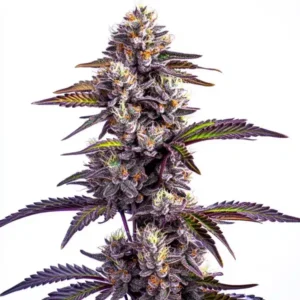
Blackberry Moonrocks Auto

|
THC | 26% - 33% (High) |

|
Lineage | Blue Moonrock x male Blackberry Kush x Ruderalis |

|
Type | Autoflowering |

|
Height | 3.94 ft | 1.2 m |

|
Yield | High |

|
Yield Indoor | 1.8 oz/ft² | 550 g/m² |

|
Yield Outdoor | 4.23 - 7.05 oz/plant | 120 - 200 g/plant |

|
Life Cycle | 8 - 10 weeks |

|
Phenotype | 80% Indica / 20% Sativa |

|
Medical | Arthritis, Depression, Fatigue |

|
Effects | Focused, Happy, Relaxed |

|
Flavors | Berry, Blueberry |
Granddaddy Purple Seeds
|
|
THC | 19% - 20% (Medium) |
|
|
Lineage | Purple Urkle x Big Bud |
|
|
Type | Feminized |
|
|
Height | 4.43 ft | 1.35 m |
|
|
Yield | High |
|
|
Yield Indoor | 1.47 - 1.64 oz/ft² | 450 - 500 g/m² |
|
|
Yield Outdoor | 19.4 - 21.16 oz/plant | 550 - 600 g/plant |
|
|
Flowering Time | 8 - 10 weeks |
|
|
Phenotype | 75% Indica / 25% Sativa |
|
|
Effects | Euphoric, Relaxed, Sleepy |
|
|
Flavors | Blueberry, Candy, Fruity |
What microbial risk means in cannabis cultivation
Cannabis has its own natural microbiome. Some microorganisms live on leaves, flowers and roots without causing disease, while others can even participate in normal interactions within the growing environment.
Problems arise when conditions favor organisms that damage the plant or create concerns for finished flower. Cannabis research has identified fungi such as Aspergillus, Penicillium, Fusarium and Cladosporium on cannabis material, while Botrytis cinerea is one of the best-known causes of bud rot during cultivation.
The practical objective is therefore to manage conditions that allow unwanted microorganisms to multiply. Moisture, airflow, flower density, sanitation, handling and drying all interact, which is why microbial risk cannot be reduced to one environmental number.
1. Persistent moisture around cannabis flowers
Moisture is one of the most important factors affecting fungal development, but relative humidity should not be treated as a simple threshold where everything below one number is safe and everything above it is dangerous.
The microclimate around and inside cannabis flowers can differ considerably from the value shown by a room sensor. Dense mature inflorescences can retain humid air internally, especially when air movement is limited.
A greenhouse cannabis study published in 2025 found that relative humidity inside mature inflorescences was around 15 percentage points higher than the surrounding environment under the conditions tested. This demonstrates why a sensor positioned away from the canopy does not always represent the conditions experienced inside dense flowers.
Instead of relying only on one room reading, growers should consider changes throughout the day, conditions after lights go off and humidity at canopy level. The Growlantis guide to environmental sensors for cannabis cultivation explains how monitoring location can affect the information growers receive.
2. Poor airflow and stagnant microclimates
Air circulation can reduce microbial risk by preventing humid air from remaining trapped around leaves and flowers. This becomes increasingly important as plants develop larger and denser inflorescences.
Cannabis-specific research provides useful evidence here. In a 2025 greenhouse study examining Botrytis bud rot, enhanced air circulation reduced relative humidity inside flowers by an average of 11.6 percentage points. Bud-rot incidence was reduced by an average of 81.2% across three trials, with individual reductions ranging from 66% to 92%.
Those figures should not be treated as universal expectations for every grow. They describe the results of a particular experimental setup, but they clearly demonstrate that flower-level airflow can influence disease pressure.
More airflow is not always better. Plants located closest to the fans in the same experiment showed some drying damage. The objective should therefore be even air movement through the canopy rather than directing excessive wind at individual plants.
Air circulation also cannot replace proper ventilation or dehumidification. Moving humid air around a sealed room does not remove the underlying moisture. Growlantis covers this distinction in more detail in its guide to cannabis airflow and mold prevention.
3. Dense flowers, canopy structure and genetics
Cannabis genetics can influence susceptibility to microbial problems, but named commercial strains should not automatically be classified as resistant or susceptible without evidence from the specific genotype.
Different plants can produce very different flower structures. Some inflorescences contain more internal leaves or form compact structures that create protected humid areas. Other genotypes produce more open flowers that allow greater air movement.
Research has also shown differences in disease susceptibility between cannabis genotypes. That supports the idea that genetics can influence risk, but it does not justify assuming that every product sold under a familiar strain name behaves the same way.
Two seeds carrying the same commercial name may come from different breeding lines, and resistance to one pathogen does not imply resistance to every other fungal or bacterial problem.
When mold resistance matters, documented information about the specific breeder and genotype is more useful than reputation alone.
4. Dead leaves and poor grow-room hygiene
Dead leaves, diseased material and other crop residues should not be allowed to accumulate around an active grow. Research on greenhouse cannabis has associated leaf litter with increased yeast and mold populations on flowers.
Senescent plant material can provide both nutrients and surfaces where microorganisms develop. Diseased tissue can also act as a source from which pathogens spread to healthier parts of the crop.
Good hygiene means routinely removing unwanted plant material and keeping floors, trays, tools and working areas reasonably clean. It does not mean trying to sterilize every part of the cultivation environment.
Healthy soils and growing media naturally contain large microbial communities. Eliminating all microorganisms from the root zone is neither realistic nor necessarily desirable. The objective is to reduce avoidable contamination sources and prevent diseased material from remaining in contact with the crop.

5. Handling and cross-contamination
People can contribute to microbial transfer during cultivation and especially during harvest and processing.
Every time plants are touched, microorganisms can move between hands, gloves, scissors, work surfaces, containers and plant material. Research on greenhouse cannabis has found associations between harvesting activity and increased microbial counts on flowers, demonstrating that contamination risk does not end while the plant is still rooted.
The most useful approach is consistent hygiene rather than occasional intensive cleaning. Tools and work surfaces should be cleaned appropriately, visibly diseased plant material should be separated from healthy material and workers should avoid unnecessarily moving between contaminated and clean areas.
Commercial facilities should develop sanitation procedures suited to their own surfaces, equipment and regulatory requirements instead of relying on one universal disinfectant concentration.
The Growlantis guide to cross-contamination during cannabis handling explains how these risks continue during post-harvest processing.
6. Water, substrates and other cultivation inputs
Irrigation water and growing media can introduce microorganisms into a cultivation system, but describing all unfiltered water as dangerous is too simplistic.
Risk depends on the source of the water, the microorganisms present, how the water is stored and how it contacts the crop. Presence in irrigation water also does not automatically prove that the same organism will be found on the harvested flower.
A 2026 study examining outdoor medicinal cannabis irrigated with reclaimed municipal wastewater illustrates this point. E. coli was measured in the irrigation water, but neither E. coli nor total coliforms were detected in harvested leaves, flowers or derived herbal oils in that experiment.
That result should not be interpreted as evidence that contaminated water is harmless. It simply demonstrates that transfer between an input and the harvested product depends on the production system and exposure pathway.
Growing media should be considered in the same way. Sterile substrate is not a universal requirement for cannabis safety. Soil and root-zone microbiomes naturally contain large numbers of microorganisms, so the priority is avoiding known pathogens and poorly managed contaminated materials rather than eliminating microbial life altogether.
7. Temperature interacts with moisture and disease
Temperature matters for microbial development, but there is no universal temperature above which cannabis suddenly becomes microbiologically unsafe.
Different fungi and bacteria have different optimal temperature ranges, and plant pathogens respond to temperature together with moisture, host susceptibility and duration of exposure.
This is particularly important for Botrytis. The 2025 cannabis study observed substantial disease pressure during conditions averaging approximately 20°C to 22°C when environmental moisture was favorable for disease development.
Keeping a room below 25°C therefore does not guarantee protection from bud rot. Temperature should be interpreted together with relative humidity, airflow, condensation risk and conditions inside the flower.
Using temperature as one part of environmental monitoring is useful. Treating one temperature value as a microbial safety limit is not.
8. Harvesting, drying and curing
Microbial management continues after the plant is harvested. Drying can strongly influence the microbial condition of finished cannabis because recently harvested flowers still contain enough moisture to support microbial activity.
If drying progresses too slowly or unevenly, parts of dense flowers can remain wet while the outer surface feels dry. Handling during trimming and processing also creates additional opportunities for microorganisms to move between material and equipment.
Once flower is dry, water activity becomes more useful than simply looking at room relative humidity. Water activity measures how much water in the product is available for processes such as microbial growth.
ASTM D8197 specifies a water activity range of 0.55 to 0.65 for dry cannabis flower intended for storage. The upper limit is intended to restrict undesirable microbial growth, while the lower end helps prevent excessive brittleness during handling.
Water activity is not the same measurement as room relative humidity. A room hygrometer describes the surrounding air, while water activity describes the moisture state of the product itself when measured under defined conditions.
Maintaining suitable water activity is also a preventive control. It does not sterilize flower that is already contaminated and should not be treated as a microbial kill step.
Why pH should not be treated as a mold-control setting
Root-zone pH is important for cannabis because it influences nutrient availability and plant physiology. It should not, however, be presented as a general method for preventing microbial contamination.
A pH target used for soil, coco or hydroponic nutrient management does not sterilize irrigation water and does not create a universal barrier against fungi or bacteria.
Different microorganisms tolerate different pH ranges, while pathogens such as Botrytis are influenced much more directly by factors such as moisture availability, susceptible plant tissue and environmental conditions.
For this reason, nutrient management and microbial hazard management should remain separate concepts even though both influence overall plant health.
Can mold-resistant genetics prevent microbial problems?
Genetics can reduce susceptibility to certain diseases, but resistance is only one layer of protection.
A plant with relatively low susceptibility to Botrytis can still develop bud rot if flowers remain wet for prolonged periods and the pathogen is present. Conversely, environmental management can substantially reduce disease pressure even in susceptible plants.
This interaction between genetics and environment is one reason strain descriptions should not be treated as guarantees. A breeder may describe a genotype as relatively resistant, but that does not remove the need for airflow, sanitation, environmental monitoring and effective drying.
The most reliable microbial strategy combines appropriate genetics with good environmental control and careful post-harvest handling.
What matters most for reducing microbial risk?
The most important principle is to prevent favorable conditions from persisting long enough for undesirable microorganisms to become established.
During cultivation, this means avoiding persistent moisture within flowers, maintaining even airflow, removing dead material, reducing unnecessary handling and keeping tools and work areas appropriately clean.
After harvest, attention shifts toward sanitary handling and controlled drying. Once flower approaches its final storage condition, water activity becomes a more useful indicator than simply monitoring ambient room humidity.
No individual intervention can guarantee microbiological safety. Risk falls when multiple preventive measures work together throughout cultivation, harvest, drying and storage.
FAQs
What factors increase microbial risk in cannabis growing?
Microbial risk increases when moisture persists around flowers, airflow is insufficient, dense canopies create humid microclimates, dead plant material accumulates, sanitation is inconsistent or plants are repeatedly handled. Water, substrates and equipment can also introduce microorganisms, while inadequate drying can allow microbial activity to continue after harvest.
Does humidity above 60% automatically cause mold on cannabis?
No. Cannabis does not have a universal relative-humidity threshold at which mold automatically develops. Risk depends on moisture duration, temperature, airflow, pathogen presence, genotype and flower structure. Dense inflorescences can also maintain substantially higher internal humidity than the surrounding room, making flower-level conditions more informative than one ambient reading.
Does airflow reduce mold risk in cannabis?
Airflow can reduce risk when it prevents stagnant humid conditions around flowers. A 2025 greenhouse cannabis study found that enhanced circulation reduced humidity inside inflorescences and substantially lowered Botrytis incidence under the tested conditions. Air movement should remain even and moderate because excessive airflow close to plants can also cause drying damage.
Can irrigation water contaminate cannabis flowers?
Potentially, although transfer from irrigation water to harvested flower is not automatic. Water quality, irrigation method, storage and contact with plant tissues all influence risk. A 2026 cannabis study detected E. coli in reclaimed irrigation water but not in harvested flowers, showing that the contamination pathway depends on the production conditions.
What water activity should dried cannabis have?
ASTM D8197 specifies a water activity range of 0.55 to 0.65 for dry cannabis flower intended for storage. Values below the upper limit help restrict undesirable microbial growth, while excessively low values increase brittleness. Water activity measures the product itself and should not be confused with the relative humidity of the surrounding room.
Are some cannabis strains more resistant to mold?
Yes, genetic differences in disease susceptibility have been documented, but resistance should be attributed to tested genotypes rather than assumed from a strain name. Even relatively resistant plants can develop disease when moisture and other environmental conditions strongly favor infection, so genetics should complement environmental control rather than replace it.