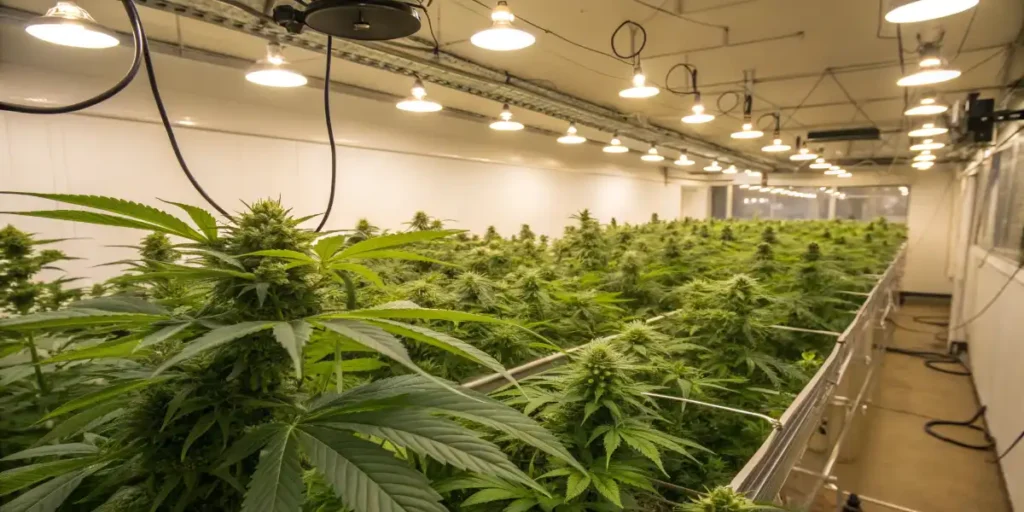

To choose cannabis seeds, prioritize documented genetics, recent germination information, clear provenance and seed health over appearance alone. Decide whether regular, feminized or autoflowering genetics fit your goals, then compare breeder data and testing. Dark, firm seeds may look mature, but color, stripes, floating or sinking cannot reliably prove viability or guarantee a contamination-free harvest.
Start by Choosing the Right Type of Cannabis Seed
Before comparing individual cultivars, decide what kind of seed fits the cultivation goal. Regular, feminized and autoflowering seeds describe different reproductive or flowering characteristics, and those differences matter much more than whether a seed has attractive markings on its shell.
Recommended Strains
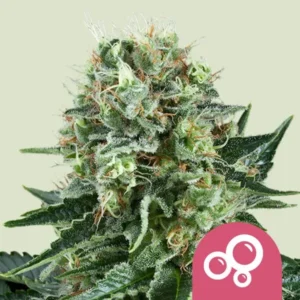
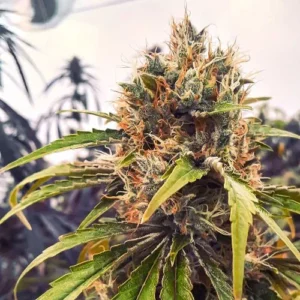
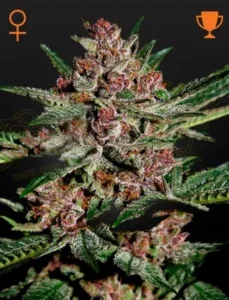
Bubble Kush

|
THC | 19% - 20% (Medium) |

|
Lineage | Bubble Gum x O.G. Kush |

|
Type | Feminized |

|
Height | 5.91 ft | 1.8 m |

|
Yield | High |

|
Yield Indoor | 1.8 - 1.97 oz/ft² | 550 - 600 g/m² |

|
Yield Outdoor | 21.16 - 22.93 oz/plant | 600 - 650 g/plant |

|
Flowering Time | 8 - 10 weeks |

|
Phenotype | 80% Indica / 20% Sativa |

|
Effects | Focused, Relaxed |

|
Flavors | Earthy, Fruity, Pepper, Pine |
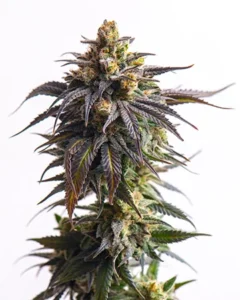
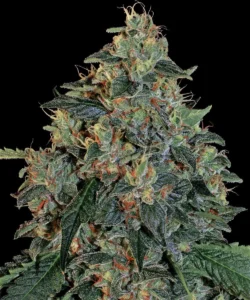
Critical Purple Autoflower
|
|
THC | 15% - 20% (Medium) |
|
|
Lineage | (Purple OG x Critical) x Ruderalis |
|
|
Type | Autoflowering |
|
|
Height | 3.94 ft | 1.2 m |
|
|
Yield | Medium |
|
|
Yield Indoor | 1.15 - 1.31 oz/ft² | 350 - 400 g/m² |
|
|
Yield Outdoor | 14.11 - 15.87 oz/plant | 400 - 450 g/plant |
|
|
Life Cycle | 8 - 9 weeks |
|
|
Phenotype | 80% Indica / 20% Sativa |
|
|
Effects | Euphoric, Happy, Relaxed |
|
|
Flavors | Coffee, Earthy, Fruity |
Regular seed populations can produce both male and female plants, making them particularly relevant when breeding or maintaining broader genetic diversity. Feminized seeds are produced to strongly favor female offspring, which makes them more practical when the objective is flower production rather than breeding. Autoflowering genetics differ because reproductive development is much less dependent on the short-day photoperiod required by conventional photoperiod cannabis.
None of these categories is inherently higher quality. A poorly produced autoflower seed can be worse than a well-produced regular seed, and feminization itself says nothing about vigor, disease resistance or genetic identity. The first question should therefore be what biological characteristics you need rather than which category is universally best.
Look for Documented Genetics, Not Just a Famous Strain Name
The next consideration is genetic provenance.
A recognizable cultivar name can be useful shorthand, but the name alone does not prove that two seed lots are genetically identical. Cannabis naming has historically been inconsistent, and different breeders can sell materially different genetics under the same or similar commercial names.
Good provenance means the producer can explain the breeding material behind the seed, how the line was reproduced and what characteristics have actually been observed in that population. When uniformity is important, information about generation, parental selection and segregation is more meaningful than descriptions such as stable genetics without supporting information.
This becomes particularly important when selecting for traits such as autoflowering, cannabinoid profile, sex expression or disease resistance. Those characteristics need to be inherited reliably if the seed is expected to reproduce them consistently.
Seed testing in agriculture reflects the same principle. USDA seed programs include varietal verification alongside germination, viability and purity testing because knowing what the seed actually is is a separate quality question from knowing whether it will germinate.
Germination Data Are More Useful Than Seed Appearance
A healthy-looking seed is encouraging, but appearance should not be treated as a laboratory test.
Cannabis seeds vary naturally in color, pattern and size. Mature seeds are often brown, gray or mottled and can have a relatively firm seed coat, while obviously crushed, damaged or incompletely developed seeds are reasonable candidates for rejection.
The mistake is going further and assuming that a particular color or pattern proves viability.
The current article says healthy cannabis seeds should be dark brown, glossy and potentially tiger striped, while green or pale seeds are treated as unlikely to germinate. Those characteristics may sometimes accompany maturity, but they are not reliable enough to determine whether the embryo inside is alive.
Actual viability is determined more directly through germination testing or physiological tests. Cannabis researchers have, for example, used tetrazolium staining to distinguish living from non-viable embryos based on metabolic activity.
For a buyer, a recent germination percentage from a properly sampled seed lot is therefore much stronger evidence than the shell having an attractive pattern.
Ask How Recent the Germination Test Is
Seed quality changes during storage.
A seed lot that performed extremely well when produced does not necessarily maintain the same germination percentage indefinitely. Temperature, moisture, handling and storage duration can all influence seed longevity.
Research on industrial hemp has documented large differences in germination among seed lots and notes that viability can decline during storage. More broadly, professional seed-testing systems report germination under standardized favorable conditions precisely because this provides a meaningful estimate of how many seeds in a lot can produce normal seedlings.
When evaluating an expensive seed lot, a stated 95% germination is much more useful if you know when the test was performed and whether it applies to the current batch.
An old percentage copied indefinitely onto a product page is substantially less informative.
What Does a Good Germination Percentage Mean?
A germination percentage describes the proportion of tested seeds that developed into normal seedlings under the conditions of the test.
It does not mean every buyer will reproduce exactly that percentage at home. Grower technique, temperature, water availability, substrate and handling can still influence emergence.
It is nevertheless one of the most useful pieces of seed-quality information because it measures actual biological performance rather than an indirect visual characteristic.
In professional seed science, germination is also distinguished from viability and vigor. A viable seed contains living tissue, while vigor describes aspects of how strongly a seed lot performs when conditions become less favorable. USDA’s testing program treats germination, viability and vigor as distinct assessments rather than interchangeable labels.
That distinction is useful when comparing cannabis seeds as well.
Does the Float Test Tell You Which Cannabis Seeds Are Good?
No. Floating or sinking should not be used as a definitive cannabis viability test.
The current page states that seeds floating in water are often non-viable while sinking seeds are more likely to germinate. That rule is too simplistic.
Buoyancy can be affected by the seed coat, trapped air, hydration and how long a seed has been submerged. None of those variables directly measures whether the embryo is alive.
A seed that initially floats may still germinate, while a seed that sinks can still be non-viable.
If the purpose of soaking is germination, judge the seed by whether germination actually begins rather than turning sink-versus-float into a pass/fail test.
Can You Squeeze a Cannabis Seed to Test It?
A gentle visual and physical inspection can identify obvious mechanical damage, but deliberately squeezing seeds is not a useful formal viability test.
If the shell is already cracked, crushed or visibly malformed, that is a legitimate quality concern. Applying increasing pressure until a seed breaks, however, risks destroying a potentially viable seed and tells you little about the physiological condition of the embryo.
Professional seed testing does not assess viability by asking whether seeds survive being squeezed between fingers.
The better approach is simply to reject visibly damaged material and use germination or validated viability data for everything that cannot be determined externally.
Seed Health Is Different From Seed Viability
A seed can germinate and still carry a plant-health problem.
This is especially relevant to the original concept of a contamination-free harvest. Seed viability asks whether the embryo can develop. Seed health asks whether the seed lot may carry pathogens or pests capable of causing problems after planting.
The distinction exists throughout commercial agriculture. USDA and APHIS maintain seed-health systems precisely because internationally traded seeds can act as pathways for plant pests and diseases.
Cannabis is not exempt from that risk.
Recent research has demonstrated that hop latent viroid, or HLVd, can occur in cannabis seeds and be transmitted into seedlings. In a 2025 study, researchers detected HLVd in seed produced by infected cannabis plants and observed infected seedlings arising from that material.
Earlier work also reported substantial seed transmission of HLVd in hemp.
This is one reason provenance and plant-health testing can matter much more than whether a seed looks dark and shiny.
Can Cannabis Seeds Guarantee a Contamination-Free Harvest?
No.
Even pathogen-tested starting material cannot protect an entire crop from everything that happens after germination.
Plants can encounter fungi, bacteria, viroids and other pathogens through infected plant material, workers, equipment, insects, irrigation systems or the cultivation environment. Post-harvest handling creates additional opportunities for microbial contamination.
Starting with healthy seed is therefore one layer of risk reduction, not a guarantee.
That distinction should replace the central promise of the current article, which repeatedly suggests that selecting the right seed can itself produce a contamination-free harvest.
A more accurate objective is to start with well-documented, viable and appropriately tested planting material, then maintain good crop-health and hygiene practices throughout cultivation.
What Should You Ask a Cannabis Seed Supplier?
A useful supplier should provide more than a strain description and THC percentage.
For a serious cultivation project, the most valuable information is the identity and provenance of the genetics, whether the seeds are regular, feminized or autoflowering, how the line was produced, approximate germination performance and when relevant whether the source applies any pathogen-testing or quality-control program.
Claims should also be specific.
Disease resistant is weak information unless the breeder explains resistance to which disease and on what evidence. Stable is similarly vague unless the seller can explain what traits have been selected and how consistently they appear in the seed population.
The current article assumes that buying from a reputable supplier automatically provides genetic purity, high germination and pathogen-free material. Reputation can be useful, but those characteristics should ideally be supported by actual quality-control information.
Should You Choose Seeds for Disease Resistance?
If a recurring pathogen is a major problem in your environment, disease resistance can be a sensible breeding criterion.
The important part is choosing documented resistance to the relevant pathogen, rather than buying a famous strain simply because internet descriptions call it hardy.
Cannabis researchers have now identified genuine genetic resistance to powdery mildew, including major resistance loci and susceptibility-gene variants that breeders can follow through molecular markers. This makes evidence-based disease selection increasingly realistic.
By contrast, generic statements that White Widow, Bruce Banner or another commercial name is simply resistant provide very little information unless the exact genetic material has been evaluated against a defined pathogen.
Disease resistance is therefore one possible selection criterion, but it should not replace basic seed quality, provenance and genetic fit.
How Important Is Seed Size?
Large seeds are not automatically genetically superior, more potent or higher yielding.
Seed size can vary among cultivars, maternal plants and seed-development conditions. Extremely shriveled or incompletely developed seeds may justifiably raise quality concerns, but normal size variation does not predict the eventual cannabinoid concentration or yield of the mature plant.
A small viable seed can produce a vigorous plant, while a large seed may fail to germinate.
Cannabinoid production is primarily a characteristic of the resulting plant’s genetics and environment rather than something that can be ranked by looking at seed dimensions.
Use seed size to identify obvious abnormalities, not to predict final flower quality.
Should You Choose Feminized, Regular or Autoflowering Seeds?
The answer depends on the purpose of the grow rather than seed quality.
Feminized seeds are usually more convenient when the goal is producing female flowering plants without maintaining males for breeding. Regular seeds are useful when breeding, preserving broader reproductive options or working with male plants. Autoflowering seeds are useful when photoperiod-independent flowering and a comparatively constrained lifecycle fit the cultivation plan.
Avoid using those categories as proxies for vigor.
Autoflower does not automatically mean easier, tougher or disease-resistant. Feminized does not mean genetically stable in every other characteristic. Regular does not mean lower quality.
Choose the reproductive system first and then evaluate the quality of the specific line within that category.
How Should Cannabis Seeds Be Stored Before Planting?
Seed quality can deteriorate after purchase if storage conditions are poor.
Heat and moisture accelerate many processes involved in seed aging, so seeds intended for later planting are generally better kept dry, dark and under stable, cool conditions rather than exposed repeatedly to heat and humidity.
Cannabis-specific research has shown that seed viability can vary with storage history, while broader seed-longevity research consistently identifies moisture and temperature as major influences on survival during storage.
I would avoid turning this into a universal requirement that every cannabis seed must be stored at exactly 41°F/5°C, as the current article does.
The appropriate storage system depends on how long the seeds need to be preserved and how well moisture is controlled.
Avoid Choosing Cannabis Seeds by THC Percentage Alone
THC percentage on a breeder page is not a seed-quality measurement.
It describes an expected phenotype of plants grown from those genetics under particular conditions. It says nothing directly about whether the current seed lot has high germination, whether the genetics are correctly identified or whether the seeds were produced from healthy parent plants.
The same applies to advertised yield and flowering time.
Those characteristics can help compare cultivars, but they should be treated as estimated genetic traits rather than proof of seed quality.
This is why the strain comparison table in the current article adds little value: listing GG4, Blue Dream and Bruce Banner by THC, terpene, yield and vague Resistance ratings does not help determine whether the seeds themselves are high quality.
How to Choose Cannabis Seeds: The Bottom Line
Choosing good cannabis seeds requires more than finding the darkest shell or the most famous strain name.
Start by deciding whether regular, feminized or autoflowering genetics suit the cultivation goal. Then evaluate the breeder or supplier’s provenance, genetic documentation, recent germination information and any relevant seed-health testing.
Visual inspection remains useful for identifying obvious physical damage, but seed color, stripes and buoyancy cannot reliably establish viability. Professional seed-quality systems rely instead on measurements such as germination, viability, vigor and varietal identity.
Seed health should also be taken seriously. Research now shows that important cannabis pathogens such as HLVd can be present in seed and transmitted to seedlings.
Even the best seed lot cannot guarantee a contamination-free harvest because disease and contamination can enter later in cultivation and processing.
The realistic goal is therefore simpler: start with healthy, well-documented genetics and remove one major source of uncertainty before the grow begins.
FAQs About Choosing Cannabis Seeds
How can you tell if a cannabis seed is good?
A good cannabis seed should be physically intact and come from a well-documented lot with credible germination and provenance information. Dark coloration and a firm shell may accompany maturity, but appearance alone cannot confirm viability. A germination test or validated viability assessment provides much stronger evidence that the embryo is capable of producing a normal seedling.
Are dark cannabis seeds better than light seeds?
Not necessarily. Seed-coat color can vary with genetics and maturity, so obviously immature or damaged material may look different from fully developed seed. However, dark color or tiger-striping does not prove viability or genetic quality. The most reliable indicator is actual germination or viability data rather than using shell color as a pass-or-fail test.
Do good cannabis seeds sink in water?
Sinking does not reliably prove that a cannabis seed is viable, and floating does not prove that it is dead. Buoyancy can change as the seed hydrates and can be affected by trapped air and seed-coat characteristics. If a seed is being soaked for germination, actual radicle emergence is much more meaningful than whether it initially floats.
What is the difference between feminized and autoflower cannabis seeds?
Feminized describes seed produced to strongly favor female plants, whereas autoflowering describes genetics whose flowering is relatively insensitive to the short-day trigger required by conventional photoperiod cannabis. A seed can be both feminized and autoflowering. Neither characteristic by itself determines seed quality, vigor, potency or disease resistance.
Can cannabis diseases spread through seeds?
Some can. Hop latent viroid has been detected in cannabis seed and research has demonstrated transmission into seedlings. This makes seed health and provenance relevant when avoiding introduction of plant pathogens. However, not every cannabis disease is seed-borne, and healthy seed cannot prevent pathogens from entering later through equipment, propagation material or the growing environment.
Can good seeds guarantee a contamination-free cannabis harvest?
No. High-quality seed reduces uncertainty at the beginning of cultivation but cannot control everything that occurs afterward. Pathogens and contaminants can be introduced during cultivation, harvesting, drying, trimming or storage. A clean harvest requires healthy starting material combined with appropriate sanitation, environmental control, crop monitoring and post-harvest handling.