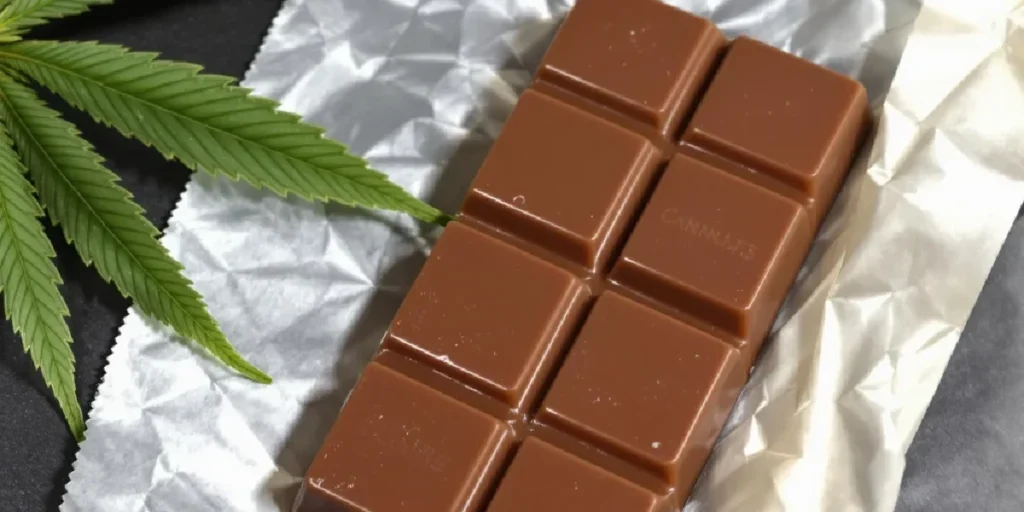

Chocolate bar weed is a cannabis edible made by combining chocolate with THC, CBD or another cannabis extract. Like other edibles, THC chocolate can take about 30 minutes to 2 hours to produce noticeable effects and considerably longer to reach full intensity. Potency depends on the cannabinoid content shown on the label, not the size or flavor of the chocolate.
What Is Chocolate Bar Weed?
Chocolate bar weed is an informal term for cannabis-infused chocolate.
Recommended Strains
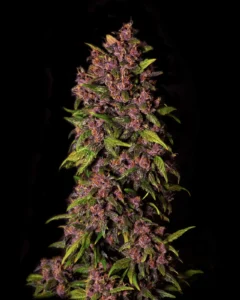
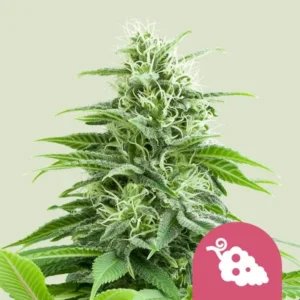
Crystal Meth Auto

|
THC | 20% - 21% (Medium) |

|
Lineage | Early Skunk x Train Wrek x Ruderalis |

|
Type | Autoflowering |

|
Height | 3.94 ft | 1.2 m |

|
Yield | High |

|
Yield Indoor | 1.47 - 1.97 oz/ft² | 450 - 600 g/m² |

|
Life Cycle | 9 - 10 weeks |

|
Phenotype | 40% Indica / 60% Sativa |

|
Effects | Happy, Uplifted, Creative |

|
Flavors | Nutty, Pine, Earthy |
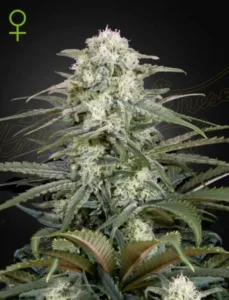
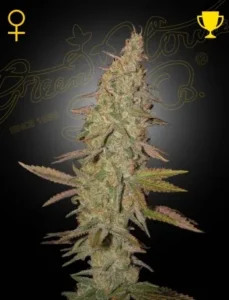
Kalashnikova Auto
|
|
THC | 20% - 21% (Medium) |
|
|
Lineage | Green-o-matic x Kalashnikova |
|
|
Type | Autoflowering |
|
|
Height | 5.91 ft | 1.8 m |

|
Yield Outdoor | 3.53 oz/plant | 100 g/plant |
|
|
Life Cycle | 7 weeks |
|
|
Phenotype | 80% Indica / 20% Sativa |
|
|
Effects | Happy, Relaxed, Uplifted |
|
|
Flavors | Fruity, Woody, Spicy, Earthy |
You may also see these products called:
- Weed chocolate bars
- THC chocolate bars
- Cannabis chocolate
- Marijuana chocolate
- CBD chocolate
- Cannabis edibles
The chocolate acts as the food base while cannabinoids such as THC or CBD are incorporated into the product.
A chocolate bar may be divided into individual squares, but those squares should only be treated as equal servings when the manufacturer specifically states the cannabinoid amount per piece.
The most important information is therefore not the size of the bar.
It is the milligrams of THC and CBD listed on the product label.
Weed Chocolate Bars at a Glance
| Question | Answer |
|---|---|
| What is it? | Cannabis-infused chocolate |
| Main cannabinoids | Usually THC, CBD or both |
| Onset | Often around 30 minutes–2 hours |
| Full effects | Can take up to several hours |
| Duration | Commonly several hours |
| Smoking required? | No |
| Does every square contain the same amount? | Only if accurately manufactured and labeled |
| Main safety issue | Delayed onset can lead to overconsumption |
| Storage priority | Clearly labeled and inaccessible to children and pets |
THC chocolate behaves primarily like an edible cannabis product, not like smoked or vaporized cannabis.
That difference explains much of its onset, duration and risk profile.
How Do THC Chocolate Bars Work?
When THC-containing chocolate is swallowed, the cannabinoids pass through the digestive system before being metabolized by the liver.
This process takes considerably longer than inhaling cannabis.
Health Canada notes that cannabis consumed through food or drink can begin producing effects within approximately 30 minutes to 2 hours.
The strongest effects can take longer to develop.
That delay is one of the most important things to understand about cannabis chocolate.
Someone may eat a piece, feel little at first and assume the product is weak.
If they consume substantially more before the first amount has reached its full effect, both amounts can eventually contribute to a much stronger experience than expected.
How Long Does Weed Chocolate Take to Kick In?
A THC chocolate bar will generally follow the same timing as other cannabis edibles.
Noticeable effects may begin in approximately:
30 minutes to 2 hours.
However, the strongest effects may develop later.
Timing varies according to factors such as:
- Product formulation
- THC amount
- Individual metabolism
- Previous cannabis exposure
- Food in the stomach
- Other medications or substances
This variability is why the clock alone cannot predict exactly when a particular chocolate edible will affect one individual.
If you have consumed cannabis chocolate and do not feel anything immediately, delayed onset does not necessarily mean the product is inactive.
How Long Do THC Chocolate Effects Last?
Edible cannabis generally lasts considerably longer than inhaled cannabis.
Health Canada reports that effects from cannabis consumed through food or drink can commonly persist for approximately 4 to 8 hours, with some lingering effects potentially lasting longer.
The actual duration depends on:
- THC amount
- CBD content
- Individual sensitivity
- Metabolism
- Food
- Other substances
- Previous tolerance
A high-THC chocolate bar should therefore not be viewed as equivalent to taking a few inhalations of cannabis.
The routes of administration behave differently.
Is Chocolate Weed Stronger Than Other Edibles?
Not inherently.
Chocolate does not automatically make cannabis stronger than gummies, cookies or other edible products.
The cannabinoid amount matters more than the food format.
For example, a chocolate square containing a particular amount of THC should not be assumed to be stronger simply because it contains chocolate.
Likewise, a large chocolate bar may contain less THC than a small edible from another category.
Instead of comparing physical size, compare:
- THC per serving
- THC per package
- CBD per serving
- CBD per package
The numbers on a reliable product label tell you much more than whether the edible is chocolate, candy or baked food.
How to Read a THC Chocolate Bar Label
A clearly labeled product should make it possible to distinguish between total package potency and potency per serving.
Imagine a bar divided into multiple pieces.
The label might tell you:
Total THC: cannabinoid content across the entire package.
THC per piece: cannabinoid content in one defined serving.
Those numbers should not be confused.
Eating an entire multi-serving bar is not equivalent to eating one square.
Also check for:
- CBD content
- Number of servings
- Ingredients
- Allergens
- Product or batch information
- Storage instructions
- Expiry or best-before information where applicable
A product whose cannabinoid content is unclear is inherently more difficult to use predictably.
Does Every Chocolate Square Have the Same THC?
It should not automatically be assumed.
A professionally manufactured and tested edible may be designed so that cannabinoids are distributed consistently across servings.
But edible homogeneity depends on manufacturing quality.
The CDC notes that cannabinoid strength in edible cannabis can sometimes be difficult to measure or inaccurately labeled.
That is especially relevant to unregulated or homemade products.
Breaking an untested homemade chocolate bar into ten visually equal pieces does not prove that each piece contains exactly one-tenth of the THC.
Physical size and cannabinoid concentration are different measurements.
THC Chocolate vs CBD Chocolate
Not all cannabis chocolate is intoxicating.
THC Chocolate
THC is the principal intoxicating cannabinoid in cannabis.
THC-containing chocolate can produce effects including:
- Euphoria
- Altered perception
- Relaxation
- Changes in coordination
- Changes in attention or memory
Higher amounts can also increase the risk of unwanted reactions such as anxiety, panic or confusion.
CBD Chocolate
CBD is not intoxicating in the same way as THC.
A CBD-dominant chocolate product may therefore not produce a conventional cannabis “high.”
However, CBD products should still be evaluated according to their actual ingredient and cannabinoid labels rather than assumed to have a particular health effect.
A product can also contain both THC and CBD.
How Much THC Is in a Weed Chocolate Bar?
There is no universal amount.
Cannabis chocolate bars can vary substantially between jurisdictions, manufacturers and formulations.
That makes statements such as:
“One square is always one dose.”
or
“Every weed chocolate bar contains the same amount of THC.”
incorrect.
The amount must be determined from the specific label.
Where regulated cannabis is legally available, official public-health guidance generally encourages choosing lower-THC products and allowing enough time for delayed effects before considering additional consumption.
For someone unfamiliar with edibles, lower THC exposure is less likely to produce unexpectedly intense effects than beginning with a high-potency product.
Why Edible Cannabis Can Feel Different From Smoking
The difference is not simply that edibles take longer.
When THC is swallowed, it is processed through the digestive system and liver before reaching systemic circulation.
That creates a different pharmacological profile from inhalation.
As a result, edible cannabis often has:
- Slower onset
- Longer duration
- Less predictable timing
- Greater risk of consuming additional THC before the first amount peaks
This is why someone comfortable with smoked cannabis should not automatically assume that the same level of experience translates directly to edibles.
Can You Make Weed Chocolate With Cannabutter?
Cannabis-infused fats can be incorporated into edible recipes, but homemade potency is difficult to determine accurately without appropriate testing.
That creates a major difference between ordinary chocolate and cannabis chocolate.
You may know exactly how much butter went into a recipe without knowing precisely how much THC ended up in each individual piece.
Growlantis covers cannabis-infused butter separately in its weed butter recipes guide.
For chocolate-bar search intent, however, the more useful issue is understanding potency and labeling rather than turning this article into a detailed manufacturing recipe.
What Should You Look for in Cannabis Chocolate?
Where legally regulated products are available, prioritize clarity rather than marketing.
Useful characteristics include:
Clearly stated THC and CBD amounts
You should be able to understand both serving and package potency.
Defined servings
The package should make it clear how portions correspond with cannabinoid content.
Ingredient information
Chocolate commonly contains potential allergens such as milk, soy or nuts.
Batch or testing information
Regulated labeling provides more confidence than an edible with unknown potency.
Child-resistant storage
Chocolate can easily be mistaken for ordinary food.
The words “premium,” “full spectrum,” “strongest” or “indica chocolate” are less informative than actual cannabinoid content.
Does the Cannabis Strain Matter in a Chocolate Bar?
Usually much less than cannabis marketing suggests.
Once cannabis has been processed into an edible, the final cannabinoid and chemical profile of the product matters more than a familiar strain name printed on the package.
Moreover, cannabis strain names themselves are not scientifically reliable enough to guarantee exact chemistry or predictable effects.
For a chocolate edible, prioritize:
- THC amount
- CBD amount
- Other labeled cannabinoids
- Product formulation
- Testing information
rather than assuming that an “indica chocolate” must make everyone sleepy or a “sativa chocolate” must feel energizing.
Growlantis explores this issue further in its guide asking whether cannabis strain names are scientifically reliable.
Can Weed Chocolate Expire?
Yes.
Cannabis chocolate is still a food product.
Its practical shelf life depends partly on the chocolate and other ingredients, not just the cannabinoids.
Check:
- Manufacturer storage instructions
- Best-before or expiry information
- Changes in smell
- Changes in appearance
- Ingredient-specific storage requirements
Store the product in a cool environment protected from excessive heat and light unless the manufacturer provides different instructions.
Do not assume that a chocolate bar remains suitable indefinitely simply because it contains cannabis.
How Should Cannabis Chocolate Be Stored?
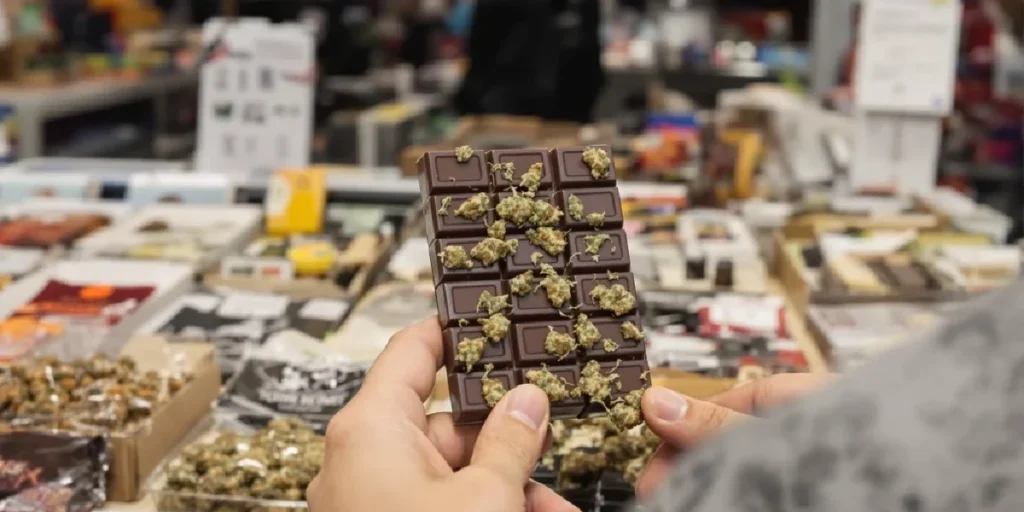
Storage has an additional safety dimension because cannabis chocolate can look almost identical to ordinary candy.
The CDC specifically warns that edible cannabis products can be accidentally consumed by children.
Keep THC-containing chocolate:
- In its original packaging
- Clearly labeled
- Separate from ordinary snacks
- Out of sight and reach of children
- Inaccessible to pets
- Securely stored
Avoid transferring cannabis chocolate into an unlabeled candy wrapper or ordinary food container.
That creates unnecessary risk of accidental ingestion.
What Happens if You Eat Too Much THC Chocolate?
Excessive THC exposure can produce unpleasant and sometimes severe effects.
The CDC lists possible signs of consuming too much cannabis including:
- Extreme confusion
- Anxiety
- Panic
- Paranoia
- Fast heart rate
- Hallucinations or delusions
- Severe nausea or vomiting
Edibles present a particular problem because their delayed onset makes it easier to consume additional THC before the first amount has fully taken effect.
Someone experiencing severe symptoms, difficulty remaining conscious, dangerous behavior or another medical emergency should receive appropriate medical or poison-control assistance.
Cannabis Chocolate and Children
This is one of the most important safety issues associated with weed chocolate.
A cannabis chocolate bar can closely resemble an ordinary chocolate product.
Young children may not understand the difference.
The CDC reports that accidental cannabis ingestion in children has increased in jurisdictions where adult cannabis use has been legalized, with some exposures requiring emergency care or hospitalization.
Never leave cannabis edibles:
- In an ordinary candy bowl
- On a kitchen counter
- Inside an unlocked snack cupboard
- In packaging easily confused with conventional sweets
Secure storage matters more with edibles than many consumers realize.
Chocolate Bar Weed: Key Takeaway
Chocolate bar weed simply means chocolate infused with cannabis cannabinoids such as THC or CBD.
The most important information is not the flavor, strain name or physical size of the bar.
It is the cannabinoid content.
THC chocolate behaves like other edible cannabis products: effects are delayed compared with inhalation and can last for several hours.
That delayed onset makes clear labeling and patience particularly important.
Choose products whose THC and CBD content can be understood per serving, avoid assuming each chocolate square contains the same amount unless the label says so, and store cannabis chocolate securely so it cannot be mistaken for ordinary food.
FAQs About Chocolate Bar Weed
What is chocolate bar weed?
Chocolate bar weed is chocolate infused with cannabis cannabinoids, most commonly THC, CBD or a combination of both. It belongs to the broader category of cannabis edibles. The cannabinoid content can vary substantially between products, so the package label is more useful for understanding potency than the chocolate’s size, flavor or strain name.
How long does a weed chocolate bar take to kick in?
THC chocolate generally follows the timing of other cannabis edibles. Noticeable effects may begin approximately 30 minutes to two hours after consumption, while the strongest effects can take longer to develop. Individual metabolism, food, THC amount, medications and previous cannabis exposure can all influence how quickly a specific product is felt.
How long do THC chocolate effects last?
Edible cannabis effects commonly persist for several hours. Health Canada indicates that cannabis consumed through food or drink can generally produce effects for around four to eight hours, although residual effects may last longer. Duration varies with THC amount, individual sensitivity, metabolism, food and other substances consumed at the same time.
Are weed chocolate bars stronger than gummies?
Chocolate is not inherently stronger than gummies or other cannabis edibles. Strength is determined mainly by the amount of THC or other cannabinoids present. A small gummy can contain more THC than a large chocolate square, or vice versa. Compare milligrams per serving rather than judging edible potency from physical size or format.
Can cannabis chocolate bars expire?
Yes. Cannabis chocolate remains a food product and its quality can deteriorate with age. Follow manufacturer storage and expiry information and check the ingredients because different formulations have different shelf lives. Cannabinoid content does not prevent chocolate, dairy ingredients, nuts or other components from undergoing normal food-quality changes during storage.
How should THC chocolate be stored?
Keep THC chocolate clearly labeled, preferably in its original child-resistant packaging, and separate from ordinary food. Store it securely out of sight and reach of children and pets. Follow the manufacturer’s temperature instructions and protect the product from excessive heat or light unless its packaging specifies another appropriate storage method.