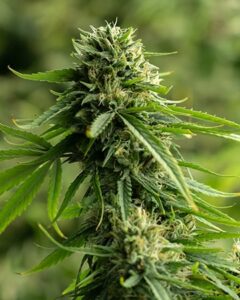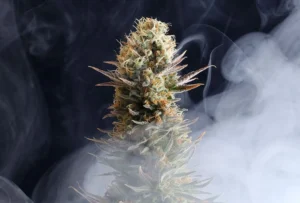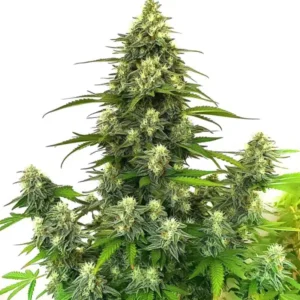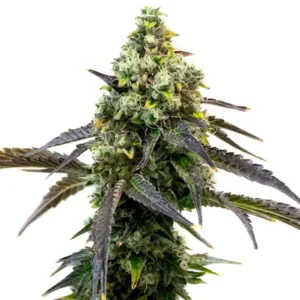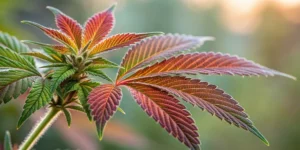
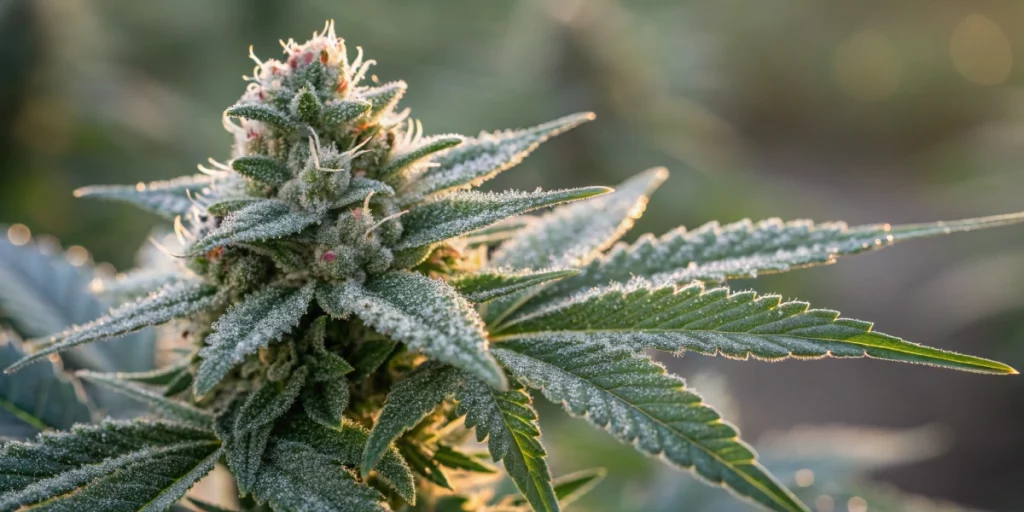

Frosty weed strains are cannabis cultivars known for dense glandular trichomes that give mature buds a white, sugary or crystal-coated appearance. The White, White Truffle, Ice Cream Cake, Original Glue, Snowman and Platinum Cookies are strong examples. Heavy frost indicates visible resin glands, but it does not guarantee higher THC, stronger effects or better overall flower quality.
Frostiest Weed Strains at a Glance
| Strain | Why It Makes the List |
|---|---|
| The White | Famous specifically for unusually dense white trichome coverage |
| White Truffle | Dark flower creates striking contrast with heavy pale trichomes |
| Ice Cream Cake | Frequently described as covered in icy trichomes |
| Original Glue | Classic cultivar known for exceptionally sticky, resin-covered buds |
| Snowman | GSC-family cultivar known for trichome-rich flowers |
| Platinum Cookies | Heavy crystal-trichome coating and strong visual bag appeal |
There is no scientific league table that measures every commercial cultivar under identical conditions, so this should be treated as an editorial shortlist of strains with well-documented frosty reputations, not an objective global ranking.
Recommended Strains
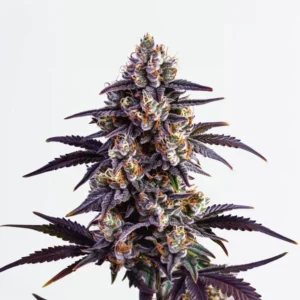
Motor Breath

|
THC | 30% - 33% (High) |

|
Lineage | Chemdog x SFV OG Kush |

|
Type | Feminized |

|
Height | 4.92 ft | 1.5 m |

|
Yield | Medium |

|
Yield Indoor | 1.15 - 1.47 oz/ft² | 350 - 450 g/m² |

|
Yield Outdoor | 15.87 - 19.4 oz/plant | 450 - 550 g/plant |

|
Flowering Time | 8 - 10 weeks |

|
Phenotype | 70% Indica / 30% Sativa |

|
Medical | Anxiety, Fatigue, Migraines |

|
Effects | Euphoric, Happy, Relaxed |

|
Flavors | Citrus, Diesel, Earthy |
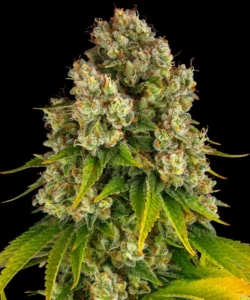
Cheese Autoflower
|
|
THC | 18% - 20% (Medium) |
|
|
Lineage | Cheese x BF Super Auto #1 |
|
|
Type | Autoflowering |
|
|
Height | 3.44 ft | 1.05 m |
|
|
Yield | High |
|
|
Yield Indoor | 1.47 - 1.64 oz/ft² | 450 - 500 g/m² |
|
|
Yield Outdoor | 5.29 - 7.76 oz/plant | 150 - 220 g/plant |
|
|
Life Cycle | 9 - 11 weeks |
|
|
Phenotype | 70% Indica / 30% Sativa |
|
|
Effects | Relaxed, Happy, Energetic, Creative |
|
|
Flavors | Earthy, Pungent, Cheese, Skunk |
What Makes Weed Look Frosty?
The “frost” covering cannabis flower is made primarily of glandular trichomes.
Female cannabis flowers produce several trichome types, including bulbous, capitate-sessile and capitate-stalked glands. The larger stalked trichomes become especially visible during flowering and are major sites of cannabinoid and terpene production and storage. Dense coverage creates the characteristic sparkling or sugar-coated appearance associated with frosty buds.
Genotype and plant age both influence trichome number, morphology and maturity. Research comparing cannabis genotypes has found substantial differences in gland density, stalk length and developmental stage.
So “frosty weed” is useful descriptive slang, but it is not a formal botanical category.
1. The White
The White is probably the clearest overall answer to frosty weed strains.
Its name comes directly from its appearance. Leafly describes mature buds as being covered with so many pale trichomes that they look as though they have been rolled in confectioner’s sugar.
That makes it a stronger inclusion than selecting strains simply because their marketing name contains Ice, Frost or Snow.
The White is also useful for illustrating why appearance and aroma should not be confused. Despite its dramatic resin coverage, it has historically been described as comparatively restrained in aroma and flavor.
In other words, more visible frost does not automatically mean more smell.
2. White Truffle
White Truffle is another especially strong candidate because heavy trichome coverage is part of its established flower description.
The cultivar is associated with Gorilla Butter genetics, and its mature flower is commonly described as dark purple to nearly black beneath a coating of frosty white trichomes.
That contrast contributes substantially to its striking appearance. Pale resin glands look especially dramatic against dark plant tissue, which is one reason some cultivars photograph as considerably frostier than others.
This is also a good reminder that visual “frostiness” is affected by both trichome abundance and the flower underneath it.
3. Ice Cream Cake
Ice Cream Cake is commonly listed as Wedding Cake crossed with Gelato #33, and grow descriptions repeatedly emphasize its heavy icy trichome coverage.
Its combination of purple and light-green tissue with pale glandular resin gives mature flowers the classic frozen or sugar-coated appearance readers expect from this search.
I would include Ice Cream Cake because its frosty reputation is established independently of the word “Ice” in the name.
I would not, however, assign one universal THC percentage to it. Different growers and batches can express different chemistry, so its place in this ranking should be based on visible trichome reputation, not a fixed potency claim.
4. Original Glue
Original Glue, formerly widely known as GG4, represents the stickier side of frosty cannabis.
The cultivar became famous partly because of its extreme resin production; accounts surrounding its origin describe trimmed plant material becoming so sticky that resin effectively glued equipment and hands together. Its flowers are still commonly characterized as chunky and resin-covered.
Original Glue demonstrates that “frosty” and “resinous” overlap but are not identical descriptions.
The White may look more dramatically pale, whereas Original Glue’s reputation emphasizes sticky glandular resin production.
Both traits ultimately involve trichomes, but visual contrast, gland morphology and flower color determine how frosty the finished bud appears.
5. Snowman
Snowman is a GSC-family cultivar whose flower is specifically described as rich in trichomes.
Its lime-green buds give those resin glands plenty of visual contrast, making it a reasonable inclusion in a shortlist built around appearance rather than simply cannabinoid percentage.
Snowman also illustrates why strain names should not determine the ranking on their own.
There are many cannabis products with Snow, Frost, Crystal or Ice in their names. That terminology is marketing until there is actual evidence that the flowers characteristically display unusually visible resin coverage.
Here, the flower descriptions support the association.
6. Platinum Cookies
Platinum Cookies, also known as Platinum GSC, rounds out the ranking.
Its flowers are commonly described as carrying a heavy coat of crystal trichomes, making it one of the more established Cookies-family choices for visible resin coverage.
It is especially useful in this list because it gives readers a Cookies-derived alternative to the Kush, Gorilla and dessert-oriented genetics appearing elsewhere.
As always, phenotype and producer matter. One Platinum Cookies batch may look substantially more heavily coated than another.
The strain name identifies a useful candidate; it does not certify a specific trichome density.
Does Frosty Weed Have More THC?
Not necessarily.
Cannabinoids are synthesized and stored primarily within glandular trichomes, so resin-gland biology is clearly connected to cannabinoid production. However, researchers specifically caution that the relationship between trichome density and total cannabinoid concentration has not been firmly established across cannabis genotypes.
Simply counting visible trichomes misses several important variables.
Gland heads can differ in size, maturity and metabolic activity. Sampling location also matters because density varies between bracts and surrounding sugar leaves. Current research therefore argues that simple trichome counts alone may not adequately predict cannabinoid content.
A very frosty flower may be potent, but the correct way to know its THC percentage is still batch-specific laboratory testing.
Does More Frost Mean More Terpenes?
Not automatically.
Glandular trichomes are important sites for both cannabinoids and terpenes, but counting visible glands cannot tell you exactly how much aromatic material a flower contains or which compounds dominate its profile.
The White provides a useful real-world counterexample: it is famous for extreme visual trichome coverage while also being known for a comparatively subtle aroma.
Aroma depends on actual volatile chemistry, not merely how white the flower appears.
For the same reason, describing every frosty strain as having unusually rich or predictable terpene profiles would be misleading.
Are Frosty Weed Strains Better Quality?
Frost can contribute to visual quality and resin potential, but it should not be used as a complete quality score.
A good flower evaluation also considers cultivar identity, aroma, moisture condition, handling and contamination status. If cannabinoid or terpene concentration matters, analytical testing is much more informative than photography.
Post-harvest handling matters as well because glandular heads can be damaged, collapse or be lost during drying and mechanical handling. Cannabis research has directly observed changes to trichome morphology after harvest and drying.
So a flower with beautifully intact glands can indicate careful handling, but “frostiest = best” is still too simplistic.
Can You Make Cannabis More Frosty?
Genetics are one of the most important determinants of how many glandular trichomes a plant produces and how those glands develop. Plant age also strongly affects their maturation.
Environmental conditions can influence plant metabolism, but there is no validated universal recipe involving cold nights, extra phosphorus, aggressive pruning or a particular light that reliably maximizes frost across all cannabis cultivars.
The current article suggests that cool nights, bright days, training, specific nutrients and lighting practices directly enhance the frosty phenotype. That is much more certainty than cannabis research currently supports.
For someone specifically seeking frosty flower, starting genetics are more defensible than chasing a cultivation hack.
Do Cool Temperatures Make Weed Frostier?
There is insufficient evidence for the broad claim that cool nights inherently create heavier cannabis trichome coverage.
Cannabis research confirms that genotype and developmental stage affect glandular trichome development, while the effects of individual environmental variables such as temperature, nutrient status and light conditions still require further characterization.
That means intentionally stressing a plant with cold conditions simply to create more frost is not evidence-based advice.
The original page’s history section attributes the development of frosty cannabis to warm days and cool nights without providing evidence for that mechanism. I would remove it.
Frosty Weed vs Mold: How Can You Tell the Difference?
Trichomes have a structured glandular appearance. Under magnification, stalked cannabis trichomes show a distinct stalk supporting a rounded gland head.
Mold does not have that morphology. Fungal contamination may look fuzzy, filamentous or web-like rather than like organized individual resin glands.
If flower looks suspicious, magnification is much more useful than relying on the overall white appearance.
A strain can be naturally extremely frosty, but unexpected fuzzy growth, unusual discoloration or a musty odor should not be dismissed simply because the cultivar is known for heavy resin production.
How to Choose a Frosty Weed Strain
Start with genetics that have a genuine reputation for dense trichome coverage rather than names that simply sound frosty.
The White is the strongest starting point when visual frost is the priority. White Truffle and Ice Cream Cake combine heavy gland coverage with dramatic flower coloration, while Original Glue is particularly relevant when sticky resin production matters.
Snowman and Platinum Cookies provide additional options with documented trichome-rich flower descriptions.
After that, judge the actual phenotype and batch.
The strain name gives you a shortlist. The flower in front of you tells you what was actually expressed.
Frosty Weed Strains: Bottom Line
Frosty cannabis gets its distinctive crystal-coated appearance from dense glandular trichomes, particularly the larger stalked glands that become prominent on mature female flowers.
The White, White Truffle, Ice Cream Cake, Original Glue, Snowman and Platinum Cookies are all credible examples of cultivars known for strong trichome or resin coverage.
The important qualification is that frost is primarily a morphological and visual characteristic.
More visible glands do not automatically establish more THC, stronger effects, better terpenes, greater yield or medical superiority. Current research specifically shows that cannabinoid concentration cannot be inferred reliably from simple trichome density alone.
Choose frosty strains for resinous flower and visual bag appeal, then use actual testing when chemistry matters.
FAQs About Frosty Weed Strains
What is the frostiest weed strain?
There is no standardized scientific ranking covering every cannabis cultivar, but The White is one of the strongest candidates because its defining characteristic is extremely dense pale trichome coverage. White Truffle, Ice Cream Cake, Original Glue, Snowman and Platinum Cookies are also widely documented for resin-heavy or visibly frosty flowers.
Why does weed look frosty?
Weed looks frosty because mature female flowers develop glandular trichomes containing resinous secretions. The larger capitate-stalked glands become especially visible during flowering, giving buds and nearby sugar leaves a sparkling, crystal-like appearance. These glands are important sites for cannabinoid and terpene biosynthesis and storage.
Does frosty weed mean high THC?
Not necessarily. Cannabinoids are produced within glandular trichomes, but research has not established a simple relationship where greater visible trichome density always means higher THC. Gland size, maturity, metabolic activity, genotype and sampling location all matter, so laboratory cannabinoid testing remains more reliable than visual frost.
What strains have the most trichomes?
The White, White Truffle, Ice Cream Cake, Original Glue, Snowman and Platinum Cookies all have established reputations for substantial trichome or resin coverage. There is no universal comparative trial proving one produces the most glands under identical conditions, so “most trichomes” should be treated as an editorial rather than scientific ranking.
Can growers increase trichomes on cannabis?
Genetics and developmental stage clearly influence cannabis trichome development. Environmental conditions may also affect expression, but there is no universal temperature, fertilizer, pruning method or light treatment proven to maximize trichomes across all cultivars. Selecting resin-heavy genetics is more defensible than relying on a supposed frost-boosting cultivation hack.
Is frosty weed always good weed?
No. Dense, intact glandular trichomes can be desirable and visually impressive, but frost alone cannot establish cannabinoid content, aroma, freshness, safety or overall flower quality. A complete assessment should consider the actual batch, handling and storage condition, while laboratory testing is needed when precise cannabinoid or terpene composition matters.