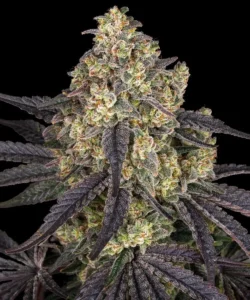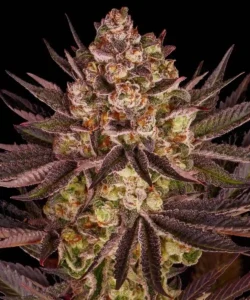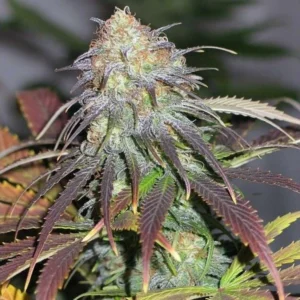
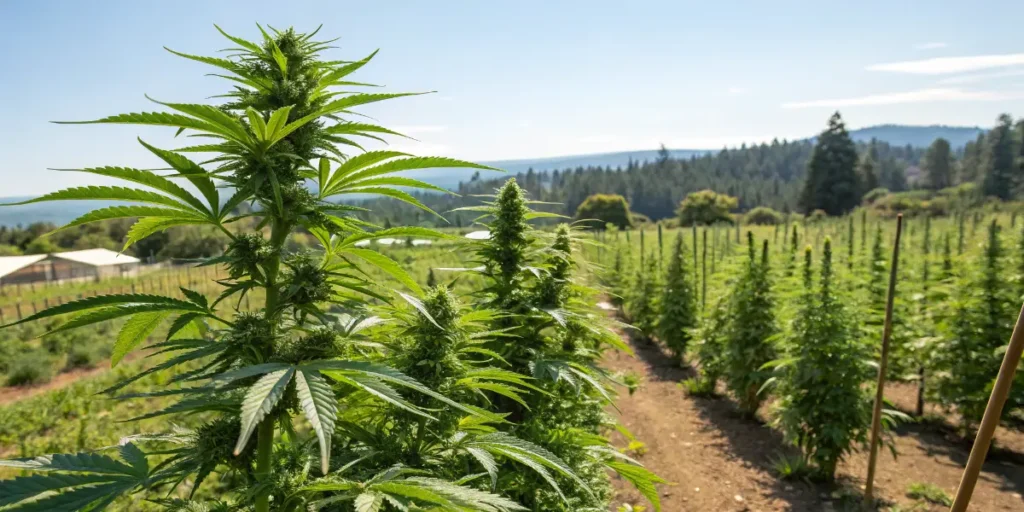

Low THC strains are cannabis cultivars bred or selected to produce less THC than today’s high-potency flower, often with more CBD. There is no universal cutoff, but products around 10% THC or less are commonly treated as lower-potency choices. Examples include CBD Auto Charlotte’s Angel, THC-Victory and other CBD-rich or moderate-THC cultivars.
What Is a Low THC Strain?
A low THC strain is a cannabis cultivar that contains substantially less tetrahydrocannabinol than the high-potency flower common in today’s cannabis market.
Recommended Strains
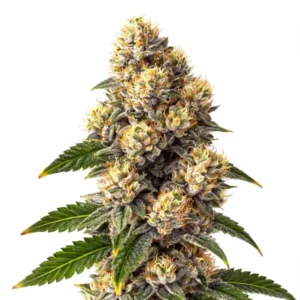
Bubba Kush

|
THC | 14% - 19% (Medium) |

|
Lineage | OG Kush x Afghan |

|
Type | Feminized |

|
Height | 4.92 ft | 1.5 m |

|
Yield | High |

|
Yield Indoor | 1.15 - 1.64 oz/ft² | 350 - 500 g/m² |

|
Flowering Time | 8 - 10 weeks |

|
Phenotype | 80% Indica / 20% Sativa |

|
Effects | Creative, Energetic, Uplifted |

|
Flavors | Chocolate, Coffee, Sweet |
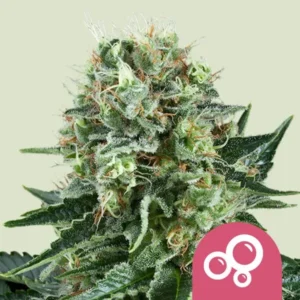
Bubble Kush
|
|
THC | 19% - 20% (Medium) |
|
|
Lineage | Bubble Gum x O.G. Kush |
|
|
Type | Feminized |
|
|
Height | 5.91 ft | 1.8 m |
|
|
Yield | High |
|
|
Yield Indoor | 1.8 - 1.97 oz/ft² | 550 - 600 g/m² |

|
Yield Outdoor | 21.16 - 22.93 oz/plant | 600 - 650 g/plant |
|
|
Flowering Time | 8 - 10 weeks |
|
|
Phenotype | 80% Indica / 20% Sativa |
|
|
Effects | Focused, Relaxed |
|
|
Flavors | Earthy, Fruity, Pepper, Pine |
THC is the main cannabinoid responsible for cannabis intoxication.
The difficulty is that there is no universal scientific definition of “low THC strain.”
Health Canada recommends that new or occasional consumers looking to reduce risk choose dried cannabis containing 10% THC or less, ideally with an equal or higher amount of CBD.
That provides a useful reference point, although it is not a global botanical classification.
For this guide, it is useful to distinguish between:
| THC Range | Practical Description |
|---|---|
| Below ~1% | Very low THC |
| ~1–10% | Low THC |
| ~10–15% | Lower-potency cannabis |
| ~15–20% | Moderate potency |
| 20%+ | High-potency territory |
These categories are editorial rather than universal legal definitions.
Actual cannabinoid concentrations can also vary between individual plants, harvests and testing laboratories.
Best Low THC Strains at a Glance
| Strain | Reported THC | Profile |
|---|---|---|
| CBD Auto Charlotte’s Angel | About 1% | Very low THC, CBD-rich |
| THC-Victory | 6–8% | Low THC |
| Critical Cure | Around 6% | Balanced THC/CBD |
| Shiva Skunk Auto | 10–13% | Lower-potency |
| Hindu Kush Automatic | 11–13% | Lower-potency |
| Big Bud Automatic | 12–13% | Lower-potency |
| Banana Kush Cake Automatic | 12–14% | Lower-potency |
The first three fit most naturally into a strict low-THC category.
The remaining cultivars are better described as lower-potency alternatives to modern flower that commonly reaches 20–30% THC.
1. CBD Auto Charlotte’s Angel
Best very-low-THC option
CBD Auto Charlotte’s Angel is one of the clearest examples of what people usually mean when searching for low THC strains.
Growlantis lists this CBD-focused autoflower at approximately:
THC: ~1%
with a substantially higher CBD content.
That cannabinoid balance makes it fundamentally different from strains containing 15%, 20% or 25% THC.
Someone specifically looking to minimize THC should generally pay more attention to products like this than to conventional Kush cultivars marketed as “mild.”
CBD Auto Charlotte’s Angel is also an autoflowering cultivar, making it distinct from photoperiod CBD strains for growers comparing genetics.
2. THC-Victory
Best low-THC option with noticeable THC
THC-Victory occupies an interesting middle ground.
Growlantis currently lists it at approximately:
THC: 6–8%
That is substantially below the potency of many modern recreational cultivars.
Unlike CBD-dominant cannabis containing almost no THC, however, 6–8% THC can still be intoxicating.
“Low THC” should never be interpreted as:
non-intoxicating.
Personal response depends on how much cannabis is consumed, route of administration, previous experience and individual sensitivity.
For someone comparing flower purely by THC concentration, however, THC-Victory is much more appropriate for this article than cultivars testing above 20%.
3. Critical Cure
Best balanced THC/CBD example
Critical Cure, also called CBD Critical Cure, is a well-known example of cannabis bred around a more balanced cannabinoid profile.
Typical reported values are approximately:
THC: ~6%
CBD: ~10%
Actual levels vary by producer and harvest.
The important feature is not simply that THC is lower.
It is that CBD represents a meaningful part of the cannabinoid profile.
Public-health guidance suggests that cannabis with lower THC and higher CBD:THC ratios generally presents less risk of severe THC-related effects than high-THC products.
That still does not make Critical Cure risk-free or guarantee one particular experience.
It simply gives it a fundamentally different potency profile from conventional high-THC flower.
4. Shiva Skunk Auto
Best lower-potency autoflower
Shiva Skunk Auto sits close to the boundary between genuinely low THC and what is better described as lower-potency cannabis.
Growlantis currently lists:
THC: 10–13%
Compared with modern cultivars exceeding 20% THC, this is relatively modest.
However, someone specifically seeking cannabis below the 10% reference used in lower-risk guidance should recognize that Shiva Skunk Auto can exceed that level.
For SEO and accuracy, I would therefore call it:
lower THC
rather than
very low THC.
That distinction is important because cannabis websites frequently label anything below 20% as “low,” which is no longer a useful comparison for THC-sensitive consumers.
5. Hindu Kush Automatic
Best classic lower-potency indica-style option
Hindu Kush Automatic is another Growlantis cultivar with a comparatively moderate cannabinoid profile.
Reported THC is approximately:
11–13%
That places it substantially below many modern high-potency Kush varieties.
It should still not be described as non-intoxicating or extremely low THC.
A person consuming enough 11–13% flower can experience significant intoxication.
The appeal here is comparative potency.
Someone who wants Hindu Kush-derived genetics but does not necessarily want cannabis testing in the mid-20% THC range may find this cannabinoid profile more relevant.
6. Big Bud Automatic
Another lower-THC autoflower
Big Bud Automatic is listed by Growlantis at approximately:
12–13% THC.
Again, this belongs in a broader lower-potency category rather than the strictest definition of low THC.
That distinction makes the article more useful.
Instead of pretending that every strain on the list contains almost no THC, readers can choose between:
- CBD-rich, very-low-THC cultivars
- Cannabis below roughly 10% THC
- Lower-potency flower in the 10–15% range
Those are three meaningfully different cannabinoid profiles.
7. Banana Kush Cake Automatic
Best lower-potency Kush-style alternative
Banana Kush Cake Automatic is currently listed at approximately:
12–14% THC.
That makes it much more appropriate for a lower-THC comparison than several Kush varieties originally included in this article.
It remains intoxicating cannabis.
But compared with Kush Mintz varieties reaching the mid-20% THC range, its reported potency is considerably lower.
This is a useful example of why shoppers or growers should compare the actual cannabinoid figures rather than assuming all cultivars belonging to one genetic family have similar strength.
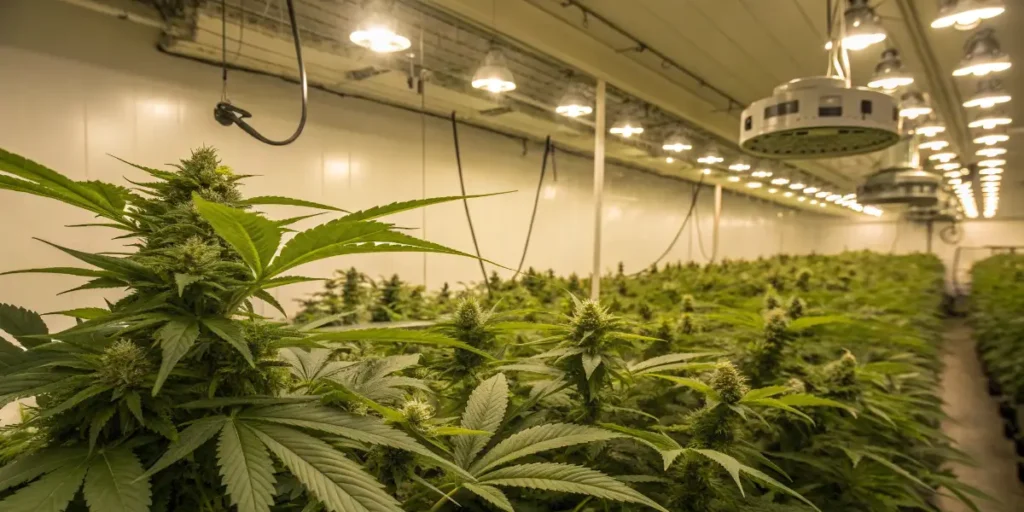
Low THC vs High THC Cannabis
The difference is mainly one of cannabinoid concentration.
THC produces many of cannabis’s intoxicating effects, including changes in:
- Perception
- Memory
- Attention
- Coordination
- Reaction time
As THC exposure increases, unwanted effects can also become more likely.
Health Canada states that higher THC potency is associated with increased risks of acute and longer-term cannabis-related problems.
For new or occasional consumers, its lower-risk guidance recommends looking for dried cannabis containing approximately 10% THC or less and an equal or higher amount of CBD.
That does not mean 10% is a magic safety threshold.
Individual response remains highly variable.
Does Low THC Mean You Won’t Get High?
No.
A low THC percentage does not automatically mean cannabis is non-intoxicating.
A product containing 6%, 8% or 10% THC still contains psychoactive THC.
The eventual effect also depends on total exposure.
Someone consuming a large amount of lower-potency cannabis can receive more total THC than someone consuming a very small amount of stronger flower.
Think of THC percentage as concentration rather than a complete prediction of experience.
Low THC vs High CBD Strains
These terms overlap, but they do not mean exactly the same thing.
Low THC
Describes cannabis containing comparatively little THC.
High CBD
Describes cannabis containing substantial cannabidiol.
A cultivar can theoretically be low in both cannabinoids.
It can also contain:
Low THC + high CBD
or
Moderate THC + high CBD.
Many people searching for low THC strains actually want CBD-dominant cannabis, because those cultivars are deliberately bred to minimize intoxicating THC while maintaining a substantial cannabinoid profile.
That is why CBD Auto Charlotte’s Angel fits the search intent much better than Bubba Kush or Bubble Kush.
Does CBD Cancel Out THC?
Not completely.
CBD and THC interact in complicated ways.
Research and public-health guidance suggest that products with more CBD relative to THC may reduce some of the risks or unwanted effects associated with high-THC cannabis.
But CBD should not be treated as an antidote that automatically cancels intoxication.
A product containing substantial THC can still impair someone even when CBD is present.
The actual cannabinoid amounts matter.
Are Low THC Strains Better for Beginners?
They may present a more conservative option for someone choosing to consume cannabis, but “beginner-friendly strain” is still too simplistic.
Individual sensitivity varies greatly.
A lower-THC product reduces one major variable—the concentration of the primary intoxicating cannabinoid—but it does not remove all risks.
New or occasional consumers can still experience:
- Anxiety
- Dizziness
- Drowsiness
- Impaired attention
- Changes in coordination
Lower THC should therefore be understood as a risk-reduction characteristic, not a guarantee of a comfortable experience.
Are Low THC Strains More Relaxing?
Not automatically.
The previous version of this article repeatedly equates low THC with relaxation.
That is too broad.
THC concentration tells you how much THC is present.
It does not prove that a cultivar will feel:
- Relaxing
- Energizing
- Social
- Sleepy
- Creative
Those experiences vary between people and products.
Commercial indica/sativa labels and strain names are also imperfect predictors of effects.
If the objective is simply a milder THC experience, cannabinoid content is more useful than marketing terms such as “calming strain.”
Are Low THC Strains Better for Anxiety?
This should not be presented as a medical guarantee.
High doses of THC can cause or worsen anxiety in some individuals, so reducing THC exposure may reduce that particular risk.
However, that does not mean a low-THC cannabis strain is a proven treatment for anxiety.
People using cannabis for a health condition should discuss product choice with an appropriate healthcare professional.
Health Canada currently states that there is insufficient evidence to recommend one cannabis product for a particular medical condition.
Is Anything Under 20% THC Considered Low?
No.
Calling 18%, 19% or 20% THC “low” is misleading in today’s context.
Health Canada reports that average dried cannabis potency has increased substantially over recent decades and that some modern strains reach around 30% THC.
Its lower-risk consumer guidance uses 10% THC or less as a reference for dried cannabis for new or occasional users.
That makes 20% cannabis approximately twice that concentration.
For this reason, this article should not describe Bubble Kush at 19–20% THC as a low-THC strain.
Is Bubba Kush a Low THC Strain?
Not really, based on the version currently listed on Growlantis.
Growlantis reports Bubba Kush at approximately:
14–19% THC.
That is lower than many modern 25–30% cultivars, but it is better described as moderate potency than genuinely low THC.
Different breeders can also sell products under the same strain name with different cannabinoid profiles.
Always check the specific product rather than relying on the cultivar name.
Is Kush Mintz Low THC?
No—not the Growlantis version currently listed.
Growlantis lists Kush Mintz at approximately:
26–27% THC.
That is a high-THC cannabinoid profile.
Including it in a list of low-THC cannabis strains creates a direct contradiction between the article and the product information.
It should be removed from this page entirely.
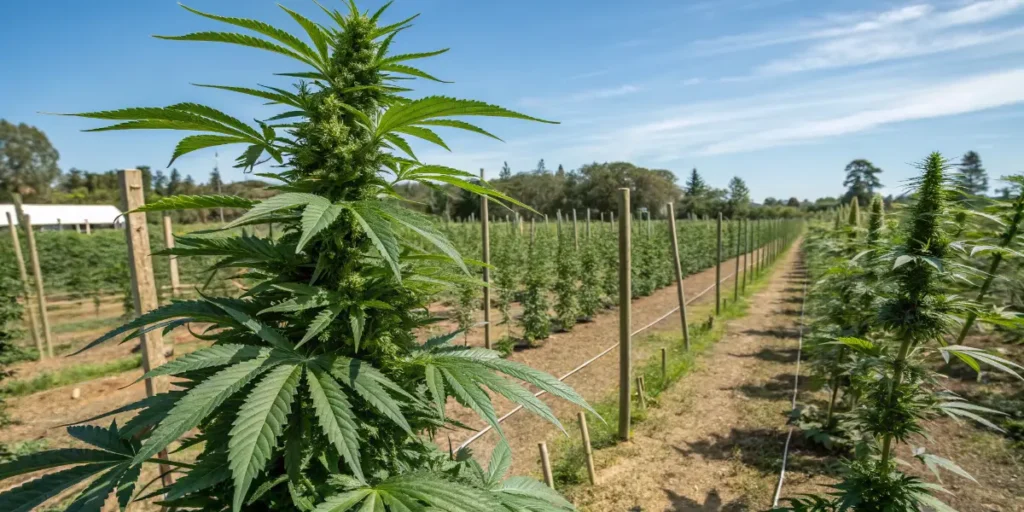
How to Choose a Lower-THC Strain
Start with the cannabinoid numbers.
Look at:
THC percentage
This is the most important figure for this search intent.
CBD percentage
Higher CBD relative to THC may be relevant for people seeking less intense THC exposure.
Actual breeder or product
Two products sharing a strain name do not necessarily have identical cannabinoid profiles.
Independent or batch testing
Advertised genetics describe expected ranges, not a guarantee of the exact chemistry of every harvested flower.
Do not choose purely because a strain is called indica, CBD, mellow or relaxing.
The cannabinoid analysis provides more useful information.
Low THC Strains: Key Takeaway
Low THC strains contain substantially less THC than today’s high-potency cannabis, but there is no universal percentage defining the category.
A practical reference is around 10% THC or less, which Health Canada uses in its lower-risk guidance for dried cannabis.
CBD Auto Charlotte’s Angel and THC-Victory are much stronger examples of genuinely low-THC Growlantis genetics than Bubba Kush, Bubble Kush or Kush Mintz.
Cultivars in the 10–15% range can still be useful lower-potency alternatives, but they remain intoxicating cannabis.
The best way to compare strains is therefore to look at their actual THC and CBD ranges rather than relying on labels such as indica, relaxing or beginner-friendly.
FAQs About Low THC Strains
What are low THC strains?
Low THC strains are cannabis cultivars containing less tetrahydrocannabinol than typical high-potency flower. There is no universal cutoff, but around 10% THC or less is a useful practical reference for dried cannabis. Some low-THC cultivars are also CBD-rich, while others simply produce smaller amounts of both cannabinoids.
What cannabis strains have the lowest THC?
CBD-focused cultivars generally contain some of the lowest THC concentrations. CBD Auto Charlotte’s Angel is listed by Growlantis at approximately 1% THC, while THC-Victory is listed around 6–8%. Exact cannabinoid levels can vary between individual plants and harvests, so advertised strain percentages should be treated as expected ranges rather than guarantees.
Can low THC weed still get you high?
Yes. Low THC does not mean THC-free. Cannabis containing 5%, 8% or 10% THC can still cause intoxication, particularly when larger quantities are consumed. The final effect depends on total THC exposure, individual sensitivity, route of administration and previous cannabis experience rather than the percentage printed on the product alone.
Are low THC strains the same as CBD strains?
Not necessarily. Low THC describes the concentration of THC, while CBD strains are selected for cannabidiol content. Many CBD-dominant cultivars also contain very little THC, so the categories frequently overlap. However, cannabis can theoretically be low in THC without being high in CBD, making cannabinoid testing more informative than the strain category.
Are low THC strains better for beginners?
Lower THC can reduce exposure to cannabis’s primary intoxicating cannabinoid, which is why public-health guidance recommends lower-potency products for people choosing to use cannabis. However, a low-THC strain can still cause impairment or unwanted effects. Individual sensitivity varies, so “low THC” should not be interpreted as automatically mild or risk-free.
Is 15% THC considered low?
Fifteen percent THC is better described as moderate or lower potency compared with modern cannabis exceeding 20–30% THC. It is not especially low under conservative public-health guidance, which uses approximately 10% THC or less as a lower-risk reference for dried cannabis. Classification also depends on context and should not replace the actual cannabinoid percentage.