
The best autoflower seeds for beginners combine automatic flowering with manageable size, a straightforward growth pattern and realistic crop times. White Widow Autoflower, Northern Lights Auto and Critical Auto are strong starting points, while compact modern autos such as Titan F1 can suit smaller spaces. Autoflowers simplify light-cycle management, but good genetics still matter because their short lifecycle leaves less time to recover from early mistakes.
Best Autoflower Seeds for Beginners at a Glance
| Autoflower | Why It Makes the List | Best For |
|---|---|---|
| White Widow Autoflower | Established auto version with manageable structure | Best overall beginner pick |
| Northern Lights Auto | Classic, widely used beginner recommendation | Simple first grow |
| Critical Auto | Fast, straightforward autoflower lineage | Growers prioritizing speed |
| Titan F1 Auto | Very compact modern autoflower | Limited vertical space |
| Purple Punch Auto | Compact indica-leaning auto | Small indoor spaces |
This is an editorial shortlist rather than a guarantee that one cultivar will be effortless. Seed quality, phenotype and growing environment still affect the outcome.
Recommended Strains
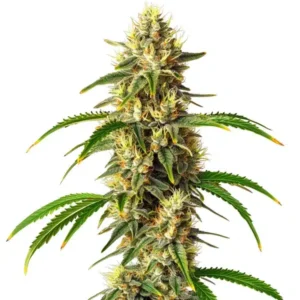
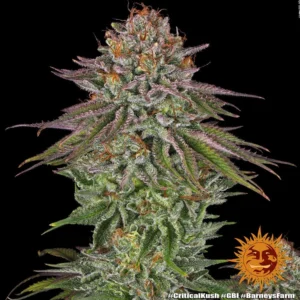
Critical Autoflower

|
THC | 10% - 14% (Low) |

|
Lineage | Critical Mass x Lowryder |

|
Type | Autoflowering |

|
Height | 4.27 ft | 1.3 m |

|
Yield | Medium |

|
Yield Indoor | 1.15 - 1.31 oz/ft² | 350 - 400 g/m² |

|
Yield Outdoor | 21.16 - 24.69 oz/plant | 600 - 700 g/plant |

|
Life Cycle | 8 - 10 weeks |

|
Phenotype | 70% Indica / 30% Sativa |

|
Medical | Depression, Insomnia, Muscle Spasms |

|
Effects | Happy, Relaxed, Talkative |

|
Flavors | Herbal, Lemon, Woody |
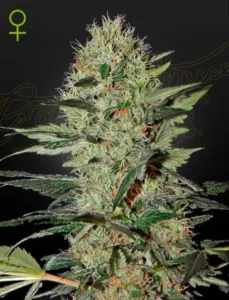
Exodus Cheese Auto
|
|
THC | 19% - 20% (Medium) |
|
|
Lineage | Exodus Cheese x Ruderalis |
|
|
Type | Autoflowering |
|
|
Height | 2.79 ft | 0.85 m |
|
|
Yield Outdoor | 3.53 oz/plant | 100 g/plant |
|
|
Life Cycle | 8 - 9 weeks |
|
|
Phenotype | 50% Indica / 50% Sativa |
|
|
Effects | Relaxed, Calming, Happy, Tingly |
|
|
Flavors | Cheese, Pungent, Skunk |
1. White Widow Autoflower
Best overall autoflower for beginners
White Widow Autoflower is one of the easiest places to start because it combines a familiar cannabis lineage with the simplified flowering behavior of an autoflower.
Growlantis currently lists its White Widow Autoflower as a compact plant reaching around one meter and describes it as suitable for beginners as well as experienced growers.
That compact structure is useful for a first grow because managing a smaller canopy is generally less intimidating than dealing with a large photoperiod plant whose vegetative period has been allowed to run for weeks or months.
More importantly, it is a straightforward example of what a beginner should look for: an established cultivar, autoflowering behavior and predictable commercial documentation.
It is a better beginner recommendation than simply choosing whichever auto advertises the highest THC or yield.
2. Northern Lights Auto
Best classic beginner choice
Northern Lights Auto has a long-standing reputation as a relatively straightforward autoflower option and appears repeatedly in Growlantis’ own beginner-oriented material.
Growlantis specifically describes Northern Lights Auto as a beginner-friendly cultivar whose autoflowering genetics remove dependence on a flowering light-cycle change.
That is the key advantage here.
A beginner does not need to learn how to keep a plant vegetative and then deliberately trigger flowering with a shorter day. The plant progresses toward flowering without that intervention.
Northern Lights Auto also makes more sense editorially than filling the list with obscure products simply because they happen to be available in the catalog.
For a beginner article, familiarity and clear documentation matter.
3. Critical Auto
Best for a straightforward short-cycle option
Critical Auto is another sensible first-grow candidate because the underlying concept is uncomplicated: Critical-family genetics combined with autoflowering ancestry.
Growlantis currently lists Critical Autoflower as an autoflowering Critical Mass × Lowryder cross with an advertised lifecycle around 8–10 weeks.
Treat breeder timelines as estimates rather than deadlines. Individual plants and environments can extend the real calendar.
Still, a relatively short lifecycle is one of the reasons beginners choose autos in the first place. You can experience the full sequence from seedling through flowering without committing to a long vegetative period beforehand.
Critical Auto therefore earns its place for simplicity rather than extreme potency or exaggerated yield claims.
4. Titan F1 Auto
Best compact modern autoflower
Titan F1 Auto is an interesting alternative for beginners whose main constraint is space.
Growlantis currently lists the cultivar at approximately 0.65 m in height, with an advertised 10–11-week lifecycle, and describes it as appropriate for both beginner and experienced growers.
The compact stature is the most relevant trait here.
A first-time grower working in a small environment usually benefits more from manageable dimensions than from chasing maximum production.
Titan F1 is also useful for illustrating how modern autoflowers have diversified. Beginner autos no longer need to be limited to the older, stereotypically small ruderalis-heavy cultivars that helped establish the category.
5. Purple Punch Auto
Best small-space alternative
Purple Punch Auto is another option worth considering when compact growth is a priority.
Growlantis’ current Fast Buds catalog lists Purple Punch Auto as an autoflowering cultivar and places it firmly within the indica-leaning side of the catalog.
For this article, however, its value is not the indica percentage or an effect claim.
It is useful because beginners often search for an autoflower that fits comfortably into a limited indoor footprint.
If Growlantis keeps Purple Punch Auto in the ranking, the supporting product page should provide clear current information about expected size and lifecycle. Those concrete cultivation characteristics are more useful to a beginner than generic promises about potency or relaxation.
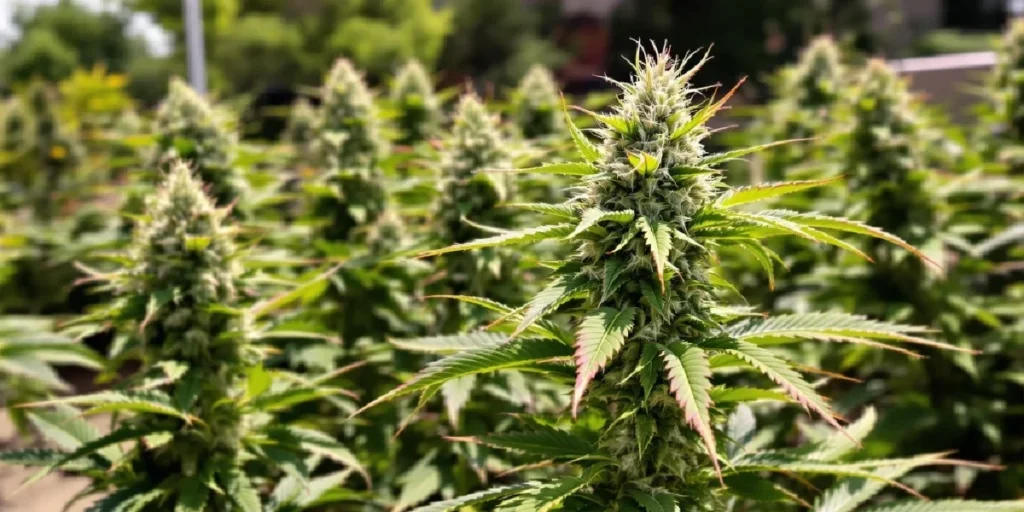
Why Autoflower Seeds Can Be Good for Beginners
The defining advantage of an autoflower is that flowering is not dependent on receiving the conventional short-day signal required by photoperiod cannabis.
Cannabis normally shows strong photoperiod control of flowering, but autoflower cultivars carry genetic variation that makes flowering comparatively insensitive to day length. A 2024 genetic study identified a second major locus associated with this trait and confirmed that multiple loci contribute to photoperiod-insensitive flowering in Cannabis sativa.
For a beginner, the practical consequence is simple:
there is no need to learn when to switch a plant from a long vegetative photoperiod to a flowering schedule.
That removes one variable from the first grow.
Are Autoflowers Actually Easier to Grow?
Easier in some ways, not in every way.
Autoflowers simplify flowering schedules and often complete their lifecycle more quickly. Many also remain reasonably compact.
But describing them as universally more forgiving is misleading.
A photoperiod plant can usually be held in vegetative growth longer if it has a poor start. A grower can allow additional recovery time before flowering.
An autoflower progresses according to its own developmental schedule.
That means a serious setback early in the lifecycle cannot always be compensated for by simply adding several more weeks of vegetative growth.
A more accurate summary is:
Autoflowers are simpler to schedule, while photoperiod plants can offer more recovery time and grower control.
That distinction is especially useful for a beginner deciding between the two.
What Makes an Autoflower Beginner-Friendly?
The easiest autoflower is not necessarily the one advertised with the fastest finish or largest yield.
For a first grow, prioritize manageable characteristics.
A cultivar with moderate size is easier to fit into a limited environment. A well-documented seed line is preferable to obscure genetics with little reliable information. A realistic lifecycle helps with planning, while a breeder with a long track record provides more useful expectations than vague marketing claims.
Uniformity also matters.
If seeds from the same pack produce wildly different plant structures and flowering times, the first grow becomes more difficult to manage.
For that reason, genetic quality and breeder provenance deserve at least as much attention as the name printed on the pack.
Don’t Choose Your First Autoflower by THC Alone
One of the weakest ways to select beginner seeds is to sort the catalog by highest THC.
Potency tells you very little about how easy the plant will be to cultivate.
A very high-THC autoflower may be genetically vigorous and straightforward, or it may be comparatively demanding. Conversely, an autoflower with moderate cannabinoid levels may offer exactly the plant structure and lifecycle a beginner wants.
The same applies to flavor.
Terpene profile can help you choose between two otherwise suitable cultivars, but citrus, fruit, Kush or dessert aromas do not make a plant easier to grow.
For a first attempt, growth characteristics should come before consumption characteristics.
Autoflower vs Photoperiod for a First Grow
If the main concern is light-cycle simplicity and relatively fast completion, autoflower has a strong advantage.
If the main concern is having maximum control over how long the plant grows before flowering, photoperiod may actually be more forgiving.
That creates a useful decision:
Choose an autoflower if you want a plant that progresses into flowering without manually triggering the transition.
Choose a photoperiod if you want the ability to extend vegetative growth, clone plants or delay flowering while correcting problems.
Neither category is automatically the correct beginner choice.
The best option depends on which kind of complexity you would rather manage.
Should Beginners Buy Feminized Autoflower Seeds?
Usually, feminized autoflowering seeds are the simplest format for someone whose goal is flowering cannabis rather than breeding.
“Autoflower” and “feminized” describe two different properties.
Autoflowering refers to flowering response.
Feminized refers to seeds produced with the intention of overwhelmingly producing female plants.
A seed can therefore be both feminized and autoflowering.
This distinction is worth explaining because beginners often mistakenly compare “autoflower vs feminized” as though they were opposite categories.
Are Autoflowers Good for Small Spaces?
Often, yes.
Many autoflower cultivars are selected partly for compact plant architecture, and examples such as Titan F1 Auto are currently marketed at well under one meter in height.
But the article should not claim that most autoflowers stay under three feet, as the current version does. Modern autos vary considerably and some can become much larger.
The safer rule is to check the expected dimensions of the specific cultivar.
Autoflower is a flowering trait, not a universal height limit.
Do Beginner Autoflowers Need Special Nutrients?
Not because they are autoflowers.
The current version says autoflowers have special nutritional requirements, tells beginners to start at 25–50% of label strength and recommends periodic flushing. That level of prescription does not belong in a seed-selection article and is not universally applicable across substrates, nutrient systems and cultivars.
A smaller or faster plant may consume fewer total nutrients than a much larger photoperiod plant, but nutrient requirements still depend on actual growth, root environment and production system.
For this page, it is enough to tell beginners not to select seeds based on claims that a cultivar requires some universal “autoflower feeding schedule.”
Detailed nutrition belongs in a dedicated cultivation guide.
Common Beginner Mistakes With Autoflowers
The most important mistake is assuming automatic flowering means automatic success.
Genetics cannot compensate for poor basic plant care. A short lifecycle can actually make early setbacks more consequential because there is limited time before reproductive growth progresses.
Another mistake is changing several things at once whenever growth looks different from expectations. Beginners learn more from consistency and observation than from constantly adjusting water, nutrients, lighting and training in response to every leaf.
Finally, avoid treating breeder numbers as guarantees.
Height, harvest time and yield are useful planning estimates, but actual results depend on environment and individual plant expression.
How We Chose These Beginner Autoflower Seeds
For this ranking, I would prioritize four characteristics:
automatic flowering, manageable structure, clear breeder information and a reasonable track record as a beginner-oriented cultivar.
I would not rank a seed higher because it has the largest advertised yield, highest THC percentage or most dramatic product description.
That produces a more defensible list:
White Widow Autoflower for the strongest all-around starting point, Northern Lights Auto for a familiar classic, Critical Auto for a straightforward short-cycle option, Titan F1 Auto for compact modern genetics and Purple Punch Auto as another small-space candidate.
The exact ranking can change as Growlantis’ available catalog changes.
Best Autoflower Seeds for Beginners: Key Takeaway
The best autoflower seeds for beginners are not simply the fastest or strongest strains.
Look for genetics with manageable size, straightforward flowering behavior, transparent breeder information and realistic lifecycle expectations.
White Widow Autoflower and Northern Lights Auto are strong traditional starting points, while Critical Auto offers a simple fast-cycle option and Titan F1 Auto provides a very compact modern alternative.
Most importantly, remember that autoflowering simplifies when flowering begins. It does not make a cannabis plant immune to stress or cultivation mistakes.
For a first grow, simpler genetics and realistic expectations are more valuable than impressive numbers on a product card.
FAQs About Autoflower Seeds for Beginners
What are the best autoflower seeds for beginners?
White Widow Autoflower, Northern Lights Auto and Critical Auto are strong beginner candidates because they combine autoflowering behavior with familiar genetics and manageable commercial specifications. Compact options such as Titan F1 Auto can also suit small spaces. No cultivar is completely mistake-proof, so prioritize reliable genetics and realistic plant size over maximum advertised THC or yield.
Are autoflower seeds easier for beginners?
Autoflowers simplify one major part of cultivation because they do not require a change to a short-day photoperiod to initiate flowering. However, their relatively fixed lifecycle can leave less time to recover from early setbacks. They are therefore simpler to schedule, but not automatically more forgiving in every aspect of cultivation.
What is the easiest autoflower strain to grow?
White Widow Autoflower is a reasonable all-around first choice because it is a well-established auto with a manageable structure, and Growlantis currently describes it as suitable for beginners. Northern Lights Auto is another frequently recommended classic. Actual difficulty still depends on the individual seed, environment and quality of the genetics.
Are autoflowers good for small indoor spaces?
Many are, but autoflowering itself does not guarantee a small plant. Cultivar size varies substantially. Titan F1 Auto, for example, is currently listed by Growlantis at approximately 0.65 m, making it a genuinely compact option. Always check the individual cultivar’s expected dimensions instead of assuming every autoflower will remain under three feet.
Should beginners choose autoflower or photoperiod seeds?
Choose autoflower if eliminating the flowering light-cycle change and shortening the overall process are priorities. Choose photoperiod if you prefer greater control over vegetative duration and more opportunity to recover from early setbacks before initiating flowering. Neither type is universally easier; they simplify different parts of the cultivation process.
Do autoflower seeds need a special light schedule?
Autoflowers do not require a short-day light schedule to initiate flowering. Their photoperiod-insensitive genetics allow reproductive development without the conventional flowering trigger used with photoperiod cannabis. That is one of their clearest advantages for beginners, although plants still need appropriate light for normal growth.