
70/30 indica dominant strains are cannabis hybrids described by breeders as having approximately 70% indica-associated ancestry and 30% sativa-associated ancestry. However, this ratio should be understood as breeding or market shorthand rather than a precise laboratory measurement of a plant’s genetics.
In this guide, we explain what 70/30 indica really means, how indica-dominant strains differ from balanced and sativa-dominant hybrids, and whether the ratio can reliably predict effects, potency, plant characteristics or growing behavior.
Recommended Strains
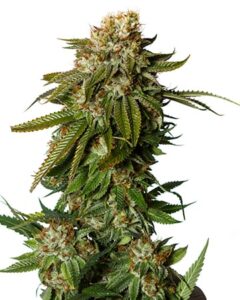
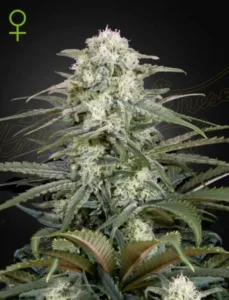
GG4 Autoflower

|
THC | 23% - 29% (High) |

|
Lineage | Sour Dubb x (Chem’s Sister x Chocolate Diesel) x Ruderalis" |

|
Type | Autoflowering |

|
Height | 3.94 ft | 1.2 m |

|
Yield | Medium |

|
Yield Indoor | 1.47 oz/ft² | 450 g/m² |

|
Yield Outdoor | 19.4 oz/plant | 550 g/plant |

|
Life Cycle | 9 - 10 weeks |

|
Phenotype | 40% Indica / 60% Sativa |

|
Effects | Euphoric, Relaxed, Uplifted |

|
Flavors | Citrus, Earthy, Fruity |
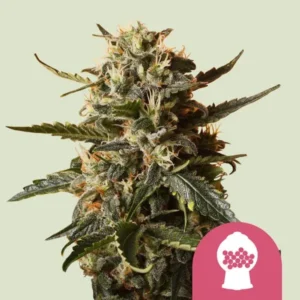
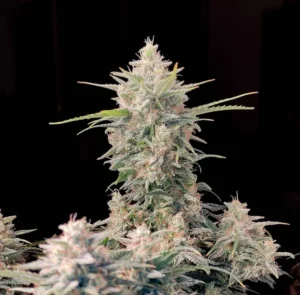
Bubblegum XL
|
|
THC | 19% - 20% (Medium) |
|
|
Lineage | Power Plant x Santa Maria |
|
|
Type | Feminized |
|
|
Height | 5.91 ft | 1.8 m |
|
|
Yield | High |
|
|
Yield Indoor | 1.47 - 1.64 oz/ft² | 450 - 500 g/m² |
|
|
Yield Outdoor | 14.11 - 15.87 oz/plant | 400 - 450 g/plant |
|
|
Flowering Time | 8 - 9 weeks |
|
|
Phenotype | 50% Indica / 50% Sativa |
|
|
Effects | Calming, Uplifted |
|
|
Flavors | Candy, Citrus, Earthy |
What Does Indica-Dominant Mean?
Indica-dominant generally describes a cannabis hybrid that breeders, seed sellers or retailers consider more closely associated with indica-type genetics or characteristics than with sativa-type ones.
You may therefore see descriptions such as:
- 60% indica / 40% sativa
- 70% indica / 30% sativa
- 80% indica / 20% sativa
- indica-dominant hybrid
These percentages are commonly used as breeding shorthand.
They should not automatically be interpreted as precise measurements showing that exactly 70% of a plant’s genome is scientifically “indica.”
Modern commercial cannabis has undergone extensive hybridization, and research shows that today’s indica and sativa labels do not correspond cleanly with genome-wide genetic structure. A Nature Plants study that analyzed more than 100 cannabis samples found that indica- and sativa-labelled material was genetically indistinct at the genome-wide level.
So indica-dominant remains a useful commercial description, but not a precise genetic classification.
What Does 70/30 Indica Mean?
A strain advertised as 70/30 indica usually means the breeder considers it approximately 70% indica-dominant and 30% sativa-influenced based on its breeding history.
That might come from crossing two parental lines and estimating how their ancestries combine through subsequent generations.
The problem is that cannabis ancestry is not inherited as a perfectly divisible percentage.
Recombination reshuffles genetic material every generation, individual seeds from the same parents differ from one another, and the original indica/sativa classification itself is not genetically clean enough to support the apparent precision of a figure such as 70.0%.
The safest interpretation is therefore:
70/30 = strongly indica-leaning hybrid, not a laboratory certificate of exact genomic ancestry.
Indica-Dominant vs Indica
In commercial cannabis language, indica usually implies that the cultivar is placed strongly at the indica end of the traditional spectrum.
Indica-dominant hybrid acknowledges that the cultivar contains mixed ancestry but is considered to lean toward the indica side.
In practice, the distinction is fuzzy.
Modern cannabis cultivars are heavily hybridized, and research demonstrates that the labels attached to commercial products often do not accurately describe their overall genetic or chemical similarity.
For that reason, “indica-dominant” is more useful as a broad market category than as a botanical definition.
Indica-Dominant vs Sativa-Dominant
The traditional distinction is straightforward:
| Label | Traditional Meaning |
|---|---|
| Indica-dominant | Hybrid leaning toward indica-associated ancestry or traits |
| Balanced hybrid | Roughly intermediate classification |
| Sativa-dominant | Hybrid leaning toward sativa-associated ancestry or traits |
Historically, indica-type cannabis has often been associated with shorter, broader plants and sativa-type cannabis with taller, narrower morphology.
Modern drug-type cultivars, however, have been crossed repeatedly.
That means a plant can inherit characteristics associated with both historical groups, and appearance does not necessarily predict its cannabinoid profile or subjective effects.
Commercial labels may still communicate what a breeder was trying to produce, but they should not be treated as independent scientific measurements.
Does Indica-Dominant Mean Relaxing?
Not necessarily.
Cannabis culture traditionally associates indica with relaxing, heavy or nighttime effects and sativa with uplifting or stimulating effects.
Those associations are widespread, but research has found that the underlying chemistry does not divide neatly along the same lines.
A large 2022 analysis examined 89,923 commercial cannabis samples from six U.S. states. Researchers found reproducible cannabinoid and terpene chemotypes, but the commercial categories Indica, Hybrid and Sativa aligned poorly with those actual chemical groups.
This does not mean every consumer description is imaginary.
It means the word indica-dominant alone is insufficient to predict how a product will affect a particular person.
THC dose, CBD content, other cannabinoids, chemistry, route of consumption, tolerance and individual response can all matter.
Does Indica-Dominant Mean Sleepy?
No.
Some indica-dominant cultivars have strong reputations for evening use, but the category itself does not guarantee sedation or improved sleep.
This distinction is particularly important when articles use ancestry percentages almost like dosage instructions—for example, suggesting that a 70/30 strain must provide stronger physical relaxation while its 30% sativa component automatically keeps the user mentally alert.
There is no scientifically established mechanism in which the “30% sativa” portion reliably produces a defined amount of stimulation.
If someone is looking specifically for cannabis associated with sleep, the actual product chemistry and personal response are more informative than an indica percentage.
Does Indica-Dominant Mean High THC?
No.
Indica dominance and THC dominance describe different things.
An indica-dominant label refers to traditional lineage or cultivar classification.
A THC-dominant chemotype refers to measurable cannabinoid chemistry.
Those concepts should not be confused.
In the large U.S. commercial dataset examined in 2022, researchers identified clear chemical groups based primarily on THC, CBD and terpene composition. The traditional Indica/Sativa/Hybrid labels did not capture those chemical differences reliably.
An indica-dominant cultivar can therefore have moderate THC, very high THC or a more balanced cannabinoid profile depending on the actual genetics.
Are Indica-Dominant Strains Stronger?
Not inherently.
A strain described as 80% indica is not automatically stronger than one described as 60% indica.
Potency is primarily a question of measurable cannabinoid concentration and dose rather than how far the strain sits on a traditional indica/sativa scale.
Even two batches sold under the same strain name can differ.
The Nature Plants study found that samples sharing identical cultivar names were sometimes as genetically and chemically distant from one another as samples carrying different names.
That is another reason to avoid using the strain category as a proxy for strength.
What Do Indica-Dominant Plants Look Like?
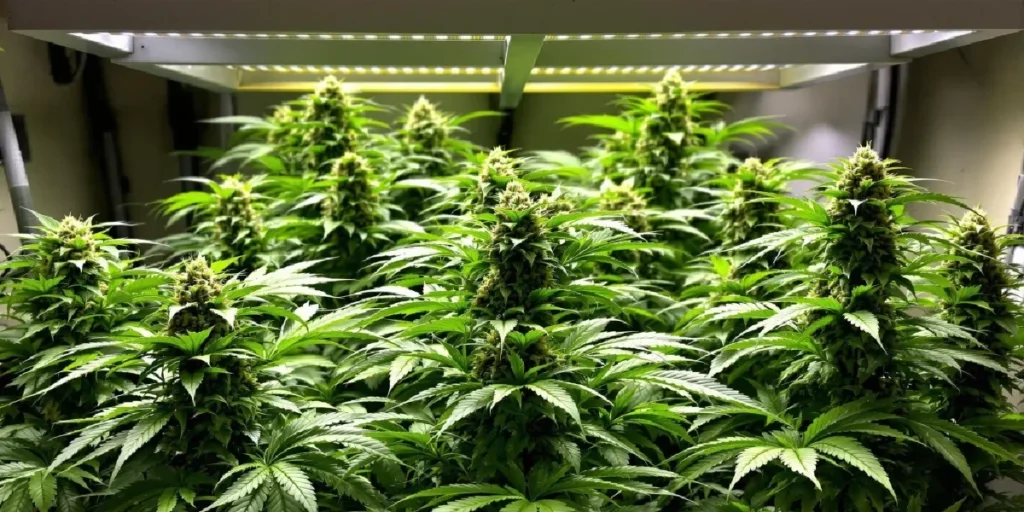
Indica-dominant cultivars are commonly described as relatively compact plants with broader leaves, shorter internodal spacing and dense branching.
These characteristics can occur, particularly when modern cultivars retain morphology associated with broad-leaf drug-type cannabis.
But they are tendencies rather than guarantees.
A commercial indica-dominant hybrid can inherit height, branching pattern, flowering behavior and leaf morphology from several ancestors. An 80/20 label does not let a grower calculate exact plant height or final yield.
For cultivation decisions, the specific breeder’s observations for that cultivar are therefore more useful than generic assumptions about all indica-dominant cannabis.
Do Indica-Dominant Strains Flower Faster?
Sometimes, but not because the label creates a universal flowering schedule.
Many historically broad-leaf or indica-associated cannabis populations evolved in environments where relatively rapid seasonal flowering was advantageous, and some modern indica-dominant lines retain shorter flowering periods.
Modern hybrids can behave very differently, however.
An indica-dominant cultivar might flower quickly, while another with a similar advertised ratio could take considerably longer because different parental genetics were used.
That means statements such as “70/30 indica strains flower in 8–10 weeks” should not be presented as a rule.
Check the actual cultivar rather than the category.
Do All Indica-Dominant Strains Need the Same Growing Conditions?
No.
An indica percentage does not determine one universal temperature, humidity, feeding level or harvest date.
Those variables depend on genetics, phenotype, plant stage and cultivation system.
The same applies to yield. A generic claim such as “70/30 indica hybrids produce 14–21 ounces per square meter” creates false precision because yield depends heavily on cultivar, light, canopy size, crop density, vegetative duration and environmental management.
Indica-dominant is simply too broad a category to establish one cultivation recipe.
Examples of Indica-Dominant Strains
Many famous commercial cultivars are commonly described as indica-dominant, although exact percentages can vary by breeder and source.
Granddaddy Purple
Granddaddy Purple is commonly positioned as an indica-dominant hybrid and is one of the best-known examples of the category.
Its Purple-family identity and long commercial history make it a more useful illustration than trying to claim that every GDP sample contains one exact percentage of indica ancestry.
Bubba Kush
Bubba Kush is another cultivar widely placed on the indica-dominant side of the spectrum.
Different breeders offer different interpretations of Bubba Kush, reinforcing why the cultivar name and indica percentage should be treated as lineage information rather than standardized chemistry.
Northern Lights
Northern Lights is traditionally associated with indica-type cannabis and appears repeatedly in breeding histories behind modern indica-dominant hybrids.
Like other classic strain names, however, multiple genetic versions circulate commercially.
Purple Kush
Purple Kush is generally classified as strongly indica-leaning and provides another recognizable example of the old-school category.
These examples are useful for understanding how the term is used commercially. They do not establish that every product carrying these names will have identical cannabinoid content or effects.
Are Gelato and Runtz Indica-Dominant?
This depends on the breeder and specific version.
Modern names such as Gelato and Runtz circulate through many seed companies, clone markets and derivative crosses. Different sources can therefore publish different indica/sativa percentages for ostensibly similar names.
That is not necessarily evidence that one source is lying.
It reflects a broader problem with modern cannabis nomenclature: cultivar names are not governed by a universal genetic registry, and commercial samples sharing a name can vary genetically and chemically.
If exact lineage matters, look at the breeder and parental material rather than relying on a generic strain database.
What Matters More Than Indica Dominance?
When choosing cannabis, several pieces of information can be more useful than the indica percentage.
First is the actual cannabinoid profile, particularly THC and CBD. Those concentrations tell you something measurable about the product rather than an estimated ancestry ratio.
Second is provenance. Knowing which breeder, producer or clone produced the cultivar can make a strain name more meaningful.
Third is previous personal experience. If one specific product consistently produces an experience you prefer, that history can be more informative than switching to another product simply because both are labelled 70% indica.
Terpene data can also help distinguish aroma and chemical profiles, but it should not be converted into guaranteed medical or psychological effects.
Is Indica-Dominant the Same as a Hybrid?
Yes. In ordinary cannabis terminology, an indica-dominant cultivar is a type of hybrid.
The word hybrid simply indicates mixed ancestry.
The additional word dominant tells you which side of the traditional indica/sativa spectrum the breeder or seller believes is more strongly represented.
So:
70/30 indica = indica-dominant hybrid
50/50 = balanced hybrid
30/70 indica/sativa = sativa-dominant hybrid
Again, these ratios usually communicate breeding intent rather than a precise genomic measurement.
Indica-Dominant Cannabis: Key Takeaway
Indica-dominant means a cannabis cultivar is considered to lean more strongly toward the indica side of the traditional indica/sativa classification.
It does not mean the plant is scientifically 70%, 80% or 90% indica in a way that can automatically predict its THC level, effects, flowering time, yield or medical properties.
Modern genetic and chemical research shows why caution is necessary. Indica- and sativa-labelled cannabis overlaps heavily at the genome-wide level, while commercial Indica/Hybrid/Sativa categories correspond poorly with measurable chemical diversity.
Use indica dominance as a broad description of lineage and market positioning.
For more specific decisions, look at the actual cultivar, breeder, cannabinoid profile and available testing data.
FAQs About Indica-Dominant Cannabis
What does indica-dominant mean?
Indica-dominant describes a hybrid cannabis cultivar considered to contain more indica-associated ancestry or characteristics than sativa-associated ones. Terms such as 70/30 or 80/20 are generally breeder shorthand rather than precise genomic measurements. Modern research shows considerable genetic and chemical overlap between cannabis marketed as indica and sativa.
What does 70% indica and 30% sativa mean?
A 70% indica / 30% sativa label usually means the breeder considers the cultivar strongly indica-leaning based on its breeding history. It should not be interpreted as laboratory confirmation that exactly 70% of the genome is indica. Sexual reproduction, recombination and inconsistent commercial classifications make that level of precision unrealistic.
Is indica-dominant stronger than sativa-dominant?
Not necessarily. Indica/sativa dominance does not measure potency. THC and other cannabinoids must be measured separately, and products within either category can range considerably in strength. Research involving nearly 90,000 commercial samples found that Indica, Sativa and Hybrid labels poorly represented the underlying chemical diversity.
Does indica-dominant mean it will make you sleepy?
No. Indica-dominant strains traditionally have a relaxing or nighttime reputation, but the label does not guarantee sedation. Individual response, THC dose, CBD, other compounds and route of consumption can all affect the experience. Scientific analyses show that commercial indica/sativa labels are weak predictors of overall product chemistry.
Is indica-dominant a hybrid?
Yes. An indica-dominant strain is generally a hybrid that breeders or sellers believe leans more toward indica-associated ancestry or traits than sativa-associated ones. A 70/30 indica hybrid is therefore still a hybrid. “Indica-dominant” simply describes its position within the traditional commercial classification.
Are indica-dominant strains better?
Not objectively. Indica dominance is not a quality grade. It does not guarantee higher THC, better flavor, larger yield, stronger effects or easier cultivation. The better choice depends on the specific cultivar, breeder, measurable cannabinoid profile and what the grower or consumer actually wants from the product.