
The best bloom booster for weed is not necessarily the product with the highest phosphorus and potassium numbers. A good booster should complement your existing fertilizer without pushing nutrients far beyond what the plant can use. Big Bud, Athena PK and Liquid KoolBloom are established options, but the right choice depends mainly on your base nutrients and growing system.
What Is the Best Bloom Booster for Weed?
There is no scientifically established single “best” bloom booster for cannabis. No controlled head-to-head research shows that one commercial brand consistently produces larger flowers, more THC or better terpene profiles than every competing product.
Recommended Strains
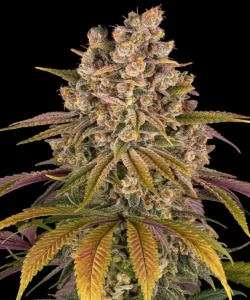
Lemon Tree

|
THC | 26% - 27% (High) |

|
Lineage | Lemon Skunk x Sour Diesel |

|
Type | Feminized |

|
Height | 5.74 ft | 1.75 m |

|
Yield Outdoor | 52.91 oz/plant | 1500 g/plant |

|
Flowering Time | 9 - 10 weeks |

|
Phenotype | 55% Indica / 45% Sativa |

|
Effects | Happy, Relaxed, Euphoric |

|
Flavors | Sour, Lemon, Skunk, Diesel |

Knockout
|
|
THC | 23% - 27% (High) |
|
|
Lineage | XXX x End Game #3 |
|
|
Type | Feminized |
|
|
Height | 5.58 ft | 1.7 m |

|
Yield | High |

|
Yield Indoor | 1.97 - 2.29 oz/ft² | 600 - 700 g/m² |
|
|
Flowering Time | 9 - 10 weeks |
|
|
Phenotype | 45% Indica / 55% Sativa |
|
|
Effects | Uplifted, Energetic, Talkative |
|
|
Flavors | Sweet, Citrus, Pine, Candy |
That matters because bloom-booster marketing often focuses heavily on very high phosphorus and potassium concentrations. Cannabis does require both nutrients, but more is not automatically better.
Research on soilless cannabis production has found that flower yield responds to nutrient balance rather than unlimited P and K. In one controlled study, predicted maximum yield occurred around 59 mg/L phosphorus under the conditions tested, while increasing potassium from 60 to 340 mg/L did not significantly increase flower yield.
More recent research reached an even stronger conclusion: increasing phosphorus input from 15 to 90 mg/L produced no significant improvement in flower yield or cannabinoid concentration in the cultivars and system evaluated.
The best bloom booster is therefore usually the one that fills a genuine nutritional gap without creating a large excess.
Quick Comparison of Popular Bloom Boosters
| Bloom booster | Guaranteed NPK | Best suited to | Main consideration |
|---|---|---|---|
| Advanced Nutrients Big Bud | 0-1-3 | Growers wanting a relatively moderate PK supplement | Lower phosphorus concentration than many traditional PK boosters |
| Athena PK | PK supplement | Growers already using Athena Blended Line | Designed as part of the Athena nutrient program |
| General Hydroponics Liquid KoolBloom | 0-10-10 | Growers using GH or wanting a concentrated liquid PK additive | Considerably more concentrated in P and K |
| FoxFarm Beastie Bloomz | 0-50-30 | Growers following the FoxFarm flowering program | Extremely concentrated, especially in phosphorus |
These numbers describe the guaranteed fertilizer analysis, not a scientifically determined cannabis requirement. They also cannot be compared directly with nutrient-solution concentrations reported in research because fertilizer labels express phosphorus and potassium as phosphate and potash equivalents rather than simply listing elemental P and K.
Advanced Nutrients Big Bud: Best Moderate PK Option
Advanced Nutrients Big Bud is one of the better-known cannabis-specific bloom additives. Its current liquid formulation carries an NPK analysis of 0-1-3, derived primarily from monopotassium phosphate and potassium sulfate.
Compared with many traditional bloom boosters, that is a relatively modest phosphorus concentration with proportionally more potassium.
That makes Big Bud a more defensible option for growers whose base fertilizer already supplies substantial phosphorus and who want an additional flowering-stage supplement without selecting one of the extremely high-P products on the market.
Advanced Nutrients markets Big Bud as increasing yield and flower mass, but those manufacturer claims should not be confused with independent comparative evidence. There is currently no controlled trial demonstrating that Big Bud itself produces greater cannabis yield than competing bloom boosters.
Best for: growers looking for a relatively moderate liquid PK additive rather than an extremely phosphorus-heavy formula.
Athena PK: Best for Growers Already Using Athena
Athena PK is designed specifically as a flowering supplement to Athena’s Bloom fertilizers. The company positions it for mid-to-late flowering and explicitly acknowledges that adding excessive phosphorus and potassium can interfere with nutrient balance, including calcium and magnesium availability.
That system-based approach makes sense.
Rather than asking whether Athena PK is universally better than another booster, the more useful question is whether it was designed to fit the rest of the nutrient program being used. Athena PK has a clear advantage for growers already running Athena Blended Line because the manufacturer has developed its feed schedules around those products working together.
That does not prove that Athena PK independently increases cannabinoids, terpenes or yield. Those remain manufacturer claims rather than outcomes demonstrated by independent cannabis trials.
Best for: growers already using the Athena Blended nutrient system.
General Hydroponics Liquid KoolBloom: Best Concentrated Liquid Option
Liquid KoolBloom is a 0-10-10 liquid flowering supplement containing phosphorus and potassium from several phosphate and potassium salts. General Hydroponics positions it as an additive used alongside a base nutrient program rather than as a complete fertilizer.
Its concentration makes it substantially different from a product such as Big Bud.
That is not automatically an advantage. A concentrated product gives growers more ability to increase P and K, but cannabis research provides little reason to assume that pushing phosphorus substantially above adequate levels will increase production.
This distinction is especially relevant when the base fertilizer already contains considerable phosphorus. Adding KoolBloom on top of an already sufficient nutrient program can increase nutrient input without necessarily increasing flower production.
Best for: growers who want a concentrated liquid PK additive and are following a nutrient program that specifically accounts for it.
FoxFarm Beastie Bloomz: A High-Phosphorus Option to Use Carefully
FoxFarm Beastie Bloomz has an NPK analysis of 0-50-30, making it dramatically more concentrated in phosphorus than the other products discussed here. FoxFarm positions it for the mid-to-late flowering phase and provides separate rates depending on whether it is used alone or alongside other nutrients.
Its high analysis may look attractive when searching for the strongest bloom booster, but strongest and best are not synonymous.
Current cannabis research does not support the assumption that very high phosphorus automatically results in heavier flowers. In a 2025 study, substantially increasing root-zone phosphorus increased the amount of phosphorus accumulated by the plant but did not improve flower yield or cannabinoid concentration.
For that reason, Beastie Bloomz makes more sense as part of the specific FoxFarm program for which it was formulated than as something to add freely to another fertilizer schedule.
Best for: growers deliberately following a compatible FoxFarm feeding program rather than anyone simply looking for the highest PK numbers.

Do Cannabis Plants Really Need a Bloom Booster?
Not necessarily.
Cannabis plants need adequate mineral nutrition during flowering, including nitrogen, phosphorus, potassium, calcium, magnesium and micronutrients. But a complete flowering fertilizer may already provide those nutrients.
A bloom booster is an additional supplement, not an automatic requirement for producing flowers.
This is one of the biggest problems with the way these products are marketed. Growers are often encouraged to think that cannabis suddenly develops an enormous phosphorus requirement when flowering starts and that increasingly strong PK additives will translate directly into larger buds.
Research does not support that simplistic model.
The University of Guelph study evaluating N, P and K during cannabis flowering found a quadratic response to phosphorus: increasing P helped until an optimum was reached, after which additional phosphorus provided no advantage. Potassium did not significantly affect yield across the tested range.
A bloom booster is therefore most rational when your existing nutrient program does not already provide the desired flowering-stage nutrition.
More PK Does Not Mean Bigger Buds
Phosphorus and potassium perform essential functions in plant metabolism.
Phosphorus participates in energy transfer, nucleic acids, membranes and many other processes. Potassium contributes to osmotic regulation, enzyme activity, stomatal function and numerous physiological processes.
But essential does not mean unlimited.
Once the plant has enough of a nutrient, supplying more does not necessarily increase growth. This concept is basic plant nutrition and particularly important when evaluating bloom boosters because many products contain extremely high guaranteed P and K analyses.
Cannabis-specific research increasingly suggests that commercial fertilizer programs can supply more phosphorus than plants actually require. Researchers studying elevated root-zone phosphorus noted both the lack of improvement in cannabis yield and the environmental implications of excessive fertilizer use.
The useful goal is adequate nutrition, not the largest PK number on the bottle.
Can Bloom Boosters Increase THC or Terpenes?
Do not assume they will.
In the University of Guelph NPK experiment, changing nitrogen, phosphorus and potassium concentrations did not significantly affect cannabinoid concentration in the harvested flowers.
Other studies have found relationships between mineral nutrition and secondary metabolism, so nutrient status can influence cannabis chemistry. But that is very different from proving that adding a commercial bloom booster increases THC or creates stronger aroma.
The final cannabinoid and terpene profile depends on genetics, environment, plant maturity, nutrition and other cultivation variables.
Claims such as “boosts potency,” “maximizes terpenes” or “produces more resin” should therefore be understood primarily as manufacturer marketing unless they are supported by controlled trials on the specific product.
Organic vs Mineral Bloom Boosters
An organic bloom booster is not automatically better than a mineral one.
Organic products use nutrient sources that meet particular production or certification standards. Some can contribute organic matter or interact with soil biology, which can be useful in biologically active growing media.
Mineral fertilizers generally provide nutrients in soluble forms that are easier to quantify and manage in hydroponic or fertigation systems.
Neither approach guarantees better cannabis flavor, smoother smoke, higher potency or cleaner flowers.
The claim that organically grown cannabis necessarily tastes better or contains fewer unwanted residues is not established simply by the fertilizer being labeled organic. Product quality depends on the entire cultivation process, not the category printed on the nutrient bottle.
Choose according to the growing system rather than assuming “organic” automatically means superior flower.
How to Choose a Bloom Booster
The first thing to examine is not the booster. It is your base fertilizer.
If the existing flowering program already provides substantial phosphorus and potassium, adding another concentrated PK product may create unnecessary nutrient accumulation.
A useful bloom booster should therefore meet several criteria:
- It complements rather than duplicates the base nutrients.
- Its composition and guaranteed analysis are clearly disclosed.
- It has a manufacturer feeding program compatible with your growing medium.
- It allows nutrient concentration to be adjusted rather than forcing a very large PK increase.
- It does not rely primarily on unsupported claims about THC, resin, flavor or enormous yield gains.
In hydroponic and soilless cultivation, monitoring the final nutrient solution and root-zone conditions is considerably more informative than judging a fertilizer simply by its marketing category.
When Should You Use a Bloom Booster?
There is no universal cannabis week when every bloom booster should begin.
Manufacturers formulate different products for different stages. Advanced Nutrients currently positions Big Bud primarily in the middle portion of flowering, Athena introduces PK during its flowering program, and General Hydroponics uses Liquid KoolBloom from early through late bloom within its own schedules.
This is why combining schedules from several manufacturers can create problems. A dose intended to complement one company’s base fertilizer may supply very different total nutrient concentrations when added to another nutrient program.
Use the product as part of a complete nutrient strategy rather than treating “week 3,” “week 4” or any other point as a universal cannabis rule.
Can Too Much Bloom Booster Hurt Cannabis Plants?
Yes.
Adding more fertilizer increases the concentration of dissolved nutrients in the root zone. Excessive fertilization can alter osmotic conditions and create nutrient imbalances even when individual ingredients are essential to plant growth.
High phosphorus can also interact with the availability and uptake of other mineral nutrients.
This does not mean every high-P bloom booster inevitably causes toxicity. Cannabis can tolerate relatively high nutrient concentrations under some controlled conditions. One recent study, for example, found that plants tolerated elevated P and overall nutrient concentration without visible leaf injury, even though the extra nutrients failed to increase yield or cannabinoid concentration.
That finding illustrates the real problem: more fertilizer can simply become more fertilizer, rather than more flower.
Do You Need to Flush After Using a Bloom Booster?
Flushing before harvest should not be presented as mandatory for producing cleaner or smoother cannabis.
A controlled 2024 study tested five cannabis cultivars by either continuing mineral nutrition or discontinuing nutrients before harvest. Flushing produced only minor changes in plant physiology, yield, cannabinoids and terpenes.
The study did find that stopping fertilizer inputs could reduce unnecessary nutrient use without substantially harming production, which can have economic and environmental benefits.
That is different from proving that flushing removes fertilizer from the flowers or creates noticeably smoother smoke.
Follow the cultivation system and fertilizer manufacturer’s recommendations, but do not treat flushing as a scientifically established method for “washing nutrients out” of harvested buds.

FAQs
What is the best bloom booster for weed?
There is no universally proven best brand. Advanced Nutrients Big Bud offers relatively moderate P with more K, Athena PK integrates well with Athena’s own nutrient system, and Liquid KoolBloom provides a more concentrated PK option. The best choice is the one that complements your existing fertilizer without supplying unnecessary phosphorus or potassium.
Does a bloom booster make buds bigger?
A bloom booster can help when flowering plants are genuinely receiving insufficient nutrients, but adding extra phosphorus and potassium beyond adequate levels does not automatically increase flower size. Controlled cannabis studies have found limited or no yield response when P or K were increased beyond sufficient concentrations.
What NPK is best for flowering cannabis?
There is no universal NPK ratio that is optimal for every cannabis cultivar, substrate and environment. Research indicates that adequate nitrogen, phosphorus and potassium matter, but requirements change with growing conditions. Comparing total nutrient concentrations is more useful than choosing the fertilizer bottle with the highest middle and final NPK numbers.
Is high phosphorus good for flowering cannabis?
Cannabis needs phosphorus, but very high phosphorus is not automatically beneficial. A 2025 controlled study found no increase in flower yield or cannabinoids when phosphorus input increased from 15 to 90 mg/L under the conditions tested. Excess phosphorus therefore should not be treated as a shortcut to larger buds.
Are organic bloom boosters better?
Not inherently. Organic and mineral bloom boosters differ mainly in nutrient sources and how those nutrients become available. Neither category has been shown to universally produce higher yields, more potent flowers or better flavor. The better option depends on whether the nutrient source fits the growing medium and overall fertilization strategy.
Can bloom boosters increase THC?
There is no reliable evidence that simply adding a bloom booster increases THC. In one controlled NPK study, varying nitrogen, phosphorus and potassium supply did not significantly change cannabinoid concentrations. Genetics, environmental conditions, nutrition and plant maturity all contribute to the final cannabinoid profile.