

The best mulch for cannabis is usually clean straw for outdoor plants grown in soil. It reduces evaporation, suppresses weeds and helps buffer soil temperature without forming a heavy surface layer. Wood chips are better for permanent beds, shredded leaves are a good free option, and living mulch suits regenerative systems. The best choice still depends on climate and growing setup.
Best Mulch for Cannabis at a Glance
There is no single material that wins in every garden, but some options are clearly better suited to particular situations.
Recommended Strains
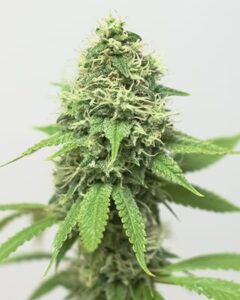
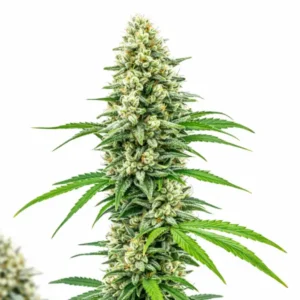
Acapulco Gold Fem

|
THC | 23% - 24% (High) |

|
Lineage | Mexican x Mexican |

|
Type | Feminized |

|
Height | 6.56 ft | 2 m |

|
Yield | Medium |

|
Yield Indoor | 1.47 oz/ft² | 450 g/m² |

|
Yield Outdoor | 19.4 oz/plant | 550 g/plant |

|
Flowering Time | 10 - 11 weeks |

|
Phenotype | 20% Indica / 80% Sativa |

|
Effects | Energetic, Happy, Relaxed |

|
Flavors | Pine, Pungent, Sweet |
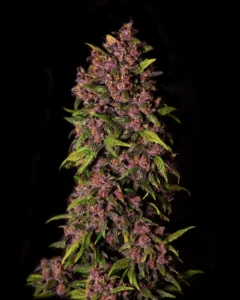
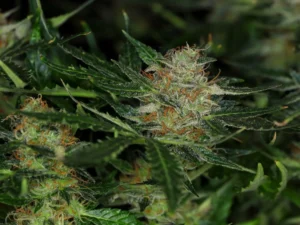
Crystal Meth Auto
|
|
THC | 20% - 21% (Medium) |
|
|
Lineage | Early Skunk x Train Wrek x Ruderalis |
|
|
Type | Autoflowering |
|
|
Height | 3.94 ft | 1.2 m |
|
|
Yield | High |
|
|
Yield Indoor | 1.47 - 1.97 oz/ft² | 450 - 600 g/m² |
|
|
Life Cycle | 9 - 10 weeks |
|
|
Phenotype | 40% Indica / 60% Sativa |
|
|
Effects | Happy, Uplifted, Creative |
|
|
Flavors | Nutty, Pine, Earthy |
| Mulch | Best use | Main advantage | Main drawback |
|---|---|---|---|
| Straw | Best overall for outdoor cannabis | Moisture conservation and cooler soil | Breaks down relatively quickly |
| Wood chips | Permanent beds and long-term soil building | Long lasting | Slower to decompose |
| Shredded leaves | Budget and living-soil grows | Free organic matter | Can mat when applied too densely |
| Compost | Topdressing and soil fertility | Adds nutrients and organic matter | Weak weed barrier when used alone |
| Living mulch | Regenerative systems | Living ground cover and soil protection | Competes for water and nutrients |
| Black plastic | Field production and cool soil | Strong weed control and soil warming | Plastic waste and possible overheating |
For most home outdoor cannabis gardens, straw offers the best balance of performance, cost and ease of management.
1. Straw — Best Overall Mulch for Cannabis
Clean straw is my first choice for most cannabis plants growing outdoors in soil.
It creates a light physical layer over the soil that reduces direct evaporation, limits light reaching weed seedlings and buffers rapid changes in surface temperature.
Unlike very fine organic materials, straw also tends to stay relatively open and breathable when applied sensibly.
More importantly, cannabis-specific research now supports its use.
A two-year 2026 field study on floral hemp compared straw mulch, black plastic and bare soil. Mulch performance changed between years, but straw produced favorable plant-growth responses and performed comparably or better than plastic for several measurements. The authors concluded that both mulches generally outperformed no mulch and highlighted straw as the more environmentally attractive option depending on local conditions.
A separate hemp study published in 2026 found that straw mulch reduced soil temperature and southern blight severity while increasing biomass under the particular warm, humid field conditions tested.
Those results don’t mean straw automatically increases cannabis yield by a fixed percentage.
They do give a stronger justification for choosing straw than simply saying growers traditionally like it.
Best for: outdoor soil grows, hot summers, dry climates and growers who want an inexpensive biodegradable mulch.
2. Wood Chips: Best for Permanent Cannabis Beds
Coarse wood chips work better when you’re growing cannabis in a permanent outdoor bed rather than containers you empty after every crop.
They decompose much more slowly than straw, which is useful when the goal is long-term soil protection and organic-matter buildup.
Washington State University Extension identifies arborist wood chips as particularly effective for conserving moisture, moderating temperature and suppressing weeds in landscape soils.
There is one important correction to the common advice around them:
Fresh wood chips do not automatically steal nitrogen from cannabis plants when used on top of the soil.
Nitrogen immobilization happens mainly at the interface where microorganisms are decomposing high-carbon wood. Problems become much more likely when fine woody material gets mixed into the root zone.
Oregon State University and other Extension resources therefore distinguish between incorporating chips into soil, which can immobilize nitrogen, and leaving coarse chips on the surface as mulch.
You usually don’t need to compost fresh arborist chips for months solely over nitrogen concerns if you’re using them correctly as surface mulch.
Do Wood Chips Improve Drainage?
Not directly.
Surface mulch can improve soil structure over the long term as organic matter decomposes, but placing wood chips on top of poorly drained soil doesn’t suddenly make water drain through that soil faster.
Drainage mostly depends on soil structure, compaction, texture, container drainage and bed design.
Wood chips mainly affect the soil surface and evaporation.
So I’d drop any recommendation to use wood chips simply because the climate is wet.
Best for: permanent outdoor beds, living-soil systems and growers who want mulch that lasts longer than straw.
3. Shredded Leaves: Best Cheap or Free Mulch
Autumn leaves can make excellent cannabis mulch when they’re clean and reasonably well shredded.
Their biggest advantage is simple: many growers can get them for free.
Leaves gradually break down into organic matter and protect the soil surface much like natural woodland litter does.
The main issue is physical structure.
A thick layer of whole wet leaves can flatten into a dense mat, which can slow water penetration and reduce gas exchange at the surface.
Shredding the leaves before application creates a looser layer and speeds decomposition.
Avoid leaves collected from areas where persistent herbicides or other contaminants may have been applied.
Best for: low-cost organic growing and gardens where leaf litter is readily available.

4. Compost: Best as a Topdressing, Not a Standalone Mulch
Compost is genuinely useful around cannabis, but I wouldn’t rank it as the best primary mulch.
Its strength is fertility.
A surface layer of mature compost can supply organic matter and nutrients while supporting soil biology. That makes it a useful topdressing beneath another mulch, such as straw.
For example, soil, then compost or organic amendment, then straw creates a different system from using straw alone.
The compost contributes fertility; the straw provides the stronger physical barrier against evaporation and weeds.
If you’re building this type of organic soil system, Growlantis’ guide to organic dry amendments for cannabis covers nutrient additions separately.
Don’t confuse the roles. Mulch is primarily surface protection. Fertilizer or compost is primarily soil amendment and nutrition.
Best for: growers who want to topdress their soil before applying straw or another protective mulch.
5. Living Mulch: Best for Advanced Living-Soil Systems
A living mulch uses low-growing plants rather than dead organic material to cover exposed soil.
Examples in regenerative agriculture include clovers and other cover crops.
Living plants can protect soil from erosion, occupy space that might otherwise be colonized by weeds and contribute organic residues when they are cut back.
However, the relationship is more complicated than with straw. A living mulch is itself a crop. That means it uses:water, root space, light and nutrients.
Research in other cropping systems shows that living mulches can suppress weeds, but effectiveness depends heavily on species and management, and straw can sometimes suppress weeds more strongly because it does not compete with the primary crop.
Living mulch therefore makes most sense for growers deliberately operating a regenerative or living-soil system rather than someone simply trying to stop a pot from drying out.
Growlantis’ guide to JADAM Microbe Solution and cannabis soil covers another part of this soil-biology approach.
Best for: experienced living-soil growers willing to manage competition.
6. Black Plastic: Best for Specific Field Conditions
Plastic mulch shouldn’t simply be dismissed as unhealthy for soil.
Agricultural producers use black polyethylene because it suppresses weeds well and alters soil temperature and moisture.
Cannabis-specific studies confirm that it can work.
The 2026 floral-hemp study found that black plastic and straw both produced useful agronomic responses relative to bare soil, though their performance varied by year.
But black plastic also has real disadvantages. It produces waste, adds no organic matter and can warm the soil substantially, which helps in cool spring conditions and hurts in an already hot climate.
The second 2026 hemp experiment is a useful example here: black plastic increased soil temperature and was linked to more severe southern blight than straw under the warm conditions tested.
So black plastic isn’t inherently bad. It’s a specialized agricultural tool rather than my first recommendation for a home cannabis garden.
Straw vs. Wood Chips for Cannabis
This is probably the most useful practical comparison.
Choose straw when you want a lighter mulch that’s easy to move, breaks down within the gardening system and performs well during hot outdoor seasons.
Choose wood chips when you have permanent beds and want mulch that stays in place much longer.
Neither should be chosen based on strain. Blue Dream doesn’t require straw, and White Widow doesn’t require wood chips. Those recommendations, if you’ve seen them elsewhere, have no clear agronomic basis.
Mulch choice should follow soil, climate and production system, not a commercial cultivar name.
How Thick Should Cannabis Mulch Be?
There is no scientifically established cannabis-specific depth that applies to every mulch.
General horticultural guidance commonly places loose organic mulches somewhere around 2–4 inches (5–10 cm), with coarser materials generally tolerating greater depth than fine materials. Virginia Cooperative Extension, for example, recommends approximately 2–4 inches depending on material.
That is a starting reference, not an exact cannabis prescription.
Straw settles significantly after application, while compost or finely chopped grass can become dense at much shallower depths.
Too little mulch may provide weak weed and moisture control.
Too much fine, wet organic material can create a dense layer that stays excessively moist and interferes with water and gas movement.
Keep mulch from being packed tightly against the main cannabis stem.
Should You Mulch Cannabis in Pots?
You can, but container plants need less mulch than large outdoor beds.
Containers already restrict soil volume and drainage, so covering the surface too heavily can make it harder to judge when the medium has dried enough for another irrigation.
A light layer of straw or shredded leaves can be useful in outdoor pots exposed to strong sun and wind.
Indoor pots often gain less from mulch because evaporation, temperature and irrigation are already easier to control.
Organic mulch that remains constantly wet indoors can also provide habitat for fungus gnats.
Use mulch because it solves a specific problem rather than because every cannabis pot supposedly needs it.
Can Mulch Cause Overwatering?
Mulch itself does not overwater a plant, but it slows water loss.
That means a watering schedule that worked on bare soil may become excessive after mulch is added.
This is one of the main advantages of mulching, but it requires changing irrigation behavior.
Do not water simply because the surface mulch looks dry.
Check the moisture condition beneath the mulch and within the root zone.
A mulched garden may require considerably less frequent irrigation than the same soil left exposed to direct sunlight and wind.
What Mulches Should You Avoid?
Avoid materials when you cannot establish what they contain.
That includes grass clippings or straw exposed to persistent herbicides, contaminated plant material, painted or treated wood, diseased crop residues and mulch containing large quantities of unwanted weed seeds.
Very fine materials also require caution when applied thickly because they can mat and remain wet.
I would not automatically blacklist fresh wood chips or all synthetic mulches.
The evidence does not support those blanket rules.
The better principle is:
know the material, know what problem you are trying to solve, and manage its specific drawbacks.
What Is the Best Mulch for Cannabis?
For a typical outdoor cannabis plant growing directly in soil, my ranking is:
Straw > coarse wood chips > shredded leaves > compost/topdressing > living mulch > plastic, although the order changes with the production system.
Straw earns the top position because it combines water conservation, soil-temperature moderation, weed suppression, biodegradability and ease of removal, while recent Cannabis sativa field experiments provide direct evidence that it can perform well as a mulch crop-management strategy. For a permanent organic bed, however, coarse wood chips can be the better long-term choice.
For commercial field production in a cool climate, black plastic can be agronomically useful despite being less sustainable. The best mulch is therefore the one whose physical properties solve the problem your garden actually has.
FAQs
What is the best mulch for cannabis?
Straw is the best overall choice for most outdoor cannabis plants grown in soil because it reduces surface evaporation, suppresses weeds and moderates soil temperature while remaining lightweight and biodegradable. Recent floral-hemp field experiments also found useful growth and soil-temperature responses from straw mulch under the conditions tested.
Is straw good mulch for cannabis?
Yes. Straw creates a physical barrier over exposed soil while remaining relatively porous. Cannabis-specific research has found favorable effects on soil temperature, plant growth and disease pressure in particular field environments. Use clean straw and remember that results depend on climate, soil, irrigation and application thickness.
Can I use wood chips around cannabis plants?
Yes. Coarse wood chips can work especially well in permanent outdoor beds. Fresh surface-applied chips generally do not cause the severe root-zone nitrogen depletion often associated with mixing woody material into soil. Keep them on the surface rather than incorporating large quantities into the root zone.
How thick should mulch be around cannabis?
There is no universal cannabis-specific thickness. General horticultural guidance commonly uses roughly 2–4 inches for loose organic mulch, adjusted for particle size and climate. Coarse material can usually be deeper than fine, wet material. Avoid piling mulch tightly against the cannabis stem.
Can mulch cause mold on cannabis plants?
Mulch does not directly cause mold on cannabis flowers, but excessive moisture and poor airflow can favor fungal problems. A very dense, constantly wet mulch layer can also keep the soil surface wetter than intended. Use an appropriate depth, maintain plant airflow and adjust irrigation after adding mulch.
Is living mulch better than straw for cannabis?
Not necessarily. Living mulch protects soil and can suit regenerative systems, but it also competes with cannabis for water, nutrients and root space. Straw provides many of the same surface-protection benefits without being a living competitor, making it simpler and usually more suitable for growers who only want moisture and weed control.

FAQs
What is the best mulch for cannabis in a hot climate?
In hotter climates, straw mulch is often the best mulch for cannabis. It effectively retains moisture, ensuring that your plants do not dry out under the scorching sun. Straw also helps to keep the soil temperature cooler, which is beneficial for cannabis plants that might otherwise suffer in intense heat.
Additionally, using straw mulch can reduce the need for frequent watering, making it a practical choice for growers in arid regions. By creating a consistent moisture level in the soil, straw helps to promote healthy growth even in challenging conditions.
For those cultivating cannabis in hot climates, incorporating straw mulch can be a game-changer. Its natural moisture retention properties minimize evaporation, providing a stable environment that supports plant vitality during peak heat periods.
Choosing the best mulch for cannabis in warm regions involves considering both temperature regulation and water conservation. Straw mulch excels in both areas, making it a go-to option for growers seeking to maintain thriving plants in challenging environmental conditions.
Can wood chips harm cannabis plants?
Wood chips, when used correctly, do not harm cannabis plants. The key is to choose the best wood chips for cannabis cultivation, like those from hardwoods. These chips decompose slowly, providing a steady release of nutrients over time. However, avoid using wood chips that are too fresh, as they can tie up nitrogen in the soil temporarily.
It’s crucial to apply wood chips properly. A layer that’s too thick can restrict oxygen flow to the roots. Aim for a thin layer, about 2-3 inches, to ensure that your cannabis plants receive adequate air and nutrients.
When applied correctly, wood chips can be a beneficial addition to cannabis gardens. They offer advantages such as improved soil structure and nutrient retention, contributing to the overall health of your plants. Ensuring proper application techniques is essential to avoid any potential issues.
By selecting the best wood chips for cannabis cultivation and applying them at the recommended thickness, you can enhance your garden’s performance. This approach helps prevent common pitfalls such as nitrogen depletion and ensures that your cannabis plants receive the full benefits of mulching.
How often should I replace mulch in my cannabis garden?
The frequency of replacing mulch depends on the type you’re using. Straw mulch typically needs to be replaced more frequently, around every season, as it breaks down quickly. This is beneficial since it adds organic matter to the soil but requires regular replenishment.
Wood chips, on the other hand, last longer. You might only need to top them up once a year. Keep an eye on the mulch layer and replenish as needed to ensure your cannabis plants continue receiving the benefits of mulching.
Regularly assessing the condition of your mulch layer is key to maintaining an optimal growing environment for your cannabis plants. Monitoring the decomposition rate and replenishing as needed ensures that your garden remains well-protected and nutrient-rich throughout the growing season.
Understanding how to choose mulch for marijuana gardens involves recognizing the maintenance requirements of different mulch types. By staying attuned to the needs of your garden, you can effectively manage mulch replacement and support the ongoing health of your cannabis plants.
Are there any mulches to avoid for cannabis cultivation?
Avoid mulches that contain chemicals or dyes, as these can leach into the soil and harm your cannabis plants. Synthetic mulches, while durable, can also hinder soil health in the long run by preventing the exchange of nutrients and air.
Fresh wood chips can be problematic if they are too green. They can lead to nitrogen depletion in the soil, which is detrimental to cannabis plants. Always opt for aged or composted wood chips to avoid this issue.
When selecting the best mulch for cannabis, it’s crucial to prioritize natural and chemical-free options. Organic mulch options for cannabis plants promote healthier soil conditions and prevent potential contamination from harmful substances found in synthetic mulches.
Being mindful of the materials used in your mulch can ensure that your cannabis garden remains a safe and thriving environment. By avoiding problematic mulches, you can protect your plants from unintended harm and foster their growth potential.
Can I use a combination of mulches for better results?
Yes, combining mulches can provide the best results for cannabis cultivation. Mixing straw with wood chips can give you the immediate benefits of moisture retention while also providing a long-term nutrient source as the wood chips decompose.
This approach allows for greater flexibility and can help address multiple soil needs simultaneously. It can be particularly effective for strains like Blue Dream, which require a balance of moisture and nutrients for optimal growth.
Using a combination of mulches offers a strategic way to leverage the strengths of different materials. By integrating various mulch types, you can tailor your gardening approach to suit specific strains and environmental conditions, maximizing the benefits for your cannabis plants.
Experimenting with different mulch combinations can help you discover the best mulch for cannabis in your unique garden setup. This adaptive strategy ensures that your plants receive comprehensive support, promoting vigorous growth and abundant yields.