

Brix readings in cannabis cultivation estimate the concentration of soluble solids in plant sap, including sugars and other dissolved compounds. They can help growers track changes within a crop when measurements are taken consistently, but there is no scientifically validated “ideal cannabis Brix level.” Brix alone cannot diagnose nutrient deficiencies, predict THC, guarantee higher yield or prove pest resistance.
What Is Brix in Cannabis Cultivation?
Brix, expressed as °Bx, is a refractometer measurement based on the refractive index of a liquid. In horticulture, it is commonly used as an estimate of total soluble solids.
Recommended Strains
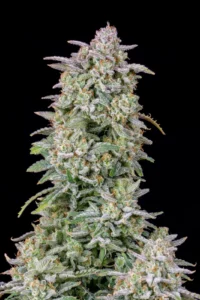
Forbidden Runtz Auto

|
THC | 23% - 26% (High) |

|
Lineage | Forbidden Fruit x Runtz x Ruderalis |

|
Type | Autoflowering |

|
Height | 3.94 ft | 1.2 m |

|
Yield | High |

|
Yield Indoor | 1.47 - 1.8 oz/ft² | 450 - 550 g/m² |

|
Life Cycle | 9 - 10 weeks |

|
Phenotype | 65% Indica / 35% Sativa |

|
Effects | Relaxed, Happy, Hungry |

|
Flavors | Earthy, Fruity, Sweet |
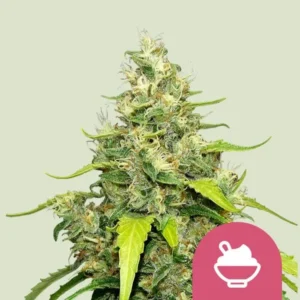
Blue Gelato
|
|
THC | 23% - 24% (High) |
|
|
Lineage | Blueberry x Thin Mint Girl Scout Cookies x Sunset Sherbert |
|
|
Type | Feminized |
|
|
Height | 5.74 ft | 1.75 m |
|
|
Yield | High |
|
|
Yield Indoor | 1.8 - 1.97 oz/ft² | 550 - 600 g/m² |

|
Yield Outdoor | 17.64 - 21.16 oz/plant | 500 - 600 g/plant |
|
|
Flowering Time | 9 - 10 weeks |
|
|
Phenotype | 80% Indica / 20% Sativa |
|
|
Effects | Balanced, Relaxed, Uplifted |
|
|
Flavors | Diesel, Earthy |
Although Brix is frequently described simply as “sugar content,” plant sap contains more than sugar. Soluble material can also include organic acids, minerals, amino acids, proteins and other compounds. Mississippi State University Extension therefore cautions that a Brix reading should not be interpreted as an exact measurement of sugar concentration in plant tissue.
Cannabis growers sometimes use leaf or petiole sap Brix as a quick plant-monitoring metric. The measurement is inexpensive and relatively easy to repeat, making it potentially useful for tracking changes within the same crop.
Its usefulness depends heavily on how it is interpreted.
What Does a Brix Reading Actually Tell You?
A Brix reading tells you how concentrated the soluble material is in the sap sample placed on the refractometer.
That concentration can change because the plant produced or accumulated more carbohydrates, but it can also change because the tissue contains more or less water. Temperature, irrigation, light, nutrition, plant age and sampling location can all influence the result.
For that reason, Brix is better considered a comparative measurement than a complete plant-health test.
If a grower measures the same cultivar, tissue type and canopy position under similar conditions every week, the resulting trend may reveal that plant physiology is changing. A single reading of 9, 12 or 15°Bx without that context tells considerably less.
Is There an Ideal Brix Level for Cannabis?
No scientifically validated universal Brix range has been established for cannabis.
Charts circulating online sometimes assign labels such as poor, average, healthy or pest-resistant to specific cannabis Brix numbers. Those thresholds are generally extrapolated from other crops or alternative cultivation systems rather than derived from controlled cannabis studies.
Even in crops where Brix is widely measured, extension guidance emphasizes that readings vary by species, season, maturity, fertilizer management, water availability, plant section and time of sampling.
Cannabis adds another major source of variation: genetics. Controlled studies show substantial genotype-dependent differences in how cannabis responds to nutrients, water stress and other environmental factors.
A fixed number should therefore not be treated as a universal target that every cannabis plant should reach.
How to Measure Brix in Cannabis
Brix is measured using an optical or digital refractometer.
The challenging part is not reading the instrument. It is obtaining plant samples that can legitimately be compared with one another.
Choose a consistent type of plant tissue and sampling position. If one measurement comes from a young upper leaf and the next comes from an older lower leaf, a difference in Brix may reflect the tissue sampled rather than a meaningful change in crop performance.
Collect measurements at approximately the same stage of the daily light cycle and under similar irrigation conditions. Avoid wet leaf surfaces because external water can dilute the sap and lower the reading.
Calibrate the refractometer according to its instructions and record the result along with contextual information rather than saving only the Brix number.
Mississippi State Extension similarly stresses that plant location, environmental conditions and sampling time need to be standardized when Brix measurements are compared over time.
Why Cannabis Brix Levels Change
A cannabis plant constantly changes the way it produces, moves and consumes carbohydrates.
Photosynthesis converts light energy into chemical energy, generating carbohydrates that can be transported to growing shoots, roots and eventually reproductive tissues. At the same time, transpiration and irrigation affect the amount of water present in leaves and sap.
A change in Brix can therefore have several explanations.
A higher reading might coincide with greater carbohydrate concentration, but it could also occur when plant tissue becomes less hydrated. A lower measurement might reflect dilution associated with growth rather than declining plant health.
This is why Brix should not be interpreted using the simple rule:
higher = healthier
Plant physiology is considerably more complex.
Does High Brix Mean a Cannabis Plant Is Healthy?
Not necessarily.
Brix can contribute information about plant physiology, but it is not a comprehensive measurement of health.
A plant experiencing certain forms of stress can accumulate soluble carbohydrates rather than use them efficiently for growth. Likewise, rapidly growing plants can sometimes show lower soluble-solids concentrations because carbohydrates are being diluted or allocated to new biomass.
Research in other crops has demonstrated these dilution effects, which is one reason agricultural extension specialists caution against using Brix as the sole measure of crop quality.
Cannabis research provides another important warning. Controlled nutrient-deficiency experiments found that deficiencies could dramatically reduce plant growth and flower yield, yet visible symptoms and foliar elemental concentrations did not always correspond neatly. Researchers recommended an integrated diagnostic approach rather than reliance on one indicator.
The same logic applies to Brix.

Does High Brix Make Cannabis Resistant to Pests?
There is little evidence supporting that claim.
A popular horticultural theory says plants above approximately 12 or 14 Brix become unattractive or indigestible to insects. This idea is frequently repeated in regenerative and high-Brix growing communities.
Washington State University’s Center for Sustaining Agriculture and Natural Resources reviewed the claim in August 2026 and found little research or insect biology supporting the idea that specific leaf-sap Brix thresholds prevent pest attacks.
That does not mean plant nutrition and physiology are irrelevant to pest interactions. Healthy and stressed plants can differ in susceptibility to different pests.
What is unsupported is turning one refractometer reading into a rule such as “14 Brix means insects cannot attack cannabis.”
Integrated pest management, plant inspection, sanitation, biological control and appropriate environmental conditions remain much more meaningful pest-management tools.
Can Brix Diagnose Cannabis Nutrient Deficiencies?
No. Brix may respond when nutrition changes, but it cannot tell you which nutrient is deficient.
Nitrogen, phosphorus, potassium, calcium, magnesium and other nutrients affect cannabis physiology through different mechanisms. Controlled cannabis research has demonstrated that deficiencies in individual nutrients can produce substantially different effects on plant growth, photosynthesis and flower yield.
For example, nitrogen deficiency can strongly reduce biomass and photosynthetic performance, while phosphorus supply affects growth, physiology and cannabinoid concentration in different ways.
A low Brix reading cannot distinguish among those possibilities.
If nutrient status is the actual question, root-zone EC and pH, irrigation records, visual symptoms and laboratory tissue analysis provide more specific information.
Brix can be recorded alongside them, but it should not replace them.
Brix vs EC, pH and VPD
These measurements answer completely different cultivation questions.
| Metric | What It Tells You |
|---|---|
| Brix | Concentration of soluble solids in plant sap |
| EC | Ionic concentration of nutrient solution or root zone |
| pH | Acidity/alkalinity affecting nutrient chemistry |
| VPD | Atmospheric drying demand based on temperature and humidity |
| PPFD | Photosynthetic light reaching the canopy |
| Tissue analysis | Concentration of individual nutrients in plant tissue |
A grower concerned about fertilizer buildup should examine EC rather than Brix. A grower troubleshooting nutrient availability should evaluate pH and nutrient composition. A grower concerned about transpiration should look at temperature, humidity and VPD.
Brix becomes more useful when it is one column in a larger dataset, not when growers ask it to replace every other measurement.
Can Brix Be Used to Adjust Cannabis Nutrients?
Brix trends may help generate questions, but they should not directly prescribe fertilizer concentration.
Suppose Brix falls for several measurements. Increasing nutrients immediately would be a poor response because the decline might relate to irrigation, environmental changes, tissue selection or rapid vegetative growth.
Conversely, a high Brix value does not prove that the plant has received optimal nutrition.
Cannabis nutrient responses are often nonlinear. A 2025 study found that increasing phosphorus and total nutrient concentration well above adequate levels increased nutrient accumulation but did not improve flower yield or cannabinoid quality.
More fertilizer is therefore not automatically better, regardless of what a refractometer displays.
Use root-zone and plant-specific measurements to make nutritional decisions, with Brix providing additional context rather than serving as the fertilizer controller.
Can Brix Tell You How Much to Water?
Not directly.
Plant water status strongly affects soluble-solids concentration, which means irrigation can influence Brix readings. However, the measurement does not tell you exactly how much water the root zone contains or when irrigation should begin.
Substrate moisture sensors, pot weight, substrate water content and irrigation-volume measurements are more directly related to irrigation management.
Brix may become useful when patterns are compared. For example, a grower could record Brix alongside substrate moisture and irrigation events to see how sap concentration changes through repeated dry-back cycles.
That is a valid data-driven experiment.
Using a particular Brix value as a universal trigger to irrigate cannabis is not.
Can Brix Optimize Cannabis Lighting?
Brix cannot determine the ideal PPFD for a cannabis crop.
Lighting affects photosynthesis, so changes in light can certainly influence carbohydrate production and potentially Brix measurements. But leaf-level carbohydrate concentration does not reveal whether adding more photons will increase whole-plant yield.
Cannabis research demonstrates why that distinction matters. In one controlled indoor study, leaf photosynthesis saturated at lower light levels while whole-plant flower yield continued increasing as canopy PPFD increased up to the highest treatment tested. The researchers specifically concluded that leaf-level photosynthetic response was not a reliable predictor of whole-plant yield.
This is another reason not to use Brix as a shortcut for complex crop physiology.
Lighting decisions should be based primarily on PPFD, daily light integral, crop response, environmental capacity and production economics.
Does Higher Brix Increase Cannabis Yield?
There is no established cannabis equation connecting a particular Brix increase with a particular increase in yield.
The current article repeatedly suggests that “optimizing Brix” produces significantly higher yields, but controlled evidence demonstrating that relationship in cannabis is lacking.
Cannabis flower yield responds strongly to factors such as light, genetics, nutrition, root-zone conditions, crop architecture and environment.
For example, nutrient-deficiency research has documented flower-yield reductions of roughly 33–72% under several individual nutrient deficiencies. Light-intensity experiments have likewise shown substantial yield responses to canopy photon flux.
Those are experimentally demonstrated relationships.
An independent Brix target producing higher cannabis yield has not been established in the same way.
Does Higher Brix Mean Higher THC?
No.
Brix measures soluble solids in sap, while THC concentration is determined through chemical analysis of cannabinoid-containing tissue.
The metabolic processes are not interchangeable.
Cannabis studies repeatedly demonstrate that plant growth, photosynthesis, flower yield and cannabinoid concentration can respond differently to the same treatment. Increasing light, for example, substantially increased yield in one indoor experiment without significantly changing cannabinoid potency.
Nutrient studies have produced similarly complex outcomes. Higher phosphorus inputs can increase yield while reducing cannabinoid concentration through a dilution effect, even though total cannabinoid production per plant changes differently.
A refractometer therefore cannot predict THC percentage.
Does Higher Brix Improve Terpenes or Flavor?
There is no validated rule saying higher leaf Brix creates stronger cannabis flavor.
Aromatic quality depends heavily on genetics and on the production, preservation and transformation of terpenes and numerous other volatile compounds.
Plant nutrition and environment can influence secondary metabolism, but those responses are often cultivar- and treatment-dependent.
For example, research on cannabis nitrogen form found significant effects on yield, photosynthesis, cannabinoids and terpenoids, demonstrating that mineral nutrition can influence several traits simultaneously.
That does not establish Brix as a proxy for terpene concentration.
If terpene content needs to be quantified, chemical analysis is the relevant measurement.
A Better Way to Use Brix in Data-Driven Cannabis Cultivation
The most defensible use of Brix is trend monitoring.
Rather than trying to “maximize Brix,” establish a consistent sampling protocol and observe how readings change alongside other cultivation variables.
A grower might track Brix together with root-zone EC, pH, irrigation volume, temperature, RH, VPD and PPFD. Changes can then be compared with crop development and final yield.
For example, if Brix repeatedly falls after a particular irrigation strategy is introduced, that pattern may justify further investigation. The reading itself does not explain the cause, but it helps identify when something changed.
Over multiple crop cycles, this approach can create useful facility-specific baselines.
That is what genuine data-driven cultivation looks like: measure, compare, test and validate, rather than assuming one metric is inherently good or bad.
Comparing Brix Between Cannabis Strains
Be cautious.
Different cannabis genotypes can respond differently to the same environment, nutrient concentration or drought stress. Controlled studies have demonstrated genotype-specific differences in mineral nutrition and photosynthetic responses.
A Brix baseline established for one cultivar should therefore not automatically become the target for another.
This is particularly important when comparing very different genetic types or production systems.
If cultivar-specific Brix data is useful to your cultivation program, establish it through repeated measurements of that cultivar under your own controlled conditions rather than relying on a generic internet chart.
How to Build a Useful Cannabis Brix Log
A Brix log should capture enough context to explain the measurement later.
Record the cultivar, growth stage, date and time, sample position and Brix reading. Alongside that information, note recent irrigation, root-zone EC and pH and major environmental variables.
You do not need dozens of measurements every day.
Consistency is more useful than excessive measurement frequency.
The aim is to determine whether repeatable trends emerge across several crop cycles. If a pattern disappears every time the cultivar, sampling position or environmental conditions change, it may not be a robust production indicator.
Common Brix Mistakes in Cannabis Growing
The biggest mistake is treating Brix as a universal plant-health score.
Another is assuming that high Brix automatically indicates superior nutrient absorption, insect resistance, yield or potency. Current evidence does not support those conclusions.
Inconsistent sampling is another major problem. Readings taken from different leaf positions, times of day or hydration states should not be compared as though everything except plant health remained constant.
Finally, avoid adjusting multiple cultivation variables simply to drive the Brix number upward.
The goal is a productive, healthy crop, not the highest possible refractometer reading.
Is Brix Worth Measuring in Cannabis?
It can be, if expectations are realistic.
A refractometer is inexpensive, measurements are fast and repeated Brix readings can add another physiological variable to a cultivation dataset.
For growers who enjoy collecting and analyzing crop data, that can be useful.
Brix becomes much less useful when it replaces more direct measurements such as root-zone EC, pH, substrate moisture, environmental monitoring or plant tissue analysis.
It should also not be treated as evidence of superior cannabis simply because one crop produced a higher number than another.
Think of Brix as one observation among many.
Brix in Cannabis Cultivation: Key Takeaway
Brix readings estimate soluble-solids concentration in cannabis plant sap. When sampling is standardized, they can help growers track changes within a plant or crop over time.
They do not provide a universal measurement of cannabis health.
There is currently no scientifically validated Brix target for cannabis, and high Brix does not automatically prove superior photosynthesis, optimal nutrient uptake, pest resistance, increased yield, stronger THC or better flavor.
The strongest use of Brix is therefore comparative: record it alongside EC, pH, irrigation and environmental data, look for repeatable patterns and validate those patterns against actual crop outcomes.
A data-driven cannabis cultivation program should use Brix as data, not dogma.
FAQs About Brix in Cannabis Cultivation
What is a good Brix level for cannabis?
There is no scientifically validated universal Brix level for cannabis. Readings vary with genetics, plant tissue, hydration, temperature, nutrition, maturity and time of sampling. Rather than trying to reach a generic target such as 12 or 14°Bx, growers can obtain more useful information by comparing consistently collected readings within the same cultivar and crop.
Does high Brix mean a cannabis plant is healthy?
Not necessarily. Higher Brix means the sampled sap contains a greater concentration of soluble solids, but that can result from several physiological processes, including differences in water content. Brix can contribute useful trend information, but plant health should be assessed using environmental data, root-zone measurements, plant observations and, when appropriate, laboratory analysis.
Does high Brix prevent pests?
There is little scientific support for claims that cannabis or other crops becomes resistant to insects once leaf Brix passes a particular threshold. Washington State University reviewed this idea in 2026 and found limited research supporting the proposed Brix-insect relationship. Pest management should rely on monitoring and integrated pest-management practices instead.
Can Brix readings tell me what nutrients cannabis needs?
No. Nutrient availability can affect plant physiology and therefore influence Brix, but a refractometer cannot identify individual nutrient deficiencies. Root-zone EC and pH, visual symptoms and plant tissue analysis provide more direct nutrient information. Controlled cannabis research recommends combining multiple diagnostic indicators because even visual symptoms and tissue concentrations do not always align perfectly.
Does higher Brix increase cannabis yield?
No causal relationship has been established showing that increasing Brix itself raises cannabis yield. Flower production responds to genetics, lighting, nutrition, environment and numerous other variables. Brix can be tracked alongside those factors, but a higher refractometer reading should not be interpreted as a guarantee of increased biomass or flower production.
Can Brix predict cannabis potency?
No. Brix measures soluble solids in sap rather than cannabinoid concentration in flowers. Controlled cannabis studies show that yield, photosynthetic performance and cannabinoid concentration can respond differently to cultivation treatments. THC or CBD potency therefore requires direct chemical analysis rather than estimation from a leaf-sap refractometer.