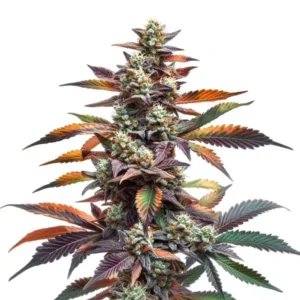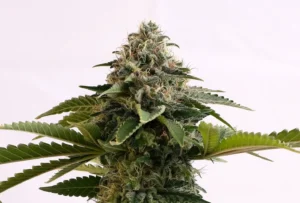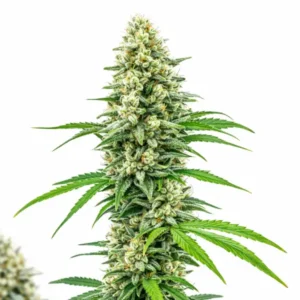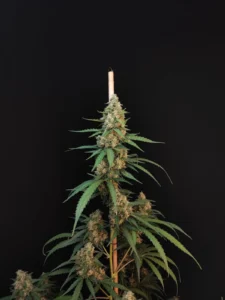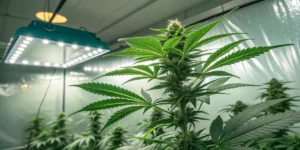
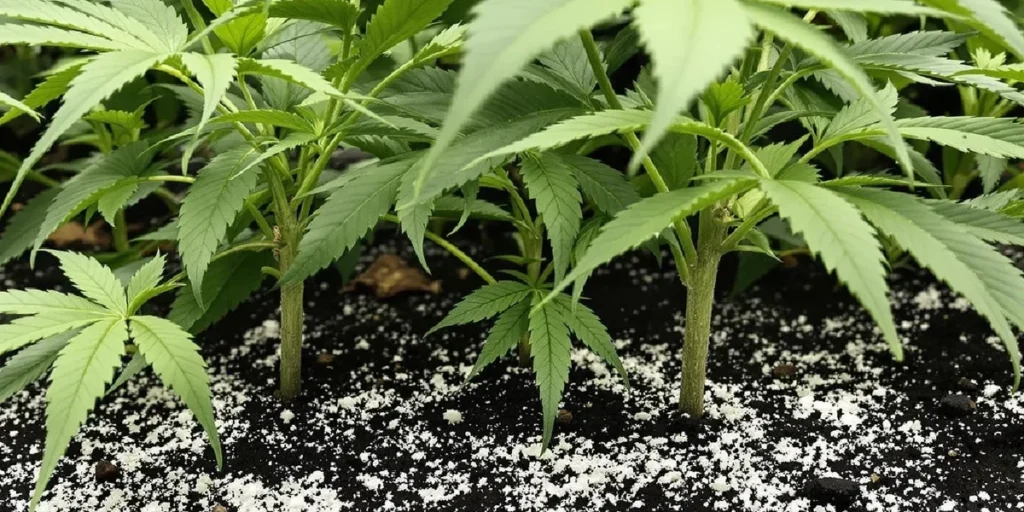

Diatomaceous earth for cannabis is mainly useful as a dry, physical insecticide against pests that contact the powder. It works by disrupting the insect cuticle and promoting water loss, but its performance drops when wet. It should not be treated as a guaranteed fungus-gnat cure, a fast silicon fertilizer, or a proven way to increase cannabis yield.
What Is Diatomaceous Earth?
Diatomaceous earth, often shortened to DE, is a fine mineral powder produced from the fossilized remains of microscopic aquatic organisms called diatoms. Their structures are largely composed of silica, or silicon dioxide.
Recommended Strains
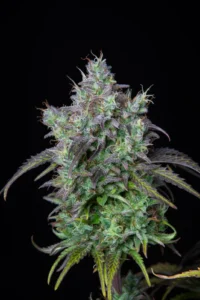
Big Bud Auto

|
THC | 23% - 24% (High) |

|
Lineage | Big Bud x Ruderalis |

|
Type | Autoflowering |

|
Height | 3.28 ft | 1 m |

|
Yield | High |

|
Yield Indoor | 1.31 - 1.64 oz/ft² | 400 - 500 g/m² |

|
Life Cycle | 8 - 9 weeks |

|
Phenotype | 70% Indica / 30% Sativa |

|
Effects | Creative, Happy, Relaxed |

|
Flavors | Floral, Fruity, Sweet |
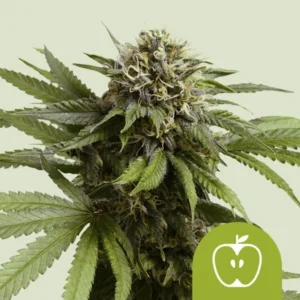
Apple Fritter Auto
|
|
THC | 23% - 24% (High) |
|
|
Lineage | Sour Apple Auto x Animal Cookies |
|
|
Type | Autoflowering |
|
|
Height | 2.62 ft | 0.8 m |
|
|
Yield | Medium |
|
|
Yield Indoor | 1.31 - 1.47 oz/ft² | 400 - 450 g/m² |

|
Yield Outdoor | 4.94 - 6.35 oz/plant | 140 - 180 g/plant |
|
|
Life Cycle | 8 - 10 weeks |
|
|
Phenotype | 60% Indica / 35% Sativa / 5% Ruderalis |
|
|
Effects | Creative, Euphoric, Relaxed |
|
|
Flavors | Candy, Earthy, Fruity |
Most diatomaceous earth consists primarily of amorphous silica, although products may also contain small amounts of crystalline silica. DE has been used in many applications, including filtration, absorbent materials and pest-control products.
For cannabis growers, its most relevant use is pest management. Diatomaceous earth does not poison insects in the way a conventional neurotoxic insecticide does. Instead, contact with the particles damages or removes protective lipids from the insect cuticle, increasing water loss until susceptible insects dehydrate. Abrasion can contribute to that process.
This physical mode of action is also why DE needs the right conditions to work.
Does Diatomaceous Earth Work on Cannabis Pests?
It can, but the answer depends heavily on the pest, where the product is applied and whether the powder remains dry.
Diatomaceous earth works best when susceptible insects physically move through or contact a dry layer of powder. It is therefore more useful against exposed crawling arthropods than against pests protected inside plant tissue, moist growing media or other inaccessible areas. Extension guidance also notes that effectiveness varies substantially among insects.
| Pest situation | Potential role of DE | Main limitation |
|---|---|---|
| Crawling insects contacting dry surfaces | Can cause desiccation after contact | Requires direct contact and dry powder |
| Mites and other small arthropods | May be susceptible to physical action | Coverage and crop suitability matter |
| Fungus gnats | Sometimes promoted for soil-surface use | Evidence for surface barriers is mixed |
| Flying insects | Limited as a stand-alone control | They may spend little time contacting treated surfaces |
| Established infestations | May contribute to management | Should not automatically replace a broader IPM strategy |
It is therefore inaccurate to say that diatomaceous earth simply “stops pests in their tracks” or reliably controls every aphid, thrip, mite or fungus gnat infestation.
Does Diatomaceous Earth Kill Fungus Gnats?
This claim needs particular caution because fungus gnats are one of the main reasons cannabis growers search for diatomaceous earth.
The theory is straightforward: putting DE on top of the growing medium should expose emerging adults and egg-laying females to the powder. However, controlled research has not consistently supported that strategy.
A study published in the Journal of Economic Entomology tested dry and moist surface layers of diatomaceous earth against fungus gnats. The DE generally did not prevent adults from emerging or females from laying eggs. Moisture from the growing medium caused the material to expand and develop openings that insects could use.
Cornell and University of Connecticut greenhouse guidance similarly report that covering growing media with diatomaceous earth did not reliably prevent fungus-gnat emergence or egg laying.
That does not mean DE can never affect fungus gnats. It means it should not be presented as a guaranteed fungus-gnat barrier, particularly in moist growing media.
Why Does Diatomaceous Earth Need to Stay Dry?
Diatomaceous earth relies on physical contact and desiccation, so moisture significantly reduces its performance.
The National Pesticide Information Center states that DE remains effective when it is dry and undisturbed. University of Minnesota Extension similarly notes that rain, watering, dew and humid conditions can reduce its effectiveness.
This matters in cannabis cultivation because the surface of a growing medium is regularly exposed to irrigation and moisture. A DE layer that becomes wet should not be assumed to provide the same pest-control effect as dry powder.
There is therefore no universal rule such as “reapply every two weeks.” Reapplication depends on the product label, irrigation, rain, humidity, disturbance and whether the treated material is still present and dry.
What Type of Diatomaceous Earth Should You Use?
For pest management, use a diatomaceous earth product specifically labeled for pesticide use and follow its directions.
“Food grade” is frequently recommended online, but the term is often misunderstood. Food-grade DE describes suitability for certain food-related uses; it does not mean that the product has been evaluated for spreading around plants as an insecticide.
The National Pesticide Information Center specifically recommends choosing products labeled for pest control because these products provide tested use directions, exposure precautions and required protective measures.
That distinction is more useful than simply telling growers to buy any bag labeled “natural” or “food grade.”
Also avoid assuming that all forms of diatomaceous earth are interchangeable. Different processing methods and silica compositions can produce materials with different properties and exposure profiles.
How to Use Diatomaceous Earth Around Cannabis Plants
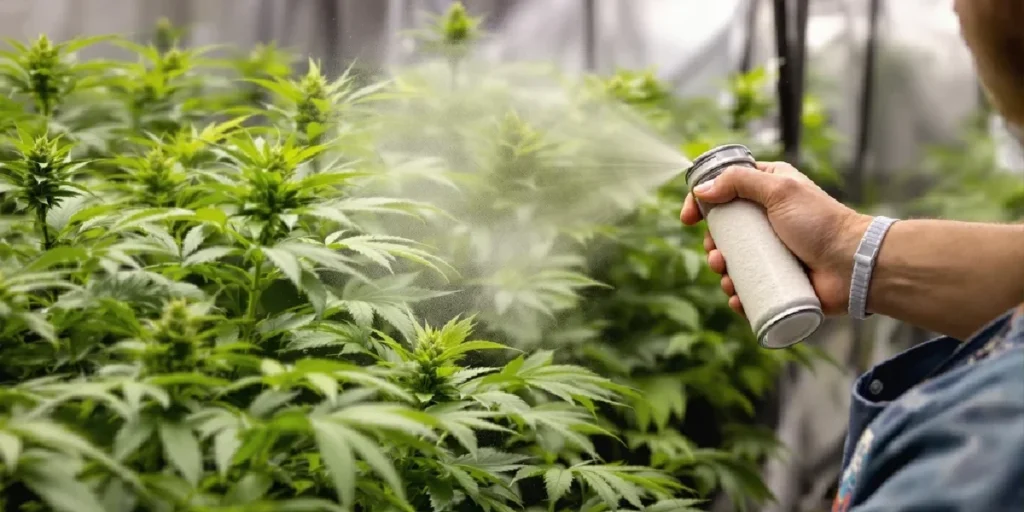
When a labeled product permits use in your cultivation situation, DE is most useful as a targeted dry treatment in areas where susceptible pests are likely to make contact with it.
Follow the product label for application location, amount, protective equipment and reapplication rather than relying on a universal cannabis-specific dose. Pesticide labels exist precisely because appropriate use rates and restrictions can differ among formulations.
Avoid creating clouds of airborne dust, particularly around fans, ventilation systems or enclosed grow spaces. NPIC identifies inhalation as a relevant exposure route and notes that DE dust can irritate the nose and respiratory tract.
Directly coating cannabis flowers is also a poor default strategy. Apart from exposing the crop to unnecessary particulate residue, flower is ultimately the portion commonly inhaled after harvest. Pest control should be targeted to the pest and application site rather than covering the entire plant simply because DE is a naturally occurring material.
Can You Put Diatomaceous Earth on Cannabis Leaves?
Some pesticide labels may permit application to plant surfaces, but blanket foliar dusting should not be treated as a universal recommendation.
DE needs pest contact to work, so leaf application may theoretically expose small arthropods feeding or moving on foliage. However, whether it is appropriate depends on the product label, pest, crop stage and intended use of the harvested material.
Applying more powder does not automatically produce better control. Excessive dust also increases occupational exposure and leaves more material on the plant.
During flowering, the case for indiscriminate application becomes weaker because cannabis flowers can trap particulate material within their complex surface structure. A targeted integrated pest-management approach is preferable to coating developing buds with powder.
Can You Mix Diatomaceous Earth Into Cannabis Soil?
Diatomaceous earth is sometimes marketed online as a soil amendment that supposedly improves aeration, water retention, nutrient uptake and root development. Those claims should be treated separately from its established insecticidal mechanism.
Research on fungus gnats has found that incorporating DE into commercial growing media did not necessarily improve control of fungus-gnat larvae at the tested concentrations.
More importantly, the fact that DE contains silica does not mean that all of that silicon immediately becomes available to cannabis roots.
A 2026 review focused specifically on silicon in cannabis production concluded that the silica in diatomaceous earth dissolves slowly under typical growing-media conditions. Its contribution to plant-available silicon during a single cannabis crop cycle may therefore be limited compared with more soluble silicon inputs.
Soil incorporation should consequently not be sold as a proven shortcut to stronger stems, better nutrient uptake or higher yields.
Does the Silica in Diatomaceous Earth Strengthen Cannabis Plants?
Silicon itself is an interesting element in plant science. Research in many crop species indicates that available silicon can contribute to stress tolerance and other physiological responses, although silicon is not generally classified as an essential plant nutrient.
But there is an important distinction between evidence for plant-available silicon and evidence for diatomaceous earth as an effective silicon fertilizer.
Cannabis cannot instantly use all the silicon locked within a DE particle. Silicon must become available in forms roots can absorb, and the recent cannabis-focused literature indicates that DE dissolves too slowly to be considered a rapid silicon source during cultivation.
Claims that adding DE directly produces stronger cannabis plants therefore go beyond the available evidence.
Does Diatomaceous Earth Increase Cannabis Yield or Potency?
There is no good basis for claiming that diatomaceous earth itself increases cannabis yield, THC concentration, terpene production, flavor or flower quality.
Preventing serious pest damage can obviously help a plant retain more of its productive potential. That is very different from demonstrating that DE directly increases yield.
Likewise, research on silicon nutrition in other crops should not be converted into a claim that sprinkling diatomaceous earth into cannabis soil will make buds more potent or flavorful.
Yield and cannabinoid composition are influenced by genetics, plant health, environment, nutrition, crop management and many other interacting variables. DE should be evaluated according to what it demonstrably does: act as a physical pest-control material under suitable conditions.
Is Diatomaceous Earth Safe to Use Around Cannabis?
Diatomaceous earth should not be described as completely harmless.
Most DE is largely composed of amorphous silica, and acute toxicity is generally relatively low. However, the fine dust can irritate the eyes, skin, nose and respiratory tract. Products can also contain small amounts of crystalline silica, which raises additional concerns with repeated inhalation exposure.
The practical approach is to minimize dust exposure and follow the protective measures specified on the pesticide label. That may include respiratory and eye protection depending on the product and application.
European regulatory assessments of kieselgur, or diatomaceous earth, likewise specifically identify operator inhalation protection as an issue requiring appropriate risk-mitigation measures.
“Natural” therefore does not mean “risk-free.”
Can Diatomaceous Earth Harm Beneficial Insects?
Diatomaceous earth does not recognize whether an arthropod is beneficial or harmful. Its physical effect depends primarily on contact and susceptibility.
That means targeted application is preferable to indiscriminate spreading, especially outdoors or wherever beneficial arthropods are being deliberately used as part of integrated pest management.
Laboratory research on honey bees and bumble bees found relatively low mortality with several tested DE products under the study conditions, but that does not justify the broader statement that DE simply “doesn’t harm pollinators.” Outcomes depend on the product, exposure and species involved.
Diatomaceous Earth Works Best as Part of Pest Management
The biggest mistake is treating diatomaceous earth as a complete pest-control program.
Its performance depends on the target pest, contact, humidity, application site and formulation. It may contribute to an integrated pest-management strategy, but sanitation, monitoring, environmental management and pest-specific biological or labeled pesticide controls may be more appropriate in other situations.
This is particularly important with fungus gnats, where moisture management and biological controls can play a larger role than relying on a DE surface barrier alone. Greenhouse IPM programs commonly use measures such as predatory mites and entomopathogenic nematodes against fungus-gnat larvae.
The correct question is therefore not whether diatomaceous earth is “good for cannabis,” but whether it is an appropriate control for the specific pest and application conditions in front of you.
FAQs About Diatomaceous Earth for Cannabis
Is diatomaceous earth good for cannabis plants?
Diatomaceous earth can be useful around cannabis primarily as a physical pest-control product when susceptible insects contact dry powder. Evidence is much weaker for claims that it directly improves cannabis nutrition, root health or yield. Its usefulness depends on the pest, application method, moisture conditions and instructions on the specific product label.
Can I use food-grade diatomaceous earth on cannabis?
Food-grade does not mean a product has been evaluated for pest-control use. NPIC recommends choosing a diatomaceous earth product specifically labeled as a pesticide when the goal is controlling insects. A pesticide label provides approved directions, exposure precautions and protective-equipment requirements that ordinary food-grade products may not provide.
Does diatomaceous earth kill fungus gnats?
Diatomaceous earth can affect susceptible insects through desiccation, but research does not support treating a DE soil-surface layer as a guaranteed fungus-gnat solution. Controlled studies found that surface applications did not reliably prevent adult emergence or egg laying, particularly when moisture caused cracks and reduced the effectiveness of the barrier.
Does diatomaceous earth stop working when it gets wet?
Its insecticidal effectiveness drops substantially when wet because the dry, absorbent powder is important to its desiccating action. Rain, irrigation, dew and high humidity can therefore reduce performance. Reapplication should follow the product label and actual conditions rather than a fixed schedule such as once every one or two weeks.
Can diatomaceous earth increase cannabis yield?
There is not sufficient evidence to claim that diatomaceous earth directly increases cannabis yield. Effective pest management can prevent losses caused by insects, but that is not the same as a yield-enhancing effect. Claims that DE increases potency, terpene production or flower quality are also unsupported without direct evidence from controlled cannabis studies.
Is diatomaceous earth safe to breathe?
No. Avoid inhaling diatomaceous earth dust. Short-term exposure can irritate the nose and respiratory tract, and some products contain small amounts of crystalline silica. Use a product intended for pest control, minimize airborne dust and follow the respiratory and other protective measures stated on its label.