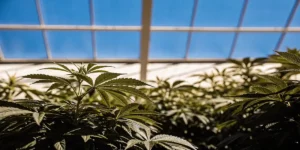
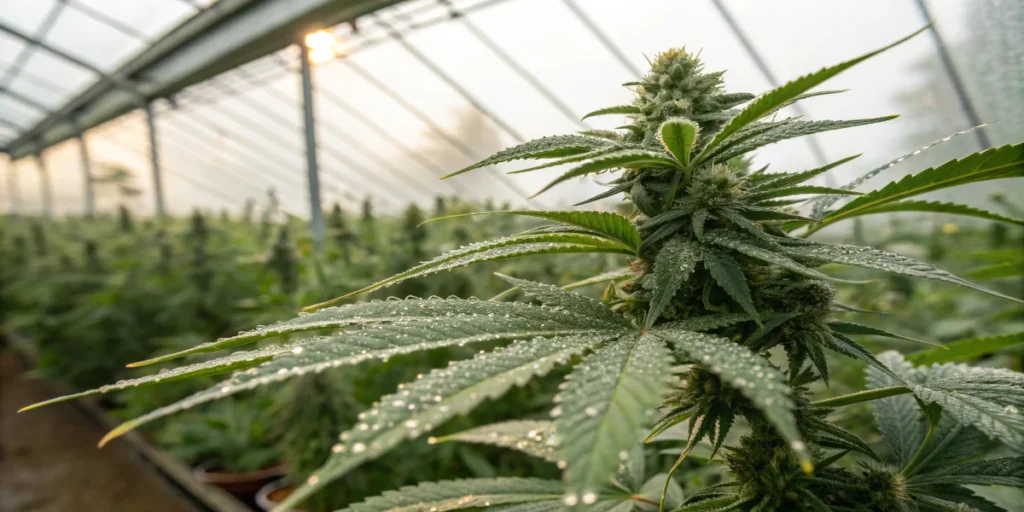

Moisture can affect cannabinoid potency indirectly during cultivation, drying and storage, but the relationship isn’t as simple as “more or less humidity equals more THC.” Very high humidity during flowering can reduce cannabinoid concentrations in some conditions, while postharvest moisture influences microbial risk, chemical stability and even how potency percentages are reported by weight.
Does moisture really affect cannabis potency?
Yes, but moisture affects cannabis differently depending on when it occurs.
Recommended Strains
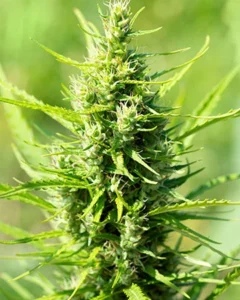
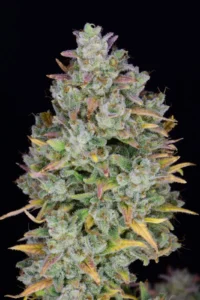
GG Fem

|
THC | 25% - 28% (High) |

|
Lineage | Chem's Sister x Chocolate Diesel |

|
Type | Feminized |

|
Height | 6.56 ft | 2 m |

|
Yield | High |

|
Yield Indoor | 1.67 oz/ft² | 510 g/m² |

|
Yield Outdoor | 15.87 oz/plant | 450 g/plant |

|
Flowering Time | 9 - 10 weeks |

|
Phenotype | 70% Indica / 30% Sativa |

|
Effects | Euphoric, Happy, Relaxed |

|
Flavors | Chocolate, Coffee, Earthy, Pine |
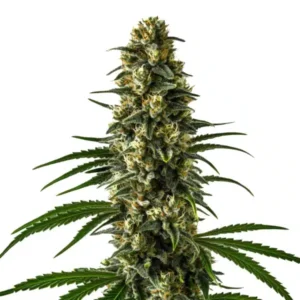
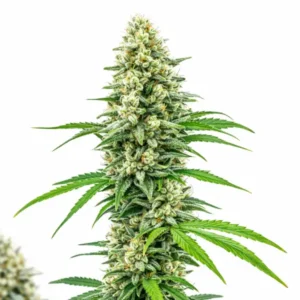
Girl Scout Cookies
|
|
THC | 18% - 25% (High) |
|
|
Lineage | Durban Poison x OG Kush |
|
|
Type | Feminized |
|
|
Height | 4.92 ft | 1.5 m |
|
|
Yield | High |
|
|
Yield Indoor | 1.64 oz/ft² | 500 g/m² |
|
|
Yield Outdoor | 21.16 - 24.69 oz/plant | 600 - 700 g/plant |
|
|
Flowering Time | 8 - 10 weeks |
|
|
Phenotype | 60% Indica / 40% Sativa |

|
Medical | Fatigue, Muscle Spasms, Stress |
|
|
Effects | Happy, Relaxed, Talkative |
|
|
Flavors | Fruity, Sweet |
During cultivation, relative humidity influences plant transpiration, flower development and disease pressure. During drying, water is intentionally removed from harvested cannabis while cannabinoids and volatile compounds continue to change. During storage, moisture conditions influence microbial safety, physical quality and the stability of the dried flower. These processes shouldn’t be treated as if they were identical.
It’s also worth separating actual cannabinoid degradation from changes in the percentage printed on a lab report. Removing water reduces the total weight of a cannabis sample, so cannabinoid concentration expressed as a percentage of dry weight can change even when the absolute quantity of THC hasn’t increased proportionally.
Moisture and cannabinoid potency: quick guide
| Stage | How moisture matters |
|---|---|
| Vegetative growth | Influences transpiration and plant physiology |
| Flowering | Excessive humidity can affect development and disease risk |
| Harvest | Flower contains substantial water that must be removed |
| Drying | Moisture reduction changes flower weight and chemistry |
| Curing | Water activity needs to remain controlled |
| Storage | Moisture, heat, light, oxygen and time influence stability |
| Laboratory testing | Moisture content can influence reported potency percentages |
The central point: there’s no single humidity number that maximizes THC throughout the cannabis lifecycle.
How humidity affects cannabinoids during flowering
Humidity is an important environmental variable during cannabis flowering, and recent controlled research provides stronger evidence than the generalized claims common online.
A 2025 study published in Frontiers in Plant Science compared cannabis grown under two canopy relative-humidity ranges during flowering. Plants exposed to very high relative humidity, approximately 78–98% RH, had substantially lower cannabinoid concentrations than plants grown at approximately 37–58% RH under the conditions tested. The high-humidity treatment also delayed flowering development.
This supports the idea that extreme humidity can interfere with normal flower and cannabinoid development. It does not, however, prove that one specific RH value always produces maximum THC. The experiment involved specific genetics and controlled growing conditions, and temperature, cultivar, plant stage, lighting and other environmental variables can all modify plant responses.
Does higher humidity mean lower THC?
Not necessarily. The finding above involved extremely high canopy humidity, reaching as high as 98%, which is different from saying that moving from 55% to 60% RH will automatically lower THC. Plant physiology operates through interacting environmental variables rather than one isolated percentage.
This is why growers increasingly consider Vapor Pressure Deficit, or VPD, instead of treating relative humidity alone as the complete environmental picture. VPD accounts for the relationship between temperature and moisture in the air, which gives additional context about how readily a plant can transpire. Growlantis’ Autoflower VPD Chart explains that relationship in more depth.
Does low humidity increase THC?
There isn’t enough evidence to say that simply lowering humidity increases THC. Extremely dry air can increase transpiration demand and create plant stress. That doesn’t mean controlled environmental stress can never influence secondary metabolites, but “lower humidity equals higher THC” is far too simplistic a claim.
The goal during cultivation should be to maintain conditions that support normal plant function while reducing excessive moisture and disease risk. Trying to maximize potency simply by lowering RH as far as possible isn’t evidence-based cultivation.
Humidity, mold and potency are different issues
High humidity can raise the risk of fungal disease, particularly when dense flowers develop humid internal microclimates, and that affects crop safety and usable yield. But mold doesn’t simply “consume THC” and lower a potency number in a predictable way. A mold-contaminated flower is a quality and safety failure regardless of whether its lab-reported cannabinoid concentration stays high.
That distinction matters. Moisture management has several goals at once: supporting plant physiology, preventing microbial growth and preserving postharvest quality.
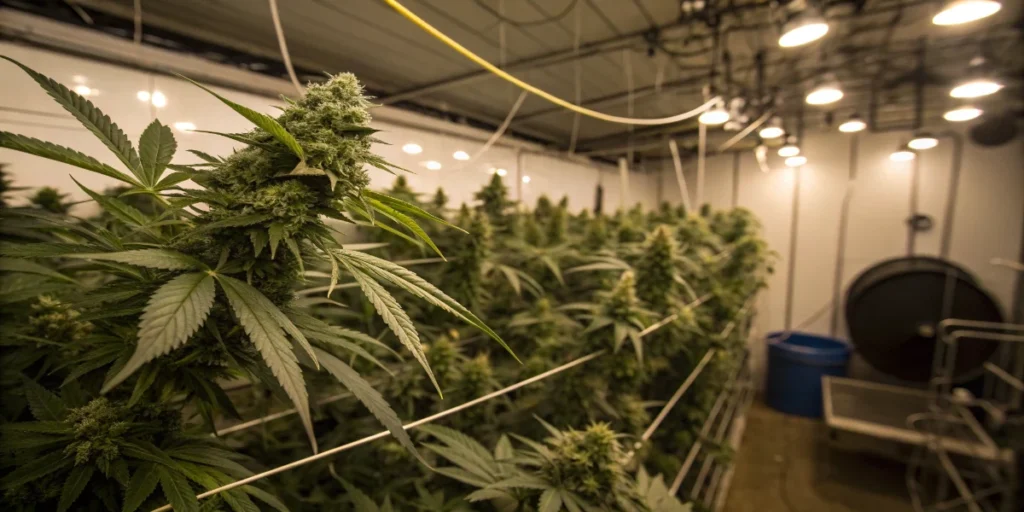
Growlantis’ guide to cannabis canopy airflow explains how circulation can help reduce stagnant, humid areas during flowering.
What happens to cannabinoids during drying?
Freshly harvested cannabis contains substantial water, and drying removes much of that moisture before storage and consumption. As water leaves the plant, several things happen at once: the flower loses mass, its physical structure changes, volatile compounds can be lost, acid cannabinoids may undergo some decarboxylation, and cannabinoids can degrade chemically depending on temperature, oxygen, light and drying conditions.
So drying shouldn’t be viewed as simply “removing water.” It’s a postharvest process that can alter cannabis’s chemical profile. Research comparing different cannabis drying methods has found measurable differences in cannabinoid and volatile-compound retention.
Growlantis covers this process in more detail in its guide to proper cannabis drying and potency stability.
Does drying increase THC potency?
This question needs an important distinction: THC percentage can increase on a weight basis as cannabis dries without the flower actually producing new THC.
Picture a cannabis sample containing cannabinoids plus a large amount of water. As water is removed, the sample weighs less, so the cannabinoids now represent a larger percentage of the remaining dry mass. That’s partly a mathematical concentration effect. There can also be genuine chemical changes during drying, including conversion of THCA to THC through decarboxylation.
So a higher reported THC percentage after drying doesn’t automatically mean drying “created more potency.” Moisture correction and analytical methodology matter when comparing lab results.
Moisture content vs. water activity
These terms are related, but they aren’t the same thing.
Moisture content measures how much water is physically present in a sample, usually expressed as a percentage of total weight.
Water activity, written as aw, describes how available that water is for processes such as microbial growth. Two cannabis samples can have similar moisture content while having different water activity. For storage and microbial control, water activity can provide more useful information than total moisture alone. ASTM has developed specific standards for measuring water activity in dried cannabis flower.
What water activity is recommended for stored cannabis?
ASTM D8197 specifies a water activity range of approximately 0.55 to 0.65 aw for dried cannabis flower intended for storage. The purpose isn’t specifically to maximize THC; the range is meant to balance two quality concerns. Above the recommended range, the risk of undesirable microbial growth increases. Well below it, flower can become excessively brittle and suffer physical damage.
This also shows why statements like “all cannabis should be stored at exactly 60% humidity” are oversimplified. Water activity inside a sealed product and room relative humidity are related concepts, but they shouldn’t be treated as identical measurements.
Can cannabis become too dry?
Yes, although the main consequences aren’t necessarily an immediate chemical destruction of THC. Excessively dry cannabis can become brittle and harsh in texture, more susceptible to trichome loss during handling, and lower in aromatic quality due to volatile compound loss.
A recent review of cannabis stability also notes concerns that excessive dryness can make glandular trichomes more fragile, potentially exposing cannabinoids to additional degradation. The better goal is stable moisture management rather than letting flower become either damp or extremely dry.
What actually causes THC to degrade during storage?
Moisture is only one part of long-term cannabis stability. Research repeatedly identifies several key factors:
- Temperature. Higher temperatures generally accelerate chemical degradation.
- Light. Light exposure can accelerate changes in THC and other cannabinoids.
- Oxygen. Oxidation contributes to changes in cannabinoid composition.
- Time. Cannabis chemistry keeps changing during storage, even under relatively good conditions.
- Moisture and packaging. Water activity and the storage environment influence physical and microbial stability.
A four-year cannabis storage study found substantial THC degradation at room temperature, particularly when samples were exposed to light. Cold, dark storage preserved cannabinoids considerably better.
Growlantis’ guide to cannabinoid oxidation and THC potency loss examines this process separately.
Does humidity affect CBD too?
Yes, environmental and postharvest conditions can affect more than THC. Cannabis contains multiple acidic and neutral cannabinoids, and their stability doesn’t all follow the same pathway. Research examining drying and storage has documented changes in compounds including THCA and THC, CBDA and CBD, CBGA and CBG, and CBN.
Different cannabinoids can respond differently to temperature, storage time and processing, which is another reason broad statements like “humidity destroys cannabinoids” are too vague. The actual outcome depends on the cannabinoid, material and conditions involved.
Should humidity be different during growth and storage?
Yes. One of the biggest mistakes in discussions of moisture is treating cultivation RH and postharvest storage humidity as the same problem.
A living cannabis plant is actively transpiring and exchanging water with its environment. Harvested flower is no longer functioning as a living plant, so its moisture needs are completely different. During cultivation, growers manage temperature and humidity to support plant physiology and reduce disease pressure. During postharvest storage, the priorities shift toward controlling water activity, microbial growth, oxidation and physical degradation. The environmental targets shouldn’t simply be copied from one stage to another.
How to protect cannabinoid potency after harvest
The evidence supports a fairly simple strategy:
- Dry cannabis under controlled conditions rather than using excessive heat.
- Avoid letting stored flower stay wet enough to support microbial growth.
- Don’t deliberately over-dry it until the material becomes extremely brittle.
- Protect stored cannabis from light and unnecessary heat.
- Limit excessive exposure to oxygen.
- Use appropriately sealed storage containers.
- Distinguish between moisture content, relative humidity and water activity rather than using those terms interchangeably.
There’s no evidence that one magic humidity percentage alone guarantees maximum potency.
How moisture affects cannabinoid potency: key takeaway
Moisture matters throughout the cannabis lifecycle, but its effect on cannabinoid potency is more nuanced than many growing guides suggest.
Extremely high humidity during flowering can reduce cannabinoid concentrations under some controlled conditions. After harvest, drying changes both cannabis chemistry and sample weight. During storage, moisture interacts with temperature, light, oxygen and time to influence long-term stability. And because potency is generally reported as a percentage by weight, the amount of water in a sample can even affect how lab potency numbers are calculated.
The best approach isn’t to search for one “perfect humidity for THC.” It’s to manage moisture appropriately at each stage: cultivation, drying, curing and storage.
FAQs about moisture and cannabinoid potency
Does humidity affect THC potency?
Humidity can affect THC potency, but not through a simple one-to-one relationship. Very high humidity during flowering has been associated with lower cannabinoid concentrations in controlled cannabis research. After harvest, moisture also affects drying, microbial risk and storage stability, while temperature, light and oxygen remain major drivers of cannabinoid degradation.
Can cannabis lose potency if it gets too dry?
Over-drying doesn’t automatically destroy THC, but excessively dry flower can become brittle, lose aroma and suffer trichome damage during handling. Moisture content also affects how cannabinoid percentages are expressed by weight. Long-term potency loss is more strongly associated with storage time, heat, light and oxidation than dryness alone.
What humidity is best for storing cannabis flower?
ASTM specifies a water activity range of 0.55 to 0.65 for dried cannabis flower intended for storage. That’s related to, but not identical to, ambient relative humidity. The goal is to reduce microbial growth while avoiding excessive brittleness. Temperature, light and container quality also influence long-term cannabinoid stability.
Does high humidity reduce cannabinoids?
Extremely high humidity can affect cannabinoid development. A controlled 2025 Cannabis sativa study found substantially lower cannabinoid concentrations under 78–98% canopy relative humidity than under 37–58% during flowering. That result shouldn’t be generalized into one universal humidity target, because cultivar, temperature, growth stage and experimental conditions also matter.
Does drying increase THC percentage?
Drying can make lab-reported cannabinoid percentages appear higher on a weight basis because water is removed from the flower, reducing total sample mass. That doesn’t necessarily mean the plant created additional THC during drying. At the same time, drying conditions can cause decarboxylation, degradation and terpene loss, so the chemistry can also change.
What matters most for preserving cannabis potency after harvest?
After harvest, stable storage conditions matter more than chasing one exact humidity number. Research consistently identifies heat, light, oxygen, time and moisture conditions as factors that influence cannabinoid stability. Keep dried flower appropriately conditioned, protected from light and excessive heat, and stored in a suitable sealed container to reduce unnecessary degradation.