
Cannabis disease resistance is influenced by inherited genes and genetic variants that affect how a plant recognizes, restricts and responds to pathogens. The clearest examples involve powdery mildew, where researchers have identified resistance loci such as PM1 and PM2 and a susceptibility gene, CsMLO1. These discoveries are enabling breeders to select resistant cannabis more precisely instead of relying on strain reputation alone.
What Does Genetic Disease Resistance Mean in Cannabis?
Genetic disease resistance means that inherited characteristics make one cannabis genotype less susceptible to a particular pathogen than another genotype exposed under comparable conditions.
Recommended Strains
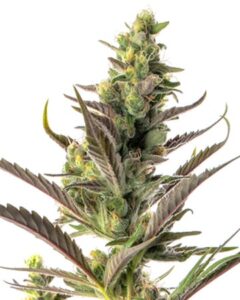
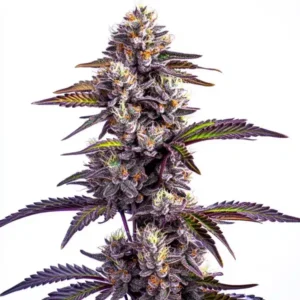
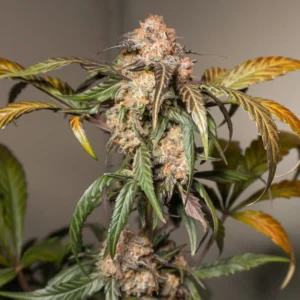
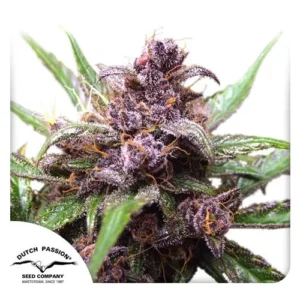
Blue Berry Skittlez Auto

|
THC | 12% - 14% (Low) |

|
Lineage | Blueberry x NL#5 x Skunk Kush x Durban x Ruderalis |

|
Type | Autoflowering |

|
Height | 2.62 ft | 0.8 m |

|
Yield | Low |

|
Yield Indoor | 0.39 - 0.66 oz/ft² | 120 - 200 g/m² |

|
Life Cycle | 10 - 12 weeks |

|
Phenotype | 60% Indica / 40% Sativa |

|
Effects | Relaxed, Tingly |

|
Flavors | Berry, Citrus, Diesel, Earthy |
Banana Krumble
|
|
THC | 24% - 25% (High) |
|
|
Lineage | Banana Punch x OG Kush |
|
|
Type | Feminized |
|
|
Height | 6.07 ft | 1.85 m |

|
Yield Outdoor | 22.93 oz/plant | 650 g/plant |
|
|
Flowering Time | 8 - 9 weeks |
|
|
Phenotype | 70% Indica / 30% Sativa |
|
|
Effects | Relaxed |
|
|
Flavors | Spicy, Diesel, Banana |
This does not mean a resistant plant is immune to every microorganism. Resistance tends to be pathogen-specific. A genotype with strong resistance to powdery mildew may still be susceptible to Botrytis cinerea, Fusarium or another disease.
Cannabis research increasingly demonstrates this variability. Comparative studies have found substantial differences in disease susceptibility among genotypes, including large differences in Botrytis and powdery mildew responses.
The practical implication is that breeders should not simply ask whether a cultivar is disease resistant. They need to establish which disease it resists, how strongly, and whether that resistance is genetically repeatable.
How Cannabis Plants Defend Themselves Against Pathogens
Plant immunity involves multiple overlapping layers of defense.
Cannabis cells can recognize molecules associated with invading microorganisms through pattern-recognition receptors. That recognition activates defense signaling, including production of reactive oxygen species, reinforcement of cell walls and changes in defense-related gene expression.
Plants also possess resistance proteins capable of detecting particular pathogen effectors. These responses can trigger stronger localized defenses designed to restrict pathogen spread.
Reviews of cannabis pathogen biology have identified components associated with salicylic acid, jasmonic acid and ethylene signaling, receptor-like kinases, NLR-type resistance proteins and other defense pathways.
Disease resistance is therefore not controlled by a single universal resistance gene. It can emerge from combinations of recognition genes, susceptibility genes, signaling pathways and structural or physiological traits.
Powdery Mildew Is the Best-Understood Example
The strongest genetic evidence in cannabis currently concerns powdery mildew, particularly disease caused by Golovinomyces ambrosiae.
Researchers have now identified multiple genetic routes to resistance.
This makes powdery mildew especially valuable for understanding where cannabis breeding is heading: away from anecdotal claims such as this strain is naturally tough and toward defined resistance loci that can be followed across generations.
Recent USDA-associated screening has reinforced how much useful diversity exists within Cannabis sativa. Researchers evaluated dozens of accessions, breeding lines and commercial cultivars and found major differences in susceptibility to G. ambrosiae.
That variability provides breeders with genetic material from which resistance can be selected and introgressed into commercially desirable plants.
PM1: A Major Powdery Mildew Resistance Locus
PM1 was one of the first major powdery mildew resistance loci characterized in cannabis.
It represents a dominant resistance region associated with strong suppression of powdery mildew infection in experimental populations.
Resistance genes of this type are generally understood within the broader framework of plant immune receptors, particularly NLR-related mechanisms in which the plant recognizes pathogen activity and activates a rapid defense response.
The importance of PM1 is not merely academic. Once a resistance locus can be genetically mapped, breeders can develop markers located near the resistance allele and use them to help identify desirable offspring before exposing every plant to disease.
This transition from phenotype-only breeding toward marker-assisted selection can make resistance breeding substantially more efficient.
PM2: A Second Major Resistance Locus
Research published in 2025 identified another major powdery mildew resistance locus called PM2.
PM2 was mapped to chromosome 9 and behaved as a dominant resistance locus. Researchers observed that it strongly suppressed both powdery mildew infection and fungal sporulation.
Microscopic examination indicated that PM2 resistance involved a localized hypersensitive response in epidermal cells, essentially restricting the fungus where infection was attempted.
The researchers also developed SNP-based markers linked to PM2.
That is particularly important for cannabis breeding because it means PM2 can potentially be tracked as breeders cross resistant plants with elite cultivars selected for flower quality, morphology or other agronomic traits.
Rather than assuming offspring inherited resistance, breeders can test for the associated genetic markers.
CsMLO1: Resistance Through Loss of Susceptibility
Another important cannabis resistance mechanism involves CsMLO1.
MLO genes are interesting because they are typically considered susceptibility genes. Powdery mildew pathogens exploit normal MLO-related plant biology during infection.
In some crops, mutations that disrupt MLO function can make infection much more difficult.
Cannabis appears to follow the same pattern.
Research comparing the powdery-mildew-resistant cannabis genotype FL 58 with a susceptible genotype identified a major QTL on chromosome 1 near CsMLO1. FL 58 contained a large insertion affecting the gene and producing a premature stop codon. Researchers developed molecular markers capable of distinguishing resistant and susceptible plants.
This is conceptually different from adding a resistance gene that recognizes an attacker.
Instead, the plant becomes resistant because a biological function exploited by the pathogen has been disrupted.
NLR and MLO Resistance Are Different Strategies
Cannabis powdery mildew research therefore points toward at least two broad genetic strategies.
One involves conventional resistance mechanisms associated with immune-recognition genes such as NLRs. These systems allow plants to recognize particular pathogen molecules or activities and rapidly activate defense responses.
The other involves susceptibility genes such as MLO, where eliminating or modifying a gene required for successful pathogen colonization can create resistance.
A review of cannabis powdery mildew genetics identifies both NLR-based and MLO-based resistance as particularly promising areas for cultivar development.
Using different mechanisms may eventually become important for breeding more durable resistance, because relying on a single resistance gene can create strong evolutionary pressure on pathogen populations.
Disease Resistance Is Often Controlled by Multiple Genes
Not every useful resistance trait will behave like one dominant PM locus.
Disease resistance can also be quantitative, meaning many genomic regions each contribute part of the phenotype.
The CsMLO1 study illustrates this complexity. Researchers identified the major chromosome 1 QTL but also detected smaller-effect QTLs on additional chromosomes.
That matters because commercial traits rarely exist in genetic isolation.
A breeder may simultaneously be selecting for pathogen resistance, plant architecture, flowering time, cannabinoid profile, yield and environmental adaptation. These characteristics can involve hundreds or thousands of genetic variants interacting with one another.
Recent cannabis pan-genome research reinforces how much genetic diversity remains available. Analysis of 113 accessions identified thousands of flexible genes and extensive presence/absence variation, including genes associated with adaptation, stress tolerance and disease resistance.
Disease-resistance breeding will increasingly depend on understanding this broader genomic diversity rather than working with a handful of famous cultivar names.
What About Botrytis Resistance?
Botrytis cinerea, responsible for gray mold and cannabis bud rot, presents a different challenge from powdery mildew.
Cannabis genotypes clearly vary in their susceptibility.
One study comparing six high-THC cannabis genotypes found high Botrytis susceptibility in Watermelon Kush, Pink Kush and Powdered Donuts, while the tested Jack Herer, Black Cherry and Death Bubba genotypes showed considerably lower infection under the experimental conditions.
A separate hemp study has also demonstrated that varieties differ significantly in susceptibility to B. cinerea, supporting the use of controlled inoculation assays to screen breeding material.
However, cannabis Botrytis resistance is not yet described by a simple commercial marker equivalent to saying this plant has PM2.
That makes phenotype-based screening particularly important.
Breeders can expose standardized plant material to the pathogen under controlled conditions, measure disease development and identify genotypes worth carrying into the next breeding generation.
A Strain Name Is Not a Resistance Gene
Commercial cannabis terminology creates a major problem when discussing disease genetics.
A strain such as Jack Herer may appear resistant in one research experiment, but that does not prove every plant sold globally as Jack Herer carries the same resistance alleles.
Cannabis cultivar names are not precise genetic certifications.
Different breeders may sell genetically different material under identical or similar names, and seed-grown populations can contain considerable internal genetic variation.
The scientifically accurate statement is therefore that the Jack Herer genotype evaluated in a particular study showed low Botrytis susceptibility, not that Jack Herer as a universal commercial category is a Botrytis-resistant strain.
This distinction becomes crucial when resistance is important enough to influence commercial crop risk.
Do Terpenes Create Disease Resistance?
Secondary metabolites including terpenes may participate in plant defense biology, but terpene content should not be treated as a simple disease-resistance score.
Cannabis defense reviews discuss secondary metabolite pathways as potential components of responses to pathogens. However, that does not mean high myrcene, limonene or caryophyllene automatically makes a cultivar resistant to mold.
In fact, research comparing six cannabis genotypes found that differences in their common terpene profiles did not correlate with differences in total yeast and mold levels. The same plants showed clear genotype-dependent differences in disease susceptibility despite that lack of terpene correlation.
The original idea that a caryophyllene-rich or myrcene-rich cultivar is inherently more pathogen resistant should therefore be removed.
Resistance needs direct genetic or phenotypic evidence.
Does Heavy Resin Production Protect Cannabis From Disease?
Heavy trichome or resin production should also not be presented as proof of microbial resistance.
Cannabis glandular trichomes produce cannabinoids, terpenes and other metabolites, some of which may have ecological defensive functions.
But commercially describing a strain as very resinous does not establish that it resists powdery mildew, Botrytis or another pathogen.
The current page describes Gorilla King Auto’s resin production as a barrier against pathogens and uses that as evidence of resistance. That connection is not sufficiently established for such a claim.
A heavily resinous flower can still develop Botrytis.
If disease resistance matters, direct pathogen screening is much stronger evidence than trichome coverage.
Horizontal Gene Transfer Is Not the Main Explanation
The current article places considerable emphasis on horizontal gene transfer, but this should be removed from the central explanation of cannabis resistance genetics.
Horizontal gene transfer is the movement of DNA between organisms outside ordinary parent-to-offspring reproduction. It is particularly important in microbial evolution and helps explain phenomena such as the spread of antibiotic-resistance genes among bacteria.
That does not mean cannabis plants routinely acquire useful disease-resistance genes from surrounding microorganisms and then pass those acquired traits into commercial breeding populations.
Cannabis resistance breeding primarily works through heritable plant genetic variation followed by selection, crossing, recombination and inheritance.
Mutations can also generate new variation over evolutionary timescales or during breeding.
Comparing that process to bacteria acquiring penicillin resistance through horizontal transfer creates more confusion than insight.
How Breeders Find Disease-Resistance Genes
Modern breeding increasingly combines deliberate pathogen screening with genomic tools.
Researchers can begin by crossing resistant and susceptible parents and observing how resistance segregates among the offspring. Genetic markers across the genome can then be compared with the disease phenotype to identify chromosome regions associated with resistance.
Techniques such as QTL mapping, bulked-segregant analysis and high-throughput sequencing have already been used successfully in cannabis powdery mildew research. PM2, for example, was mapped using bulked-segregant analysis combined with RNA sequencing.
Once a useful genetic region is identified, researchers can examine candidate genes within that interval and create markers linked to the resistance allele.
This is much more precise than simply selecting whichever surviving plant appears healthiest at the end of a disease outbreak.
Marker-Assisted Selection for Cannabis Resistance
Marker-assisted selection allows breeders to test young plants for DNA markers associated with desirable traits.
Imagine crossing a powdery-mildew-resistant plant carrying PM2 with an elite cultivar that has desirable flower characteristics but poor disease resistance. The offspring will contain different combinations of parental genes.
Instead of waiting for each plant to become infected, breeders can test DNA for markers associated with PM2 and prioritize offspring carrying the desired resistance region.
They still need phenotypic testing because markers and genes need to perform as expected within the new genetic background.
However, molecular selection can dramatically narrow the number of plants that need to proceed through expensive cultivation and pathogen trials.
Why Resistant Plants Still Need Disease Management
Genetic resistance should reduce disease risk rather than create a false expectation of immunity.
Environmental conditions remain important. Temperature, humidity, canopy microclimate, airflow, pathogen abundance and the physiological condition of the plant all influence disease development.
Even resistant genetics can perform differently when disease pressure becomes extreme.
Pathogen populations also evolve. A resistance gene that works against one pathogen population may eventually be challenged by another carrying different virulence factors.
For this reason, the most sustainable cultivation strategy combines resistant genetics with environmental control, sanitation, monitoring and appropriate integrated disease management.
Genetics can reduce dependence on intervention, but it does not make pathogen management unnecessary.
Can Disease Resistance Reduce Fungicide Use?
Potentially, and this is one of the major motivations behind resistance breeding.
The researchers who characterized PM2 specifically describe genetic resistance as a sustainable strategy for managing powdery mildew, particularly where pesticide options are limited.
A cultivar that develops substantially less disease under the same pathogen pressure may require fewer interventions and experience fewer crop losses.
However, the reduction will depend on how durable the resistance is, what pathogen populations are present and how the cultivation environment is managed.
It is therefore more accurate to say resistant cultivars can contribute to reduced pesticide dependence than to promise that a particular resistance gene eliminates the need for crop protection.
The Future of Disease-Resistant Cannabis Genetics
Cannabis breeding is moving toward more precise integration of genomics and pathology.
A recent review of cannabis genetics highlights disease resistance alongside sex determination, cannabinoid biosynthesis, fiber quality and stress adaptation as an increasingly important target for genomic breeding. New pan-genomic resources, functional genomics and gene-editing tools are expanding researchers’ ability to identify and validate useful alleles.
Future cultivars may combine several resistance mechanisms rather than depending on one gene.
For powdery mildew, breeders could potentially combine NLR-associated resistance with MLO-based resistance and other quantitative resistance loci. For pathogens such as Botrytis, continued germplasm screening may identify stronger sources of partial resistance that can later be genetically mapped.
The long-term objective is not simply to produce a strain marketed as hardy.
It is to produce cultivars whose resistance can be measured, inherited, genetically tracked and repeatedly validated.
Genetic Disease Resistance in Cannabis: Key Takeaway
Genetic resistance to cannabis pathogens is real, but it is considerably more specific than commercial strain descriptions often suggest.
Powdery mildew currently provides the clearest evidence. Researchers have identified major resistance loci including PM1 and PM2, along with resistance associated with disruption of the susceptibility gene CsMLO1. Molecular markers are already available for tracking some of these traits in breeding populations.
Other cannabis pathogens such as Botrytis also show strong genotype-dependent differences, although the underlying resistance architecture remains less completely characterized.
What the evidence does not support is using horizontal gene transfer, bacterial antibiotic resistance, terpene percentage or heavy resin production as simple explanations for cannabis disease resistance.
The strongest future breeding programs will combine pathogen screening with genomic mapping, marker-assisted selection and genetically diverse germplasm.
That is the difference between a cultivar that is merely described as resistant and resistance that can actually be demonstrated.
FAQs About Cannabis Disease-Resistance Genetics
Which genes make cannabis resistant to powdery mildew?
Cannabis powdery mildew resistance involves several genetic mechanisms rather than one universal gene. Researchers have characterized resistance loci called PM1 and PM2 and identified resistance associated with disruption of the susceptibility gene CsMLO1. Smaller-effect QTLs may also contribute, making resistance architecture dependent on the particular cannabis population being studied.
What is the PM2 gene in cannabis?
PM2 is a dominant powdery mildew resistance locus mapped to chromosome 9 of Cannabis sativa. In experiments it strongly suppressed infection and sporulation and produced a localized hypersensitive response in epidermal cells. Researchers also developed associated SNP markers that can help breeders track PM2 when developing resistant cultivars.
Does cannabis have genetic resistance to Botrytis?
Cannabis genotypes clearly differ in Botrytis susceptibility, although the responsible genetics are less completely characterized than powdery mildew resistance. Research comparing high-THC genotypes found substantially lower infection in the tested Jack Herer, Black Cherry and Death Bubba plants than in several more susceptible genotypes. These findings apply to those tested genetic materials rather than every plant sold under those names.
Do terpenes make cannabis resistant to mold?
Terpenes may participate in plant defense biology, but terpene concentration alone does not establish disease resistance. Research comparing cannabis genotypes found clear differences in fungal susceptibility without corresponding differences in the common terpene profiles measured. A cultivar should therefore be evaluated directly against the pathogen rather than classified as resistant because it contains abundant myrcene or caryophyllene.
Can breeders test cannabis seeds for disease-resistance genes?
Breeders can test young plants for DNA markers associated with certain resistance alleles when validated markers are available. Researchers have developed molecular markers linked to CsMLO1-associated resistance and to PM2. Marker-assisted selection can help identify promising offspring, although pathogen testing remains important to confirm that resistance performs as expected in the resulting genetic background.
Is disease-resistant cannabis completely immune to pathogens?
No. Genetic resistance lowers susceptibility to particular pathogens under particular conditions; it does not make cannabis universally immune. Environmental conditions, pathogen strain, inoculum pressure and other plant stresses can still influence disease development. Resistance to powdery mildew also does not automatically provide resistance to Botrytis, Fusarium or other cannabis diseases.