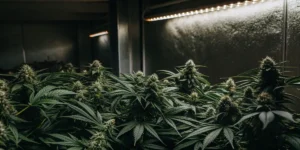
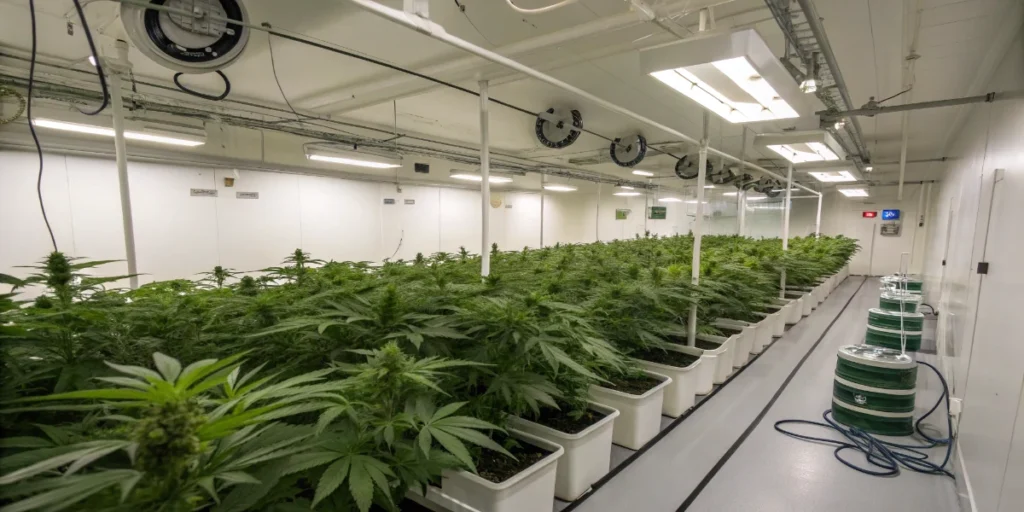

Proper cannabis airflow helps prevent mold by reducing stagnant, humid pockets inside and around the canopy. The goal isn’t maximum fan power, it’s even air movement above, through and below the plants, combined with humidity control and adequate exhaust. Good airflow matters most during flowering, when dense buds can trap moisture.
Why is airflow important for cannabis plants?
Airflow plays two different roles in an indoor cannabis grow. Ventilation replaces warm, humid air inside the grow space with fresher air. Air circulation moves air around and through the cannabis canopy. A grow room needs both.
Recommended Strains
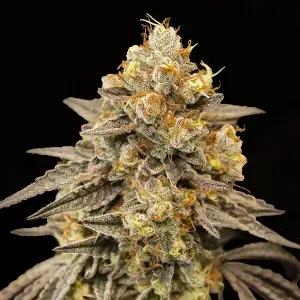
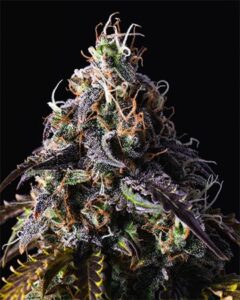
Auto Frozen Biscotti

|
THC | 19% - 20% (Medium) |

|
Lineage | Auto Oreoz OG x Biscotti |

|
Type | Autoflowering |

|
Height | 4.43 ft | 1.35 m |

|
Yield | High |

|
Yield Indoor | 1.47 - 1.64 oz/ft² | 450 - 500 g/m² |

|
Life Cycle | 10 - 11 weeks |

|
Phenotype | 60% Indica / 40% Sativa |

|
Effects | Relaxed, Energetic, Calming |

|
Flavors | Sweet, Fruity, Diesel |
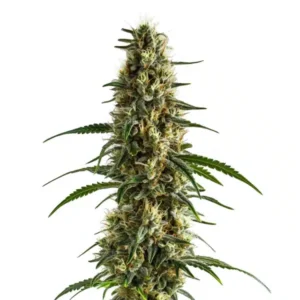
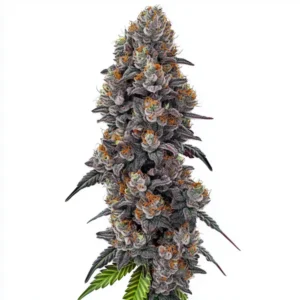
Clementine
|
|
THC | 18% - 22% (Medium) |
|
|
Lineage | Tangie x Lemon Skunk |
|
|
Type | Feminized |
|
|
Height | 4.92 ft | 1.5 m |
|
|
Yield | Medium |
|
|
Yield Indoor | 0.98 - 1.31 oz/ft² | 300 - 400 g/m² |

|
Yield Outdoor | 14.11 - 21.16 oz/plant | 400 - 600 g/plant |
|
|
Flowering Time | 8 - 10 weeks |
|
|
Phenotype | 30% Indica / 70% Sativa |

|
Medical | Depression, Insomnia, Muscle Spasms |
|
|
Effects | Happy, Hungry, Relaxed |
|
|
Flavors | Citrus, Lemon, Orange |
An exhaust fan can remove humid air from the room, but it may not eliminate small stagnant pockets between overlapping leaves or inside a dense canopy. Circulation fans help disrupt those microclimates.
This matters most during flowering, because cannabis inflorescences can hold more humidity internally than measurements taken elsewhere in the grow room suggest. Research on greenhouse-grown cannabis has found that enhanced air circulation can reduce humidity around inflorescences and significantly cut the incidence of Botrytis bud rot.
So the objective isn’t to make the room feel windy. It’s to prevent localized pockets of stagnant, moisture-rich air.
Cannabis airflow: quick guide
| Area | Goal |
|---|---|
| Above canopy | Prevent stagnant warm and humid air |
| Through canopy | Keep air moving between branches and flowers |
| Below canopy | Reduce humid pockets beneath foliage |
| Exhaust | Remove excess heat and humidity from the grow space |
| Intake | Replace exhausted air |
| Fan strength | Gentle, continuous movement |
| Humidity | Monitor especially during flowering and lights-off |
| Plant spacing | Prevent dense overlapping canopies |
A useful visual indicator is the plant itself. Leaves should show gentle movement rather than being permanently bent or violently shaken by the fan.
Air circulation vs. grow room ventilation
These terms are often used as if they mean the same thing, but they solve different problems.
Grow room ventilation
Ventilation moves air into and out of the growing environment. A typical indoor setup may use an exhaust fan, passive or active intake, ducting, and carbon filtration when odor control is required.
The exhaust system helps remove heat and moisture generated by plants and equipment. But exhausting air from the room doesn’t guarantee good airflow inside a dense cannabis canopy.
Canopy air circulation
Circulation fans move air within the grow space. Their job is to prevent static pockets around leaves, branches, lower growth, dense flowers and corners of the grow room.
This is why one powerful fan pointed across the top of the plants isn’t necessarily an effective airflow system. The canopy itself can block movement. Air needs pathways through and around the plants.
How does airflow help prevent mold?
Cannabis pathogens such as Botrytis cinerea, which causes gray mold and bud rot, are strongly influenced by environmental moisture. Dense cannabis flowers can create their own microclimate: research on greenhouse cannabis has measured higher relative humidity inside mature inflorescences than in the surrounding environment.
That matters because a room hygrometer may show acceptable conditions while individual flowers stay much more humid internally.
Increasing air circulation can help reduce these moisture pockets. A recent cannabis study found that enhanced circulation around flowering plants lowered relative humidity inside inflorescences and substantially reduced bud rot incidence.
Airflow should be viewed as one part of an integrated mold-prevention strategy, alongside humidity control, plant spacing, canopy management, sanitation, removal of infected material, and environmental monitoring. Fans alone can’t compensate for consistently excessive humidity.
Where should fans be placed in a cannabis grow room?
Fan placement matters more than simply adding more fans. The goal is movement throughout the canopy rather than concentrating all airflow in one location. Depending on the size and density of the grow, circulation may be needed at several heights.
Above the canopy
Air movement above the plants helps prevent warm, humid air from building up over the canopy. Fans should move air across the growing area rather than continuously blasting the closest flowers.
Through the canopy
This is one of the most important zones. Dense foliage can create relatively still pockets between branches. Positioning circulation so air passes through the plant structure helps reduce these microclimates.
Below the canopy
Lower leaves and branches can also trap moisture, particularly when plants are tightly spaced. Gentle air movement below the canopy can keep this area from going stagnant.
The exact number of fans depends on the grow space. A better test than simply counting fans is checking whether there are obvious areas where leaves stay completely still while surrounding plants move.
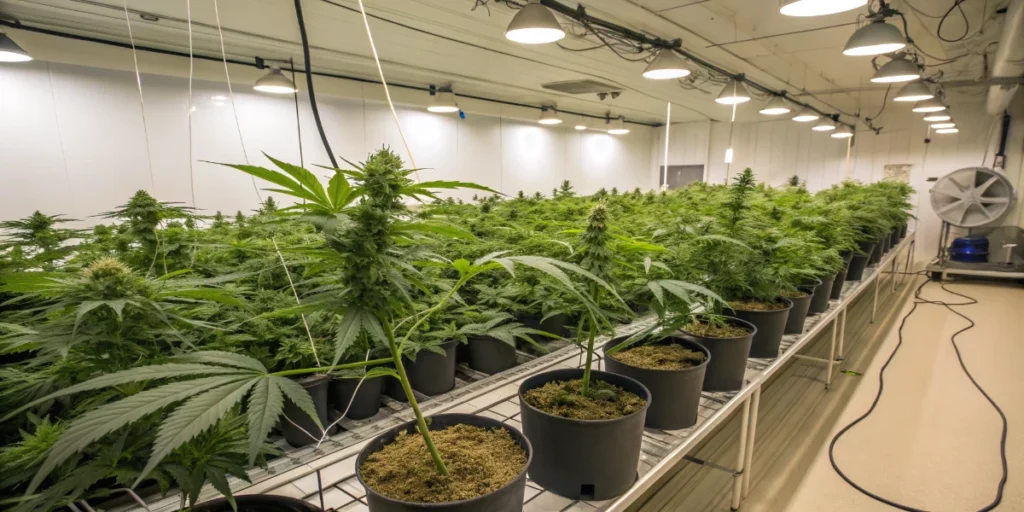
Can cannabis plants get too much airflow?
Yes. More airflow isn’t always better. A powerful fan continuously directed at the same plant can cause excessive drying and physical stress.
Possible signs include leaf edges drying, leaves curling, persistent bending away from the fan, uneven drying of the growing medium, and localized stress on plants closest to the fan. Cannabis research using enhanced airflow to control Botrytis also reported minor drying damage on leaves closest to the fans.
The aim is circulation, not wind exposure. Oscillating or strategically positioned fans are generally more useful than continuously pointing a strong stream of air at one plant.
Airflow during the flowering stage
Airflow matters especially as cannabis transitions into flowering. Flowers become denser as they mature, making it easier for moisture to stay trapped within the inflorescence. At the same time, mature plants can release substantial amounts of water into the grow environment through transpiration, and that combination can favor microbial growth.
During flowering:
- Inspect dense flowers regularly.
- Monitor humidity at canopy level rather than relying only on a sensor far from the plants.
- Prevent branches and leaves from forming extremely dense overlapping areas.
- Maintain airflow above and below the canopy.
- Watch for environmental changes after lights turn off.
- Remove dead plant material from the grow space.
Cannabis cultivars also differ in flower structure. Dense inflorescences can create different microclimates than more open flower structures, so base your environmental management on the actual canopy rather than assumptions tied to a strain name.
Cannabis airflow and humidity
Air circulation and humidity control work together, but they aren’t interchangeable. A fan moves moisture around; an exhaust system or dehumidifier removes moisture from the environment. If the grow room stays excessively humid, adding more circulation fans won’t solve the underlying moisture problem.
Instead, combine air circulation to prevent stagnant microclimates, ventilation to remove humid air, dehumidification to actively pull water from the air when necessary, and canopy management to let air reach plant surfaces.
This is also why humidity shouldn’t be viewed in isolation from temperature. Relative humidity changes as temperature changes, and plant transpiration responds to the relationship between temperature and moisture in the air.
Growers who want to manage these variables more precisely can also use Growlantis’ Autoflower VPD Chart as an introduction to vapor pressure deficit.
What humidity should cannabis plants have?
There’s no single relative-humidity percentage that guarantees healthy plants or prevents mold. Appropriate conditions depend on growth stage, temperature, canopy density, flower structure, cultivar, air circulation, transpiration and watering practices.
Seedlings and vegetative plants generally tolerate more humidity than dense flowering plants. During flowering, growers commonly reduce humidity because prolonged moisture around developing flowers raises disease risk.
Instead of treating one number as universally safe, pay attention to trends and microclimates. A room reading can look acceptable while humidity stays elevated inside a dense flower, which is why canopy inspection matters.
Why humidity can rise when lights turn off
Humidity problems often become more noticeable during the dark period. When grow lights switch off, room temperature commonly falls. As air temperature falls, relative humidity can rise even when the absolute amount of water vapor hasn’t suddenly increased. Meanwhile, plants and growing media may keep contributing moisture to the environment.
Don’t evaluate humidity only during the middle of the light period. Check environmental data throughout the full light/dark cycle. Unexpected nighttime spikes can reveal problems that daytime measurements miss.
Improving airflow through canopy management
Fans work better when air has somewhere to travel. Extremely dense foliage can limit circulation regardless of how many fans are installed, so plant spacing and selective canopy management can improve airflow. Options include removing dead or damaged leaves, avoiding overcrowding, training branches to create a more open canopy, selective pruning, and selective defoliation where appropriate.
Don’t remove healthy foliage indiscriminately just to maximize airflow. Leaves are important photosynthetic organs. The goal is to remove unnecessary congestion, not strip the plant.
Growlantis’ guide to trimming cannabis during flowering explains how selective canopy management can be used without excessive pruning.
Does defoliation prevent mold?
Defoliation can improve airflow when excessive foliage creates dense areas inside the canopy. But defoliation itself doesn’t prevent fungal disease, it just changes canopy architecture. Its usefulness depends on whether foliage is genuinely blocking air movement or creating persistent areas of high moisture.
Over-defoliating can also stress plants and reduce useful photosynthetic area. A better strategy is targeted removal of problematic leaves rather than automatically stripping plants on a fixed schedule.
Do carbon filters prevent mold?
Not directly. Carbon filters are mainly used in cannabis grow rooms to reduce odors and certain airborne compounds as air moves through an exhaust system. They shouldn’t be treated as a replacement for air circulation, humidity control, sanitation or appropriate ventilation.
A carbon filter also creates resistance in an exhaust system, meaning actual airflow can be lower than the fan’s advertised free-air rating. When designing ventilation, consider the complete system rather than evaluating the fan alone.
Common cannabis airflow mistakes
One common mistake is using a single powerful fan to blast the canopy from one direction, which creates strong airflow near the fan while leaving other areas stagnant. Another is focusing only on airflow above the canopy while ignoring moisture trapped underneath or between plants.
Other problems: overcrowding, where leaves and branches overlap so heavily that air can’t circulate; poor exhaust, where fans move humid air around without removing it; no nighttime monitoring, so humidity rises after lights-off undetected; fans pointed directly at flowers, causing drying stress from excessive localized airflow; dirty equipment, with plant debris and contaminated surfaces left in the cultivation area; and ignoring internal bud humidity, where room RH is treated as if it represents conditions inside dense flowers.
Good airflow means thinking about the grow space as a complete environment rather than simply adding more fans.
Signs of poor cannabis airflow
Poor airflow doesn’t produce one unique symptom, but several signs can point to a circulation problem: areas of the canopy that stay completely still, persistent condensation, damp pockets between leaves, uneven temperature across the grow space, repeated mold problems in the same area, dense overlapping foliage, slow drying of plant surfaces, or bud rot and gray mold.
Don’t assume yellowing leaves alone indicate poor airflow. Leaf discoloration has many potential causes, including nutrition, watering, root problems, pests and environmental stress. Growlantis’ guide to how humidity affects cannabis leaf color covers this distinction in more detail.
Best cannabis airflow setup: key takeaway
Effective cannabis airflow requires both room ventilation and canopy circulation. Exhaust ventilation removes humid air from the grow space. Circulation fans prevent stagnant microclimates from developing around leaves and flowers. Neither system should be used alone.
During flowering, pay close attention to dense inflorescences, nighttime humidity and areas below or inside the canopy where moisture can build up.
Avoid fixed rules claiming every cannabis grow needs the same fan speed, number of air exchanges or humidity percentage. Grow size, plant density and environmental conditions vary too much for one universal setup.
The practical target is simple: keep air moving gently throughout the canopy, remove excess moisture from the room, and eliminate persistent humid pockets without creating wind stress.
FAQs about cannabis airflow
What is the best airflow for cannabis plants?
The best cannabis airflow is gentle, continuous and evenly distributed across the canopy rather than a strong stream aimed at one plant. Leaves should move slightly, not whip or curl from fan pressure. Combine internal circulation with exhaust ventilation so humid air is removed instead of simply being moved around the grow space.
Does airflow help prevent bud rot?
Yes. Good airflow can reduce humid microclimates inside dense cannabis canopies and around inflorescences, making conditions less favorable for Botrytis bud rot. Research in greenhouse cannabis has found lower bud-rot incidence with enhanced air circulation. Airflow works best alongside humidity control, sanitation and appropriate plant spacing.
Where should fans be placed in a cannabis grow room?
Place circulation fans so air moves above, through and below the cannabis canopy without blasting one area continuously. Depending on canopy density, this may require fans at different heights. The objective is to eliminate stagnant pockets while maintaining gentle leaf movement across the grow space and avoiding obvious wind stress.
How much humidity is too much for flowering cannabis?
There’s no single humidity number that guarantees mold prevention, because risk also depends on temperature, cultivar, canopy density and moisture inside the flowers. During flowering, growers generally reduce humidity compared with vegetative growth and pay particular attention to nighttime spikes, condensation and dense buds that stay humid internally.
Can too much airflow damage cannabis plants?
Yes. Excessively strong or poorly directed airflow can dry leaf edges, increase water stress and cause physical movement that damages foliage. Research using enhanced airflow in greenhouse cannabis reported minor drying injury near fans. Use circulation to prevent stagnant air, but avoid continuously pointing a powerful fan directly at the same plants.
Do carbon filters improve airflow or prevent mold?
A carbon filter is mainly used for odor control and forms part of many exhaust systems, but it isn’t a substitute for canopy circulation or humidity management. Mold prevention depends on controlling moisture, removing humid air, keeping the canopy open and maintaining sanitation. Size the exhaust system with filter resistance in mind.