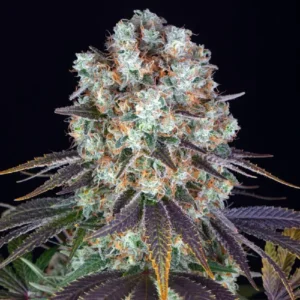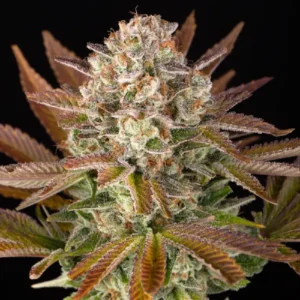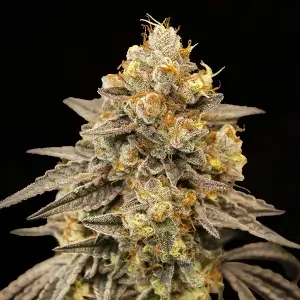


Apricot Auto is an indica-dominant autoflowering strain with a complete lifecycle of approximately 9–10 weeks from germination to harvest. The current Fast Buds version combines an Apricot light purple cut from Compound Genetix with GG4 Auto F6 and is classified as an F5 feminized autoflower with 80% Indica and 20% Sativa genetics.
Current Apricot Auto seeds reach approximately 80–120 cm and are listed at up to 26% THC. Indoor production is rated at 450–550 g/m², while outdoor plants can produce approximately 50–170 g each under suitable conditions.
Recommended Strains

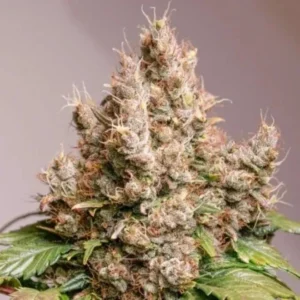
Apricot Auto

|
THC | 26% - 28% (High) |

|
Lineage | Orange Juice x Apricot Helix x Ruderalis |

|
Type | Autoflowering |

|
Height | 3.94 ft | 1.2 m |

|
Yield | High |

|
Yield Indoor | 1.47 - 1.8 oz/ft² | 450 - 550 g/m² |

|
Life Cycle | 9 - 10 weeks |

|
Phenotype | 80% Indica / 20% Sativa |

|
Effects | Relaxed, Sleepy, Hungry |

|
Flavors | Apricot, Fruity, Sweet, Woody |
Auto Red Tropicana Cookies
|
|
THC | 20% - 24% (High) |
|
|
Lineage | Red Tropicana Cookies x Auto Night Queen |
|
|
Type | Autoflowering |
|
|
Height | 4.27 ft | 1.3 m |
|
|
Yield | High |
|
|
Yield Indoor | 1.8 - 1.97 oz/ft² | 550 - 600 g/m² |
|
|
Life Cycle | 10 - 11 weeks |
|
|
Phenotype | 50% Indica / 50% Sativa |
|
|
Effects | Creative, Happy, Uplifted |
|
|
Flavors | Sweet, Fruity, Berry, Apricot |
| Apricot Auto Grow Info | Current specification |
|---|---|
| Breeder | Fast Buds |
| Genetics | Apricot light purple cut × GG4 Auto F6 |
| Seed type | F5 Feminized Autoflower |
| Indica / Sativa | 80% Indica / 20% Sativa |
| THC | Up to 26% |
| CBD | <1% |
| Lifecycle | 9–10 weeks from germination |
| Height | 80–120 cm |
| Indoor yield | 450–550 g/m² |
| Outdoor yield | 50–170 g/plant |
| Environment | Indoor / Outdoor / Greenhouse / Mixlight |
| Flavor | Apricot, fruit, sweet, woody |
| Structure | Short internodes, strong lateral branching, dense flowers |
Apricot Auto Genetics
The current Apricot Auto generation combines an Apricot light purple cut from Compound Genetix with GG4 Auto F6. Fast Buds identifies the resulting line as an F5 feminized autoflower, meaning its flowering behavior is genetically automatic rather than controlled by a change in day length.
This is important because older descriptions of Apricot Auto may show different lineage information. The current generation should be described using the genetics published for the present seed line rather than retaining an older Orange Juice × Apricot Helix × Ruderalis description.
Growers comparing this strain with other autoflowering genetics from the same breeder can browse the wider Fast Buds seed collection.
Is Apricot Auto Indica or Sativa?
Apricot Auto is 80% Indica and 20% Sativa, making it clearly indica dominant rather than only slightly Indica leaning.
Its current structure reflects that classification through relatively short internodes, sturdy development and substantial lateral branching. The plant remains manageable at approximately 80–120 cm but is still categorized as a relatively large modern autoflower rather than an extremely small micro plant.
The genetic ratio should be treated separately from subjective effects. Fast Buds user data most frequently reports relaxation, with happy, hungry, sleepy and creative effects also appearing among consumer reports. Individual response can vary with dose, tolerance and the chemistry of each harvest.
How Much THC Does Apricot Auto Have?
The current Fast Buds specification lists Apricot Auto at up to 26% THC.
That differs from older or third-party listings that may show lower 18–22% ranges or higher 26–28% figures. For the current seed line, up to 26% is the most appropriate specification.
The phrase “up to” also matters. It represents the breeder’s published potency ceiling rather than a guarantee that every plant or every flower will test at exactly 26%. Growing conditions, phenotype, maturity and post-harvest handling can all influence the final cannabinoid concentration.
Apricot Auto Flavor and Aroma
Apricot is the defining sensory characteristic of this autoflower. Fast Buds describes a sweet, tangy fruit profile built around apricot and tropical-fruit notes, accompanied by woody characteristics that become more noticeable alongside the sweeter flavors.
The breeder also compares the aroma to apricot marmalade, which describes the combination of concentrated fruit sweetness and tanginess more accurately than reducing the cultivar to a generic citrus profile.
Although older product descriptions list specific dominant terpenes, the current breeder specification does not provide a detailed quantitative terpene analysis. For that reason, the documented apricot, fruit, sweet and woody profile is more reliable than presenting one fixed terpene hierarchy as universal.
How Long Does Apricot Auto Take to Grow?
Apricot Auto completes its entire lifecycle in approximately 9–10 weeks from germination to harvest.
This is one of the most important facts to understand about the strain. Nine to ten weeks should not be interpreted as a flowering period that begins after several additional weeks of vegetation. Apricot Auto transitions automatically as it matures, so vegetative growth and flowering are parts of one continuous age-driven lifecycle.
Individual plants can still develop slightly faster or slower. Environment, root development, early stress and phenotype can influence the precise finishing point, so the 9–10 week specification should be used as a planning range rather than a mandatory harvest date.
Does Apricot Auto Need a 12/12 Light Cycle?
No. Apricot Auto does not need a change to 12 hours of light and 12 hours of darkness to begin flowering.
Autoflowering genetics trigger the transition according to plant maturity rather than photoperiod. Indoor growers can therefore maintain a consistent autoflower-appropriate light schedule throughout the cycle instead of treating flowering as a separate 12/12 phase.
This distinction is especially important when comparing Apricot Auto with photoperiod cultivars. A photoperiod plant can remain in vegetation until the grower changes the day length; Apricot Auto has a limited 9–10 week total lifecycle and continues progressing regardless of that decision.
Apricot Auto Height and Plant Structure
Apricot Auto currently reaches approximately 80–120 cm, or 31–47 inches.
The plant develops a sturdy structure with short internodes and substantial lateral branching. That can create a relatively dense canopy, particularly once the side branches begin carrying heavy flowers.
Its 120 cm upper specification means growers should still provide adequate vertical space despite its autoflowering format. A healthy modern autoflower can become considerably larger than the very compact early-generation autos that shaped the category’s reputation.
Final size depends on root volume, lighting, environment and early plant health. Because Apricot Auto cannot simply be held in vegetation for extra recovery time, preventing severe early stress is particularly important.
Growing Apricot Auto Indoors
Apricot Auto is listed at 450–550 g/m² indoors, with its 80–120 cm size making it manageable in grow tents and other controlled environments.
Its short internodes and strong lateral branches can create a dense plant, so the goal indoors should be to maintain enough separation for light and air to reach through the canopy. This is more useful than trying to force maximum vertical development.
Because the complete cycle lasts only around 9–10 weeks, early setbacks matter. Severe overwatering, excessive feeding, root restriction or aggressive training can consume a meaningful portion of the plant’s available development time.
A stable environment, suitable root space and consistent light exposure allow the plant to continue progressing without requiring a later change in photoperiod.
Growing Apricot Auto Outdoors
Apricot Auto can also be grown outdoors, where the current yield specification is approximately 50–170 g per plant.
Unlike photoperiod cannabis, it does not need shortening autumn days before flowering can begin. This gives growers more flexibility when positioning an autoflower cycle within the warmer part of the outdoor season.
The best outdoor results still depend on strong light, healthy root development and protection from prolonged extreme weather. Because plants only have around 9–10 weeks to complete their cycle, a poor early period cannot simply be compensated for by extending vegetation.
Outdoor yield should therefore be interpreted according to plant size and conditions rather than assuming every 80–120 cm plant will automatically reach the upper 170 g figure.
Apricot Auto Yield
Current specifications list Apricot Auto at 450–550 g/m² indoors and 50–170 g per plant outdoors.
The indoor figure is expressed by area because growers can cultivate several autoflowers within the same illuminated canopy. Plant density, root volume, light distribution and overall health influence how effectively that area produces.
Outdoor yield is expressed per plant and varies much more with sunlight, container or root-zone size, weather and early development.
Neither figure is guaranteed. The upper ends represent production potential under favorable conditions, while a plant that experiences significant stress during its short lifecycle may finish considerably below those values.

How to Germinate Apricot Auto Seeds
Apricot Auto does not need a unique germination method, but the short lifecycle makes a clean start especially valuable.
Seeds can be germinated in a controlled moist environment and transferred carefully once the taproot appears. Avoid saturating the seed continuously, since successful germination requires moisture without depriving the developing root of oxygen.
Because autoflowers continue progressing according to age, excessive root disturbance shortly after germination is best avoided. Growers using containers can reduce unnecessary transplant stress by planning the early root environment before the seedling becomes established.
For more detail on managing moisture and temperature at this stage, see the cannabis seed germination temperature and humidity guide.
Early Growth and Pre-Flower
Apricot Auto should not be assigned a rigid two-, three- or four-week vegetative phase. Autoflower development is continuous, and the timing of pre-flower can vary between individual plants.
The early part of the cycle should focus on root establishment, healthy leaf development and avoiding severe stress. This is when the plant builds the structure that will support later flowering, but it does not remain in a grower-controlled vegetative stage like a photoperiod cultivar.
Fast Buds documented females entering pre-flower around week five during a 2026 Apricot Auto production run, with some plants already stretching and showing their first stigmas. That is useful real-world context, but it was a breeding population observation rather than a biological deadline that every seed must follow.
Apricot Auto Grow Diary: What the Official Production Notes Show
Searches for an Apricot Auto grow diary are useful because a real cultivation cycle provides context that a specification table cannot. However, a diary should never be converted into a compulsory week-by-week schedule.
In Fast Buds’ documented 2026 production run, female plants were in pre-flower around week five. Some had already begun stretching, while the breeder was still observing differences in flowering timing and structure across the population.
That observation fits the official 9–10 week total lifecycle, but it also demonstrates that individual development can vary. Use documented timelines to understand progression, not to diagnose a healthy plant as “late” simply because it did not show exactly the same development on the same day.
Training Apricot Auto
Fast Buds specifically identifies Low-Stress Training and selective defoliation as useful options for Apricot Auto because the plant can develop a bushy canopy with closely spaced branches.
Gentle LST can move side branches outward and improve both light distribution and internal airflow without requiring the recovery associated with more aggressive high-stress techniques.
Selective defoliation can also be useful where large leaves block airflow or overlap heavily, but it should remain selective rather than becoming repeated heavy stripping. Autoflowers have a limited recovery window, so the objective is to improve canopy structure without unnecessarily slowing development.
Topping and mainlining should not be treated as standard requirements for Apricot Auto simply because they are common techniques on photoperiod plants.
Flower Development
As Apricot Auto enters pre-flower and flowering, the plant begins redirecting more of its development toward flower sites while continuing some structural growth.
Dense flowers can form along the lateral branches, and resin production becomes increasingly visible as the plant approaches maturity. Its characteristic apricot and sweet-fruit aroma also becomes more pronounced later in the cycle.
Because flowering begins automatically, there is no need to change the light cycle to initiate this stage. Keep environmental conditions stable and avoid unnecessary late high-stress training.
The main calendar reference remains the 9–10 week total lifecycle, but actual maturity should still be assessed on the plant rather than assuming that every seed must be harvested on exactly day 63 or day 70.
Feeding Apricot Auto
Apricot Auto does not require a universal strain-specific NPK ratio.
Nutrition should be matched to the growing medium, fertilizer system, water quality, root development, plant size and visible response. This is particularly important with a fast autoflower because excessive nutrient concentration early in the cycle can slow growth during a period the plant cannot simply extend indefinitely.
Start conservatively and increase feeding only when plant development supports it. Burned leaf tips, unusually dark foliage, stalled growth or progressive discoloration are more useful indicators than assuming Apricot Auto automatically needs a nitrogen-heavy early formula followed by large amounts of phosphorus and potassium.
Flushing should not be presented as a mandatory method for increasing flavor or improving terpene expression.
Watering Apricot Auto
Water demand changes rapidly during Apricot Auto’s short lifecycle. A newly established seedling requires far less water than an 80–120 cm plant carrying multiple flowering branches.
Avoid a rigid schedule such as watering every two or three days regardless of conditions. Instead, use root-zone moisture, container weight, plant size, temperature and airflow to judge demand.
Overwatering early can restrict oxygen around developing roots and slow growth at a stage when lost time matters. As the plant becomes larger, water use can increase considerably.
The autoflower watering guide explains how irrigation needs change through a fast autoflower lifecycle.
Airflow and Dense Canopy Management
Apricot Auto’s short internodes, strong side branching and dense flowers make internal canopy airflow worth managing throughout flowering.
Gentle LST can create more distance between branches, while selective leaf removal can help where foliage heavily blocks internal circulation. The objective is not to expose every flower completely, but to avoid stagnant pockets inside a crowded canopy.
Do not assume the strain is automatically resistant to mold or pests simply because it is described as easy to grow. Dense flowers can still retain moisture under unfavorable conditions.
The airflow and mold prevention guide explains why conditions inside the canopy can differ from the humidity measured elsewhere in the grow space.
Common Apricot Auto Growing Problems
One of the biggest risks with a fast autoflower is severe stress early in the lifecycle. Root damage, chronic overwatering, strong nutrient burn or aggressive training can reduce final plant size because there is limited time available for recovery before flowering advances.
A second issue is canopy density. Short internodes and substantial lateral branching can create overlapping growth, so airflow and sensible branch positioning become increasingly valuable as flowers gain mass.
Overfeeding should also be avoided. High published THC and indoor yield figures do not mean the plant needs unusually aggressive nutrition.
Finally, do not diagnose normal variation as a problem simply because one Apricot Auto begins pre-flower several days earlier or later than another. Autoflower genetics still show phenotype-to-phenotype differences.
When to Harvest Apricot Auto
Apricot Auto is designed to complete its full cycle in approximately 9–10 weeks from germination, making that range the main harvest-planning reference.
As the expected window approaches, assess the actual flowers rather than harvesting solely because a calendar date has arrived. Trichome development can provide useful information about maturity, but there is no need to prescribe one universal percentage of amber trichomes for every plant.
Pistils also darken and retract as flowers mature, but they should be considered alongside broader flower development rather than used as a precise numerical harvest formula.
Once harvested, drying and curing should be treated as separate post-harvest stages rather than part of the 9–10 week plant lifecycle.
Apricot Auto Effects
Fast Buds’ current consumer reports most frequently describe Apricot Auto as relaxing, with happy, hungry, sleepy, creative and uplifting effects also reported.
These descriptions fit the strain’s 80% Indica / 20% Sativa classification, but they remain subjective experiences rather than guaranteed outcomes.
The current THC specification reaches up to 26%, so the cultivar should not be described as a low-potency autoflower. At the same time, cannabinoid percentage alone cannot predict exactly how an individual will respond.
Apricot Auto FAQs
How long does Apricot Auto take from seed to harvest?
Apricot Auto completes its full lifecycle in approximately 9–10 weeks from germination to harvest. Because it is an autoflower, this is not a separate flowering period added after vegetation. Individual plants may finish slightly earlier or later, but the current breeder specification uses 9–10 weeks as the main planning range.
How much THC does Apricot Auto have?
The current Fast Buds specification lists Apricot Auto at up to 26% THC. Growlantis currently shows a higher 26–28% range, which should be updated. The breeder figure is a published genetic specification rather than a guarantee that every harvested flower will test at exactly 26%, since phenotype and growing conditions can affect expression.
Is Apricot Auto Indica or Sativa?
Apricot Auto is an indica-dominant autoflower with 80% Indica and 20% Sativa genetics. Its current lineage combines an Apricot light purple cut from Compound Genetix with GG4 Auto F6. The breeder describes a sturdy plant with short internodes, heavy side branching and a strongly relaxing reported effect profile.
How tall does Apricot Auto grow?
Apricot Auto is currently listed at 80–120 cm, or about 31–47 inches. That range makes it manageable indoors while still placing it among the larger modern autoflowers. Final size can vary with root volume, light, environment and early plant health, so 120 cm should be treated as a published upper reference rather than a guaranteed height.
How much does Apricot Auto yield?
Current breeder specifications list Apricot Auto at 450–550 g/m² indoors and 50–170 g per plant outdoors. These numbers describe production potential under suitable conditions, not guaranteed harvests. Light intensity, root space, plant health, weather, watering and the limited recovery time of an autoflower can all influence final yield.
Does Apricot Auto need a 12/12 light cycle?
No. Apricot Auto begins flowering according to maturity rather than a change to a 12/12 light schedule. Indoor growers can maintain a consistent autoflower-appropriate light schedule throughout the cycle. The important distinction is that its 9–10 week figure covers the complete lifecycle from germination to harvest, unlike the flowering-only figures used for photoperiod strains.