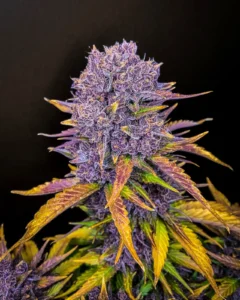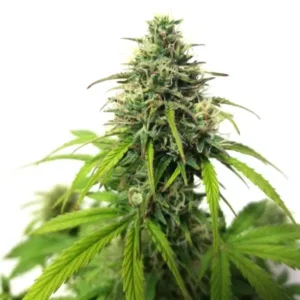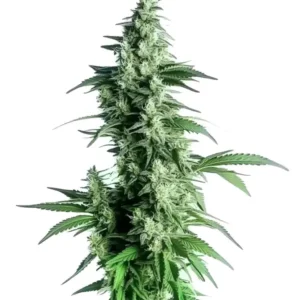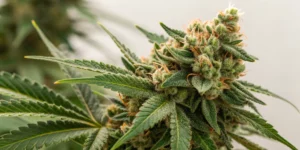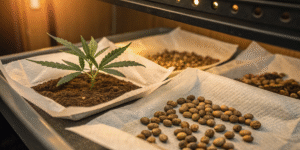


Honey Cream Fast is an indica-dominant fast-flowering photoperiod strain from Royal Queen Seeds created from BlueBlack, Maple Leaf Indica and White Rhino genetics. It is classified as 65% Indica and 35% Sativa, reaches up to 16% THC and completes its flowering stage in approximately 50–55 days.
Current Honey Cream Fast seeds reach approximately 100–160 cm indoors and 180–250 cm outdoors. Indoor production is listed at 500–550 g/m², while outdoor plants can produce around 625–675 g each and are expected to finish in early October.
Recommended Strains

Honey Cream Fast

|
THC | 15% - 16% (Medium) |

|
Lineage | BlueBlack x Maple Leaf Indica x White Rhino |

|
Type | Fast Flowering |

|
Height | 6.89 ft | 2.1 m |

|
Yield | High |

|
Yield Indoor | 1.64 - 1.8 oz/ft² | 500 - 550 g/m² |

|
Yield Outdoor | 22.05 - 23.81 oz/plant | 625 - 675 g/plant |

|
Flowering Time | 7 - 8 weeks |

|
Phenotype | 65% Indica / 35% Sativa |

|
Effects | Creative |

|
Flavors | Candy, Earthy |
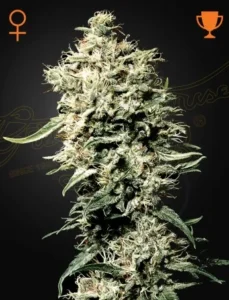
White Rhino
|
|
THC | 20% - 21% (Medium) |
|
|
Lineage | Afghan x Brazilian x South Indian |
|
|
Type | Feminized |
|
|
Height | 5.58 ft | 1.7 m |
|
|
Yield Outdoor | 26.46 oz/plant | 750 g/plant |
|
|
Flowering Time | 9 - 10 weeks |
|
|
Phenotype | 80% Indica / 20% Sativa |
|
|
Effects | Sleepy, Relaxed, Tingly |
|
|
Flavors | Woody, Earthy, Pungent |
| Honey Cream Fast Grow Info | Current specification |
|---|---|
| Breeder | Royal Queen Seeds |
| Genetics | BlueBlack × Maple Leaf Indica × White Rhino |
| Seed type | Photoperiod, Fast Flowering |
| Indica / Sativa | 65% Indica / 35% Sativa |
| THC | Up to 16% |
| CBD | Medium |
| Flowering time | 50–55 days |
| Indoor height | 100–160 cm |
| Outdoor height | 180–250 cm |
| Indoor yield | 500–550 g/m² |
| Outdoor yield | 625–675 g/plant |
| Outdoor harvest | Early October |
| Climate | Short summers |
| Flavor | Candy, Earthy |
| Reported effect | Psychedelic |
Honey Cream Fast Genetics
Honey Cream Fast combines BlueBlack, Maple Leaf Indica and White Rhino, producing a strongly indica-dominant photoperiod cultivar with a shorter-than-average flowering phase.
Royal Queen Seeds also refers to Honey Cream as Cream Caramel, reflecting the sweet, caramel-like aroma associated with the flowers. The current commercial seed line remains Honey Cream (Fast Flowering), and that is the name used throughout this grow guide.
Growers interested in other genetics from the same breeder can explore the wider Royal Queen Seeds collection.
The important cultivation distinction is that Honey Cream Fast remains photoperiodic. Its speed comes from finishing flowering quickly, not from an automatic flowering gene.
Is Honey Cream Fast Indica or Sativa?
Honey Cream Fast is 65% Indica and 35% Sativa, making it clearly indica dominant.
Its genetic background includes several heavy Indica lines, and the breeder describes plants with a classic bushy structure and dense flowering growth. However, the exact final shape still depends on vegetative duration, root space, training and environmental conditions.
The genetic ratio should also be kept separate from subjective effects. Royal Queen Seeds currently classifies the effect as psychedelic and describes the broader experience as strongly relaxing and euphoric.
How Much THC Does Honey Cream Fast Have?
Royal Queen Seeds currently lists Honey Cream Fast at up to 16% THC, alongside a medium CBD level.
This is lower than the 18–20% range found in older versions of the grow guide and should replace it throughout the page.
The wording “up to” matters. The published figure represents the breeder’s current specification rather than a guarantee that every harvested flower will contain exactly 16% THC. Phenotype, cultivation conditions, harvest maturity and post-harvest handling can all influence measured cannabinoid levels.
Honey Cream Fast Flavor and Aroma
Honey Cream Fast is known for a sweet, sugary aromatic profile with a strong caramel-like character. Royal Queen Seeds currently lists candy and earthy as its main flavors, while the breeder’s narrative description emphasizes sweet cream and caramel.
This combination gives the strain a dessert-like aroma without losing the earthy depth associated with its heavy Indica background.
Specific dominant terpene claims should be treated cautiously. The current breeder data sheet does not provide a quantitative terpene breakdown, so the documented candy, earth and caramel sensory profile is more reliable than presenting one fixed list of dominant terpenes.

Is Honey Cream Fast an Autoflower?
No. Honey Cream Fast is a fast-flowering photoperiod strain, not an autoflower.
Indoors, flowering still needs to be initiated by reducing day length, typically to approximately 12 hours of light and 12 hours of uninterrupted darkness.
The “Fast” part of the name refers to what happens after flowering begins. Honey Cream completes that phase in approximately 50–55 days, which is quicker than many conventional photoperiod cultivars.
This distinction is important because a fast-flowering strain still allows the grower to control how long vegetation lasts before initiating bloom.
Honey Cream Fast Flowering Time
Honey Cream Fast has a current breeder-listed flowering period of 50–55 days.
That equals roughly seven to eight weeks and begins after an indoor plant is moved into its flowering light cycle. It should not be counted from germination.
Because the strain is photoperiodic, total seed-to-harvest time depends on how long the grower allows vegetation to continue before making the transition.
The 50–55 day range is therefore the most useful fixed timing reference for the cultivar.
For a broader explanation of what changes after the photoperiod transition, see the cannabis flowering stage guide.
Honey Cream Fast Height and Plant Structure
Honey Cream Fast reaches approximately 100–160 cm indoors and 180–250 cm outdoors.
These separate breeder specifications are considerably more useful than assigning the plant one universal height.
Indoors, growers can influence final size by changing vegetative duration. A plant moved into flowering relatively early may remain toward the lower end of its expected range, while one given more vegetative time can develop a larger canopy.
Outdoors, the cultivar can become substantially taller than its compact Indica reputation might suggest, so growers should allow enough vertical and lateral space for the full 180–250 cm breeder range.
Growing Honey Cream Fast Indoors
Honey Cream Fast is currently listed at approximately 500–550 g/m² indoors.
Its fast flowering period makes it attractive to growers who want to shorten the bloom phase without moving to autoflowering genetics. Unlike an auto, however, the grower still controls how much vegetative growth occurs before flowering begins.
Indoor planning should therefore focus on developing enough healthy canopy to use the available light without allowing the plant to become unnecessarily large before the 12/12 transition.
There is no universal requirement for a 600-watt light or one fixed lamp-to-canopy distance. Lighting decisions should be based on the fixture, grow area, plant response and manufacturer guidance rather than the strain name alone.
Growing Honey Cream Fast Outdoors
Honey Cream Fast is particularly relevant outdoors because its short flowering stage can help plants finish before later autumn conditions become established.
Royal Queen Seeds currently lists outdoor plants at approximately 180–250 cm, producing around 625–675 g per plant under suitable conditions.
The official Northern Hemisphere harvest reference is early October, not early September.
The breeder also classifies Honey Cream Fast as suitable for short summers. Even so, final outdoor performance depends on sunlight, root space, weather and plant health.
The published yield figures should therefore be treated as genetic production potential rather than guaranteed harvest weights.
Honey Cream Fast Yield
Current breeder specifications list Honey Cream Fast at approximately 500–550 g/m² indoors and 625–675 g per plant outdoors.
These figures replace the lower 450–500 g/m² indoor and 550–600 g outdoor values found in the older grow guide.
Indoor yield is expressed by canopy area because plant count and vegetative duration can vary considerably. Outdoor production is measured per plant because each plant has much greater access to root and canopy space.
Neither number guarantees a particular harvest. Light, roots, vegetative development, climate and overall plant health all influence final production.
How to Germinate Honey Cream Fast Seeds
Honey Cream Fast does not require an unusual strain-specific germination method.
Seeds need consistent moisture, suitable warmth and access to oxygen without remaining waterlogged. A damp paper-towel method can be used to observe taproot emergence before transfer, while direct germination in an appropriate starting medium reduces the amount of handling required.
Once the taproot appears, handle the seed carefully and avoid damaging the developing root. Early watering should reflect the limited size of the new root system rather than the needs of an established plant.
The cannabis seed germination temperature and humidity guide covers these principles in more detail.
Vegetative Growth
Honey Cream Fast does not have a fixed four-, five- or six-week vegetative stage.
As a photoperiod cultivar, it can remain in vegetative growth until the grower decides the plant has reached a suitable size for flowering.
That decision should reflect available height, root development, container size, plant density and canopy coverage rather than an arbitrary week number.
The cultivar’s fast-flowering characteristic only affects the bloom phase after flowering has been triggered. It does not force the plant to enter flowering at a particular age.
Growers with restricted space can transition earlier, while larger environments can support additional vegetative development before moving to 12/12.
Training Honey Cream Fast
Honey Cream Fast can be shaped during vegetative growth, but its short flowering cycle makes a simple training strategy more appropriate than building the entire grow around prolonged recovery or canopy work.
Gentle low-stress branch positioning can help distribute the canopy where necessary. Topping can also be considered if the plant is healthy and the grower plans enough vegetative recovery before initiating flowering.
A long SCROG process is not essential for this cultivar. The main advantage of Honey Cream Fast is its shortened flowering stage, so training should support efficient canopy development rather than unnecessarily delaying the transition.
No technique should be presented as a guarantee of higher THC or a specific yield.
Flowering Development
Once Honey Cream Fast moves to a 12/12 schedule, the approximately 50–55 day flowering period begins.
Early bloom can include some continued structural development as flower sites become established. As flowering progresses, buds become denser and the sweet, caramel-like aroma becomes increasingly noticeable.
Because the flowering period is short, there is less value in an artificial week-by-week calendar that assumes every plant entered bloom at the same age.
Instead, count flowering from the actual photoperiod transition and use the breeder range as the main timeline.
As harvest approaches, compare actual flower development with the expected 50–55 day window rather than automatically cutting the plant at one predetermined calendar week.
Feeding Honey Cream Fast
Honey Cream Fast does not require one universal strain-specific nutrient formula.
Nutrition should be matched to the growing medium, fertilizer system, water quality, root volume, plant size and visible response. There is no need to prescribe one fixed high-nitrogen vegetative formula followed automatically by heavy phosphorus and potassium feeding.
As flowering begins, follow the transition recommended for the nutrient system being used and adjust only when plant development provides evidence that a change is necessary.
Burned leaf tips, unusually dark foliage, stalled development or progressive discoloration provide more useful feedback than a rigid Honey Cream Fast feeding calendar.
Watering Honey Cream Fast
Water demand changes throughout the plant’s development.
A small seedling with a limited root system uses far less water than a mature flowering plant. For that reason, avoid watering according to one fixed number of days.
In containers, substrate moisture and pot weight can provide useful indicators of actual demand. Ensure that excess water can drain instead of leaving the root zone permanently saturated.
Outdoor plants may use considerably more water during warm weather, particularly when they approach the upper end of the 180–250 cm size range, but irrigation should still respond to soil conditions, rainfall and actual plant demand.
Airflow and Flowering Canopy Management
Honey Cream Fast can produce dense flowering growth, so maintaining airflow through the canopy becomes increasingly important as bloom progresses.
The objective is gentle circulation above, through and below the plant rather than strong wind directed continuously at one location.
Branches and foliage that overlap heavily can create localized humid areas even when the room-level humidity appears acceptable. Sensible spacing and selective canopy management can help air reach those zones.
Common Honey Cream Fast Growing Problems
One common planning mistake is confusing fast flowering with autoflowering. Honey Cream Fast still requires a photoperiod change indoors and will not automatically begin bloom at a fixed age.
Another issue is following a rigid 12-week calendar. Vegetative duration remains flexible, while the breeder-defined flowering phase is approximately 50–55 days.
Overwatering and excessive nutrient concentration are broader cultivation problems rather than documented Honey Cream-specific sensitivities. Diagnose them from actual root-zone and plant conditions.
Finally, do not assume the cultivar is universally mold- or pest-resistant. Maintain good sanitation, canopy spacing and airflow throughout flowering regardless of strain descriptions.

When to Harvest Honey Cream Fast
Indoor Honey Cream Fast generally reaches its expected harvest window after approximately 50–55 days of flowering.
Outdoors, Royal Queen Seeds currently lists harvest for early October in the Northern Hemisphere.
Use those timings as planning references rather than automatic cutting dates. As the expected window approaches, assess actual flower development and trichome maturity.
There is no need to require one universal amber-trichome percentage such as 20–30% for every plant. Phenotype and environmental conditions can create legitimate variation around the published breeder range.
Drying and curing should then be treated as separate post-harvest stages rather than extra weeks added to the cultivation lifecycle.
Honey Cream Fast Effects
Royal Queen Seeds currently labels the Honey Cream Fast effect as psychedelic, while its broader product description emphasizes deep relaxation and euphoria.
These descriptions fit the strain’s strong Indica background, but they remain reported subjective characteristics rather than guaranteed outcomes.
Honey Cream Fast reaches up to 16% THC and contains a medium CBD level according to the breeder. Individual response can still vary according to dose, tolerance and the chemical composition of a particular harvest.
Honey Cream Fast FAQs
How long does Honey Cream Fast take to flower?
Honey Cream Fast has a current breeder-listed flowering time of 50–55 days after the indoor light schedule is changed to 12/12. This refers only to flowering, not the full seed-to-harvest timeline. Because it is photoperiodic, growers control how long the plant remains in vegetative growth before bloom begins.
Is Honey Cream Fast an autoflower?
No. Honey Cream Fast is a fast-flowering photoperiod strain, not an autoflower. Indoors, flowering still needs to be triggered by changing the light schedule, typically to 12 hours of light and 12 hours of darkness. Its advantage is that the flowering phase finishes faster than many conventional photoperiod cultivars.
How much THC does Honey Cream Fast have?
Royal Queen Seeds currently lists Honey Cream Fast at up to 16% THC and medium CBD. Older Growlantis copy that describes 18–20% THC should be removed. The published THC figure is a breeder specification rather than a guarantee that every harvested flower will test at exactly the same cannabinoid concentration.
How much does Honey Cream Fast yield?
Current breeder data lists Honey Cream Fast at approximately 500–550 g/m² indoors and 625–675 g per plant outdoors. These figures describe production potential under favorable conditions rather than guaranteed harvests. Light, root space, vegetative duration, climate, plant health and canopy management can all influence final yield.
How tall does Honey Cream Fast grow?
Honey Cream Fast is currently listed at approximately 100–160 cm indoors and 180–250 cm outdoors. The separate figures are more useful than the current Growlantis 2.1 m universal height. Indoor growers can also influence final size through vegetative duration, container volume, training and the point at which flowering is initiated.
Is Honey Cream Fast Indica or Sativa?
Honey Cream Fast is an indica-dominant photoperiod cultivar classified as 65% Indica and 35% Sativa. Its documented genetics combine BlueBlack, Maple Leaf Indica and White Rhino. The genetic ratio describes the seed line, while final plant structure and subjective effects can still vary with phenotype, cultivation conditions and individual response.