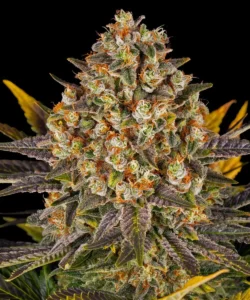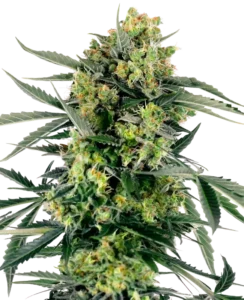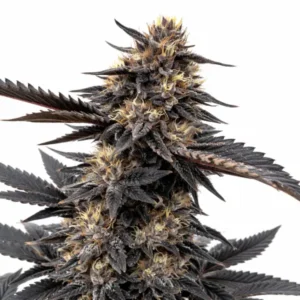


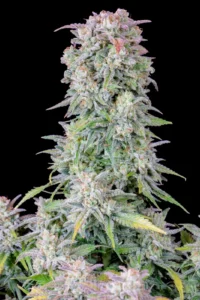
Acapulco Gold is a classic sativa-dominant photoperiod strain family associated with Mexican and Central American cannabis genetics. However, current commercial Acapulco Gold seed lines are not genetically or technically identical, so flowering time, THC, height and yield depend on the version being grown.
Classic landrace sativas have a timeless, uplifting appeal that is hard to beat. Our Acapulco Gold seeds capture that sweet, earthy, coffee-tinged Mexican flavour and a soaring, energetic high, rewarding a warm, sunny grow with tall, productive plants and a genuinely cheerful, daytime effect.
Recommended Strains

Acapulco Gold

|
THC | 22% - 23% (Medium) |

|
Lineage | Central American |

|
Type | Feminized |

|
Height | 5.74 ft | 1.75 m |

|
Yield Outdoor | 52.91 oz/plant | 1500 g/plant |

|
Flowering Time | 8 - 10 weeks |

|
Phenotype | 30% Indica / 70% Sativa |

|
Effects | Focused, Aroused, Energetic, Creative, Euphoric, Happy |

|
Flavors | Earthy, Pine, Pungent, Sweet |
Afghan Kush Auto
|
|
THC | 22% - 23% (Medium) |
|
|
Lineage | Afghani #1 x Ruderalis |
|
|
Type | Autoflowering |
|
|
Height | 4.53 ft | 1.38 m |

|
Yield | High |

|
Yield Indoor | 1.31 - 1.64 oz/ft² | 400 - 500 g/m² |
|
|
Life Cycle | 8 - 9 weeks |
|
|
Phenotype | 90% Indica / 10% Sativa |
|
|
Effects | Hungry, Sedative, Powerful, Relaxed |
|
|
Flavors | Sweet, Spicy, Earthy |
Current feminized lines range from approximately 70–80% Sativa and 20–30% Indica, with published THC levels from 23% to 26%. Flowering takes around 60–80 days depending on the seed line, while indoor yield ranges from approximately 450–700 g/m².
| Acapulco Gold Grow Info | Current seed-line range |
|---|---|
| Genetics | Mexican / Central American landrace-derived genetics |
| Seed type | Feminized photoperiod |
| Sativa / Indica | 70–80% Sativa / 20–30% Indica |
| THC | 23–26% |
| Flowering time | 60–80 days |
| Height | Approx. 100–200 cm depending on line and environment |
| Indoor yield | 450–700 g/m² |
| Outdoor yield | 550–1,500 g/plant depending on seed line |
| Outdoor harvest | Mid-to-late October |
| Common flavors | Pine, Sweet, Citrus, Earthy/Pungent |
| Flowering trigger | Photoperiod |
Acapulco Gold Genetics and Origin
Acapulco Gold is closely associated with historic Mexican cannabis from the Acapulco and Guerrero region, but current commercial seed lines should not be treated as one genetically identical landrace population.
One current version describes its genetics simply as Central American, while another uses Mexican landrace genetics. Both remain strongly sativa dominant, but their THC, flowering time, height and yield specifications differ considerably.
This is why a modern grow guide should distinguish the wider Acapulco Gold identity from the exact commercial seed line being cultivated.
The plants covered here are feminized photoperiod varieties. Indoor growers therefore decide when flowering begins by changing the light schedule rather than waiting for an automatic age-driven transition.
Does Acapulco Gold Still Exist?
Yes. Acapulco Gold remains available today as commercial feminized cannabis genetics, although modern seed lines sold under the name are not necessarily one identical reproduction of a single historic plant from the 1960s.
Current versions still preserve the defining Acapulco Gold identity through strong Sativa dominance, Mexican or Central American genetic heritage and characteristic energetic effects.
For cultivation, the important point is to use the specifications for the exact seed line in hand. Historical descriptions of Acapulco Gold should not automatically replace current flowering, THC, height or yield data.
Is Acapulco Gold Indica or Sativa?
Acapulco Gold is strongly sativa dominant, but current seed lines do not all publish the same ratio.
Available versions range from approximately 70% Sativa / 30% Indica to 80% Sativa / 20% Indica.
That strong Sativa influence is reflected in its generally vigorous structure and reported energetic, cerebral and creative characteristics. However, individual plant shape can still vary considerably between seed lines.
The genetic ratio should therefore be treated as a line-specific breeder classification rather than one universal percentage for every commercial Acapulco Gold seed.
How Much THC Does Acapulco Gold Have?
Current Acapulco Gold seed lines publish THC specifications from approximately 23% to 26%.
One current version reaches up to 23% THC, while another is listed at 26%. Older Growlantis content that presents 22–23% as the universal range is therefore no longer accurate for the entire current catalog.
Published THC figures represent breeder specifications rather than guaranteed laboratory results for every plant. Phenotype, plant health, light, harvest maturity and post-harvest handling can all influence the cannabinoid concentration measured in an individual crop.

Acapulco Gold Flavor and Aroma
Acapulco Gold is generally associated with an old-school aromatic profile built around pine, sweetness, earth and pungency.
Current seed lines also publish citrus characteristics, while individual versions add coffee, creamy, woody or peppery notes. These differences are expected because the modern commercial lines are not genetically identical.
The most reliable general description is therefore a sweet, earthy and pine-forward profile with citrus elements rather than one rigid flavor formula.
Specific terpene lists should remain seed-line specific. A terpene profile published for one Acapulco Gold version should not automatically be presented as universal across every commercial line.
Acapulco Gold Flowering Time
Current Acapulco Gold seed lines flower in approximately 60–80 days, depending on the version.
One current line finishes in around 60–70 days, while another publishes approximately 70–80 days. This means older general claims of 10–12 weeks are too broad to describe every current version accurately.
Flowering begins after the indoor photoperiod is changed. Acapulco Gold is not an autoflower, so the grower controls how long the vegetative stage lasts before initiating bloom.
Once the transition occurs, use the exact seed line’s breeder range as the primary timing reference rather than assuming every Acapulco Gold plant needs the same number of weeks.
The cannabis flowering stage guide provides additional context on how photoperiod plants develop after the light-cycle transition.
Acapulco Gold Height and Plant Structure
Height varies substantially by seed line and environment.
One current Acapulco Gold line is listed at approximately 100–110 cm indoors and 150–200 cm outdoors. Another current line is described as reaching around six feet, or approximately 183 cm, without the same separate indoor and outdoor measurements.
This makes one universal height such as 1.75 meters misleading.
Indoor growers also have considerable control because vegetative duration influences final size. Starting flowering earlier can keep a plant considerably smaller than allowing an extended vegetative period.
Training becomes particularly useful where a more vigorous Sativa-dominant phenotype begins using excessive vertical space.
Growing Acapulco Gold Indoors
Current Acapulco Gold lines produce approximately 450–700 g/m² indoors, depending on the exact genetics.
One line publishes around 450 g/m², while another reaches approximately 600–700 g/m². These figures should not be averaged into one supposedly universal yield.
Indoor growers should plan around the plant’s actual size and branch structure rather than the historical reputation of Acapulco Gold as an extremely tall Sativa. Some current genetics remain quite manageable indoors, while others can approach six feet without training.
Vegetative duration should be adjusted to available space. Once the canopy reaches a suitable size, changing to approximately 12 hours of light and 12 hours of uninterrupted darkness initiates flowering.

Growing Acapulco Gold Outdoors
Outdoor cultivation is one of the strongest historical search intents for Acapulco Gold, and current seed lines can differ dramatically in their outdoor production.
One current version reaches approximately 150–200 cm outdoors and up to 1,500 g per plant. Another is described at around six feet and produces approximately 550 g per plant.
That difference is too large to hide behind one average.
The shared requirement is enough season length to finish during autumn. Current commercial lines generally reach harvest from around mid-October through late October in the Northern Hemisphere.
Provide enough space for lateral branches and maintain airflow through the canopy as plants become larger. Outdoor yield depends heavily on sunlight, root space, season length, weather and the exact seed line.
Acapulco Gold Yield
Indoor Acapulco Gold yield currently ranges from approximately 450–700 g/m², depending on the seed line.
Outdoor production varies even more dramatically, with current specifications ranging from roughly 550 g to 1,500 g per plant.
Those figures should not be treated as one continuous genetic range in which every plant has equal potential to reach 1,500 g. They belong to different commercial versions.
Yield data is most useful when matched to the exact seed product being grown. Light, roots, canopy size, vegetative duration, climate and plant health then determine how closely a specific grow approaches that published potential.
How to Germinate Acapulco Gold Seeds
Acapulco Gold does not require an unusual strain-specific germination technique.
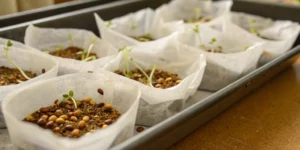
Seeds need consistent moisture, suitable warmth and access to oxygen without remaining permanently saturated. A damp paper-towel method can be used to monitor taproot emergence, while direct germination in an appropriate starting medium can reduce handling.
Once the root appears, transfer the seed carefully and avoid damaging the new taproot. Early watering should reflect the small root system rather than the needs of an established plant.
The cannabis seed germination temperature and humidity guide provides more detail on maintaining appropriate moisture and environmental conditions during this stage.
Vegetative Growth
Acapulco Gold does not have a universal four- to six-week vegetative stage.
As a photoperiod cultivar, it remains in vegetative growth until the indoor grower changes the light schedule. This allows final plant size to be adapted to available room, root volume and canopy goals.
The stage should be used to establish healthy roots and useful branch structure rather than to reach an arbitrary week number.
Growers working with the taller seed line or limited vertical space can initiate flowering earlier. Larger environments can support more vegetative development before the 12/12 transition.
Use actual plant size and structure to make the decision rather than a fixed calendar.
Training Acapulco Gold
Training can be particularly useful with vigorous Acapulco Gold plants where vertical growth or branch spacing becomes difficult to manage.
Gentle low-stress training can move branches outward and create a broader canopy. Topping during healthy vegetative growth can also reduce dominance of the main stem when the plant has enough recovery time before flowering.
Selective pruning can help prevent unnecessary internal congestion as the canopy develops.
These techniques should be used to manage plant architecture and light distribution rather than presented as guarantees of higher THC or a particular harvest weight.
The exact amount of training required will depend heavily on which Acapulco Gold seed line is being cultivated.
Flowering Development
Once the indoor light schedule changes, Acapulco Gold enters a flowering stage lasting approximately 60–80 days, depending on the seed line.
Plants may continue adding structural growth during the early transition while flowering sites become established. Later, the flowers become increasingly resinous and develop the golden, reddish and orange coloration associated with the Acapulco Gold name.
Because current lines differ significantly in finishing speed, do not assume that one plant is late simply because another commercial Acapulco Gold finishes ten or fifteen days sooner.
Use the exact breeder range together with direct observation of flower maturity as harvest approaches.
Feeding Acapulco Gold
Acapulco Gold does not require one universal strain-specific NPK ratio.
Nutrition should be adapted to the growing medium, fertilizer system, water quality, root volume, plant size and visible response.
Fixed formulas such as 1-1-1 during seedlings, 3-1-1 during vegetation or 1-3-3 during flowering should not be presented as genetic requirements of Acapulco Gold.
Likewise, aggressively increasing phosphorus and potassium does not guarantee more resin, potency or yield.
Follow the feeding program designed for the chosen medium and make gradual adjustments when the plant provides evidence that they are necessary.
Watering Acapulco Gold
Water demand changes as Acapulco Gold develops.
A seedling with a small root system requires much less water than a large outdoor plant approaching two meters. This makes a rigid watering schedule inappropriate.
In containers, substrate moisture and pot weight can provide useful information about actual demand. Ensure excess water can drain rather than allowing the root zone to remain permanently saturated.
Outdoor irrigation should respond to plant size, soil conditions, recent rainfall and temperature.
Neither overwatering nor deliberately withholding water near harvest should be presented as a strain-specific method for increasing Acapulco Gold flavor, potency or resin production.
Airflow and Disease Risk
Resistance to mold or pests should not be generalized across every Acapulco Gold seed line.
One current commercial version is described as relatively resistant to common pests and pathogens, while the other current breeder specification does not establish the same universal rating.
Regardless of seed line, airflow remains important as the plant develops a larger canopy and flowering sites gain mass.
Branches that overlap heavily can create localized humid zones even when general environmental readings appear acceptable. Adequate spacing and sensible canopy management can help circulation reach those areas.
The cannabis airflow and mold prevention guide explains how flower-level microclimates can differ from conditions elsewhere in the grow space.
Common Acapulco Gold Growing Problems
Height management can be an issue with the more vigorous Acapulco Gold seed line, particularly if indoor vegetation continues until the canopy has already filled the available vertical space.
Another common mistake is assuming every version needs 10–12 weeks of flowering. Current lines range from approximately 60 to 80 days, so the exact product specification matters.
Overwatering and excessive fertilizer concentration are broader cultivation problems rather than Acapulco Gold-specific weaknesses. Diagnose them from actual root-zone and plant symptoms rather than following a rigid strain calendar.
Finally, avoid assuming every current commercial seed carries identical landrace genetics, resistance or yield characteristics simply because it uses the Acapulco Gold name.
When to Harvest Acapulco Gold
Indoor harvest timing depends on the exact seed line, with current flowering ranges spanning approximately 60–80 days after the transition to bloom.
Outdoors, current commercial versions generally finish from mid-October through late October in the Northern Hemisphere.
Use these ranges as planning references and assess actual flower maturity as harvest approaches.
Trichome development can provide useful information, but there is no need to require one fixed percentage of amber trichomes or claim that a particular ratio guarantees peak potency or one specific effect.
Drying and curing should then be treated as separate post-harvest stages rather than part of the flowering timeline.
Acapulco Gold Effects
Current Acapulco Gold seed lines share a strongly uplifting and energetic reputation.
Reported characteristics across the available versions include cerebral stimulation, creativity, happiness, euphoria, focus and a degree of relaxation.
Those similarities fit the strong Sativa dominance of both current lines, although the exact descriptions differ between products.
Effects remain subjective rather than guaranteed outcomes. The available seed lines also differ in THC, so dose, tolerance and the complete chemical composition of an individual harvest can influence the experience substantially.

Acapulco Gold FAQs
How long does Acapulco Gold take to flower?
Current Acapulco Gold photoperiod seed lines flower in approximately 60–80 days, depending on the version. This refers only to flowering after the indoor light-cycle transition, not the complete seed-to-harvest timeline. One current line finishes in 60–70 days, while another publishes a 70–80 day range indoors.
Is Acapulco Gold Indica or Sativa?
Acapulco Gold is strongly sativa dominant, but the exact ratio depends on the current seed line. Available versions range from about 70% Sativa / 30% Indica to 80% Sativa / 20% Indica. That difference is why a general guide should not present one ratio as universal.
How much THC does Acapulco Gold have?
Current Acapulco Gold seed lines publish THC specifications from about 23% to 26%, depending on the version. One current line is listed at up to 23% THC, while another publishes 26%. These are breeder specifications rather than guaranteed laboratory results for every plant harvested under different conditions.
How much does Acapulco Gold yield?
Current Acapulco Gold lines vary considerably in yield. Indoor specifications range from roughly 450–700 g/m², while outdoor figures range from about 550 g to 1,500 g per plant. These are seed-line production references, not guaranteed harvests, and actual results depend on light, roots, climate and plant health.
How tall does Acapulco Gold grow?
Height depends on both the Acapulco Gold seed line and growing environment. One current version lists 100–110 cm indoors and 150–200 cm outdoors, while another can reach around six feet overall. Indoor vegetative duration and training can also change final size significantly before flowering begins.
Can Acapulco Gold be grown outdoors?
Acapulco Gold can perform well outdoors where the season is long enough to carry a sativa-dominant photoperiod plant into autumn. Current seed lines finish from roughly mid-October through late October. Outdoor yield and height vary significantly between versions, so growers should check the exact product before planning space and harvest expectations.