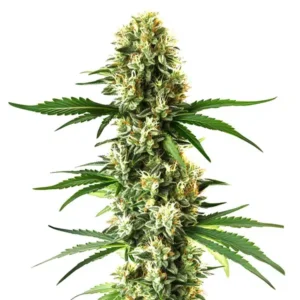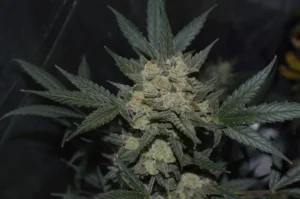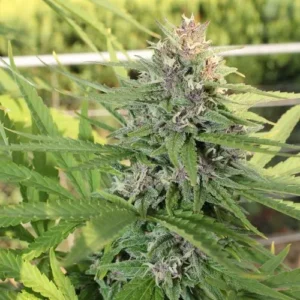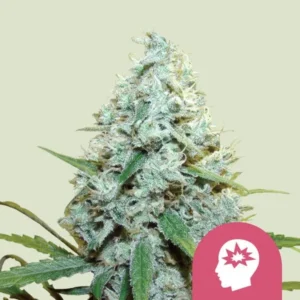

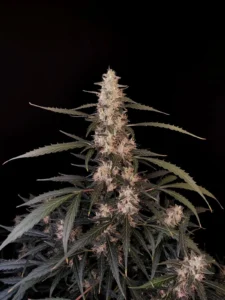
Amnesia Haze is a strongly sativa-dominant feminized photoperiod strain known for a long flowering period, vigorous growth and citrus-led aroma. However, current Amnesia Haze seed lines are not genetically identical, so specifications such as THC, Sativa/Indica ratio, height and outdoor yield vary depending on the version being grown.
Current photoperiod lines generally require around 10–13 weeks of flowering. Published THC levels range from 16% to 22%, while indoor production is relatively consistent at approximately 600–650 g/m². Outdoors, current yield specifications range from roughly 650 to 1,000 g per plant under favorable conditions.
Recommended Strains
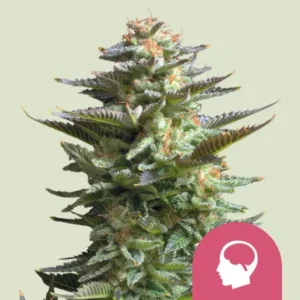
Amnesia Haze

|
THC | 22% - 23% (Medium) |

|
Lineage | Original Amnesia Haze |

|
Type | Feminized |

|
Height | 6.23 ft | 1.9 m |

|
Yield | High |

|
Yield Indoor | 1.97 - 2.13 oz/ft² | 600 - 650 g/m² |

|
Yield Outdoor | 22.93 - 24.69 oz/plant | 650 - 700 g/plant |

|
Flowering Time | 10 - 11 weeks |

|
Phenotype | 30% Indica / 70% Sativa |

|
Effects | Relaxed, Powerful |

|
Flavors | Citrus, Earthy, Herbal, Pepper |
Amnesia Haze Auto
|
|
THC | 22% - 23% (Medium) |
|
|
Lineage | Amnesia Haze x Ruderalis |
|
|
Type | Autoflowering |
|
|
Height | 3.94 ft | 1.2 m |
|
|
Yield | High |
|
|
Yield Indoor | 1.31 - 1.8 oz/ft² | 400 - 550 g/m² |
|
|
Life Cycle | 10 - 11 weeks |
|
|
Phenotype | 30% Indica / 70% Sativa |
|
|
Effects | Focused, Creative, Relaxed |
|
|
Flavors | Herbal, Lemon, Spicy |
| Amnesia Haze Grow Info | Current seed-line range |
|---|---|
| Genetics | Varies by seed line |
| Seed type | Feminized photoperiod |
| Sativa / Indica | 70–80% Sativa / 20–30% Indica |
| THC | 16–22% |
| Flowering time | Approx. 10–13 weeks |
| Indoor height | Approx. 80–180 cm depending on seed line and setup |
| Outdoor height | 175–210 cm in the line with a separate current outdoor specification |
| Indoor yield | 600–650 g/m² |
| Outdoor yield | 650–1,000 g/plant |
| Outdoor harvest | Late October into November depending on line and climate |
| Common flavors | Citrus, lemon, earthy, herbal, fruity, pepper |
Amnesia Haze Genetics
Amnesia Haze should not be treated as one genetically identical commercial cultivar. Current photoperiod seed lines sold under the name have different documented parentage.
One current version is listed simply as Original Amnesia Haze, while another combines South Asian Indica with Cambodian genetics. Both remain strongly sativa dominant, but the difference in parentage helps explain why their flowering time, THC, plant structure and production specifications are not identical.
Because these are photoperiod plants, indoor growers control when flowering begins. Amnesia Haze does not automatically enter flowering after a fixed number of weeks, so vegetative duration can be adapted to available space and the size of the developing canopy.
Which Amnesia Haze Seed Line Are You Growing?
Before applying an exact THC percentage or flowering time, identify the specific seed line. The current higher-THC Amnesia Haze line is listed differently from the 16–20% THC Amnesia Haze line.
The two versions also differ in genetic background and Sativa/Indica ratio. One is classified as 70% Sativa / 30% Indica, while the other is 80% Sativa / 20% Indica. Their outdoor production specifications also differ, making the exact seed line particularly important when planning space and harvest expectations.
Is Amnesia Haze Sativa or Indica?
Amnesia Haze is clearly sativa dominant, but there is no single ratio that applies to every current seed line. Current versions range from approximately 70% Sativa / 30% Indica to 80% Sativa / 20% Indica.
That strong Sativa influence is reflected in the strain’s longer flowering cycle and tendency toward vigorous growth. It does not, however, mean every Amnesia Haze plant will develop the same height or structure.
Genetic ratios should also be kept separate from subjective effects. They describe the classification of the seed line rather than guaranteeing that every person or phenotype will behave identically.
How Much THC Does Amnesia Haze Have?
Current photoperiod Amnesia Haze lines publish THC levels from approximately 16% to 22%.
One current seed line is listed at 16–20% THC, while another reaches up to 22%. A claim that all Amnesia Haze contains 22%, 23% or 25% THC would therefore be inaccurate when discussing the strain generally.
Published THC figures are also specifications rather than guaranteed laboratory results from every harvested plant. Phenotype, cultivation conditions, maturity and post-harvest handling can all influence measured cannabinoid levels.
Amnesia Haze Flavor and Aroma
Citrus is the clearest sensory characteristic shared across current Amnesia Haze lines. Lemon and broader citrus notes appear repeatedly alongside earthy and herbal characteristics.
Depending on the seed line, additional descriptions include fruit, pepper, spice, orange and mandarin. Those differences are expected when the genetics themselves are not identical.
For a general Amnesia Haze guide, the most accurate description is therefore a citrus-forward profile with earthy, herbal and sometimes fruity or peppery secondary notes rather than one rigid flavor formula.
Does Amnesia Haze Have One Terpene Profile?
There is no single terpene list that should be applied universally to all current Amnesia Haze seed lines.
Different versions publish different combinations of myrcene, limonene, caryophyllene or pinene, and the available documentation is not identical between lines. Combining those lists would create a terpene profile that may not correspond to either actual seed line.
The safer general description is to use the verified citrus, lemon, earthy, herbal and fruity aromatic characteristics while checking the exact product for any line-specific terpene information.
Amnesia Haze Flowering Time
Flowering time is one of the most important characteristics of Amnesia Haze. Current photoperiod seed lines require approximately 10–13 weeks of flowering, depending on the exact version and phenotype.
One current line is listed at around 65–70 days, or roughly 10–11 weeks. Another publishes approximately 70–84 days in its detailed cultivation information, while some of its breeder copy still describes the strain as flowering in 11–13 weeks.
For a general Amnesia Haze guide, the most accurate planning range is therefore approximately 10–13 weeks rather than treating 10, 11 or 12 weeks as a universal finishing point.
This flowering period begins after the plant transitions into bloom. It is not the total time from germination to harvest because the vegetative stage of a photoperiod plant is controlled by the grower.
For a broader explanation of what changes after the light-cycle transition, the cannabis flowering stage week-by-week guide covers the main phases without imposing one fixed strain calendar.
Amnesia Haze Height and Plant Structure
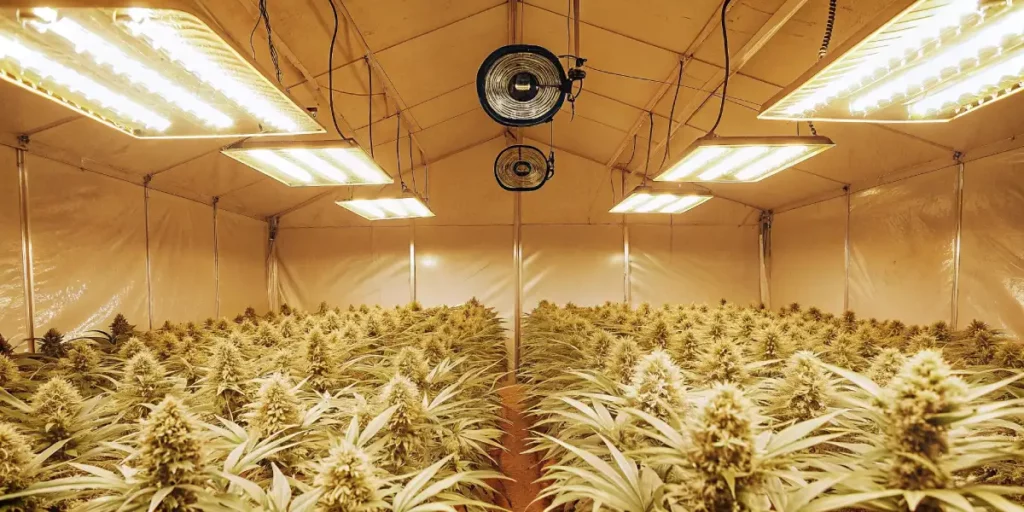
Height varies considerably by seed line and cultivation environment.
One current Amnesia Haze line is listed at approximately 80–140 cm indoors and 175–210 cm outdoors. Another breeder describes its plants as tall and bushy with a final height of roughly 180 cm, without publishing separate current indoor and outdoor measurements.
This means a single statement such as “Amnesia Haze grows to 1.9 meters” is too simplistic.
Indoor growers have additional control because vegetative duration influences final size. A plant moved into flowering earlier can remain considerably smaller than one given an extended vegetative period in a large container.
Growing Amnesia Haze Indoors
Amnesia Haze can be grown successfully indoors, but its longer flowering cycle and Sativa-dominant growth make vertical planning important.
Current lines publish indoor yield potential around 600–650 g/m². That range is relatively consistent, but it still represents production under favorable conditions rather than a guaranteed harvest.
The main indoor challenge is balancing vegetative development with the space required for flowering. Allow enough time to establish healthy branches and roots, but do not assume that a fixed four- or six-week vegetative phase is required.
Once the canopy has reached a suitable size, the indoor photoperiod can be changed to approximately 12 hours of light and 12 hours of uninterrupted darkness to initiate flowering.
Growing Amnesia Haze Outdoors
Amnesia Haze is best suited to outdoor environments with enough warmth and season length to accommodate its extended flowering period.
One current seed line reaches approximately 175–210 cm outdoors and produces around 650–700 g per plant. Another current version publishes outdoor production of up to 1,000 g per plant, although its breeder does not currently provide a separate exact outdoor-height figure.
The long finishing period is the main consideration. One line is listed for harvest around late October, while another requires a similarly long flowering period and is particularly associated with hot, Mediterranean-style climates.
Growers in regions with wet or unstable autumn weather need to account for that late finish when selecting a site. A greenhouse or other protected environment can be useful where the growing season becomes unreliable before flowers mature.
Amnesia Haze Yield
Indoor yield is relatively consistent between current Amnesia Haze lines at approximately 600–650 g/m².
Outdoor figures vary more. One current line publishes around 650–700 g per plant, while another lists potential production up to approximately 1,000 g per plant under suitable conditions.
These numbers should not be converted into one artificial average. Outdoor plant size, sunlight, root volume, climate, vegetative season and training can dramatically affect production.
Yield figures are best used for comparing the potential of the exact seed line rather than predicting the weight of a future harvest.
How to Germinate Amnesia Haze Seeds
Amnesia Haze does not require a unique strain-specific germination technique. Seeds need consistent moisture, suitable warmth and access to oxygen without remaining waterlogged.
A damp paper-towel method can be used to monitor root emergence before transplanting, while direct germination in an appropriate starting medium reduces handling. Both approaches can work when moisture is controlled carefully.
Once a taproot emerges, handle the seed gently and transfer it without damaging the new root. At this stage, avoid watering as though the plant already has a large established root system.
The cannabis seed germination temperature and humidity guide explains moisture management and common starting methods in more detail.
Vegetative Growth
Amnesia Haze does not have a fixed four-, five- or six-week vegetative phase.
As a photoperiod plant, it can remain in vegetative growth until the grower changes the indoor light schedule. The correct duration therefore depends on vertical space, container size, plant density, training strategy and the amount of canopy the grower wants to develop.
This flexibility is especially useful with a Sativa-dominant cultivar. Growers working in restricted height can begin flowering earlier, while larger rooms may allow considerably more vegetative development.
Use plant structure rather than the calendar to decide when the canopy is ready for flowering.
Training Amnesia Haze
Training is particularly useful for Amnesia Haze because its Sativa-dominant growth can create considerable height and long productive branches.
Low-stress training can spread branches horizontally and improve canopy distribution before flowering. Topping is another reasonable option during healthy vegetative growth where the plant has enough time to recover before the light-cycle transition.
A screen can also help distribute taller growth across a wider area, particularly when the grower wants to manage several lateral branches rather than one dominant vertical stem.
As flowers gain weight, physical support may become more important than additional shaping. Some current breeder guidance specifically recommends staking, so ties, stakes or a trellis can help support heavily loaded branches during later flowering.
Flowering Development
Amnesia Haze can continue adding structural growth during the early flowering transition, so height management should be planned before the canopy reaches the limits of the grow space.
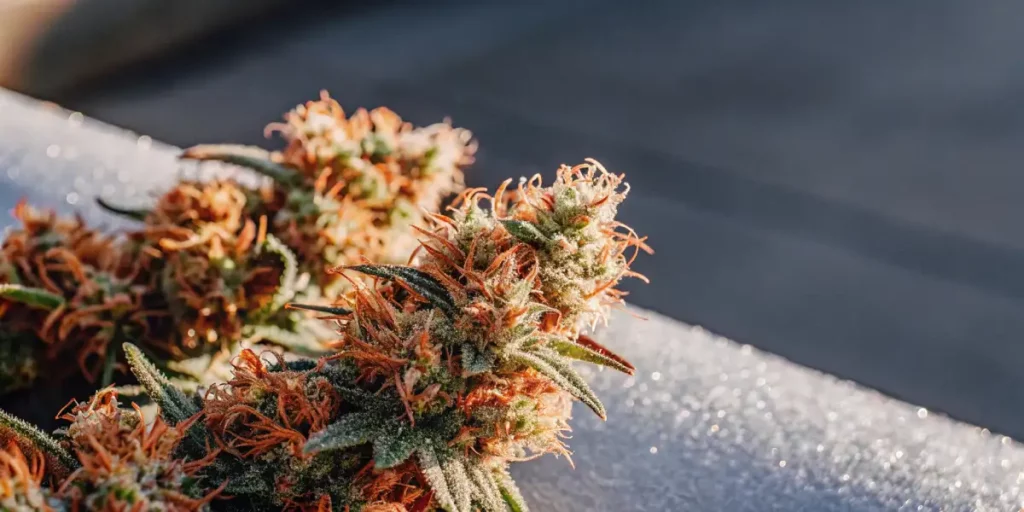
As flowering progresses, bud sites become more established along the branches and the plant begins putting increasing resources into flower development. A well-spaced canopy helps maintain light access and air movement during this long phase.
Because flowering can extend toward 13 weeks in some lines or phenotypes, avoid treating the plant as overdue simply because another Amnesia Haze version finishes sooner.
During the final stage, compare actual flower maturity with the published range for the exact seed line rather than harvesting automatically at week 10 or week 12.
Feeding Amnesia Haze
Amnesia Haze does not require one universal strain-specific NPK ratio.
Feeding should be based on the growing medium, fertilizer system, water quality, container or root volume, plant size and visible response. A large plant with vigorous growth may consume more nutrients than a smaller plant, but that does not justify automatically feeding every Amnesia Haze heavily.
During flowering, follow the transition recommended by the nutrient system being used rather than assuming that aggressively increasing phosphorus or potassium will automatically improve flower density, potency or flavor.
Leaf-tip burn, excessively dark foliage, progressive discoloration or stalled growth provide more useful feedback than a rigid calendar built around the strain name.
Watering Amnesia Haze
Water demand changes throughout the life of the plant, so avoid watering Amnesia Haze according to a fixed schedule.
Young plants have a limited root system and generally need much less water than mature flowering plants. In container cultivation, substrate moisture and pot weight are often better guides than simply counting days.
As root mass and canopy size increase, water use can rise substantially. Outdoor plants can require especially large volumes during warm weather, but irrigation should still respond to soil conditions, recent weather and actual plant demand.
Good drainage remains important because providing more water than the roots can use does not improve growth.
Airflow and Disease Risk
Amnesia Haze should not be universally classified as either mold resistant or mold sensitive because the available seed lines differ and breeder descriptions are not consistent enough to support one general rating.
The practical priority is maintaining enough airflow through the canopy as flowers mature. Long flowering periods expose plants to environmental conditions for more time, particularly outdoors as autumn approaches.
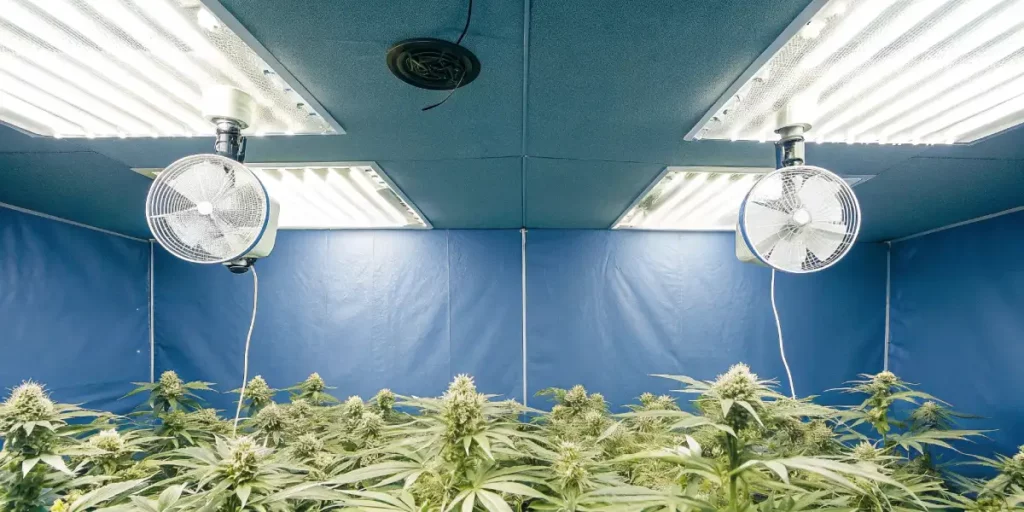
Indoors, circulation should reach above, through and below the canopy rather than only moving air across the top of the plants. Outdoors, adequate plant spacing can reduce stagnant zones between dense branches.
The airflow and mold prevention guide explains how canopy microclimates can differ from the humidity measured elsewhere in the grow space.
Common Amnesia Haze Growing Problems
Height management is one of the most predictable challenges, especially indoors. Waiting too long to initiate flowering can leave insufficient vertical space once the plant continues stretching during the transition.
The extended flowering period is another consideration. Growers need to maintain stable conditions for longer than they would with many faster hybrids, and outdoor plants need a climate capable of carrying them into late-season maturity.
Overfeeding and overwatering are broader cultivation problems rather than unique genetic weaknesses. Diagnose symptoms from the actual plant and root zone instead of assuming Amnesia Haze requires unusually strong nutrients.
Late in flowering, airflow and moisture deserve increasing attention, particularly where branches overlap or autumn weather becomes wetter.
Amnesia Haze vs Amnesia
Amnesia Haze and Amnesia should not be treated as interchangeable strain names.
The Amnesia Haze lines covered here are strongly Sativa-dominant cultivars with flowering periods that can extend to around 10–13 weeks. Current genetics and production figures differ from the GH Amnesia seed line sold separately.
If you are growing that cultivar instead, the Amnesia strain grow guide covers its Super Silver Haze × Afghan genetics, shorter 9–10 week flowering period and separate yield specifications.
Keeping these cultivars separate prevents flowering times, cannabinoid levels and genetic information from being transferred incorrectly between pages.
Amnesia Haze vs Amnesia Haze Auto
Photoperiod Amnesia Haze and Amnesia Haze Auto also require different cultivation planning.
The plants covered in this guide are feminized photoperiod varieties. Indoor flowering is triggered by changing day length, and the flowering phase alone can require approximately 10–13 weeks.
Amnesia Haze Auto contains autoflowering genetics and transitions according to age. Its complete lifecycle, height and yield therefore need to be interpreted separately rather than applying the photoperiod flowering range.
For example, the current Amnesia Haze Auto line completes its entire seed-to-harvest cycle in approximately 11–13 weeks, which is fundamentally different from a photoperiod plant requiring a similar amount of time for flowering alone.
When to Harvest Amnesia Haze
Indoor harvest timing depends on the exact seed line and phenotype. Current flowering references span roughly 10–13 weeks, so the specific product range should remain the primary planning reference.
Outdoors, one current line is listed for harvest in late October, while longer-flowering versions can continue later depending on climate and phenotype.
Do not harvest simply because a calendar week has arrived. Compare the expected breeder window with actual flower development and trichome maturity.
There is also no universal requirement that every Amnesia Haze plant must reach one fixed percentage of amber trichomes before harvest.
Amnesia Haze Effects
Current breeder descriptions share a strong cerebral and uplifting character, with reported effects including euphoria, creativity and mental stimulation together with varying degrees of relaxation.
The precise profile differs between seed lines, just as their THC specifications differ from 16% to 22%.
Individual response can also vary with dose, tolerance and the chemistry of the harvested plant. These descriptions should therefore be treated as reported characteristics rather than guaranteed outcomes or claims that the strain can treat a medical condition.
Amnesia Haze FAQs
How long does Amnesia Haze take to flower?
Current photoperiod Amnesia Haze seed lines generally require about 10–13 weeks of flowering, depending on the exact genetics. This refers only to flowering, not the complete seed-to-harvest cycle. Because the plant is photoperiodic, indoor growers choose how long vegetation lasts before switching to a flowering light schedule.
Is Amnesia Haze Indica or Sativa?
Amnesia Haze is strongly sativa dominant, but the exact ratio depends on the seed line. Current versions range from approximately 70% Sativa / 30% Indica to 80% Sativa / 20% Indica. That difference is one reason general Amnesia Haze guides should not present one genetic ratio as universal.
How much THC does Amnesia Haze have?
Current Amnesia Haze photoperiod lines publish THC levels from about 16% to 22%, depending on the version. One line is listed at 16–20%, while another reaches up to 22%. Published percentages are breeder specifications rather than guaranteed laboratory results for every harvested plant, because phenotype and growing conditions can influence expression.
How much does Amnesia Haze yield?
Indoor Amnesia Haze yield is relatively consistent across current lines at roughly 600–650 g/m². Outdoor production varies more, from around 650–700 g per plant in one version to about 1,000 g in another. These figures describe production potential under favorable conditions, not an expected harvest from every plant.
How tall does Amnesia Haze grow?
Height depends on the Amnesia Haze seed line and growing environment. One current line lists 80–140 cm indoors and 175–210 cm outdoors, while another describes a final height around 180 cm without separating environments. Indoor vegetative duration and training can also substantially change the final size of a photoperiod plant.
Is Amnesia Haze an autoflower?
No. The Amnesia Haze covered in this guide is feminized photoperiod cannabis, so indoor flowering is triggered by changing the light schedule. Amnesia Haze Auto is a separate autoflowering type that begins flowering according to age. Its lifecycle, height, yield and genetics should therefore be treated separately from photoperiod Amnesia Haze.