
To grow autoflower cannabis successfully, start with healthy genetics, a well-aerated root zone, adequate light and consistent watering without keeping the medium saturated. Autoflowers begin flowering without a short-day light trigger, so their limited vegetative period makes a strong start especially important. Avoid excessive feeding, overwatering and unnecessary stress, then adjust care according to the individual plant rather than a rigid schedule.
What Is an Autoflower Cannabis Plant?
An autoflower is cannabis that can transition into reproductive growth without requiring the change to short days used to trigger conventional photoperiod cultivars.
Recommended Strains
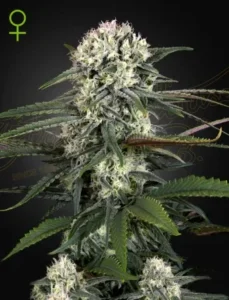
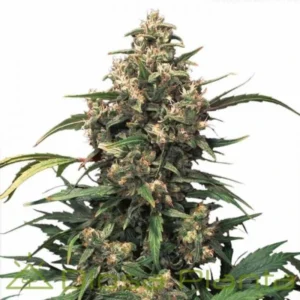
Auto Bomb Seeds

|
THC | 15% - 17% (Medium) |

|
Lineage | Green-O-Matic x Big Bang Autoflowering |

|
Type | Autoflowering |

|
Height | 3.44 ft | 1.05 m |

|
Yield Outdoor | 1.76 oz/plant | 50 g/plant |

|
Life Cycle | 7 - 8 weeks |

|
Phenotype | 80% Indica / 20% Sativa |

|
Effects | Relaxed, Calming |

|
Flavors | Sweet, Fruity |

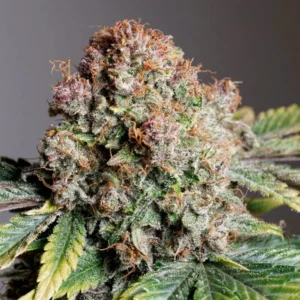
Blue Auto Mazar
|
|
THC | 15% - 20% (Medium) |
|
|
Lineage | Auto Blueberry X Auto Mazar |
|
|
Type | Autoflowering |
|
|
Height | 2.62 ft | 0.8 m |

|
Yield | High |

|
Yield Indoor | 1.64 oz/ft² | 500 g/m² |
|
|
Yield Outdoor | 3.53 oz/plant | 100 g/plant |
|
|
Life Cycle | 10 - 11 weeks |
|
|
Phenotype | 70% Indica / 30% Sativa |
|
|
Effects | Relaxed, Focused |
|
|
Flavors | Sweet, Earthy, Fruity |
Scientists describe this trait as photoperiod-insensitive flowering. Cannabis normally responds strongly to day length, but autoflowering populations carry genetic variants that relax this requirement. Research has now identified multiple loci involved in the trait, including Autoflower1 and Autoflower2.
For a grower, the practical difference is simple: you do not have to switch an autoflower from a vegetative light schedule to 12/12 to make it bloom.
The tradeoff is time.
A photoperiod plant can usually remain vegetative while you allow it to grow larger or recover from stress. An autoflower continues progressing toward flowering according to its developmental program.
That makes the first few weeks particularly important.
Autoflower Grow Timeline
Exact timelines depend heavily on genetics, so breeder estimates should be treated as planning ranges rather than deadlines.
A typical autoflower progresses through:
| Stage | What Is Happening |
|---|---|
| Germination | Seed hydrates and radicle emerges |
| Seedling | Roots establish and first true leaves develop |
| Early vegetative growth | Rapid root, stem and leaf development |
| Pre-flowering | Sex expression and reproductive transition begin |
| Flowering | Inflorescences develop and gain mass |
| Ripening | Flower growth slows and maturity approaches |
| Harvest | Plant is cut when the desired maturity is reached |
Many commercial autoflowers complete this sequence substantially faster than conventional photoperiod crops.
A 2026 greenhouse comparison found that autoflower plants had shorter production cycles and smaller final plants than the photoperiod treatment used in that experiment.
That does not establish one universal number of weeks for every autoflower.
1. Start With Suitable Autoflower Genetics
The genetics influence almost everything that follows: plant size, lifecycle, branching, vigor, flower structure and chemical profile.
For a first autoflower grow, prioritize clear breeder information and realistic growth characteristics rather than simply choosing the strain with the highest advertised THC or yield.
If your space is limited, expected plant architecture matters particularly.
An autoflower can be compact, but autoflowering itself does not mean dwarf. Some modern autos can become substantial plants under favorable conditions.
The same applies to resilience. Autoflower genetics are often advertised as exceptionally tough, but photoperiod insensitivity does not automatically provide resistance to overwatering, nutrient problems, insects or fungal disease.
Choose the cultivar, not just the word “Auto.”
2. Germinate the Seed
Cannabis seeds need moisture, oxygen and suitable temperature to begin germination.
You can start the seed directly in its growing medium or use a separate germination method first. The important point is to maintain consistent moisture without keeping the emerging root in an oxygen-poor environment.
Once a white radicle appears, handle it as little as possible.
Autoflowers are sometimes planted directly into their final container to avoid disturbing the root system later. That can be convenient, but transplanting is not inherently fatal to autoflowers either.
The real objective is avoiding a prolonged early setback.
Because an autoflower’s developmental clock continues advancing, losing a week to serious root stress matters more than it might with a photoperiod plant whose vegetative period can simply be extended.
3. Choose an Aerated Growing Medium
The current article is directionally correct in emphasizing drainage.
Roots need both water and oxygen.
A medium that remains dense and saturated for long periods makes root-zone management difficult, while a well-structured medium allows water to drain and air to return around the roots.
Growers use many successful systems, including soil-based mixes, coco-based substrates and various soilless media.
There is no single “best autoflower soil.”
The useful properties are more universal: good aeration, reliable drainage, adequate water retention and a nutrient strategy appropriate for that particular medium.
Do not add amendments simply because an autoflower guide says every auto needs compost, biochar, bat guano or another specific ingredient.
4. Choose the Container With Root Space in Mind
Container size influences the volume of substrate available for roots, water and nutrients.
A tiny container can constrain a vigorous plant quickly, while an unnecessarily large container can make watering a small seedling more difficult because a large volume of wet substrate may remain moist for a long time.
Choose the pot according to expected plant size and cultivation system.
Drainage is more important than the particular material.
Fabric pots can provide good air exchange, while ordinary plastic containers can also work perfectly well when drainage and irrigation are managed correctly.
There is no special pot that autoflowers biologically require.
5. Give Autoflowers Consistent Light
Autoflowers do not need a flowering light-cycle change, but they still need sufficient photosynthetically active light to grow well.
Common indoor schedules include 18 hours on / 6 hours off and 20/4 throughout the crop.
I would not describe either one as scientifically proven to be the universally “optimal autoflower light schedule.”
The amount and intensity of light reaching the canopy matter alongside the number of hours the fixtures are running.
Cannabis lighting experiments repeatedly show that increasing usable light can substantially increase flower biomass within the tested ranges, while cannabinoid concentration does not simply increase in parallel.
So instead of obsessing over whether 18/6 or 20/4 is universally superior, focus on:
adequate intensity + uniform canopy coverage + a daily duration your environment can support.
More hours do not compensate for a weak fixture, and excessive intensity can create stress.
6. Don’t Use a Fixed Light-to-Canopy Distance
The current article recommends specific distances such as 12–18 inches from LEDs. That should be removed.
Fixture power, optics and mounting design vary too much.
Two LEDs positioned 16 inches above a canopy can expose plants to radically different photon flux densities.
When possible, manage lighting using PPFD and plant response rather than inches from the lamp.
Also watch the actual canopy. Bleaching, leaf deformation, excessive heat or stress near the top of the plant can indicate that lighting or environmental conditions need adjustment.
7. Water the Root Zone, Not the Calendar
One of the most common beginner mistakes is watering because a schedule says it is “watering day.”
Water demand changes constantly.
A young seedling consumes very little. A rapidly growing plant under intense light can use much more. Temperature, humidity, container volume and growing medium also influence how quickly water is lost.
The goal is therefore not:
“water every two days.”
It is:
allow sufficient drainage and oxygenation, then irrigate according to the condition of the root zone and the plant.
Persistent saturation can restrict root-zone oxygen and encourage root problems.
On the opposite side, repeatedly allowing the entire root zone to become severely dry can also limit growth.
Consistency matters more than following a universal timetable.
8. Feed According to the Plant and Growing Medium
The claim that autoflowers universally require less fertilizer than photoperiod cannabis is too simplistic.
A small, fast autoflower may consume less total nutrition than a large plant that vegetated for two months, but nutrient demand still depends on biomass, genetics, medium, irrigation and environment.
What the scientific literature does show clearly is that more fertilizer is not automatically better.
A 2025 cannabis experiment found that increasing root-zone phosphorus and doubling overall nutrient-solution EC above adequate conditions did not improve flower yield or cannabinoid quality.
Other cannabis experiments likewise show complex relationships between N, P, K, plant growth and chemical composition rather than a simple “high-P bloom feed = more buds” rule.
For a beginner, the lesson is straightforward:
avoid both deficiency and unnecessary excess.
Follow a nutrition strategy appropriate for the medium and adjust according to measurable root-zone conditions and plant response.
9. Don’t Automatically Switch to Heavy Phosphorus in Flower
Cannabis guides frequently instruct growers to drastically increase phosphorus as soon as flowering begins.
Research does not support the idea that ever-higher phosphorus automatically increases flowers.
In a 2025 controlled cannabis experiment, raising phosphorus from 15 to 90 mg/L produced no significant improvement in yield or quality under the tested conditions.
Earlier research likewise found that increasing P beyond what the crop required could substantially increase phosphorus waste without improving flower yield or cannabinoid concentration.
Autoflowers need adequate nutrition during flowering.
They do not need nutrient excess simply because the package says “bloom booster.”
10. Manage pH According to the Growing System
pH matters because it influences nutrient availability.
But an article about how to grow autoflowers should not imply that every plant requires exactly the same narrow pH number regardless of substrate.
Soil, peat-based substrates, coco and recirculating hydroponic systems behave differently.
Use the range appropriate to your medium and fertilizer system.
More importantly, avoid diagnosing every yellow leaf as a “pH problem.” Cannabis nutrient-deficiency research shows that visual symptoms can overlap and that leaf appearance alone does not always correspond neatly to the actual elemental status of the plant.
Root-zone EC, pH, irrigation history and the pattern of symptoms together provide a better diagnosis.
11. Keep Air Moving Through the Canopy
Air movement helps reduce humid stagnant pockets within dense foliage and flowers.
This becomes increasingly important as inflorescences expand.
Do not aim a powerful fan continuously at one small area of the plant. The goal is broad, gentle circulation through and around the canopy.
Room-level humidity can also hide wetter microclimates inside dense flowers, so airflow and spatial environmental monitoring become more important later in the crop.
A clean, uncrowded canopy is generally easier to manage than an extremely dense one.
12. Train Autoflowers Conservatively
Low-stress training can be useful for spreading branches and exposing more of the canopy to useful light.
What makes autoflowers different is recovery time.
With a photoperiod plant, you can perform aggressive training and extend vegetative growth while the plant rebuilds.
An autoflower does not offer the same scheduling flexibility.
That does not mean topping or higher-stress techniques are impossible. Experienced growers successfully top vigorous autos.
It means the risk/reward calculation is different.
For a first grow, gentle canopy management is usually easier to learn than stacking topping, heavy defoliation, supercropping and other interventions simply because a guide promises increased yield.
13. Don’t Defoliate Just to Follow a Schedule
Remove leaves when there is a clear reason—not because “week 5 = defoliation day.”
A leaf may be removed if it is severely damaged, blocking important airflow or creating a specific canopy-management problem.
But leaves are also photosynthetic organs.
Aggressive removal does not inherently increase autoflower yield.
The current article recommends defoliation as an advanced yield-maximizing technique. I would remove that blanket recommendation.
With the limited developmental window of an auto, unnecessary stress is particularly difficult to justify.
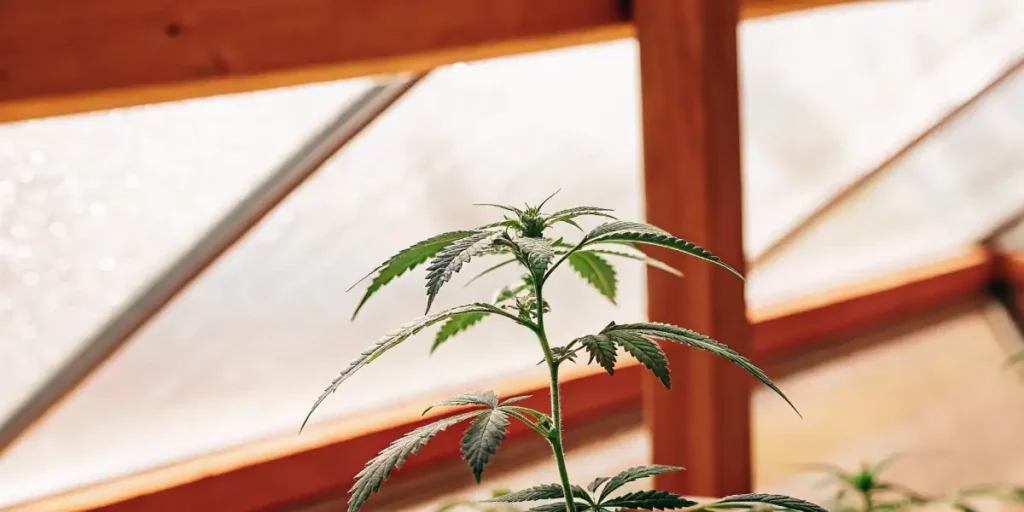
14. Watch the Plant Transition Into Flower
One advantage of growing autoflowers is watching reproductive development begin without changing the timer.
The plant may continue substantial vertical and lateral growth during the transition into flowering.
At this point, priorities shift gradually.
Canopy airflow becomes increasingly important, water demand may change, and developing inflorescences become a larger share of the plant’s biomass.
Do not assume that flowering starts on one exact day because the breeder advertises an eight- or ten-week lifecycle.
Plants respond to genetics and environment.
Use the calendar for planning and the plant for decisions.
15. Don’t Chase Maximum Yield With Every Possible Technique
The best way to increase autoflower yield is not to stack every grow hack from the internet.
Start with the major factors:
healthy genetics, enough root space, appropriate irrigation, balanced mineral nutrition, a suitable environment and sufficient light.
Light in particular has a strong relationship with cannabis productivity. Controlled-environment studies have repeatedly reported increasing floral biomass with greater usable light within their tested ranges.
Meanwhile, simply increasing nutrient concentration does not necessarily improve production.
That makes basic environmental optimization much more defensible than arbitrary supplements and “boosters.”
16. Know When Your Autoflower Is Ready to Harvest
Breeder timelines are useful estimates but should not be the only harvest criterion.
As the plant matures, flower development slows, calyxes may swell, pistil appearance changes and glandular trichomes progress through maturation.
Evaluate the plant as a whole rather than harvesting simply because the product page says “70 days.”
Genetics and environment can move actual maturity earlier or later than the advertised schedule.
Also avoid reducing harvest timing to a simplistic rule such as “X% amber trichomes creates exactly Y effect.” Cannabinoid and terpene chemistry is more complicated than a single visual percentage.
How Long Does It Take to Grow an Autoflower?
Autoflowers generally complete their full seed-to-harvest lifecycle faster than conventional photoperiod crops because the grower does not add an independently controlled vegetative period before flowering.
Commercial breeders commonly advertise total cycles around 8–12 weeks for many modern autos, although some plants finish outside that range.
A 2026 greenhouse comparison confirmed the underlying tradeoff experimentally: the autoflower treatment completed a shorter production cycle but produced smaller plants and less biomass than its photoperiod counterpart.
That is best understood as a general speed-versus-control tradeoff rather than a universal yield rule.
Are Autoflowers Easier to Grow?
They are simpler in one important respect: you do not need to induce flowering by manipulating day length.
They can also suit growers who want relatively fast crop turnover.
But they are not automatically more resistant to mistakes.
A serious setback early in development may reduce final plant size because there is less opportunity to extend the vegetative period afterward.
So autoflowers are best described as:
easy to schedule, but relatively time-sensitive.
Growing Autoflowers Indoors vs Outdoors
Indoor cultivation provides greater control over light, temperature, air movement and irrigation.
Outdoors, natural sunlight eliminates the need for grow lights, while autoflowering genetics make the crop less dependent on seasonal day-length changes.
That can be particularly useful in regions where the favorable growing season is short.
The 2024 genetic research into photoperiod-insensitive cannabis specifically notes that relaxing photoperiod sensitivity can enable cultivation at higher latitudes.
Outdoor success still depends on the specific cultivar and local environment.
Autoflower does not make a plant immune to cold, extreme heat, excessive rainfall or fungal disease.
Common Autoflower Growing Mistakes
The biggest autoflower mistakes are usually not exotic.
Overwatering can keep the root zone poorly aerated.
Overfeeding can create unnecessary salt or nutrient stress.
Insufficient light can limit photosynthesis and biomass.
Too much early stress can consume a significant percentage of the plant’s short vegetative period.
And constantly changing the grow strategy can make it impossible to understand what the plant is responding to.
Autoflowers reward consistency more than constant intervention.
How to Grow Autoflower Cannabis: Key Takeaway
Growing autoflower cannabis successfully is mostly about getting the fundamentals right early.
Choose suitable genetics, establish a healthy root zone, provide enough light, irrigate according to the actual medium rather than a calendar and supply balanced nutrition without assuming more fertilizer produces more flower.
Autoflowers do not need a short-day trigger to flower, which makes light scheduling simpler. But their limited vegetative period also means early setbacks can have a larger effect on final plant size.
Keep the grow straightforward.
A healthy autoflower does not need dozens of supplements, aggressive training or complicated optimization tricks to complete its lifecycle successfully.
FAQs About Growing Autoflowers
How do you grow an autoflower successfully?
Start with healthy autoflower genetics, a well-draining and aerated root zone, consistent light and careful irrigation. Avoid keeping the substrate continually saturated or applying excessive fertilizer. Because autoflowers begin flowering without a short-day trigger, their vegetative period cannot simply be extended indefinitely to compensate for early stress.
What light schedule should I use to grow autoflowers?
Many indoor growers use 18/6 or 20/4 throughout an autoflower’s lifecycle because flowering does not require a 12/12 schedule. Neither should be treated as universally optimal. Light intensity and total daily light exposure matter alongside photoperiod, and cannabis experiments show that usable light can strongly influence flower biomass.
Do autoflowers need less nutrients?
Not automatically. A smaller autoflower may use fewer total nutrients than a much larger photoperiod plant, but nutrition depends on genetics, biomass, substrate and environmental conditions. Controlled cannabis research also shows that increasing fertilizer beyond adequate levels does not necessarily improve yield or cannabinoid quality.
Should I top an autoflower?
Topping can work on vigorous autoflowers, but it introduces stress and recovery time during a relatively short developmental window. Beginners may find low-stress canopy management more predictable. Unlike a photoperiod plant, an autoflower cannot simply be held vegetative for several additional weeks if recovery is slower than expected.
How long does an autoflower take from seed to harvest?
Many commercial autoflowers are advertised around 8–12 weeks from seed, but the true timeline depends on genetics and cultivation conditions. Autoflowers generally complete crops faster than photoperiod plants because flowering starts without an independently extended vegetative stage. Use breeder timelines as estimates rather than fixed harvest dates.
Do autoflowers need 12/12 to flower?
No. Autoflower cannabis is photoperiod-insensitive and does not require the conventional short-day signal used to initiate flowering in photoperiod cultivars. Genetic research has identified multiple loci associated with this trait in Cannabis sativa.