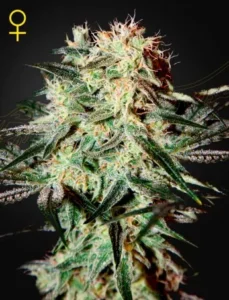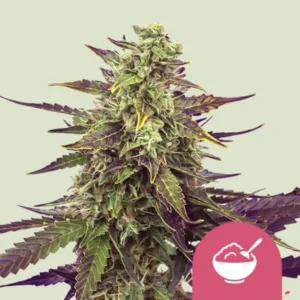


Blueberry is the original indica-dominant photoperiod cultivar from Dutch Passion’s Blue Family, built from predominantly Afghani Indica genetics with Thai and Oaxacan Mexican Sativa influences. The current seed line is approximately 80% Indica and 20% Sativa and typically falls within Dutch Passion’s 15–20% THC category.
Blueberry flowers in approximately 8–9 weeks indoors. Dutch Passion currently lists indoor production at around 350–450 g/m² and describes the plant as compact and sturdy, while outdoor plants can become dramatically larger and reach approximately 2.5–3 m under favorable conditions.
Recommended Strains
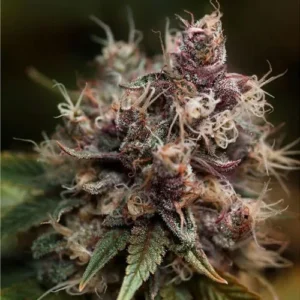
Blueberry

|
THC | 15% - 20% (Medium) |

|
Lineage | 1970's Original Blueberry |

|
Type | Feminized |

|
Height | 4.92 ft | 1.5 m |

|
Yield | High |

|
Yield Indoor | 1.64 oz/ft² | 500 g/m² |

|
Yield Outdoor | 19.4 oz/plant | 550 g/plant |

|
Flowering Time | 9 weeks |

|
Phenotype | 80% Indica / 20% Sativa |

|
Effects | Calming, Happy, Relaxed |

|
Flavors | Berry, Pine, Sweet |

Auto Blueberry
|
|
THC | 14% - 16% (Medium) |
|
|
Lineage | Blueberry x Indica Auto Dominant |
|
|
Type | Autoflowering |
|
|
Height | 3.61 ft | 1.1 m |
|
|
Yield | Medium |
|
|
Yield Indoor | 1.15 - 1.31 oz/ft² | 350 - 400 g/m² |
|
|
Life Cycle | 9 - 10 weeks |
|
|
Phenotype | 90% Indica / 10% Sativa |
|
|
Effects | Euphoric, Energetic, Happy |
|
|
Flavors | Blueberry, Earthy, Sweet |
| Blueberry Grow Info | Current specification |
|---|---|
| Breeder | Dutch Passion |
| Cultivar | 1970’s Original Blueberry |
| Genetics | Mainly Afghani Indica with Thai Sativa and Oaxacan Mexican Sativa |
| Seed type | Photoperiod; feminized and regular versions exist |
| Indica / Sativa | 80% Indica / 20% Sativa |
| THC | Typically 15–20% |
| Flowering time | 8–9 weeks |
| Typical breeder-recommended veg | Approx. 4–6 weeks depending on plant density |
| Indoor yield | 350–450 g/m² |
| Indoor structure | Compact; no current numerical breeder height |
| Outdoor height | Up to approx. 2.5–3 m |
| Outdoor harvest | Start to middle of autumn |
| Flavor | Blueberry, Fruity, Sweet |
| Reported effects | Clear, Euphoric, Pleasant, Uplifting |
Blueberry Genetics
Dutch Passion Blueberry traces its genetic foundation to mainly Afghani Indica combined with Thai Sativa and a smaller Oaxacan Mexican Sativa contribution.
This three-way background created the original Blueberry genetic family that later became influential in cultivars such as Blue Dream and numerous other Blue-family hybrids.
The current Blueberry line is approximately 80% Indica and 20% Sativa. Despite that strong Indica dominance, the Thai and Mexican Sativa contribution remains relevant to both its growth and reported effects.
Growers interested in related genetics can explore the broader Dutch Passion seed collection.
Is Blueberry Indica or Sativa?
Blueberry is 80% Indica and 20% Sativa, making it strongly indica dominant.
The plant usually develops sturdy stems, broad fan leaves, relatively short internodes and a compact indoor growth pattern. These structural characteristics reflect its substantial Afghani influence.
However, the Sativa component should not be ignored. Dutch Passion notes that Blueberry can still stretch during flowering, and the breeder describes its reported effects as unusually clear and euphoric for such a strongly indica-dominant cultivar.
The genetic ratio therefore describes the seed line without reducing either plant behavior or reported effects to a simple Indica stereotype.
How Much THC Does Blueberry Have?
Dutch Passion currently places Blueberry within its very-high-THC category of approximately 15–20%, and notes that THC levels around 20% are not unusual.
This range is consistent with the current Growlantis listing and should remain the primary specification.
The published range represents breeder expectations rather than a guarantee that every harvested plant will fall at one precise percentage. Phenotype, cultivation conditions, light, flower maturity and post-harvest handling can all influence measured cannabinoid levels.
Claims of 25% THC should not replace the breeder’s current 15–20% classification unless new line-specific laboratory data becomes available.
Blueberry Flavor and Aroma
Blueberry is known primarily for its intense fresh-blueberry, fruity and sweet character.
Dutch Passion describes it as one of the fruitiest cultivars in its collection, with an aroma and flavor that can closely resemble real blueberries and sweet candy.
This sensory profile is one of the defining characteristics that helped make Blueberry the foundation of an entire genetic family.
A general strain guide does not need to force one universal terpene hierarchy onto the cultivar. The breeder’s current material provides stronger support for its distinctive berry and fruit profile than for treating pine or any individual terpene as the defining characteristic of every plant.
Blueberry Flowering Time
Dutch Passion Blueberry flowers indoors in approximately 8–9 weeks.
This period begins after the grower changes the photoperiod to initiate flowering. It is not the complete amount of time from germination to harvest.
Dutch Passion typically recommends around four to six weeks of vegetative growth, depending on plant density. Growers using fewer plants may allow closer to six weeks, while denser layouts can use a shorter vegetative period.
That recommendation is useful for planning, but Blueberry remains photoperiodic. The grower ultimately controls when flowering begins according to available space, plant size and canopy development.
For more detail on what happens after the light-cycle transition, see the cannabis flowering stage guide.

How Long Does Blueberry Take From Seed to Harvest?
Dutch Passion gives approximately 12–15 weeks from seed to harvest as a typical reference when its recommended vegetative period is combined with the 8–9 week flowering stage.
That figure should not be interpreted as an automatic lifecycle.
Blueberry is a photoperiod cultivar, so growers can shorten or extend vegetation before initiating flowering. A plant given four weeks of vegetation will naturally finish sooner than one maintained in vegetative growth for six weeks or longer.
For planning purposes, treat 12–15 weeks as a breeder example built around a typical indoor grow rather than a biological deadline.
Blueberry Plant Structure and Height
Blueberry develops a relatively compact indoor structure with sturdy stems, broad fan leaves and short internodal spacing.
Dutch Passion does not currently publish one numerical indoor height for the cultivar, so assigning a universal 1.5 m figure would create false precision.
Outdoor plants are a different matter. Under favorable conditions, Blueberry can reach approximately 2.5–3 m, making outdoor space planning important despite its compact indoor reputation.
Plant size still depends on root space, vegetative duration, phenotype and growing conditions. Indoor growers can control final height partly through the timing of the flowering transition and canopy management.
Growing Blueberry Indoors
Blueberry currently produces approximately 350–450 g/m² indoors according to Dutch Passion.
Its compact structure, strong stems and short internodal spacing can make efficient use of an indoor canopy. The breeder specifically identifies the plant as a good candidate for Sea of Green-style layouts.
Blueberry also benefits from environmental stability. Dutch Passion describes the cultivar as more demanding than some beginner-oriented varieties and notes that it can be a fussy feeder.
That makes consistency more valuable than aggressive intervention. Focus on healthy root development, sensible plant density, stable growing conditions and gradual nutritional adjustments rather than chasing the highest possible input levels.
Growing Blueberry Outdoors
Blueberry can become a much larger plant outdoors than its indoor structure might suggest.
Dutch Passion currently states that outdoor plants can reach approximately 2.5–3 m in favorable conditions. The breeder recommends mild or temperate conditions with plenty of sunlight and enough natural air movement to reduce moisture accumulation around developing flowers.
Blueberry is generally harvested around the start to middle of autumn.
Outdoor yield is highly dependent on conditions. Dutch Passion does not publish one standard per-plant yield figure on its current product page, although it notes that exceptional plants grown in favorable environments have exceeded 2 kg.
That exceptional result should not be treated as a normal expected harvest.
Blueberry Yield
The most reliable current numerical yield specification is 350–450 g/m² indoors.
For outdoor plants, Dutch Passion emphasizes production potential rather than giving one universal standard yield. Large plants grown under favorable conditions can produce heavily, with exceptional documented grower results exceeding 2 kg per plant.
This does not mean every outdoor Blueberry should be expected to produce kilograms of flower.
Sunlight, root space, growing-season length, plant size, health and local conditions all influence outdoor production.
For this reason, indoor yield can be presented as a breeder range, while outdoor yield is better described as highly condition-dependent rather than reduced to an unsupported 550 g per plant.

How to Germinate Blueberry Seeds
Blueberry does not require an unusual strain-specific germination process.
Seeds need consistent moisture, suitable warmth and access to oxygen without remaining permanently saturated. A damp paper-towel method can be used to observe taproot emergence, while direct germination in a suitable starting medium reduces later handling.
Once the taproot appears, transfer the seed carefully and avoid damaging the developing root.
Early watering should reflect the limited size of the seedling root system rather than the requirements of a mature plant.
For broader guidance on moisture and temperature during this stage, see the cannabis seed germination guide.
Vegetative Growth
Dutch Passion typically recommends approximately 4–6 weeks of vegetative growth for Blueberry.
The exact point within that range depends partly on plant density. A smaller number of plants can be allowed additional time to develop larger canopies, while a denser Sea of Green layout can transition earlier.
This breeder recommendation should be used as a planning framework rather than a rigid rule.
Blueberry remains photoperiodic, so indoor growers can initiate flowering when canopy size, root development and available height make the transition appropriate.
Expect some additional stretch after the switch because the cultivar’s Sativa ancestry can still influence flowering growth despite its strong Indica dominance.
Training Blueberry
Blueberry’s sturdy stems, large leaves and short internodal spacing make canopy management particularly relevant indoors.
Dutch Passion specifically recommends the cultivar for Sea of Green-style growing, where several plants can use an illuminated area efficiently.
Gentle branch positioning can also help improve spacing where broad leaves create excessive shading. Selective pruning can be used where internal growth becomes unnecessarily congested.
Training should support structure and light distribution rather than being presented as a guarantee of more THC or a specific yield.
Because Blueberry can be more demanding than some beginner strains, avoid combining unnecessary plant stress with aggressive environmental or nutritional changes.
Flowering Development
Once the light schedule is changed, Blueberry generally needs 8–9 weeks of flowering.
The cultivar can stretch during the early transition despite its predominantly Indica background. Later, flowers develop into dense, resinous clusters with a favorable calyx-to-leaf ratio.
Blue and purple coloration can become more pronounced in some plants as flowering progresses. Dutch Passion notes that cooler late-flowering conditions can encourage stronger color expression.
Color should remain secondary to plant health. There is no need to expose Blueberry to damaging temperatures simply to create purple flowers.
As the buds become denser, spacing and airflow become increasingly useful for controlling moisture around the flowers.
Feeding Blueberry
Dutch Passion describes Blueberry as a cultivar that can be a fussy feeder, making careful observation more useful than a rigid nutrient recipe.
There is no universal Blueberry NPK formula that should be applied to every medium or fertilizer system.
Nutrition should reflect the substrate, water quality, root volume, plant size and actual response. Increase or reduce concentration gradually instead of assuming that flowering automatically requires large phosphorus and potassium increases.
Burned leaf tips, unusually dark foliage, stalled growth or progressive discoloration provide more useful information than an artificial Blueberry feeding calendar.
Routine supplements should only be added when the growing system or the plant itself provides a reason to use them.
Watering Blueberry
Blueberry’s watering needs change substantially between seedling growth and full flowering.
A young plant with a limited root system requires much less water than an established canopy. Avoid watering by one fixed number of days throughout the grow.
In containers, substrate moisture and pot weight can provide useful information about actual demand. Ensure excess water can drain rather than leaving roots continuously saturated.
Large outdoor plants can require considerably more water during warm periods, but irrigation should still respond to soil conditions, rainfall and actual plant demand.
Stable root-zone conditions are particularly useful with Blueberry because the breeder emphasizes consistency for getting the best from the cultivar.
Airflow and Dense Blueberry Flowers
Blueberry can produce compact, dense flowers, making airflow increasingly relevant later in flowering.
Dutch Passion recommends outdoor sites with some natural air movement to reduce the risk of flowers being damaged by mold or fungus.
The same principle applies indoors. The objective is gentle circulation through and around the canopy, not excessive fan pressure directly against individual flowers.
Room-level humidity does not always represent the conditions inside dense mature buds, where moisture can remain trapped.
The guide to microbial risk in cannabis growing explains why flower structure, persistent moisture and stagnant airflow interact during cultivation.
Common Blueberry Growing Problems
Blueberry is not necessarily the easiest photoperiod cultivar for a first grow.
Dutch Passion describes it as potentially fussy with feeding and recommends stable conditions. Aggressive nutrient changes can therefore create more problems than they solve.
Dense flowers also make persistent moisture worth monitoring during late flowering, especially in outdoor environments where rain and autumn conditions become less predictable.
Another common mistake is relying on outdated specifications. The current breeder indoor yield is approximately 350–450 g/m², while the universal 1.5 m height and 550 g outdoor yield figures found in older listings are not current breeder specifications.
Finally, avoid mixing Blueberry data with Blueberry Auto, Blueberry Kush or Blueberry OG.
Blueberry vs Blueberry Auto
Blueberry and Blueberry Auto are separate seed lines.
The Blueberry covered in this guide is a photoperiod cultivar. Indoor growers control how long vegetation lasts and initiate flowering by changing the light schedule. Flowering itself takes approximately 8–9 weeks.
Blueberry Auto flowers according to age and completes a much shorter seed-to-harvest lifecycle without requiring a 12/12 trigger.
Its height, yield and lifecycle therefore should not be transferred into this guide.
Growers working with the automatic version should use the dedicated Blueberry Auto grow guide.
Blueberry and Blue Dream
Blueberry is also an important parent in the wider Blue genetic family.
One of the best-known examples is Blue Dream, which combines Blueberry genetics with Haze-family genetics to create a substantially different cultivar with its own Sativa/Indica balance, height, flowering behavior and yield.
That relationship is genetically relevant but does not mean the two strains share the same cultivation specifications.
If you are growing that cross instead, use the dedicated Blue Dream grow guide rather than transferring Blueberry timing or structure directly.
When to Harvest Blueberry
Indoor Blueberry generally reaches its expected harvest window after approximately 8–9 weeks of flowering.
Outdoor plants are typically ready around the start to middle of autumn, depending on climate and seasonal conditions.
Use breeder timing as a planning reference while assessing actual flower maturity on the individual plant.
Trichome development can provide additional information as harvest approaches, but there is no need to require one fixed amber percentage for every Blueberry phenotype.
Drying and curing begin after harvest and should remain separate from the flowering timeline rather than being counted as additional cultivation weeks.

Blueberry Effects
Despite being approximately 80% Indica, Dutch Passion describes Blueberry as producing a clear, euphoric, pleasant and uplifting reported effect rather than an exclusively heavy or sedating experience.
This character reflects the Sativa genetics present within its primarily Afghani background.
The cultivar generally falls within the 15–20% THC range, but potency alone cannot predict exactly how every individual will respond.
Dose, tolerance and the complete chemical profile of a particular harvest can all influence subjective effects, so these descriptions should remain experiential rather than medical claims.
Blueberry FAQs
How long does Blueberry take to flower?
Dutch Passion Blueberry generally flowers for around 8–9 weeks after the indoor light schedule is changed to 12/12. This is the flowering phase only, not the entire seed-to-harvest timeline. Dutch Passion typically recommends about 4–6 weeks of vegetation depending on plant density, space and the grower’s canopy plan.
How much THC does Blueberry have?
Dutch Passion currently classifies Blueberry in its very-high-THC group, which corresponds to roughly 15–20% THC, and notes that levels around 20% are not unusual. The published range describes breeder expectations rather than a guaranteed laboratory result, because phenotype, cultivation, harvest timing and post-harvest handling can all influence measured potency.
How much does Blueberry yield?
Dutch Passion currently publishes approximately 350–450 g/m² as the indoor yield range for Blueberry. Outdoors, it does not give one standard per-plant yield figure on the current product page; instead, it notes that exceptionally favorable grows have exceeded 2 kg per plant. Outdoor production should therefore be treated as highly condition-dependent.
How tall does Blueberry grow?
Dutch Passion describes Blueberry as compact indoors, with sturdy stems, broad leaves and short internodes, but does not currently publish a universal numerical indoor height. Outdoors, plants can reach approximately 2.5–3 m in favorable conditions. Final size also depends on vegetative duration, root space, training, climate and phenotype.
Is Blueberry Indica or Sativa?
Blueberry is approximately 80% Indica and 20% Sativa. Dutch Passion describes the genetic foundation as mainly Afghani Indica with Thai Sativa and a smaller Oaxacan Mexican Sativa contribution. Despite the strong Indica dominance, the breeder characterizes the reported effect as clear, euphoric, pleasant and uplifting rather than simply heavily sedating.
Is Blueberry an autoflower?
No. The Blueberry covered in this guide is a photoperiod cultivar, available from Dutch Passion in feminized and regular form. Indoor flowering is initiated by changing the light schedule. Auto Blueberry is a separate autoflowering seed line with its own lifecycle, height and yield specifications, so its grow data should not be transferred to photoperiod Blueberry.