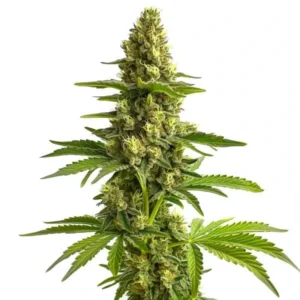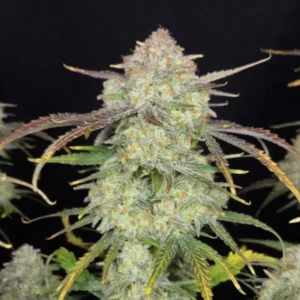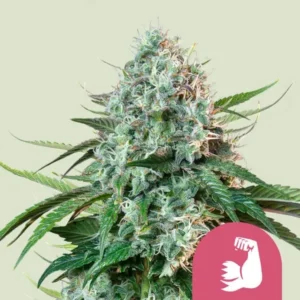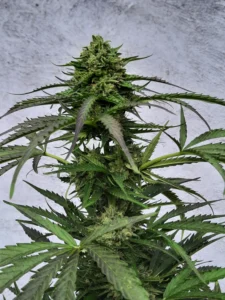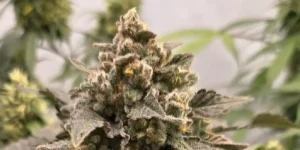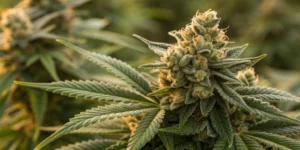
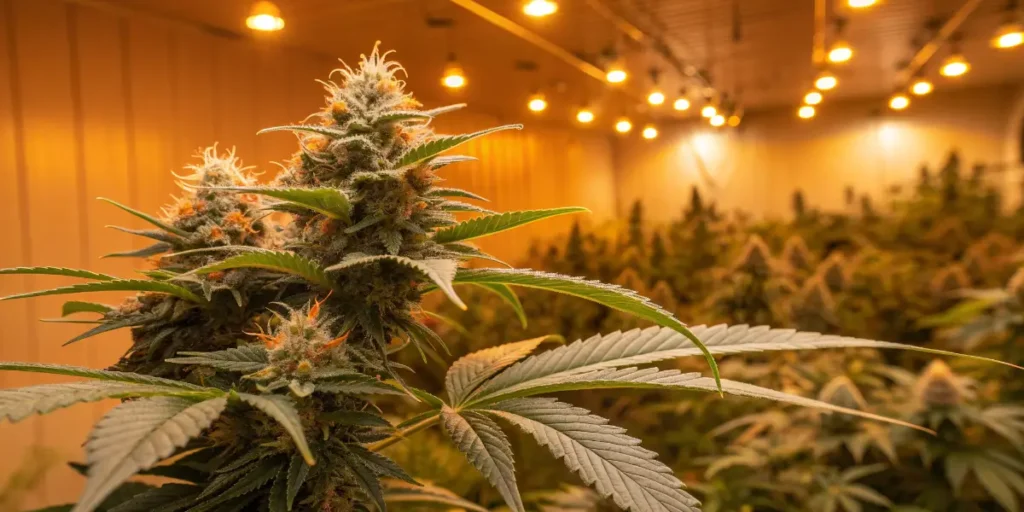

Bruce Banner is a sativa-dominant feminized photoperiod strain built around OG Kush and Strawberry Diesel genetics. However, Bruce Banner is not represented by a single seed line, so specifications such as THC, height, flowering time and yield vary between the versions currently available.
Published photoperiod lines range from approximately 20% to 32% THC and generally flower in 60–70 days. Indoor yields fall around 550–650 g/m², while outdoor production can reach approximately 1,000–1,500 g per plant under favorable conditions. Outdoor plants can become particularly large, with documented line-specific heights extending well beyond 2.5 meters.
Recommended Strains
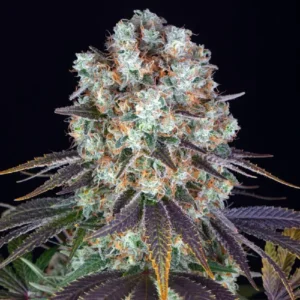
Bruce Banner

|
THC | 31% - 32% (High) |

|
Lineage | Strawberry Diesel Strain x OG Kush Strain |

|
Type | Feminized |

|
Height | 6.56 ft | 2 m |

|
Yield | High |

|
Yield Indoor | 1.97 - 2.13 oz/ft² | 600 - 650 g/m² |

|
Flowering Time | 9 - 10 weeks |

|
Phenotype | 40% Indica / 60% Sativa |

|
Effects | Relaxed, Uplifted, Creative |

|
Flavors | Fruity, Sweet, Apricot, Citrus |
Bruce Banner Auto
|
|
THC | 24% - 25% (High) |
|
|
Lineage | OG Kush x Strawberry Diesel x Ruderalis |
|
|
Type | Autoflowering |
|
|
Height | 3.94 ft | 1.2 m |
|
|
Yield | High |
|
|
Yield Indoor | 1.47 - 1.97 oz/ft² | 450 - 600 g/m² |
|
|
Life Cycle | 10 - 11 weeks |
|
|
Phenotype | 35% Indica / 65% Sativa |
|
|
Effects | Happy, Uplifted, Creative |
|
|
Flavors | Berry, Sweet, Diesel |
| Bruce Banner Grow Info | Current seed-line range |
|---|---|
| Genetics | OG Kush × Strawberry Diesel |
| Seed type | Feminized photoperiod |
| Sativa / Indica | Current listings: 60% Sativa / 40% Indica |
| THC | 20–32%, depending on seed line |
| Flowering time | 60–70 days |
| Indoor height | Around 100–150 cm in lines with exact indoor specifications |
| Outdoor height | Approximately 250–305 cm depending on seed line |
| Indoor yield | 550–650 g/m² |
| Outdoor yield | 1,000–1,500 g/plant |
| Outdoor harvest | Late September to mid-October, depending on seed line |
| Common flavor notes | Sweet, fruity, berry, strawberry, diesel, earthy |
| Common reported effects | Uplifting, creative, cerebral, happy, relaxing |
Bruce Banner Genetics
Current photoperiod Bruce Banner lines share the same fundamental parental combination: OG Kush and Strawberry Diesel. The order in which the parents are presented varies between seed lines, but the core genetic pairing remains the same.
Current listings generally classify these plants as 60% Sativa and 40% Indica, making Bruce Banner a moderately sativa-dominant hybrid. That classification fits the vigorous growth and substantial outdoor height documented in several versions, although phenotype and final plant structure still vary between lines.
Most importantly, this guide covers feminized photoperiod Bruce Banner, not Bruce Banner Auto. Indoor flowering therefore depends on a change in day length rather than beginning automatically at a predetermined plant age.
Which Bruce Banner Seed Line Are You Growing?
Before applying an exact THC, height or harvest figure, identify the specific Bruce Banner line you have. Current options include a Bruce Banner line listed at 31–32% THC, a 20–29% THC Bruce Banner line and a separate Bruce Banner Fem line.
They share the same core OG Kush × Strawberry Diesel background but do not have identical cultivation specifications. This is why one flowering time, plant height or outdoor yield should not be presented as universal for every Bruce Banner seed.
Is Bruce Banner Sativa or Indica?
Current Bruce Banner photoperiod listings are generally classified as 60% Sativa and 40% Indica, making the strain sativa dominant rather than a balanced 50/50 hybrid.
This moderate Sativa dominance is reflected in the plant’s tendency to develop significant vertical growth, particularly outdoors. Some seed lines also produce long lateral branches that benefit from training or physical support as flower weight increases.
The genetic ratio should not be used to predict an identical experience from every plant. Effects and morphology can vary between seed lines, phenotypes and individual growing conditions.
How Much THC Does Bruce Banner Have?
THC is one of the specifications that varies most noticeably between Bruce Banner seed lines. Current published figures range from approximately 20% to 32% THC, with some versions occupying the high twenties and another reaching the low thirties.
For that reason, Bruce Banner should not be described as universally containing 31%, 29% or any other single THC percentage. The correct figure depends on the exact genetics being grown.
Actual harvested flowers can also test differently from published specifications because phenotype, light, plant health, maturity and post-harvest handling can influence cannabinoid expression.
Bruce Banner Flavor and Aroma
Sweet fruit and fuel-like characteristics are common across current Bruce Banner lines, but the exact sensory profile varies. Documented descriptions include strawberry, berry, sweet fruit, diesel, earth, citrus and pine.
Those differences are expected when multiple commercial seed lines share the same strain name. Rather than creating one universal flavor profile, it is more accurate to treat sweet-fruity and diesel characteristics as recurring themes while checking the specific seed line for finer details.
Does Bruce Banner Have a Single Terpene Profile?
No single terpene breakdown should be treated as universal across every Bruce Banner seed line. Some versions publish compounds such as myrcene, caryophyllene, limonene or pinene, but the available profiles and supporting information differ between lines.
For a general Bruce Banner guide, documented aroma and flavor characteristics are more reliable than combining terpene lists from different genetics and presenting the result as one definitive chemical profile.
Bruce Banner Flowering Time
Current photoperiod Bruce Banner lines flower for approximately 60–70 days, or roughly nine to ten weeks depending on the version.
This figure refers to flowering rather than the complete period from germination to harvest. Bruce Banner is photoperiodic, so an indoor grower determines how long the plant remains in vegetative growth before changing the light schedule.
Once the desired canopy and plant size have developed, switching to approximately 12 hours of light and 12 hours of uninterrupted darkness initiates flowering indoors. From that point, the 60–70 day line-specific range becomes the useful timing reference.
Bruce Banner Height and Plant Structure
Bruce Banner can develop considerable vertical growth, but height varies substantially by seed line and environment. Versions with precise current indoor specifications generally finish around 100–150 cm indoors, while other lines are simply classified as tall.
Outdoor plants become much larger. Current breeder references extend from approximately 250 cm to around 305 cm, depending on the seed line and growing conditions.
This difference between indoor and outdoor height is important. A single figure such as “Bruce Banner grows to 2 meters” does not accurately represent the available genetics. Indoors, vegetative duration and training strongly influence size, while outdoor plants can exploit a much larger root zone and a longer natural growing period.
Growing Bruce Banner Indoors
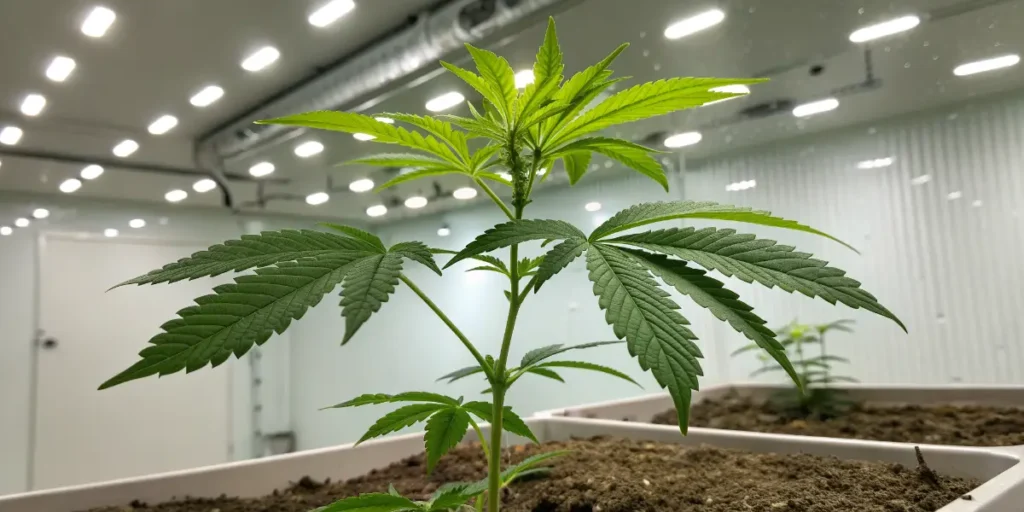
Bruce Banner’s combination of vigorous growth and potential stretch makes early space planning important indoors. Growers should consider both the height of the plant before flowering and the vertical development that can continue during the transition.
Current photoperiod lines publish indoor yields of approximately 550–650 g/m². Those figures should be treated as production potential rather than guaranteed results. Light availability, canopy area, root volume, vegetative time, plant health and environmental management all influence final harvest weight.
Because the vegetative phase is flexible, there is no universal week when Bruce Banner should be moved into flowering. The transition should occur when the canopy has developed enough productive branches while leaving sufficient space for further growth.
Growing Bruce Banner Outdoors
Outdoor growing is particularly relevant for Bruce Banner because several current seed lines can become very large. Documented outdoor heights range from approximately 250 to 305 cm, and published production potential ranges from around 1,000 to 1,500 g per plant.
A plant capable of reaching this size requires substantial root space and enough distance from surrounding plants or structures. Long side branches can also become heavily loaded during flowering, making stakes, ties or trellis support useful when branch weight starts increasing.
Outdoor harvest varies between seed lines. Current references extend from late September into mid-October, so the exact product specification should be checked before planning the season. Latitude, seasonal temperatures, rainfall and phenotype can move individual plants within or around that published window.
Bruce Banner Yield
Current Bruce Banner photoperiod lines list approximately 550–650 g/m² indoors and 1,000–1,500 g per plant outdoors.
Indoor yield is expressed by area because plant count and vegetative duration can vary considerably. One grower may fill a square meter with several smaller plants, while another may use fewer plants and allow more time for canopy development.
Outdoor production depends even more strongly on scale. Large root volume, direct sunlight, a long growing season and enough physical space allow Bruce Banner to develop the size associated with its highest published yields. The upper breeder figures should therefore be treated as potential rather than a normal guaranteed harvest.
How to Germinate Bruce Banner Seeds
Bruce Banner does not require a unique strain-specific germination technique. The priority is providing controlled moisture, suitable warmth and enough oxygen while avoiding a saturated environment around the seed.
Once a root emerges, transfer the germinated seed carefully into an appropriate starting medium and avoid damaging the young taproot. Early watering should reflect the very small root system rather than the needs of a mature plant.
For a more detailed explanation of moisture and temperature during this stage, see the cannabis seed germination temperature and humidity guide.
Vegetative Growth
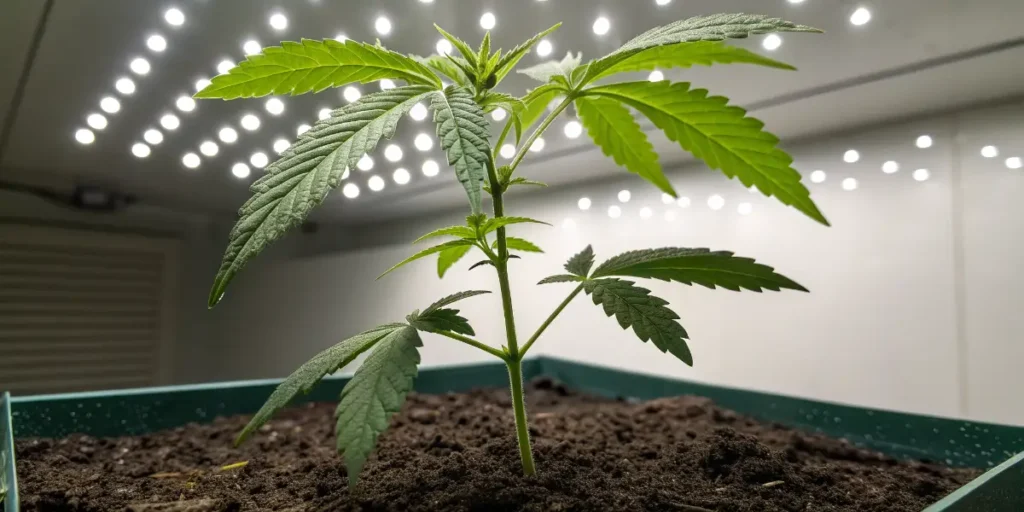
Bruce Banner is photoperiodic, so vegetative growth does not have a fixed duration. The grower controls how long the plant remains in this phase before initiating flowering indoors.
This flexibility is particularly useful with Bruce Banner because plant height can become one of the main management challenges. In a restricted indoor space, allowing excessive vegetative development can leave too little vertical clearance once flowering stretch begins.
The objective is to establish a healthy root system and enough productive lateral growth to use the available canopy efficiently. Growers with greater vertical and horizontal space can allow a longer vegetative phase, while smaller setups generally benefit from an earlier flowering transition.
Training Bruce Banner
Bruce Banner is well suited to height and canopy management, particularly because several current lines are documented as vigorous or tall.
Low-stress training can pull the main stem and lateral branches outward, helping distribute growth across the available area before flowering. Topping during healthy vegetative growth is another relevant option where the grower wants to reduce apical dominance and create several main branches.
Some seed lines specifically recommend both topping and tying branches down. Physical support can become increasingly useful during flowering because long lateral branches may carry enough weight to bend or snap. Stakes, ties or a trellis can therefore serve a different purpose later in the cycle than early structural training.
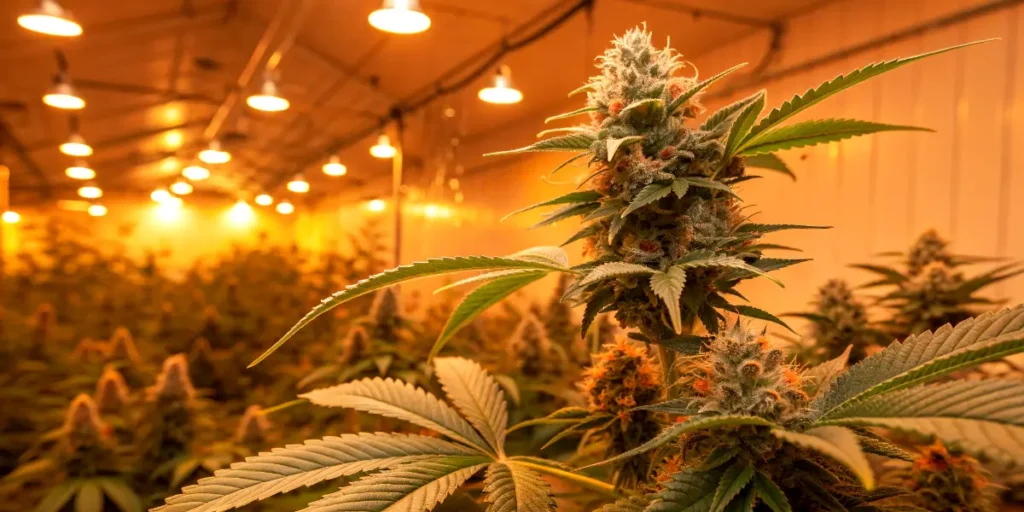
Flowering Development
During the first part of flowering, Bruce Banner can continue stretching while new flowering sites become established along the branches. This is why height management should largely be planned before or during the early transition rather than postponed until flowers are already developing heavily.
As flowering progresses, branch support and canopy spacing become more important. Different seed lines produce somewhat different structures, but large plants with substantial flower mass benefit from avoiding tightly overlapping branches that restrict airflow.
During the final portion of the 60–70 day flowering range, use the published timing for your seed line as a guide rather than treating one specific day as an automatic harvest point.
Feeding Bruce Banner
There is no universal Bruce Banner nutrient schedule or strain-specific NPK ratio that applies to every seed line and growing system.
Nutrition should be adapted to the growing medium, fertilizer program, water quality, root development, plant size and visible response. A large, rapidly developing plant may consume more nutrients than a smaller plant, but that does not justify assuming that every Bruce Banner requires unusually heavy feeding.
Increase or reduce nutrient concentration according to actual plant response. Burned tips, unusually dark foliage, stalled growth or progressive discoloration can provide more useful information than following a rigid strain calendar.
The transition to flowering also does not mean that aggressively increasing phosphorus and potassium will automatically produce larger or more potent flowers. Follow the fertilizer system being used and make gradual adjustments when the plant provides a reason to do so.
Watering Bruce Banner
Bruce Banner should be watered according to the condition of the root zone rather than a fixed number of days.
Water requirements increase as roots, leaf area and plant size develop. A young plant may use relatively little water, while a large outdoor Bruce Banner approaching three meters can have dramatically greater demand during warm weather.
In containers, substrate moisture and pot weight are useful indicators. Ensure excess water can drain and avoid leaving the root zone continuously saturated. Outdoors, weather, soil structure and root volume should guide irrigation frequency instead of relying on one universal schedule.
Airflow and Mold Prevention
Mold resistance should not be generalized across all Bruce Banner seed lines. Some versions are described as adaptable, while another current line specifically warns that dense flowers can become susceptible to mold late in flowering.
The practical response is the same: maintain enough spacing for air to move through the canopy and pay increasing attention to moisture as flowers become denser. A room-level humidity reading does not necessarily reveal humid pockets between overlapping branches or inside large flowers.
The cannabis airflow and mold prevention guide explains how ventilation, canopy circulation and humidity management work together without relying on unsupported claims that a particular strain is mold-proof.
Common Bruce Banner Growing Problems
Height is one of the clearest practical challenges. Bruce Banner can stretch significantly, so indoor growers who delay canopy management may run out of vertical clearance later in flowering.
Heavy branches are another potential issue. Some line-specific guidance recommends adding support once flowering begins because elongated side branches can bend as flower weight develops.
Overwatering, excessive feeding and poor airflow are broader cultivation problems rather than unique Bruce Banner weaknesses. Diagnose them from actual plant and root-zone conditions instead of assuming that every symptom results from a strain-specific sensitivity.
Bruce Banner vs Bruce Banner Auto
Photoperiod Bruce Banner and Bruce Banner Auto should not share the same cultivation timeline.
The Bruce Banner covered in this guide uses feminized photoperiod genetics based on OG Kush × Strawberry Diesel. Indoor growers control the flowering transition through the light schedule, and the current photoperiod seed lines generally require around 60–70 days of flowering.
Bruce Banner Auto adds autoflowering genetics and transitions according to age rather than requiring the same day-length change. Its height, THC, yield and total lifecycle are therefore separate specifications. If you are growing that version, use the dedicated Bruce Banner Auto grow guide instead.
When to Harvest Bruce Banner
Indoor harvest timing depends on the specific seed line, with current photoperiod references spanning approximately 60–70 days of flowering.
Outdoors, current harvest windows range from late September through mid-October. This variation is large enough that growers should check their exact seed line rather than relying on a single Bruce Banner harvest date.
As the expected window approaches, inspect the actual maturity of the flowers and trichomes. Avoid treating a fixed percentage such as 15% or 20% amber as a biological requirement for every Bruce Banner plant.
Bruce Banner Effects
Reported effects vary somewhat between seed lines, but recurring descriptions include uplifting, cerebral, creative, euphoric and happy effects together with a relaxing component as the experience develops.
Those descriptions should be treated as reported characteristics rather than guaranteed outcomes. THC content itself varies substantially between Bruce Banner lines, and individual response is influenced by dose, tolerance and the chemistry of the specific harvested plant.
Bruce Banner FAQs
How long does Bruce Banner take to flower?
Current photoperiod Bruce Banner seed lines generally flower for about 60–70 days after the indoor light cycle is changed to flowering. That equals roughly nine to ten weeks. The total seed-to-harvest time is longer because vegetative growth is flexible and controlled by the grower rather than fixed by the genetics.
How much does Bruce Banner yield?
Current Bruce Banner photoperiod lines publish indoor yields around 550–650 g/m² and outdoor potential around 1,000–1,500 g per plant. Those figures are breeder or product specifications, not guaranteed harvests. Light, root volume, vegetative duration, climate, plant health and canopy management can all change the final result substantially.
How tall does Bruce Banner grow?
Documented current breeder data places indoor Bruce Banner plants around 100–150 cm for lines with a separate indoor specification, while outdoor plants can reach roughly 250–305 cm. Some product listings use broader generic height figures, so check the exact seed line and plan extra vertical space before flowering begins.
How much THC does Bruce Banner have?
THC varies significantly between current Bruce Banner seed lines. Published figures range from about 20% to 32%, with some versions listed in the high twenties or low thirties. For that reason, one THC percentage should not be presented as universal for every Bruce Banner seed currently sold under the same strain name.
When is Bruce Banner harvested outdoors?
Outdoor harvest timing varies between Bruce Banner seed lines and climate. Current references place finishing from late September into mid-October, with several lines centered around October. Latitude, seasonal weather and phenotype can shift maturity, so use the published window for your exact seed line and confirm flower maturity before harvesting.
Is Bruce Banner an autoflower?
No. The Bruce Banner covered here is the feminized photoperiod type, which requires changes in day length to initiate flowering indoors. Bruce Banner Auto is a separate autoflowering version with ruderalis-derived genetics and a fixed age-driven lifecycle. Its height, yield, cannabinoid levels and total grow time should be treated separately.