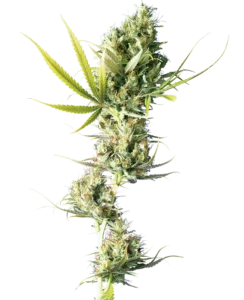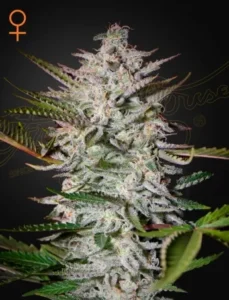


Frisian Dew is a feminized photoperiod hybrid from Dutch Passion created from Super Skunk × Purple Star. The strain is particularly well known for vigorous growth, very high yield potential, excellent mold resistance, colorful phenotypes, and reliable performance in outdoor and greenhouse environments.
Frisian Dew was developed and selected under Dutch outdoor conditions, which makes outdoor cultivation one of its greatest strengths. However, this guide covers the strain as a whole, including its genetics, flowering time, plant size, yield, training, harvest window, effects, and cultivation requirements.
Recommended Strains
Frisian Dew

|
THC | 10% - 15% (Medium) |

|
Lineage | Super Skunk X Purple Star |

|
Type | Feminized |

|
Height | 4.92 ft | 1.5 m |

|
Yield | High |

|
Yield Indoor | 1.64 oz/ft² | 500 g/m² |

|
Yield Outdoor | 28.22 oz/plant | 800 g/plant |

|
Flowering Time | 7 - 9 weeks |

|
Phenotype | 50% Indica / 50% Sativa |

|
Effects | Creative, Balanced, Energetic, Happy |

|
Flavors | Floral, Fresh, Fruity |
Durban Dew
|
|
THC | 10% - 15% (Medium) |
|
|
Lineage | Durban Poison X Frisian Dew |
|
|
Type | Feminized |
|
|
Height | 4.92 ft | 1.5 m |
|
|
Yield | High |
|
|
Yield Indoor | 1.64 - 1.97 oz/ft² | 500 - 600 g/m² |
|
|
Yield Outdoor | 38.8 - 42.33 oz/plant | 1100 - 1200 g/plant |
|
|
Flowering Time | 8 - 9 weeks |
|
|
Phenotype | 30% Indica / 70% Sativa |
|
|
Effects | Uplifted, Euphoric, Focused, Energetic |
|
|
Flavors | Sweet, Citrus, Fruity |
The strain has an approximately balanced Indica/Sativa genetic profile, flowers for around eight weeks, and can become exceptionally large outdoors. Under favorable conditions, mature plants can reach approximately 3–4 meters and produce more than 1 kg per plant.
You can find Frisian Dew seeds and other genetics from Dutch Passion at Growlantis.
Frisian Dew Grow Info
| Trait | Frisian Dew |
|---|---|
| Genetics | Super Skunk × Purple Star |
| Seed type | Feminized photoperiod |
| Indica / Sativa | Approximately 50% / 50% |
| Flowering time | Around 8 weeks |
| Outdoor harvest | Usually early to mid-October |
| Outdoor height | Up to approximately 3–4 m |
| Outdoor yield | XXL; 1 kg+ possible on large plants |
| Best environment | Outdoor / greenhouse |
| Mold resistance | Excellent |
| Plant structure | Vigorous and strongly branched |
| Flavor / aroma | Fruity, floral, citrus, spicy and earthy |
| Reported effects | Energetic and creative with physical relaxation |
These specifications represent the cultivar’s potential rather than guaranteed results. Final plant size, yield, harvest timing, and phenotype depend on climate, root space, planting time, sunlight, training, soil quality, and growing conditions.
What Is Frisian Dew?
Frisian Dew is a cannabis strain created specifically to perform reliably in demanding outdoor environments. Its breeding program took place under Dutch conditions, where plants had to cope with cooler temperatures, elevated humidity, rainfall, wind, and unpredictable summer weather.
That selection process produced a cultivar with vigorous vegetative growth, substantial branching, high yield potential, and particularly strong resistance to mold.
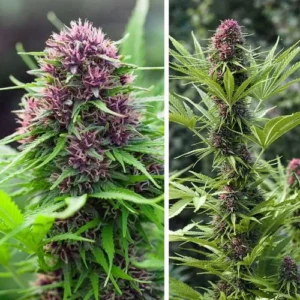
Frisian Dew is also known for the striking purple coloration that can appear in some phenotypes, although green phenotypes occur as well. Color does not determine quality or maturity and should not be treated as a requirement of the strain.
Its combination of resilience, size, and production has made Frisian Dew especially popular with growers in Northern Europe and other climates where autumn conditions can become challenging before harvest.
Frisian Dew Genetics
The official Frisian Dew genetics are Super Skunk × Purple Star.
The breeding project combined vigorous growth and substantial production with the ability to finish successfully outdoors in cooler and more humid environments.
The finished cultivar is generally described as an approximately balanced 50% Indica and 50% Sativa hybrid.
Its growth pattern reflects this mixed heritage. Frisian Dew can develop substantial vertical height but also produces strong lateral branches and a broad canopy. When grown directly in fertile ground with sufficient sunlight and a long vegetative season, plants can become both extremely tall and wide.
The genetics were also selected heavily for outdoor reliability, which helps explain the cultivar’s reputation for strong mold resistance and its ability to perform under variable weather.
Is Frisian Dew Indica or Sativa?
Frisian Dew is an approximately 50% Indica and 50% Sativa hybrid.
Its structure combines characteristics associated with both sides of the genetic background. Plants can develop vigorous height and long branches while also producing dense, resinous flowers and substantial lateral growth.
The reported effect profile is similarly balanced. Lower amounts are often described as more energetic, uplifting, and creative, while stronger consumption can introduce greater physical relaxation.
The 50/50 classification should be treated as a description of the breeding line rather than a guarantee that every individual plant will show exactly the same structure, color, flavor, or effect.
Frisian Dew Plant Height
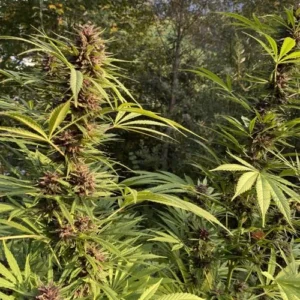
Frisian Dew can become an exceptionally large plant when given enough outdoor space.
Under favorable conditions, mature plants can reach approximately 3–4 meters in height and may develop almost as much width.
Final size depends strongly on planting time, root volume, sunlight, soil fertility, training, climate, and phenotype. A plant started early and transplanted directly into fertile ground has much greater size potential than one kept in a restricted container or planted late in the season.
Growers with limited space should begin controlling height during vegetative growth rather than waiting until the plant is already fully developed.
Topping and low-stress training can redirect vertical growth into a wider and more manageable canopy.

Frisian Dew Flowering Time
Frisian Dew has a flowering period of approximately eight weeks.
Because it is a photoperiod cultivar, this does not mean that the entire plant takes eight weeks from seed to harvest. The vegetative period varies according to when the plant is started, local day length, climate, and the grower’s cultivation strategy.
Outdoors, flowering normally begins naturally as the days become shorter toward the end of summer.
In Northern European conditions, Frisian Dew generally reaches harvest maturity around early to mid-October.
The eight-week flowering period should therefore be used as a cultivation reference rather than as an automatic harvest countdown. Actual flower maturity and local conditions should determine the final harvest date.
Frisian Dew Yield
Frisian Dew is classified as an XXL-yielding cultivar.
Large outdoor plants grown in favorable conditions can produce more than 1 kg of dried flowers per plant, and exceptional specimens can considerably exceed that figure.
Those yields require context. A plant capable of producing more than a kilogram may also develop into a three- or four-meter specimen with a large root system and a broad canopy.
A smaller plant grown in a limited container, planted late, shaded for part of the day, or restricted by poor soil will have significantly lower production potential.
Final yield depends on sunlight, root space, vegetative duration, soil fertility, irrigation, training, weather, plant health, and phenotype.
The main takeaway is that Frisian Dew has unusually high production potential when allowed to develop fully.
Growing Frisian Dew Outdoors
Outdoor cultivation is where Frisian Dew best expresses the characteristics for which it was originally selected.
Choose a location with strong direct sunlight, good drainage, and enough horizontal and vertical space for substantial growth. Mature plants can develop long branches and wide canopies, so spacing becomes increasingly important as summer progresses.
The root zone should be capable of supporting vigorous long-term growth. Preparing outdoor soil with suitable organic matter and improving its structure before planting can help support a large plant throughout the season.
Avoid positioning several Frisian Dew plants too closely together. A crowded outdoor canopy reduces light penetration and makes it harder for moisture to leave the interior of the plant after rainfall or heavy morning dew.
Large branches can also become heavily loaded later in flowering, so physical support may become useful as harvest approaches.
Best Climate for Frisian Dew
Frisian Dew is especially well suited to cool, humid, and variable climates.
The strain was developed in the Netherlands and selected under outdoor conditions that included rain, cloud cover, fluctuating temperatures, and elevated humidity.
That does not mean Frisian Dew prefers poor weather. Strong sunlight, warm conditions, and a healthy root environment still support better growth and yield.
Its advantage is that temporary unfavorable conditions are less likely to cause severe problems than they may with more climate-sensitive genetics.
This makes Frisian Dew particularly attractive for growers in Northern Europe and comparable regions, although the cultivar can also perform successfully in warmer climates.
When to Start Frisian Dew
In Northern European-type climates, Frisian Dew can be started indoors during March or April before being moved permanently outdoors once frost risk has passed.
Starting early gives plants more time to build the substantial root and branch structure required for their large outdoor size.
Young plants should be gradually acclimated to stronger sunlight, cooler nighttime temperatures, wind, and changing outdoor conditions before permanent transplantation.
Moving plants outside around May is common in regions where frost danger has ended by that point, although the exact timing depends on local climate.
A late start reduces the amount of vegetative growth available before natural flowering begins and can significantly limit final plant size and yield.
Frisian Dew Outdoor Grow Timeline
Rather than following a rigid week-by-week calendar, Frisian Dew is better understood through its natural seasonal development.
March to April: Germination and Early Growth
Seeds can be started under protected conditions while outside temperatures remain unreliable. This allows young plants to develop roots and foliage before being exposed to wind, rain, cooler nights, and other outdoor stresses.
May: Outdoor Transplant
Once frost risk has passed, established plants can gradually be moved outdoors. Hardening off before permanent transplantation helps them adjust to stronger sunlight and changing temperatures.
June to July: Vegetative Development
Long summer days support vigorous growth. Frisian Dew can increase rapidly in size during this period, making it the most useful stage for topping, low-stress training, and canopy shaping.
August: Flowering Transition
As natural day length decreases, the plant begins transitioning toward flowering. Established branches become the framework for the large flower sites that develop through late summer and autumn.
Early to Mid-October: Harvest
In Northern European conditions, Frisian Dew generally reaches maturity around early to mid-October. Latitude, phenotype, weather, and greenhouse protection can shift the precise date.
Training Frisian Dew
Frisian Dew responds well to topping, low-stress training, and selective pruning.
Training is particularly valuable because controlling plant size is often more important than trying to increase vigor. An unrestricted Frisian Dew plant can become extremely large when started early and given sufficient root space.
Topping during vegetative growth can reduce dominance of the main stem and encourage a broader plant structure.
Low-stress training can then redirect vigorous branches horizontally, reducing overall height while increasing the amount of canopy exposed to sunlight.
Selective pruning can also remove unnecessary interior growth and create more open pathways for air through the center of the plant.
The goal should be a strong, open structure rather than an excessively dense bush.
Frisian Dew Outdoor Harvest Time
Frisian Dew generally reaches outdoor harvest maturity around early to mid-October in Northern European conditions.
The exact date can vary according to latitude, phenotype, weather, planting time, and whether plants are grown in the open or inside a greenhouse.
Do not harvest solely because the calendar reaches October. Frisian Dew can continue adding considerable flower mass during the final part of the cycle.
Instead, use the expected harvest window to determine when maturity should be monitored more closely.
Flower development, trichome maturity, plant condition, and upcoming weather should all contribute to the final decision.
Its strong mold resistance provides useful protection during autumn but does not make leaving mature flowers indefinitely in persistent rain risk-free.
Growing Frisian Dew in a Greenhouse
Greenhouse cultivation works particularly well for Frisian Dew because it combines natural sunlight with greater protection from wind and prolonged rainfall.
The strain can still become exceptionally large in this environment, so greenhouse height and lateral space need to be considered before planting.
Protection from rain does not automatically solve humidity problems. A large cannabis plant releases substantial moisture through transpiration, and enclosed greenhouses can develop high humidity when ventilation is poor.
Roof vents, doors, side ventilation, or active extraction can help remove moist air while maintaining circulation through the canopy.
The combination of a naturally resilient outdoor cultivar and partial environmental protection can produce very large, productive plants when enough space is available.
Can Frisian Dew Be Grown Indoors?
Frisian Dew is a photoperiod cannabis strain, so its lifecycle can technically be controlled under artificial lighting.
However, it was specifically developed for outdoor and greenhouse environments, and indoor cultivation is not its intended strength.
Its vigorous growth and potential size can make conventional grow tents unnecessarily difficult to manage compared with genetics specifically selected for indoor cultivation.
Indoor space is more useful at the beginning of an outdoor Frisian Dew grow, where young plants can be protected during germination and early vegetative development before being moved outside.
Growers who still choose to complete the entire cycle indoors will need to control height aggressively and account for the cultivar’s substantial growth potential.
Frisian Dew Mold Resistance
Excellent mold resistance is one of Frisian Dew’s most important characteristics.
The strain was selected under cool, wet Dutch conditions, where resistance to humidity-related problems was essential for reliable outdoor performance.
That characteristic is particularly valuable later in the season when mature flowers can encounter rain, cool nights, fog, and prolonged humidity.
However, mold resistance does not mean mold immunity.
A heavily overcrowded canopy, dead leaves trapped between flowers, persistent rainfall, or poor greenhouse ventilation can still create conditions where fungal problems develop.
Keep branches reasonably open, remove dead plant material, and maintain airflow around mature flowers.
Germinating Frisian Dew Seeds
Frisian Dew does not require a unique germination technique.
Seeds need suitable warmth, moisture, oxygen, and careful handling while the first root develops. A controlled propagation medium or moist paper-towel method can both work when conditions remain stable.
Keep seeds moist rather than permanently saturated.
Once the root emerges, transfer the seed carefully into the chosen medium and allow the young plant to become established before exposing it to demanding outdoor conditions.
For outdoor growers in cooler climates, several weeks of protected early development can create stronger plants before permanent transplantation.
For more detailed germination guidance, see how long cannabis seeds take to germinate.

Feeding Frisian Dew
Frisian Dew does not require one universal strain-specific NPK ratio.
Its potential to become a very large plant does, however, mean that soil quality and available root nutrition can become important throughout the season.
Prepare outdoor soil before planting where necessary, using suitable organic material or amendments to improve fertility, drainage, and root structure.
Additional feeding should reflect the actual soil, fertilizer system, plant size, weather, and visible plant response.
Avoid assuming that an XXL-yielding strain automatically requires extremely concentrated nutrients. A large plant growing directly in fertile ground has very different requirements from a plant restricted to a smaller container.
Nutrient strength should therefore be adjusted according to the cultivation system rather than the strain name alone.
Watering Frisian Dew
Water demand can increase dramatically as Frisian Dew develops into a large outdoor plant.
Young specimens initially use relatively little water, while mature plants with several meters of canopy and extensive root systems can consume substantial amounts during warm summer weather.
Irrigation should follow actual soil moisture and weather conditions instead of a fixed schedule.
Good drainage remains important even though Frisian Dew handles humid climates well. Mold resistance above ground does not mean roots perform well in permanently waterlogged soil.
Mulching can help reduce moisture loss during hot and dry periods.
During prolonged rainfall, growers should instead make sure excess water can drain effectively away from the root zone.
Frisian Dew Purple Phenotypes
Purple flowers are one of the characteristics most strongly associated with Frisian Dew.
Some phenotypes develop deep purple coloration during flowering, while others remain predominantly green. Cooler autumn temperatures can make pigmentation more visible, but genetic expression remains an important factor.
A green Frisian Dew plant is therefore not incorrect or inferior simply because it does not develop intense purple flowers.
Color also does not indicate harvest maturity.
Growers should use flower development and trichome maturity rather than pigmentation when deciding when to harvest.
Trying to force purple coloration through excessive cold stress can reduce plant performance and provides no meaningful cultivation advantage.
Frisian Dew Effects
Frisian Dew is generally described as producing a balanced hybrid experience.
Lower amounts are associated with a more uplifting, energetic, and creative effect, while larger amounts can introduce increasingly noticeable physical relaxation.
Individual responses can vary according to tolerance, dose, phenotype, cannabinoid composition, and finished flower quality.
For that reason, effect descriptions should be treated as typical characteristics rather than guaranteed outcomes.
The balanced genetic profile helps distinguish Frisian Dew from cultivars marketed around exclusively heavy sedation or highly stimulating cerebral effects.
Medical claims should not be inferred from these descriptions.
Frisian Dew Flavor and Aroma
Frisian Dew can show a varied flavor and aroma profile depending on phenotype.
Common descriptions include fruity, floral, citrus, spicy, earthy, pine-like, and lavender-like characteristics.
Purple and green phenotypes can sometimes emphasize different aspects of the sensory profile, although appearance alone does not reliably predict aroma.
Growing conditions also affect expression. Sunlight, maturity, plant health, drying, and curing all influence how clearly different aromatic characteristics remain in finished flowers.
For that reason, Frisian Dew is better described using its broader verified flavor range than by assigning one exact dominant terpene hierarchy to every plant.
Frisian Dew vs Durban Dew
Frisian Dew and Durban Dew are related but distinct cultivars.
Durban Dew combines Durban Poison with Frisian Dew, using Frisian Dew as one side of its genetic background.
Frisian Dew itself is Super Skunk × Purple Star and was developed around outdoor performance, high yield potential, mold resistance, and reliable finishing in difficult climates.
The two cultivars should therefore not automatically share flowering time, height, yield, or cultivation instructions.
Growers should always confirm which genetic line they are growing before applying information from another related strain.
Common Problems When Growing Frisian Dew
Underestimating Plant Size
Frisian Dew can reach approximately 3–4 meters outdoors under favorable conditions and may also develop substantial width. Growers expecting a compact 1.5-meter plant can quickly run out of space. Start topping and low-stress training during vegetative growth if controlling final height is important.
Treating Frisian Dew as Primarily an Indoor Strain
Frisian Dew was specifically selected for outdoor and greenhouse cultivation. Although photoperiod cannabis can technically be grown under artificial lighting, its vigorous structure and potential size mean its strongest characteristics are better expressed in environments where plants have substantially more room to develop.
Assuming Mold Resistance Means Mold-Proof
Frisian Dew has excellent mold resistance, but prolonged rainfall, overcrowded growth, dead leaves, or poor greenhouse ventilation can still create problems. Maintain spacing and airflow throughout flowering, particularly once flowers become dense and autumn humidity begins increasing.
Starting Too Late
Frisian Dew uses the long spring and summer vegetative period to build the root and branch structure responsible for its high outdoor yield. Starting very late reduces this developmental window and normally results in a much smaller plant before natural flowering begins.
Harvesting Too Early
Frisian Dew can continue adding significant flower weight toward the end of its outdoor cycle. Do not automatically harvest in September simply because autumn weather has arrived. In Northern European conditions, early to mid-October is generally a more appropriate reference while actual maturity and local weather determine the final day.
FAQs About Frisian Dew
Is Frisian Dew good for outdoor growing?
Yes. Frisian Dew was specifically developed under Dutch outdoor conditions and selected for vigorous growth, very high yield potential, excellent mold resistance, and reliable performance in cool and humid climates. Outdoor and greenhouse environments allow the strain to express its size and resilience more naturally than conventional indoor cultivation.
What is the Frisian Dew flowering time?
Frisian Dew has an approximate flowering period of eight weeks. Outdoors, flowering begins naturally as summer day length decreases, with harvest generally falling around early to mid-October in Northern European conditions. Latitude, phenotype, weather, and greenhouse protection can cause individual plants to finish somewhat earlier or later.
When should Frisian Dew be harvested?
Frisian Dew is generally ready around early to mid-October in Northern European climates. The precise date depends on latitude, phenotype, growing conditions, and seasonal weather. Use the breeder’s harvest window as a reference while checking flower development and trichome maturity rather than cutting plants solely according to the calendar.
How tall does Frisian Dew grow?
Frisian Dew can reach approximately 3–4 meters outdoors in favorable conditions and can also develop substantial width. Final size depends on planting time, root volume, sunlight, soil fertility, climate, and training. Growers with restricted space should begin controlling height during vegetative growth rather than waiting until flowering.
How much does Frisian Dew yield?
Frisian Dew is an XXL-yielding outdoor cultivar. Large plants can produce more than 1 kg of dried flowers under favorable conditions, while exceptional specimens may produce considerably more. Actual yield depends heavily on plant size, root space, sunlight, growing season, soil quality, irrigation, training, weather, and phenotype.
Is Frisian Dew resistant to mold?
Frisian Dew has excellent mold resistance and was selected under cool and humid Dutch outdoor conditions. However, resistance does not mean immunity. Prolonged rainfall, trapped dead foliage, overcrowded branches, or poor greenhouse ventilation can still create problems, so maintaining sensible spacing and airflow remains important throughout flowering.