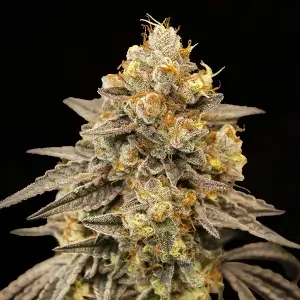


Ghost Train Haze is a high-THC, Sativa-dominant feminized photoperiod cultivar known for vigorous growth, heavy resin production, and a distinctive combination of spice, sweetness, wood, citrus, and pine. The Ghost Train Haze seeds currently sold through Growlantis correspond to the Blimburn Seeds HMC Edition, which is created from Ghost Train Haze × Pellezin genetics.
This distinction matters because the original Ghost Train Haze lineage is commonly associated with Ghost OG × Neville’s Wreck, while the HMC Edition adds Pellezin to that genetic background. The version covered in this guide is therefore the specific Ghost Train Haze × Pellezin seed line sold through Growlantis rather than every cultivar ever sold under the Ghost Train Haze name.
Recommended Strains

Ghost Train Haze

|
THC | 28% - 30% (High) |

|
Lineage | Ghost Train Haze x Pellezin |

|
Type | Feminized |

|
Height | 3.94 ft | 1.2 m |

|
Yield | High |

|
Yield Indoor | 1.97 oz/ft² | 600 g/m² |

|
Yield Outdoor | 21.16 - 28.22 oz/plant | 600 - 800 g/plant |

|
Flowering Time | 8 - 10 weeks |

|
Phenotype | 20% Indica / 80% Sativa |

|
Medical | Anxiety, Depression, Migraines |

|
Effects | Calming, Relaxed, Sedative |

|
Flavors | Spicy, Sweet, Woody |

Grizzly Purple Auto
|
|
THC | 9% - 13% (Low) |
|
|
Lineage | Critical Auto x Purple Afghani x Ruderalis |
|
|
Type | Autoflowering |
|
|
Height | 4.92 ft | 1.5 m |
|
|
Yield | Medium |
|
|
Yield Indoor | 1.15 - 1.31 oz/ft² | 350 - 400 g/m² |
|
|
Yield Outdoor | 21.16 - 24.69 oz/plant | 600 - 700 g/plant |
|
|
Life Cycle | 8 - 10 weeks |
|
|
Phenotype | 80% Indica / 20% Sativa |
|
|
Medical | Depression, Insomnia, Muscle Spasms |
|
|
Effects | Happy, Relaxed, Talkative |
|
|
Flavors | Citrus, Fruity, Lemon |
Current specifications place the HMC Edition at 80% Sativa and 20% Indica, with approximately 28–30% THC. Flowering takes around 8–9 weeks, indoor yield is listed at approximately 600 g/m², and outdoor plants can produce around 600–800 g each under favorable conditions.
You can find Ghost Train Haze seeds and other genetics from Blimburn Seeds at Growlantis.
Ghost Train Haze Strain Grow Info
| Trait | Ghost Train Haze HMC Edition |
|---|---|
| Genetics | Ghost Train Haze × Pellezin |
| Seed type | Feminized photoperiod |
| Indica / Sativa | 20% Indica / 80% Sativa |
| THC | 28–30% |
| Flowering time | 8–9 weeks |
| Published height reference | Around 1.2 m |
| Indoor yield | Around 600 g/m² |
| Outdoor yield | Around 600–800 g/plant |
| Outdoor harvest | October, around mid-month |
| Climate | Warm, bright growing conditions |
| Flavors | Spicy, sweet, woody |
| Listed terpenes | Caryophyllene, Linalool, Myrcene, P-Cymene, Terpinolene |
| Reported effects | Happy, hungry, relaxed; breeder copy also describes an energizing cerebral onset |
These specifications refer specifically to the Ghost Train Haze HMC Edition sold through Growlantis. Plant dimensions, yield, finishing time, and cannabinoid concentration can still vary according to phenotype, vegetative duration, root space, environment, training, and general plant health.
What Is the Ghost Train Haze Strain?
Ghost Train Haze is a name with a strong association with high-potency Sativa-dominant genetics. However, growers should distinguish between the historical Ghost Train Haze lineage and the specific commercial seed line covered in this guide.
The Blimburn HMC Edition currently sold through Growlantis crosses Ghost Train Haze with Pellezin. The Ghost Train Haze side traces back to Ghost OG × Neville’s Wreck, while the addition of Pellezin creates a distinct cultivar with its own flowering time, THC range, yield figures, flavor profile, and growth specifications.
The finished HMC Edition remains strongly Sativa dominant at approximately 80% Sativa and 20% Indica. It is supplied as feminized photoperiod seed, meaning indoor growers control when flowering begins through the light schedule rather than relying on an automatic biological clock.
Ghost Train Haze Genetics
The exact genetics of the seed line covered here are Ghost Train Haze × Pellezin.
Understanding this distinction is important because Ghost Train Haze itself is commonly traced to Ghost OG × Neville’s Wreck. Those genetics remain part of the HMC Edition through the Ghost Train Haze parent, but they are not the complete lineage of the finished seeds sold through Growlantis.
Blimburn’s current material also traces Pellezin through additional modern genetics, making the HMC Edition a further development rather than a simple reproduction of the original Ghost Train Haze.
Growers comparing flowering time, yield, THC, height, or effects should therefore use data attached to this specific seed line instead of automatically applying specifications from unrelated Ghost Train Haze versions.
Ghost Train Haze vs Ghost Train Haze HMC Edition
The original Ghost Train Haze and the HMC Edition are related but should not be treated as genetically identical.
Classic Ghost Train Haze is widely associated with Ghost OG × Neville’s Wreck. The Blimburn HMC Edition uses Ghost Train Haze as one parent and crosses it with Pellezin, resulting in the Ghost Train Haze × Pellezin cultivar sold through Growlantis.
This is particularly important when researching grow information online. Different Ghost Train Haze versions may publish different THC levels, heights, flowering periods, yield figures, flavors, and effects.
For this guide, all technical cultivation specifications refer to the Blimburn HMC Edition currently linked from the Growlantis product catalog.
Is Ghost Train Haze Indica or Sativa?
The Ghost Train Haze HMC Edition is a Sativa-dominant hybrid containing approximately 80% Sativa and 20% Indica genetics.
Its Sativa dominance is reflected in its vigorous development, branch production, and preference for strong light. However, the breeder’s current reported effect profile contains characteristics from both sides of the hybrid.
Blimburn’s structured data lists happy, hungry, and relaxed effects, while its extended description also mentions a more energetic, euphoric, and mentally stimulating onset followed by a calmer physical component.
Individual experiences can still vary according to dose, tolerance, phenotype, cannabinoid concentration, and finished flower quality.

Ghost Train Haze THC
The current Ghost Train Haze HMC Edition is listed at approximately 28–30% THC.
This unusually high published range is one of the cultivar’s defining characteristics and helps explain why Ghost Train Haze generates substantial search interest around THC percentage.
The breeder range represents genetic potential and reference testing rather than a guarantee that every plant will produce flowers testing between exactly 28% and 30%.
Phenotype, lighting, plant health, environmental stability, harvest maturity, drying, curing, and laboratory methodology can all influence measured cannabinoid concentration.
For the seed line currently sold through Growlantis, 28–30% is the most appropriate THC reference.
Ghost Train Haze Flowering Time
Ghost Train Haze HMC Edition flowers for approximately 8–9 weeks after the indoor light schedule has been switched to 12/12.
This range is the current breeder specification and should replace older or conflicting figures of 8–10, 9–10, or 9–11 weeks within the Growlantis guide and product information.
The 8–9 week period covers flowering only. It does not include germination or vegetative growth.
Because Ghost Train Haze is photoperiod dependent, growers determine how long the plant remains in vegetation. Total seed-to-harvest time therefore changes according to canopy size, root development, training strategy, and the moment flowering is initiated.
Ghost Train Haze Plant Height
Blimburn currently publishes a height reference of approximately 1.2 m for the Ghost Train Haze HMC Edition.
The breeder also describes the cultivar as vigorous and strongly Sativa in structure, so final plant size should not be treated as an immutable 1.2 m limit. Photoperiod plants can vary substantially according to vegetative duration, root volume, light, training, environment, and phenotype.
Indoor growers have particularly strong control over final dimensions because they decide when to switch the plant to 12/12.
Allowing extended vegetative growth produces a larger branch structure before flowering, while earlier switching and canopy training can keep the final plant more manageable in restricted spaces.
Growing Ghost Train Haze Indoors
Ghost Train Haze can perform well indoors when growers plan ahead for vigorous branch development and provide strong light across an organized canopy.
During vegetation, an 18/6 photoperiod gives the plant time to develop its roots and branch structure. Once the canopy reaches the appropriate size for the room, changing to 12/12 initiates the 8–9 week flowering period.
The current breeder specification lists indoor production at approximately 600 g/m² under favorable conditions.
Reaching that potential depends less on following one rigid calendar than on developing a healthy, evenly exposed canopy before flowering. Adequate root space, useful branch positioning, stable environmental conditions, and appropriate light distribution all contribute to productive indoor growth.
Growing Ghost Train Haze Outdoors
Ghost Train Haze HMC Edition can also perform well outdoors where it receives strong direct sunlight and a sufficiently warm growing season.
Blimburn’s current grow notes associate the cultivar with warm, semi-arid to Mediterranean-like conditions, while its technical sheet also emphasizes a preference for warm climates. Outdoor plants need enough seasonal stability to continue flowering into October.
Current outdoor yield potential is approximately 600–800 g per plant under favorable conditions.
The breeder places outdoor harvest around October and more specifically describes mid-October as the expected Northern Hemisphere window. Growers should therefore consider autumn rainfall and humidity when deciding whether their local season is long and stable enough for this cultivar.
Ghost Train Haze Yield
Ghost Train Haze HMC Edition is classified as a high-yielding cultivar.
Current breeder specifications place indoor production at approximately 600 g/m², while outdoor plants can produce around 600–800 g each under favorable conditions.
These figures represent breeder-listed potential rather than guaranteed harvest weights. Indoor yield depends on light, usable canopy area, vegetative duration, root volume, plant density, training, irrigation, nutrition, and environmental stability.
Outdoor production additionally depends on sunlight, soil or container volume, plant size, growing season, local weather, and phenotype.
Using the current 600 g/m² and 600–800 g outdoor references is more accurate than the lower figures previously published in the Growlantis guide.
Ghost Train Haze Outdoor Harvest Time
Ghost Train Haze HMC Edition generally reaches outdoor maturity during October, with Blimburn’s cultivation notes placing the expected Northern Hemisphere harvest around mid-October.
The exact finishing date can still shift somewhat according to latitude, phenotype, sunlight, temperature, and seasonal weather.
Growers should therefore use mid-October as a planning reference rather than an automatic cutting date.
As the expected harvest window approaches, actual flower and trichome maturity should guide the final decision. Outdoor growers should also monitor prolonged rain and humidity because weather conditions can become increasingly relevant as mature flowers approach harvest.
Germinating Ghost Train Haze Seeds
Ghost Train Haze does not require a unique strain-specific germination technique.
Seeds need stable warmth, moisture, oxygen, and careful handling while the first root emerges. A controlled moist paper-towel method or another suitable propagation medium can both work when conditions remain consistent.
Keep the germination environment moist rather than saturated. Once the first root has emerged, transfer the seed carefully into the chosen growing medium without damaging the exposed root tip.
Because Ghost Train Haze is photoperiod dependent, growers have flexibility during later vegetative development and are not constrained by the fixed seed-to-harvest clock associated with an autoflower.
Ghost Train Haze Vegetative Growth
During vegetation, Ghost Train Haze develops the roots and branch structure that will later support its flowering canopy.
Indoor growers can maintain an 18/6 photoperiod until the plant reaches a suitable size for the available space. There is no universal number of vegetative weeks that every Ghost Train Haze plant must complete.
The appropriate duration depends on canopy coverage, root development, plant number, vertical clearance, and the training method being used.
This is also the best stage for most structural training. Branches remain flexible and the plant has time to respond before the 8–9 week flowering phase begins, making vegetation the ideal period for spreading vigorous Sativa-dominant growth across the available area.

Training Ghost Train Haze
Low-Stress Training and Screen of Green are particularly useful techniques for Ghost Train Haze HMC Edition and are specifically referenced in the breeder’s current cultivation guidance.
LST allows vigorous branches to be gradually redirected outward, reducing vertical dominance while exposing more flowering sites to direct light. A ScrOG setup can then distribute those branches horizontally across a screen and maintain a more even canopy.
Topping can also be considered during healthy vegetative development where the grower wants to encourage several dominant branches, but it should be used with a clear structural purpose rather than simply because the technique is available.
Once flowering becomes established, major training should gradually give way to branch support, airflow, and stable environmental management.
Ghost Train Haze Flowering Development
After the switch to 12/12, Ghost Train Haze begins its approximately 8–9 week flowering period.
During early bloom, the plant can continue extending while flowering sites become increasingly visible across its branches. Any final gentle canopy positioning should be completed before flowers gain substantial weight.
As flowering progresses, trichome production increases and the strain’s spicy, sweet, woody, citrus, pine, and more pungent aromatic characteristics become increasingly noticeable.
Late flowering should focus on maintaining healthy roots, suitable irrigation, stable light exposure, branch support where required, and good airflow through the developing flowers rather than continued aggressive training.
Early Flowering
During the first part of the 8–9 week bloom, Ghost Train Haze transitions from vegetative growth toward established flower production.
The strong Sativa influence can produce continued extension during this stage, so indoor growers should monitor branch position and light clearance while the final canopy structure develops.
This is the last practical period for minor canopy adjustments. Growers using a screen can continue positioning flexible branches as required, but increasingly developed flowering sites should be handled carefully.
Good spacing established now makes later flower development easier to manage by improving both light penetration and airflow across the canopy.
Mid Flowering
During the middle of flowering, flower mass and resin production become the plant’s main developmental priorities.
The aromatic profile becomes increasingly pronounced, while branches begin carrying greater weight. Major structural training should largely be complete by this point.
Instead, the focus should move toward consistent irrigation, suitable nutrition for the chosen growing medium, stable environmental conditions, and enough airflow to prevent stagnant moisture around developing flowers.
High yield potential does not require an aggressive nutrient schedule. The plant should be fed according to actual response rather than a fixed assumption that increasingly concentrated fertilizer automatically produces larger buds.
Late Flowering and Maturation
During late flowering, Ghost Train Haze approaches the end of its breeder-listed 8–9 week window.
Flower density and trichome coverage continue developing while aroma becomes stronger. The official flowering range should be used to identify when close maturity checks become important rather than as an automatic harvest command.
Phenotype and environment can create small differences in finishing speed.
Growers should therefore combine the breeder timeline with direct observation of flower development and trichome maturity before deciding on the final harvest date.
Feeding Ghost Train Haze
Ghost Train Haze does not require one universal strain-specific NPK formula.
During vegetative growth, use a nutrient program appropriate to the chosen growing medium that supports healthy roots, leaves, stems, and branch development. As flowering becomes established, transition toward the bloom-oriented program associated with the fertilizer system being used.
There is no need to assume that Ghost Train Haze requires unusually aggressive feeding or that a particular fixed ratio will automatically increase yield or terpene production.
Nutrient concentration should instead reflect substrate, water quality, root volume, plant size, and actual response. Leaf color, leaf tips, development rate, and overall plant condition provide more useful feedback than a rigid generic feeding calendar.
Watering Ghost Train Haze
Ghost Train Haze should be watered according to actual root-zone conditions rather than a predetermined daily or weekly schedule.
Young plants initially consume relatively little water because their roots occupy only a small part of the growing medium. As the root system and canopy expand, irrigation demand increases naturally.
Container size, substrate, temperature, humidity, lighting, and airflow all influence how quickly water is used.
Allowing adequate oxygen to return to the root zone between irrigations is more useful than keeping the growing medium continuously saturated. Large outdoor plants can naturally require substantially more water during warm, bright periods.
Airflow During Ghost Train Haze Flowering
Ghost Train Haze develops resinous flower clusters across a vigorous branched canopy, making airflow increasingly important as bloom progresses.
Indoor circulation should move air gently through, above, and below the canopy while ventilation removes excess heat and moisture from the room. LST or ScrOG performed earlier in the cycle can help maintain useful spacing between flowering sites.
Outdoor plants benefit from natural movement but can still retain moisture following autumn rain or prolonged humid conditions, particularly as the mid-October harvest window approaches.
When to Harvest Ghost Train Haze Indoors
Indoor Ghost Train Haze HMC Edition plants generally approach maturity after approximately 8–9 weeks of flowering.
Use that range as a reference for when close observation should become a priority rather than cutting automatically according to the calendar.
Individual phenotype, plant health, light, and environmental conditions can cause small variations in finishing speed.
As the expected window approaches, evaluate the overall flowers and trichomes directly. Combining the breeder’s current flowering specification with plant-specific maturity is more reliable than relying on the older 9–10 or 9–11 week ranges previously used in this guide.
Ghost Train Haze Effects
Blimburn’s current materials describe a mixed effect profile for Ghost Train Haze HMC Edition.
The breeder’s structured specification lists happy, hungry, and relaxed effects, while its longer description also characterizes the cultivar as producing an initially euphoric, energetic, and mentally clear experience with a calmer physical component developing alongside it.
This combination is consistent with a strongly Sativa-dominant hybrid that still contains an Indica influence.
Individual responses can vary significantly according to dose, tolerance, phenotype, cannabinoid profile, and finished flower quality, so these characteristics should be treated as general breeder-reported effects rather than guaranteed experiences.
Ghost Train Haze Flavor and Aroma
The main structured flavor profile for Ghost Train Haze HMC Edition is spicy, sweet, and woody.
Blimburn’s extended description adds further complexity, including sweet citrus, earthy pine, diesel, tangy fruit, skunk, and herbal or anise-like undertones.
This creates a profile that is substantially broader than the simple citrus-and-floral description found in the older Growlantis guide.
The exact balance can still vary between individual plants and environments, while harvest maturity, drying, and curing also influence the finished sensory profile.
Ghost Train Haze Terpenes
Blimburn currently lists Caryophyllene, Linalool, Myrcene, P-Cymene, and Terpinolene in the structured terpene information for Ghost Train Haze HMC Edition.
These compounds help explain parts of the cultivar’s spicy, floral, herbal, woody, and more aromatic character, but the current data does not provide a quantitative percentage for each terpene.
For that reason, they should be presented as listed components of the profile rather than as a definitive dominant-terpene ranking.
Their presence also should not be used to claim that Ghost Train Haze treats anxiety, depression, inflammation, migraines, pain, or other medical conditions.
Ghost Train Haze Strain Review
From a cultivation perspective, Ghost Train Haze HMC Edition combines unusually high THC potential with a manageable 8–9 week flowering period and strong yield figures.
The current breeder specification lists approximately 600 g/m² indoors and 600–800 g per outdoor plant, while the strong Sativa influence makes canopy management particularly useful where space is limited.
Its main planning considerations are vigorous branch development, adequate light, the mid-October outdoor harvest window, and maintaining an open canopy during flowering.
Growers will generally gain more from healthy roots, appropriate vegetative sizing, LST or ScrOG, and stable flowering conditions than from complicated nutrient schedules or generic assumptions about how all Haze strains should be cultivated.
Common Problems When Growing Ghost Train Haze
Using the Wrong Ghost Train Haze Genetics
The version currently sold through Growlantis is the Blimburn Ghost Train Haze HMC Edition, created from Ghost Train Haze × Pellezin. Ghost OG × Neville’s Wreck describes the ancestry of the Ghost Train Haze parent rather than the complete finished HMC cross, so those two genetic descriptions should not be used interchangeably.
Using an Outdated Flowering Time
The current Blimburn specification places Ghost Train Haze HMC Edition at approximately 8–9 weeks of flowering. Older Growlantis content alternates between 8–10, 9–10, and 9–11 weeks. Using one verified 8–9 week reference keeps the product page, grow guide, FAQs, and search intent consistent.
Underestimating Ghost Train Haze Yield
Current breeder specifications list approximately 600 g/m² indoors and 600–800 g per outdoor plant. The older guide publishes substantially lower yield ranges. These figures still represent production potential rather than guarantees, as light, root space, plant size, training, nutrition, environment, and phenotype all affect final harvest weight.
Following a Fixed Vegetative Calendar
Ghost Train Haze is photoperiod dependent, so there is no universal number of vegetative weeks before flowering. Indoor growers decide when to switch to 12/12 according to canopy size, root development, available height, plant number, and training. The 8–9 week breeder figure applies only after flowering begins.
Assuming High THC Means Every Plant Tests at 30%
The current 28–30% THC specification represents the published potential of the seed line rather than a guaranteed laboratory result from every plant. Phenotype, light, environmental stability, health, harvest maturity, drying, curing, and laboratory methodology can all influence the cannabinoid concentration measured in finished flowers.

FAQs About Ghost Train Haze
How long does Ghost Train Haze take to flower?
The Blimburn Ghost Train Haze HMC Edition currently sold through Growlantis flowers for approximately 8–9 weeks after indoor plants are switched to 12/12. This timeframe covers flowering only and does not include germination or vegetation, which growers can extend or shorten according to canopy size and available space.
Is Ghost Train Haze indica or sativa?
Ghost Train Haze HMC Edition is strongly Sativa dominant, containing approximately 80% Sativa and 20% Indica genetics. Its current breeder data describes happy, hungry, and relaxed effects, while the longer description also references an energetic and euphoric cerebral component followed by a calmer physical sensation.
What is the THC percentage of Ghost Train Haze?
The current Ghost Train Haze HMC Edition is listed at approximately 28–30% THC. This is the appropriate range for the Blimburn seed line sold through Growlantis. Actual measured potency can still vary according to phenotype, light, environment, harvest maturity, drying, curing, plant health, and laboratory testing methodology.
How much does Ghost Train Haze yield?
Current breeder specifications place Ghost Train Haze at approximately 600 g/m² indoors and 600–800 g per outdoor plant under favorable conditions. These figures describe genetic potential rather than guaranteed production. Light, root space, vegetative duration, training, irrigation, nutrition, environment, climate, plant size, and phenotype influence final yield.
When is Ghost Train Haze harvested outdoors?
Ghost Train Haze HMC Edition generally reaches outdoor maturity during October, with current breeder cultivation guidance placing the Northern Hemisphere harvest around mid-October. Latitude, phenotype, seasonal temperatures, sunlight, and weather can shift the exact date, so growers should confirm flower and trichome maturity before making the final harvest decision.
What are the genetics of Ghost Train Haze?
The Blimburn HMC Edition covered in this guide is Ghost Train Haze × Pellezin. The Ghost Train Haze side traces back to Ghost OG × Neville’s Wreck, but that ancestry should not be confused with the complete finished HMC cross currently sold through Growlantis.