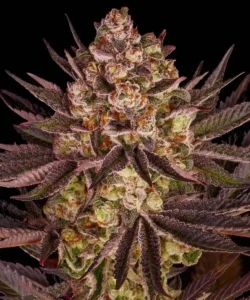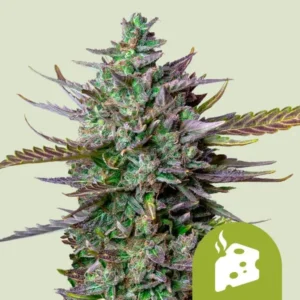


Orange Sherbet, also commonly written as Orange Sherbert, is a name used for several citrus-focused cannabis cultivars. Although these versions share the orange, sweet, and creamy profile associated with the name, their genetics, growth patterns, flowering times, yields, and even Indica-to-Sativa ratios can differ considerably depending on the breeder.
For that reason, there is no single set of Orange Sherbet strain specifications that can accurately describe every seed sold under this name. Barney’s Farm uses the spelling Orange Sherbert for its feminized photoperiod version, while Fast Buds offers both Orange Sherbet Auto and Orange Sherbet FF.
Recommended Strains
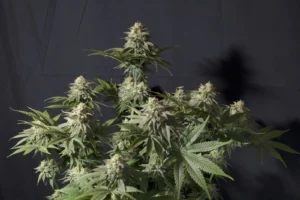
Orange Sherbet FF

|
THC | 26% - 27% (High) |

|
Lineage | Tangie x Orange Sherbet Auto |

|
Type | Fast Flowering |

|
Height | 4.92 ft | 1.5 m |

|
Yield | High |

|
Yield Indoor | 1.31 - 1.97 oz/ft² | 400 - 600 g/m² |

|
Flowering Time | 7 weeks |

|
Phenotype | 50% Indica / 50% Sativa |

|
Effects | Balanced, Relaxed |

|
Flavors | Orange, Sweet, Sour, Cream |

Orange Sherbet Auto
|
|
THC | 23% - 24% (High) |
|
|
Lineage | Orange Sherbet x Ruderalis |
|
|
Type | Autoflowering |
|
|
Height | 3.28 ft | 1 m |
|
|
Yield | High |
|
|
Yield Indoor | 1.31 - 1.64 oz/ft² | 400 - 500 g/m² |
|
|
Life Cycle | 9 - 10 weeks |
|
|
Phenotype | 30% Indica / 70% Sativa |
|
|
Effects | Creative, Energetic, Powerful, Talkative |
|
|
Flavors | Sweet, Sour, Orange |
This grow guide focuses on the characteristics that can reasonably be applied across Orange Sherbet cultivation while clearly separating breeder-specific figures whenever genetics or growing behavior differ.
Orange Sherbet vs Orange Sherbert: Are They the Same Strain?
Orange Sherbet and Orange Sherbert are often treated as spelling variations of the same strain name, especially in grow reports, dispensary listings, and general cannabis discussions. However, the spelling alone is not enough to identify the genetics a grower actually has.
Barney’s Farm officially calls its cultivar Orange Sherbert and breeds it from Orange Cream × Purple Urkle × Cherry Pie. This version is an 80% Indica, 20% Sativa feminized photoperiod plant.
Fast Buds instead uses the Orange Sherbet spelling for its own lines. Orange Sherbet FF is a fast-flowering photoperiod hybrid bred from Tangie × Orange Sherbet Auto, while Orange Sherbet Auto is an autoflowering cultivar with a completely different lifecycle.
Growers should therefore check the breeder and seed type before following a flowering schedule, light cycle, yield estimate, or height recommendation. A cultivation plan that works for one Orange Sherbet version may be unsuitable for another.
Orange Sherbet Strain Comparison
| Version | Seed Type | Genetics | Indica / Sativa | THC | Flowering / Cycle | Indoor Yield |
|---|---|---|---|---|---|---|
| Orange Sherbert – Barney’s Farm | Feminized photoperiod | Orange Cream × Purple Urkle × Cherry Pie | 80% Indica / 20% Sativa | 24% on current international data | 60–70 days flowering | 550–650 g/m² |
| Orange Sherbet FF – Fast Buds | Fast-flowering photoperiod | Tangie × Orange Sherbet Auto | 50% Indica / 50% Sativa | Up to 26% | Around 7 weeks flowering | 500–650 g/m² |
| Orange Sherbet Auto – Fast Buds | Autoflowering | Fast Buds Orange Sherbet Auto line | 30% Indica / 70% Sativa | Up to 26% | 9–10 weeks seed to harvest | 500–650 g/m² |
These figures demonstrate why Orange Sherbet should not be described with one universal flowering time, THC percentage, genetic ratio, or yield.
Growlantis currently carries Orange Sherbet FF by Fast Buds, while growers using the automatic version can follow the dedicated Orange Sherbet Auto grow guide.
Orange Sherbet Genetics
The genetics behind Orange Sherbet depend entirely on the breeder.
The Barney’s Farm Orange Sherbert is based on Orange Cream × Purple Urkle × Cherry Pie. This creates a strongly Indica-dominant plant with an 80/20 genetic split and a comparatively compact photoperiod structure.
Its genetics are associated with dense flowers, substantial side branching, orange and purple coloration, and a sweet citrus profile. Barney’s Farm describes the finished flowers as particularly dense and recommends supporting heavily loaded side branches during the final weeks.
You can explore more genetics from the breeder in the Growlantis Barney’s Farm seed collection.
Fast Buds’ Orange Sherbet FF is not simply a faster version of the Barney’s Farm plant. It is a separate 50/50 hybrid bred from Tangie × Orange Sherbet Auto. The breeder developed it specifically as a fast-flowering photoperiod cultivar capable of completing bloom in approximately seven weeks.
Orange Sherbet Auto is different again. It is an autoflowering, Sativa-dominant version that follows an age-driven lifecycle and therefore should not be grown using the same flowering schedule as either photoperiod version.
Growing Orange Sherbet Indoors
Before growing Orange Sherbet indoors, identify whether the seeds are photoperiod, fast-flowering photoperiod, or autoflowering. This single distinction determines one of the most important aspects of the cultivation plan: the light schedule.
Photoperiod Orange Sherbet plants, including the Barney’s Farm Orange Sherbert and Fast Buds Orange Sherbet FF, can be kept under a vegetative schedule such as 18/6 until they reach the desired size. Flowering is then initiated by providing approximately 12 hours of uninterrupted darkness each day.
There is no fixed number of vegetative weeks that every Orange Sherbet plant needs. Growers should base the switch on plant size, root development, available vertical space, and canopy coverage rather than trying to follow an arbitrary seed-to-harvest calendar.
Orange Sherbet Auto works differently. It begins flowering according to age and does not require a 12/12 switch. Growers using the automatic version should follow its separate cultivation guide rather than applying the photoperiod instructions from this article.

Managing Orange Sherbet Height Indoors
Final height varies significantly between versions. Barney’s Farm currently lists its Orange Sherbert at approximately 100–110 cm indoors, making it relatively manageable in standard indoor spaces.
Fast Buds Orange Sherbet FF can grow considerably larger if given a long vegetative period. The breeder lists plants reaching up to approximately 250 cm under suitable conditions, making early canopy management particularly important where vertical space is restricted.
Low-stress training can help spread branches horizontally while they remain flexible. Growers using the Fast Buds FF version can also shorten the vegetative period if final height is a concern, since flowering duration remains relatively fast once the plant enters bloom.
The objective should be to create an evenly illuminated canopy while leaving enough space for airflow between branches. Aggressive training is not automatically better, especially once flowers have begun developing.
Training Orange Sherbet
Orange Sherbet plants can benefit from training when their natural structure creates uneven height or excessive canopy density. The most appropriate method depends on the exact cultivar and how quickly it develops.
Barney’s Farm specifically notes that its Orange Sherbert develops substantial side branches that may require support later in flowering. Growers can prepare for this by establishing a well-spaced branch structure during vegetation and adding stakes or a support net before the flowers become too heavy.
Fast Buds recommends tying down the rapidly growing branches of Orange Sherbet FF when height needs to be controlled. Low-stress training can redirect vertical growth horizontally and expose additional flowering sites without requiring repeated high-stress manipulation.
A ScrOG system can also be useful for photoperiod versions when the grower wants to distribute longer branches across a larger area. The screen should improve canopy organization rather than create a tightly packed layer of foliage with poor air circulation.
Orange Sherbet Flowering Time
There is no accurate universal answer to how long Orange Sherbet takes to flower because the available versions have different flowering systems.
Barney’s Farm lists 60–70 days of flowering for its feminized Orange Sherbert. Outdoors, the breeder places harvest around the first to second week of October.
Fast Buds lists approximately seven weeks of flowering for Orange Sherbet FF. This figure refers specifically to bloom after the photoperiod plant has been switched to flowering conditions. The total lifecycle will still depend on how long the grower chooses to maintain vegetative growth.
Orange Sherbet Auto should not be described using either of those flowering periods. Fast Buds lists a 9–10 week total cycle from seed to harvest for the automatic version.
This distinction is important because describing every Orange Sherbet as an “8–10 week strain” can be misleading. Growers should use the specifications for their exact breeder and seed type.
For a broader explanation of what happens as photoperiod plants develop during bloom, see the Growlantis guide to the cannabis flowering stage week by week.
Orange Sherbet Yield
Orange Sherbet yield also varies according to breeder, plant type, environment, and plant size.
Barney’s Farm lists its Orange Sherbert at approximately 550–650 g/m² indoors and up to 800 g per plant outdoors under favorable conditions. Outdoor plants are listed at approximately 120–150 cm tall.
Fast Buds lists Orange Sherbet FF at approximately 500–650 g/m² indoors and 400–600 g per plant outdoors. Its rapid flowering does not necessarily mean the plant must remain small, as the breeder describes it as an XL cultivar capable of substantial vertical growth.
Orange Sherbet Auto is listed at approximately 500–650 g/m² indoors and 60–300 g per plant outdoors, with plants reaching approximately 110–150 cm.
These figures should be treated as breeder potential rather than guaranteed production. Light, root volume, vegetative time, plant health, climate, irrigation, training, and phenotype can all change the final result substantially.
Growing Orange Sherbet Outdoors
Outdoor growers should once again identify the version before planning harvest timing. A Barney’s Farm Orange Sherbert and a Fast Buds Orange Sherbet Auto will not respond to the outdoor season in the same way.
Barney’s Farm lists its photoperiod Orange Sherbert for harvest around the first or second week of October. Plants can reach approximately 120–150 cm outdoors and produce up to 800 g per plant under favorable conditions.
Photoperiod plants need enough seasonal time to complete flowering before persistent cold, rainfall, or high humidity creates problems around mature flowers. Growers in climates with unstable autumn weather should therefore consider the local finishing window rather than relying solely on breeder yield potential.
The autoflowering version offers more flexibility because flowering is not triggered by shortening days. Its shorter 9–10 week total lifecycle allows growers to schedule a crop around a favorable period of weather instead of waiting for the natural autumn flowering season.
Regardless of version, choose a location with strong sunlight, adequate root space, good drainage, and enough spacing for air to circulate around mature plants.
Germinating Orange Sherbet Seeds
Orange Sherbet does not require a unique strain-specific germination technique. The main priorities are stable warmth, consistent moisture, adequate oxygen, and careful handling once the first root appears.
The paper towel method is one option, although seeds can also be germinated in a suitable propagation medium. The material surrounding the seed should remain moist without becoming permanently waterlogged.
Once the root has emerged, transfer the seed carefully into the chosen medium and avoid damaging the exposed root tip. Young seedlings require relatively little water because their root systems have not yet colonized the surrounding container.
For a more detailed explanation of timing and germination methods, see how long cannabis seeds take to germinate.
Orange Sherbet Vegetative Growth
For photoperiod Orange Sherbet plants, the vegetative stage is flexible rather than fixed. A grower working in a small indoor space may switch to flowering after a shorter vegetative period, while a larger room or outdoor environment can support considerably more growth.
This stage is the best time to establish plant structure. Branch positioning, topping where appropriate, or a ScrOG setup should generally be completed while the plant is actively growing and still has time to recover.
Avoid using a universal statement such as “Orange Sherbet needs three to eight weeks of vegetation.” The correct duration depends on the cultivar, container, lighting, available space, and desired final plant size.
Fast Buds Orange Sherbet FF is particularly important in this respect because the breeder combines a very short seven-week flowering period with the ability to grow into a large plant when given additional vegetative time.
Feeding Orange Sherbet
There is no evidence that every cultivar sold as Orange Sherbet requires one fixed nutrient formula or a specific NPK ratio.
Feeding should be based on the growing medium, nutrient system, water quality, plant size, root development, and visible response of the plant. A young seedling requires far less nutrition than a large flowering photoperiod plant occupying a full indoor canopy.
During vegetative growth, plants generally require sufficient nitrogen to support leaves and stems. As flowering develops, nutrition normally shifts toward a bloom-oriented formulation appropriate to the cultivation system.
That does not mean growers should simply increase phosphorus and potassium as much as possible. Excess nutrient concentration can reduce plant performance just as deficiencies can, and high breeder yield estimates do not imply that a cultivar needs exceptionally aggressive feeding.
Watering Orange Sherbet
Orange Sherbet should be watered according to the condition of the root zone rather than a fixed calendar. Container size, plant size, growing medium, temperature, humidity, lighting, and root development all affect how quickly moisture is used.
One of the most common problems during early growth is saturating a large container when the plant still has a small root system. Allow the medium to retain enough air between irrigations and gradually increase water volume as roots expand.
Outdoor plants may use considerably more water once they become established, particularly in hot conditions with strong sunlight. Good drainage remains important even when plant demand is high.
Watch the actual plant and substrate rather than assuming every Orange Sherbet cultivar requires the same volume or frequency.
Airflow and Humidity During Flowering
Dense Orange Sherbet flowers can make airflow increasingly important as harvest approaches, particularly with the Barney’s Farm version, which is described as producing substantial colas and heavily loaded branches.
Good airflow is not simply a matter of pointing a powerful fan toward the top of the plants. Air should move gently above, through, and below the canopy while ventilation removes excess moisture from the growing environment.
Plant spacing matters as much as fan placement. A severely overcrowded canopy can create stagnant areas between leaves and flowers even when the room itself appears to have adequate circulation.
Humidity should be evaluated throughout the entire light and dark cycle because conditions can change significantly when lights switch off.
When to Harvest Orange Sherbet
Harvest timing should be based on the exact Orange Sherbet version and the maturity of the individual plant.
Barney’s Farm gives a 60–70 day flowering window for its Orange Sherbert and places outdoor harvest around the first to second week of October. Fast Buds Orange Sherbet FF is considerably faster at approximately seven weeks of flowering.
Fast Buds Orange Sherbet Auto follows a different timeline entirely, with approximately 9–10 weeks from seed to harvest.
These breeder timelines are useful planning references, but growers should still inspect the plant itself. Pistil color alone is not a reliable maturity test, and the cultivar’s orange coloration should not be confused with a harvest signal.
Evaluate overall flower development and trichome maturity alongside the relevant breeder timeline rather than harvesting automatically on one predetermined day.
Is Orange Sherbet Indica or Sativa?
There is no single Indica-to-Sativa ratio for every Orange Sherbet strain.
Barney’s Farm Orange Sherbert is strongly Indica dominant at 80% Indica and 20% Sativa.
Fast Buds Orange Sherbet FF is classified as an even 50% Indica and 50% Sativa hybrid.
Fast Buds Orange Sherbet Auto moves in the opposite direction and is listed as 70% Sativa and 30% Indica.
This variation is another reason why growers should not assume that two products with nearly identical names are genetically identical.
If a seed package simply says Orange Sherbet without identifying the breeder, verify the original source before relying on specifications from an unrelated version.
Orange Sherbet THC Levels
THC figures also depend on breeder and market.
Barney’s Farm currently lists 24% THC on its international Orange Sherbert product page, while its U.S. page lists 28% THC for the same named cultivar. Because the breeder itself publishes different regional values, it is better to acknowledge the discrepancy than present one number as universally definitive.
Fast Buds currently lists up to 26% THC for both Orange Sherbet FF and Orange Sherbet Auto.
These percentages represent breeder reference figures rather than guaranteed laboratory results for every plant. Cannabinoid concentration can vary with phenotype, environmental conditions, harvest timing, drying, curing, and testing methodology.
Orange Sherbet Strain Effects
Orange Sherbet effects vary partly because the products sold under the name are genetically different.
Barney’s Farm describes its Indica-dominant Orange Sherbert as relaxing and calming, with a gentle body-oriented character.
Fast Buds Orange Sherbet FF is a balanced 50/50 hybrid and is described as producing a long-lasting experience with both uplifting and relaxing characteristics.
Orange Sherbet Auto is Sativa dominant and Fast Buds’ user-reported data includes creative, happy, energetic, and relaxed responses.
These descriptions should be treated as breeder or consumer-reported characteristics rather than guaranteed effects. Dose, tolerance, individual physiology, phenotype, and finished flower composition can significantly influence the experience.
Orange Sherbet Flavor and Aroma
Citrus is the main characteristic connecting the different Orange Sherbet cultivars.
Barney’s Farm describes Orange Sherbert with acid candy, orange, citrus, sweetness, and a slightly bitter orange aroma. The combination of Orange Cream, Purple Urkle, and Cherry Pie produces a profile centered on sweet orange and creamy notes.
Fast Buds describes both Orange Sherbet FF and Orange Sherbet Auto with orange, sweet, sour, and creamy flavors. Its descriptions also mention tangerine, tropical fruit, subtle earthiness, and pine.
This shared orange-sherbet sensory profile explains why the same broad strain name appears across different breeding programs even though the underlying genetics are not identical.
Orange Sherbet Auto vs Orange Sherbet FF
Orange Sherbet Auto and Orange Sherbet FF from Fast Buds should not be treated as interchangeable versions.
Orange Sherbet Auto flowers according to age and takes approximately 9–10 weeks from seed to harvest. It does not require the grower to switch to a 12/12 light schedule.
Orange Sherbet FF is a fast-flowering photoperiod cultivar. Growers can control the length of its vegetative stage, but indoor flowering still needs to be initiated through the photoperiod. Once flowering begins, Fast Buds lists approximately seven weeks to completion.
The FF version also uses Tangie × Orange Sherbet Auto genetics and has a balanced 50/50 genetic classification, while the Auto is listed as 70% Sativa and 30% Indica.
Growers using the automatic version should follow the dedicated Orange Sherbet Auto cultivation guide rather than adapting the photoperiod schedule described here.

Common Problems When Growing Orange Sherbet
Following the Wrong Breeder Specifications
The biggest mistake with Orange Sherbet is assuming that every seed bearing the name has the same genetics. Flowering time, genetic ratio, THC, height, and yield can all change between Barney’s Farm Orange Sherbert, Fast Buds Orange Sherbet FF, and Orange Sherbet Auto. Always identify the breeder before building a cultivation plan.
Switching an Autoflower to 12/12
Orange Sherbet Auto does not need a flowering light-cycle change. It begins flowering according to age. A 12/12 switch is relevant to photoperiod versions such as Barney’s Farm Orange Sherbert and Fast Buds Orange Sherbet FF, not to the automatic cultivar.
Using One Universal Flowering Time
The common statement that Orange Sherbet always flowers in eight to ten weeks is inaccurate. Current breeder figures range from approximately seven weeks of flowering for Fast Buds FF to 60–70 days for Barney’s Farm, while the Auto uses a 9–10 week complete lifecycle.
Underestimating Branch Support
Some Orange Sherbet versions develop substantial flowering branches. Barney’s Farm specifically notes that the side branches of its Orange Sherbert may need support during the final weeks. Preparing stakes or a suitable support system before branches are heavily loaded makes late-flowering management considerably easier.
Treating Breeder Yields as Guaranteed Results
Yield figures describe genetic potential under favorable conditions rather than what every grower will harvest. Lighting, plant size, root space, climate, irrigation, environmental control, training, plant health, and phenotype all influence whether a plant approaches the breeder’s published numbers.
FAQs About Orange Sherbet Strain
Are Orange Sherbet and Orange Sherbert the same strain?
Orange Sherbet and Orange Sherbert are often used as spelling variants, but the name does not always refer to one identical cultivar. Barney’s Farm sells Orange Sherbert, while Fast Buds offers Orange Sherbet Auto and Orange Sherbet FF with different genetics, flowering behavior, plant structure, and breeder specifications.
Is Orange Sherbet indica or sativa?
It depends on the breeder. Barney’s Farm classifies its Orange Sherbert as 80% Indica and 20% Sativa, while Fast Buds lists Orange Sherbet FF as a 50/50 hybrid and Orange Sherbet Auto as 70% Sativa and 30% Indica. Always check the exact seed version before applying strain-specific advice.
How long does Orange Sherbet take to flower?
There is no universal Orange Sherbet flowering time. Barney’s Farm lists 60–70 days for its photoperiod Orange Sherbert, while Fast Buds lists about seven weeks of flowering for Orange Sherbet FF. Orange Sherbet Auto is different again, with a complete seed-to-harvest cycle of roughly 9–10 weeks.
How much THC does Orange Sherbet have?
THC varies by breeder and market. Barney’s Farm currently lists 24% THC on its international Orange Sherbert page and 28% on its U.S. page. Fast Buds lists up to 26% THC for both Orange Sherbet FF and Orange Sherbet Auto. These figures are breeder references rather than guaranteed test results.
How much does Orange Sherbet yield?
Yield depends on the exact version and growing conditions. Barney’s Farm lists 550–650 g/m² indoors and up to 800 g per plant outdoors for Orange Sherbert. Fast Buds lists 500–650 g/m² indoors for Orange Sherbet FF and Auto, with different outdoor yield ranges for each version.
Is Orange Sherbet Auto the same as Orange Sherbet FF?
No. Orange Sherbet Auto and Orange Sherbet FF from Fast Buds use different flowering systems. The Auto flowers according to age and completes its cycle in about 9–10 weeks, while the FF is a fast-flowering photoperiod cultivar that still requires a 12/12 light schedule indoors to initiate flowering.