
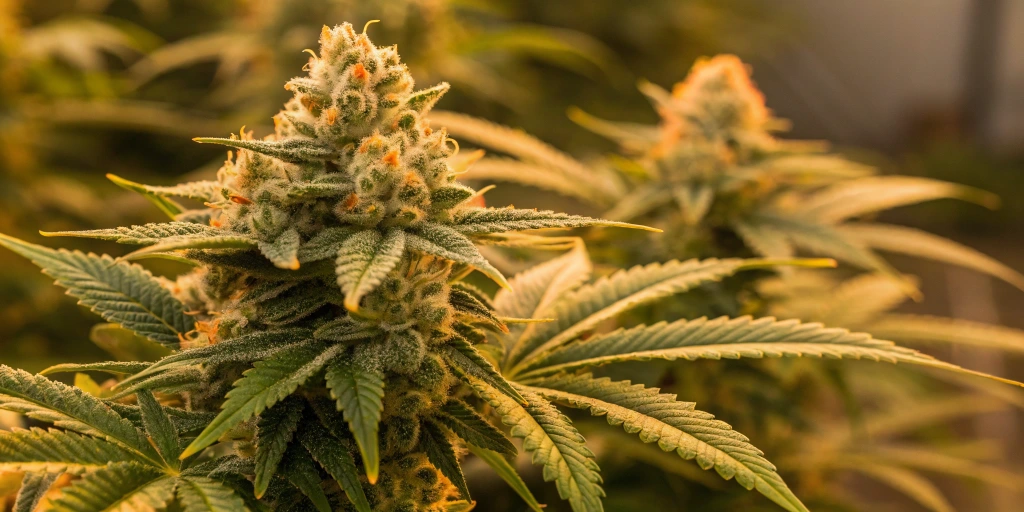

Milky Way F1 Auto is a compact autoflowering F1 hybrid from Royal Queen Seeds created from highly stabilized parental lines with Blue Mammoth, Blue Dream, and Sin Tra Bajo Auto genetics. It combines rapid automatic flowering with strong hybrid vigor, very high THC potential, compact dimensions, and a complex flavor profile built around chocolate, citrus, pungent Skunk, and pine.
The plant remains exceptionally manageable at approximately 55–75 cm and completes its full lifecycle in around 70–75 days after germination. Flowering itself lasts approximately 42–45 days, while Royal Queen Seeds currently classifies its production potential as XXL.
Recommended Strains

Milky Way F1 Auto

|
THC | 21% - 22% (Medium) |

|
Lineage | Blue Mammoth x Blue Dream x Sin Tra Bajo Auto |

|
Type | Autoflowering |

|
Height | 2.62 ft | 0.8 m |

|
Yield | Low |

|
Yield Indoor | 0.98 - 1.15 oz/ft² | 300 - 350 g/m² |

|
Yield Outdoor | 3.53 - 8.82 oz/plant | 100 - 250 g/plant |

|
Life Cycle | 10 - 11 weeks |

|
Phenotype | 40% Indica / 40% Sativa / 20% Ruderalis |

|
Effects | Creative, Euphoric, Relaxed |

|
Flavors | Chocolate, Citrus, Pungent, Skunk |

Milky Dreams Strain
|
|
THC | 25% - 27% (High) |
|
|
Lineage | Mother’s Milk x Persian Pie |
|
|
Type | Feminized |
|
|
Height | 6.56 ft | 2 m |
|
|
Yield Outdoor | 56.44 oz/plant | 1600 g/plant |
|
|
Flowering Time | 8 - 9 weeks |
|
|
Phenotype | 60% Indica / 40% Sativa |
|
|
Effects | Relaxed, Uplifted, Euphoric, Creative |
|
|
Flavors | Earthy, Citrus, Fruity, Banana |
Because Milky Way F1 is an autoflower, it does not require a switch to 12/12. Flowering begins according to age, allowing indoor growers to maintain a longer light schedule throughout the complete cycle.
You can find Milky Way F1 Auto seeds and other genetics from Royal Queen Seeds at Growlantis.
Milky Way F1 Auto Grow Info
| Trait | Milky Way F1 Auto |
|---|---|
| Genetics | Blue Mammoth × Blue Dream × Sin Tra Bajo Auto |
| Type | F1 Hybrid auto |
| THC | Very high |
| Flowering time | 42–45 days |
| Full lifecycle | 70–75 days after germination |
| Height | 55–75 cm |
| Yield | XXL |
| Climate | Suitable for short summers |
| Main terpenes | Farnesene, Myrcene, Pinene |
| Flavor | Chocolate, citrus, pungent, Skunk |
| Reported effects | Creative, euphoric, physically relaxing |
These are the current breeder specifications for Milky Way F1. Royal Queen Seeds now expresses potency and yield using qualitative categories rather than one fixed THC percentage or universal grams-per-square-meter figure, so this guide follows those current specifications instead of older retailer data.
What Is Milky Way F1 Auto?
Milky Way F1 is a true autoflowering F1 hybrid bred for rapid development, compact growth, and greater consistency between individual plants. Its genetic background combines Blue Mammoth, Blue Dream, and Sin Tra Bajo Auto through highly stabilized parental lines that were crossed to produce the final F1 generation.
From a grower’s perspective, its most noticeable characteristics are speed and size. Milky Way F1 normally stays between 55 and 75 cm while completing the period from germination to harvest in approximately 70–75 days.
That combination makes it particularly useful for small indoor spaces, discreet outdoor cultivation, greenhouses, and locations where the suitable outdoor season is relatively short.
What Makes Milky Way F1 an F1 Hybrid?
Milky Way F1 belongs to Royal Queen Seeds’ F1 hybrid program. In F1 breeding, highly stabilized parental lines are crossed to create a first-generation hybrid that can express strong hybrid vigor and improved uniformity.
In practical cultivation, this can result in plants that develop rapidly and show more consistent height, structure, flowering behavior, and general performance than less uniform seed populations.
Royal Queen Seeds specifically associates Milky Way F1 with strong speed, vigor, productivity, and resilience. This does not mean that environment stops mattering. Root conditions, light, irrigation, nutrition, temperature, and stress still affect individual plants, but the genetic line has been developed to reduce unnecessary variability between specimens.
Milky Way F1 Genetics
The official Milky Way F1 genetic background is Blue Mammoth × Blue Dream × Sin Tra Bajo Auto.
Rather than simply crossing three commercially available plants together, the breeder developed highly stabilized parental lines using these genetic backgrounds before producing the final F1 hybrid.
Blue Mammoth contributes autoflowering and compact-growth characteristics, while Blue Dream and Sin Tra Bajo Auto add additional vigor, potency, flavor, and automatic flowering traits to the finished line.
The current Royal Queen Seeds technical sheet classifies Milky Way F1 as an F1 Hybrid auto rather than assigning one fixed Indica, Sativa, and Ruderalis percentage.
Is Milky Way F1 Indica or Sativa?
Milky Way F1 is officially classified as an autoflowering F1 hybrid rather than being defined by a current fixed Indica/Sativa percentage.
Its compact 55–75 cm stature and strong physical relaxation show characteristics commonly associated with Indica-style plants, while its creative and euphoric reported effects add a more mentally active component to the experience.
For growers, the F1 autoflower classification is more useful than forcing the cultivar into an outdated percentage ratio. What matters most in cultivation is its compact structure, fast lifecycle, automatic flowering, and strong uniformity.
Milky Way F1 Life Cycle: 70–75 Days From Germination
Milky Way F1 completes its entire lifecycle in approximately 70–75 days after germination, equivalent to roughly ten to eleven weeks.
This figure covers seedling development, rapid vegetative growth, automatic flowering, and final maturation. It should not be confused with flowering time alone.
Because the plant follows a fixed automatic biological clock, there is less room to compensate for severe early stress than with a photoperiod cultivar. Healthy root development, sensible watering, stable lighting, and avoiding unnecessary interruptions during the first few weeks are therefore particularly useful.
Drying and curing begin after harvest and should not be added to the 70–75 day lifecycle.
Milky Way F1 Flowering Time
The flowering stage of Milky Way F1 lasts approximately 42–45 days.
Flowering begins automatically according to plant age. There is no need to reduce the indoor light schedule to 12/12 in order to trigger bloom.
The distinction between flowering time and total lifecycle is important. Milky Way F1 does not take 8–10 weeks to flower after a separate vegetative period. Instead, approximately six weeks of flowering occur within the broader 70–75 day seed-to-harvest cycle.
Actual maturity should still be checked directly as the expected harvest window approaches because environment and individual development can create small differences between plants.
Does Milky Way F1 Need a 12/12 Light Cycle?
Milky Way F1 does not require a 12/12 photoperiod to flower because it is an autoflowering hybrid.
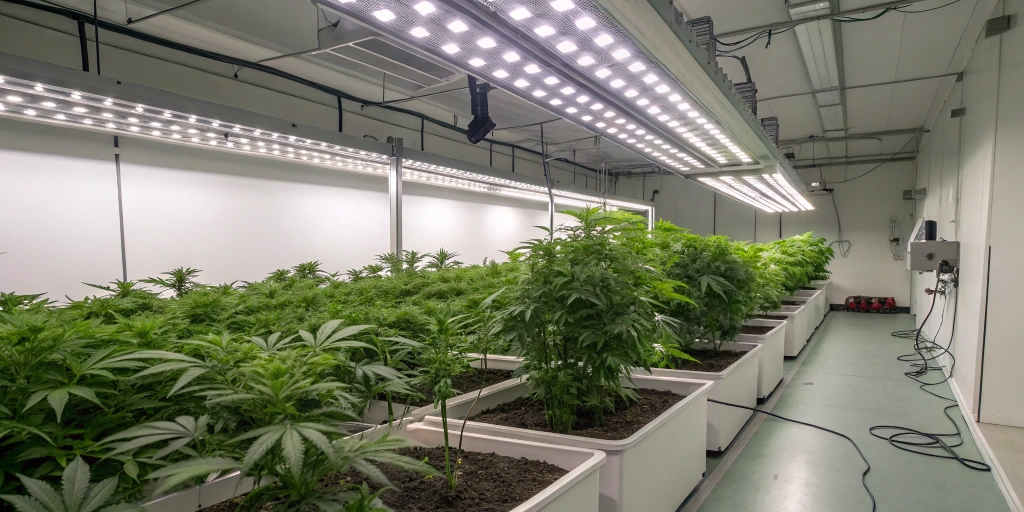
Royal Queen Seeds’ documented indoor grow maintained the plant under 18 hours of light throughout its complete development, including the flowering stage. Flower production began automatically without any change in day length.
An 18/6 schedule is therefore a practical option throughout the entire indoor cycle. Other longer autoflower schedules can also be used where light intensity and total daily light remain appropriate.
Changing to 12/12 simply because flowers appear is unnecessary and reduces the amount of daily light available to the plant.
Milky Way F1 Grow Diary: What to Expect
Royal Queen Seeds has published a documented indoor Milky Way F1 grow from germination through harvest. That grow provides a particularly useful reference for the cultivar because it shows how one real plant developed under an 18-hour light schedule.
The following timeline uses that documented development as an example rather than a rigid guarantee. Different environments can shift growth slightly, while feeding, lighting, substrate, and irrigation should always be adapted to the grower’s own system.
Week 1: Germination and Seedling Establishment
During the documented first week, Milky Way F1 germinated quickly and established its first true leaves without significant stretching. The seedling remained very small, as expected, while its initial root system developed inside the final growing container.
The main objective during this stage should be uninterrupted establishment. Young plants have limited roots and do not require the same water or nutrient quantities as mature specimens. Stable moisture, oxygen around the roots, and appropriate light are more useful than trying to force rapid early growth.
Week 2: Early Vegetative Growth
During the second week, vegetative growth accelerated noticeably as the plant developed additional foliage and more than doubled its previous height.
This period demonstrates one of the defining characteristics of Milky Way F1: rapid vegetative development despite its eventual compact size. The plant does not need to become tall to build useful biomass.
Watering and nutrition should follow root development rather than one universal weekly recipe. A healthy plant should be allowed to build momentum without repeatedly disturbing roots or applying unnecessary structural stress.
Week 3: Rapid Canopy Development
By Week 3, the documented Milky Way F1 had developed a much denser canopy and reached approximately 18 cm.
Branch and leaf production accelerated rapidly during this period, reflecting the hybrid vigor for which the F1 line was selected.
Growers with very limited space can begin gentle canopy organization during this stage if necessary, but aggressive training is not required. The documented plant developed effectively without major training, showing that Milky Way F1 naturally maintains a manageable structure.
Week 4: Preflower and Transition
By the end of Week 4, the documented plant had moved beyond preflower and was already showing numerous white pistils at developing bud sites.
This transition happened automatically while the grower continued using an 18-hour light schedule. No switch to 12/12 was required.
A light defoliation was used in the documented grow to expose shaded flowering sites, but that should be understood as an optional canopy-management decision rather than an essential requirement of the genetics.
Week 5: Early Flower Development
Flower development accelerated rapidly during Week 5. Bud sites became increasingly defined while aroma became much more noticeable.
At this stage, the plant’s priority shifts from building new vegetative structure toward flower production. Large training interventions become less useful because the rapid automatic lifecycle leaves progressively less time for recovery.
Stable lighting, appropriate irrigation, sensible nutrition, and good airflow should become the main priorities as developing flowers occupy more of the canopy.
Weeks 6–7: Bud Building and Stretch Completion
During Weeks 6 and 7, flowers continued gaining size and density while the documented plant reached approximately 54 cm by the end of Week 7.
Notably, this height was achieved without major training, reinforcing the compact nature of the cultivar.
A light canopy thinning was performed to improve light penetration and airflow as flowers became denser. Growers should avoid removing large amounts of healthy foliage indiscriminately, but selective leaf management can be useful where a particularly dense area blocks air movement or productive flowering sites.
Week 8: Advanced Flower Maturation
By Week 8, many pistils on the documented plant had darkened and trichome production had become substantially more visible.
This is the stage where Milky Way F1 begins looking much closer to its mature form. Resin production intensifies, the flowers become heavier, and the strain’s pungent citrus, Skunk, and chocolate characteristics become increasingly noticeable.
Environmental stability becomes especially useful late in bloom because unnecessary stress at this point cannot be compensated for by extending the automatic lifecycle indefinitely.
Weeks 9–11: Final Maturation and Harvest
During the final weeks, the documented Milky Way F1 continued maturing under the same 18-hour light schedule used throughout the grow.
The plant became increasingly senescent while flowers finished swelling and resin coverage reached its later stages. The exact harvest day should still be based on actual maturity rather than simply cutting because Week 10 or Week 11 has arrived.
In the Royal Queen Seeds grow report, the final dried harvest from one plant was approximately 72 g. That number represents one documented setup rather than a universal yield specification, but it provides useful real-world context alongside the breeder’s broader XXL yield classification.
Milky Way F1 Height
Milky Way F1 generally reaches approximately 55–75 cm, making it a particularly compact autoflowering hybrid.
Its small dimensions are one of the cultivar’s strongest practical advantages. Growers can fit Milky Way F1 into small tents, limited-height spaces, greenhouses, or discreet outdoor locations without managing the extreme vertical stretch associated with taller genetics.
Final height can still vary according to lighting, root space, environment, plant density, and stress. However, the current breeder range is more accurate than treating 80 cm as the cultivar’s standard height.
Good spacing remains important even with compact plants because lateral foliage and mature flowers still need direct light and airflow.
Growing Milky Way F1 Indoors
Milky Way F1 is particularly well suited to indoor cultivation because its compact dimensions simplify space management while its automatic lifecycle removes the need for a photoperiod change.
A consistent longer light schedule can remain in place from seedling establishment through harvest. This allows the same room to support vegetative and flowering development without a separate 12/12 phase.
Because the plant normally stays below 75 cm, vertical clearance is rarely the primary challenge. Instead, growers should focus on appropriate plant spacing, strong but suitable light distribution, healthy roots, and airflow through the compact canopy.
Royal Queen Seeds currently classifies Milky Way F1 as an XXL-yielding cultivar, although actual production depends heavily on cultivation conditions.
Growing Milky Way F1 Outdoors
Milky Way F1 is particularly useful for outdoor cultivation where the warm season is relatively short.
Royal Queen Seeds specifically classifies the cultivar for short summers, and its 70–75 day complete lifecycle allows growers to finish a crop without waiting for the natural autumn photoperiod that controls traditional feminized strains.
Outdoor cultivation should begin when frost risk has passed and temperatures are suitable for healthy development. The plant benefits from strong direct sunlight but remains compact enough for balconies, terraces, small gardens, and discreet locations.
In climates with a sufficiently long frost-free season, more than one successive Milky Way F1 crop may be possible.
Milky Way F1 Yield
Royal Queen Seeds currently classifies Milky Way F1 as an XXL-yielding F1 hybrid.
The current technical specification does not provide one universal indoor grams-per-square-meter or outdoor grams-per-plant figure, so this guide does not treat older retailer ranges as definitive breeder data.
Actual yield depends on light intensity, canopy area, root development, container size, plant density, irrigation, nutrition, environment, and the amount of stress experienced during the rapid lifecycle.
The documented Royal Queen Seeds grow produced approximately 72 g dry from one indoor plant, but that should be understood as one real-world example rather than the expected yield of every Milky Way F1 plant.
Training Milky Way F1
Milky Way F1 does not require aggressive training to remain compact.
Its natural 55–75 cm height makes it manageable even without topping or extensive branch manipulation. The documented breeder grow reached approximately 54 cm during flowering without major training.
Where additional canopy organization is useful, gentle Low-Stress Training or selective leaf positioning can improve light distribution without creating a long recovery period.
As with other rapid autoflowers, high-stress techniques should be considered carefully because every significant pause in growth consumes part of a fixed 70–75 day lifecycle. For most growers, maintaining uninterrupted development is more valuable than forcing the plant through complex training.
Feeding Milky Way F1
Milky Way F1 does not require one universal strain-specific NPK schedule.
The official grow report used a particular branded soil and feeding system, but that protocol should not be copied as a genetic requirement. A plant growing in another soil, coco, hydroponic system, or fertilizer program will have different nutrient needs.
Early feeding should reflect the size of the root system and the nutrient content already present in the medium. As flowering becomes established, nutrition can be adjusted according to plant development and the fertilizer system being used.
High yield potential does not mean that progressively stronger feeding automatically produces better results.
Watering Milky Way F1
Milky Way F1 should be watered according to actual root-zone conditions rather than a fixed weekly volume.
Young plants initially have small root systems and therefore consume considerably less water than established flowering plants. As roots and canopy size increase, irrigation demand naturally rises.
Container volume, growing medium, temperature, humidity, airflow, and lighting all influence how quickly moisture is used.
Allowing enough oxygen to return to the root zone between irrigations is particularly important during the rapid early stages, when root problems can slow development during a lifecycle that cannot simply be extended later.
Milky Way F1 Pest and Disease Resistance
Milky Way F1’s hybrid vigor is associated with strong resilience against pests, diseases, and environmental stress.
Royal Queen Seeds’ documented grow completed without notable pest or disease problems, and the breeder specifically highlights the cultivar’s overall resilience as one of its F1 characteristics.
That does not mean Milky Way F1 is immune to fungal disease or pests. Dense flowers, high humidity, stagnant air, or established infestations can still create problems.
Good plant spacing, regular inspection, ventilation, and airflow remain useful throughout flowering even when working with resilient genetics.
Airflow During Milky Way F1 Flowering
Milky Way F1 remains compact, which means dense foliage and flowers can occupy a relatively small space.
Indoor circulation should move air through, above, and below the canopy while ventilation removes excess moisture and heat from the grow area. Plants grown close together should not be allowed to form one permanently compressed mass of overlapping foliage.
Outdoor plants naturally benefit from moving air, but sheltered balconies and greenhouses can still develop stagnant humidity.

When to Harvest Milky Way F1
Milky Way F1 generally reaches harvest maturity approximately 70–75 days after germination.
This timeframe should be used as the principal planning reference rather than extending the grow automatically into Week 12. As the expected finish approaches, inspect actual flower development and trichome maturity before deciding on the harvest day.
Individual environment and plant development can create small differences in finishing speed.
Once harvested, the plant enters drying and curing. These post-harvest stages can influence final aroma, texture, and quality, but they are separate from the 70–75 day biological lifecycle of Milky Way F1.
Milky Way F1 THC
Royal Queen Seeds currently describes Milky Way F1 as having very high THC rather than publishing one fixed percentage in the technical data sheet.
This makes “very high THC” the most appropriate current breeder specification and avoids mixing older ranges such as 18–24% or retailer-specific values such as 21–22%.
Actual measured cannabinoid concentration can vary according to phenotype, lighting, environment, plant health, maturity at harvest, drying, curing, and analytical methodology.
Milky Way F1 should therefore be understood as a high-potency F1 autoflower rather than a medium-THC cultivar.
Milky Way F1 Effects
Royal Queen Seeds describes Milky Way F1 as producing creative, euphoric, and physically relaxing effects.
The experience combines an initially more mentally engaging component with a warmer physical character as the effects develop. This mixed profile is more accurate than describing the cultivar simply as energetic or purely sedating.
Individual responses can still vary according to dose, tolerance, cannabinoid composition, phenotype, and finished flower quality.
These characteristics should therefore be treated as breeder-reported effects rather than guaranteed outcomes or evidence that Milky Way F1 treats stress, anxiety, pain, or other medical conditions.
Milky Way F1 Flavor and Terpenes
Milky Way F1 combines chocolate, citrus, pungent, and Skunk characteristics into one of the more distinctive profiles in the Royal Queen Seeds F1 range.
The breeder identifies Farnesene, Myrcene, and Pinene among its major terpenes. Together, these compounds contribute sweet, earthy, herbal, pine-like, and sharper aromatic elements to the finished flowers.
Exact terpene concentration can still vary between plants and growing environments. Harvest maturity, drying, and curing also influence the final sensory expression.
These terpenes are best discussed as part of the cultivar’s aroma rather than being used to make medical or therapeutic claims.
Milky Way F1 Strain Review
From a cultivation perspective, Milky Way F1’s strongest combination is its compact height, rapid lifecycle, and strong production potential.
Plants normally stay within 55–75 cm while completing the entire grow in approximately 70–75 days. Flowering lasts around 42–45 days, and no switch to 12/12 is required.
The cultivar is particularly well suited to small indoor spaces and short outdoor seasons, while its F1 breeding provides useful consistency and vigor.
The most important cultivation priority is maintaining uninterrupted development. Milky Way F1 already stays compact naturally, so healthy roots, appropriate light, sensible irrigation, and stable conditions generally matter more than aggressive training.
Common Problems When Growing Milky Way F1
Switching the Lights to 12/12
Milky Way F1 is an autoflowering hybrid and does not require 12/12 to begin flowering. The breeder’s documented grow used 18 hours of light throughout the complete cycle. Reducing the photoperiod unnecessarily lowers daily light exposure without providing the flowering trigger required by a photoperiod cultivar.
Confusing Flowering Time With the Full Lifecycle
Milky Way F1 flowers for approximately 42–45 days but takes around 70–75 days from germination to harvest. These figures describe different parts of development. The plant does not require 70–75 additional days after flowering begins, nor should post-harvest drying and curing be added to its biological lifecycle.
Treating Old THC Figures as Current Official Data
Royal Queen Seeds currently classifies Milky Way F1 as having very high THC without assigning a fixed percentage. Older retailer ranges should not automatically replace the current breeder specification. Environment, phenotype, harvest maturity, drying, curing, and laboratory methodology can all influence the cannabinoid concentration measured in finished flowers.
Treating Yield as Low
Current Royal Queen Seeds data classifies Milky Way F1 as an XXL-yielding F1 hybrid. Older retailer descriptions labeling the cultivar as low yielding do not match the breeder’s present specification. Final production still depends on light, root space, plant density, irrigation, nutrition, environment, and overall plant health.
Using an Aggressive Training Program
Milky Way F1 naturally remains only 55–75 cm tall, so extensive high-stress training is rarely necessary simply to control height. Because the lifecycle is fixed and rapid, severe stress can consume valuable development time. Gentle canopy organization is a safer default where additional light distribution is required.
FAQs About Milky Way F1 Auto
How long does Milky Way F1 take from seed to harvest?
Milky Way F1 completes its full lifecycle in approximately 70–75 days after germination, or roughly ten to eleven weeks. This includes early growth, automatic flowering, and maturation. Drying and curing occur after harvest and should not be counted as additional weeks in the plant’s biological seed-to-harvest lifecycle.
What is the flowering time of Milky Way F1?
Milky Way F1 flowers for approximately 42–45 days. Because it is an autoflowering F1 hybrid, bloom begins according to age rather than after a change to 12/12. The flowering period forms part of the broader 70–75 day lifecycle rather than representing the entire seed-to-harvest cultivation time.
Does Milky Way F1 need a 12/12 light cycle?
No. Milky Way F1 is an autoflower and does not need 12/12 to trigger bloom. Royal Queen Seeds’ documented grow maintained an 18-hour daily light schedule throughout the complete cycle. Flowering began automatically, so reducing the photoperiod is unnecessary simply because the plant starts producing flowers.
How tall does Milky Way F1 grow?
Milky Way F1 generally reaches approximately 55–75 cm, making it a very compact F1 autoflower. Final height can still change according to light, root space, plant density, environment, and stress. Its naturally short structure makes aggressive height-control training unnecessary for most indoor growers.
How much does Milky Way F1 yield?
Royal Queen Seeds currently classifies Milky Way F1 as an XXL-yielding cultivar rather than publishing one universal grams-per-square-meter figure. In one documented indoor breeder grow, a single plant produced approximately 72 g dry. That result reflects one specific setup and should not be treated as a guaranteed yield.
Is Milky Way F1 indica or sativa?
Milky Way F1 is currently classified by Royal Queen Seeds as an autoflowering F1 hybrid rather than by one fixed Indica/Sativa percentage. Its compact structure and physical relaxation show some Indica-style characteristics, while the breeder also reports creative and euphoric effects. The F1 auto classification is therefore the most accurate current description.