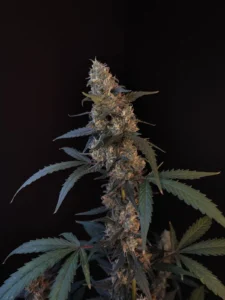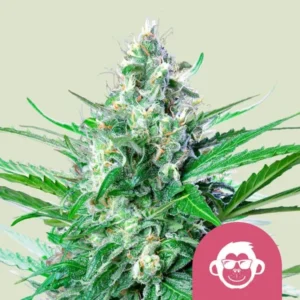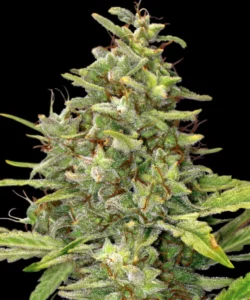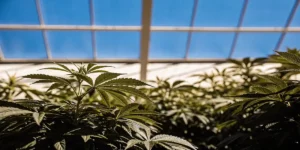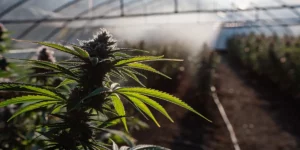


Pineapple Express is a high-yielding feminized photoperiod strain from Barney’s Farm created by crossing Hawaiian Landrace Sativa with Trainwreck. The cultivar combines 60% Sativa and 40% Indica genetics with vigorous growth, a tropical pineapple-driven flavor profile, and substantial production potential indoors and outdoors.
Current breeder specifications place Pineapple Express at approximately 28% THC. Indoor plants generally reach 120–140 cm and can produce approximately 600–700 g/m², while outdoor specimens can reach 180–250 cm and yield around 1,500–2,000 g per plant under favorable conditions.
Recommended Strains

Pineapple Express

|
THC | 26% - 27% (High) |

|
Lineage | Hawaiian Landrace Sativa x Trainwreck |

|
Type | Feminized |

|
Height | 7.05 ft | 2.15 m |

|
Yield Outdoor | 52.91 - 70.55 oz/plant | 1500 - 2000 g/plant |

|
Flowering Time | 9 - 10 weeks |

|
Phenotype | 40% Indica / 60% Sativa |

|
Effects | Focused, Relaxed, Happy |

|
Flavors | Pineapple, Tropical, Fruity, Pine |

Pineapple Express Auto
|
|
THC | 20% - 21% (Medium) |
|
|
Lineage | Pineapple Express x Ruderalis |
|
|
Type | Autoflowering |
|
|
Height | 3.28 ft | 1 m |

|
Yield | High |

|
Yield Indoor | 1.31 - 1.8 oz/ft² | 400 - 550 g/m² |
|
|
Life Cycle | 9 - 10 weeks |
|
|
Phenotype | 60% Indica / 40% Sativa |
|
|
Effects | Creative, Balanced, Relaxed |
|
|
Flavors | Tropical, Sweet, Fruity, Pineapple |
The flowering stage lasts approximately 60–65 days indoors. Outdoors, Pineapple Express generally reaches maturity during the first to second week of October in the Northern Hemisphere. This is a photoperiod strain, not an autoflower, so indoor growers initiate flowering by changing the light schedule to 12/12.
You can find Pineapple Express seeds and other genetics from Barney’s Farm at Growlantis.
Pineapple Express Strain Grow Info
| Trait | Pineapple Express |
|---|---|
| Genetics | Hawaiian Landrace Sativa × Trainwreck |
| Seed type | Feminized photoperiod |
| Sativa / Indica | 60% Sativa / 40% Indica |
| THC | Approximately 28% |
| Flowering time | 60–65 days |
| Indoor height | 120–140 cm |
| Indoor yield | 600–700 g/m² |
| Outdoor height | 180–250 cm |
| Outdoor yield | 1,500–2,000 g/plant |
| Outdoor harvest | 1st–2nd week of October |
| Flavor | Pineapple, citrus, earthy, pine |
| Aroma | Fruit, pineapple, tropical |
| Reported effects | Fast cerebral onset, happy, relaxing |
| Growth characteristic | Naturally resistant to molds and diseases according to the breeder |
These specifications describe the Barney’s Farm Pineapple Express seed line currently sold through Growlantis. Actual height, yield, cannabinoid concentration, and finishing speed can still vary according to phenotype, vegetative duration, root space, training, environment, and overall plant health.
What Is the Pineapple Express Strain?
Pineapple Express is a Sativa-dominant photoperiod hybrid created from Hawaiian Landrace Sativa and Trainwreck. Its genetic background combines the tropical character of Hawaiian cannabis with the vigorous structure and complex lineage associated with Trainwreck.
The resulting plant contains approximately 60% Sativa and 40% Indica genetics. This gives Pineapple Express a noticeable Sativa lean without turning it into an extremely tall or slow-flowering tropical cultivar. Indoor plants remain within a relatively manageable 120–140 cm range, while outdoor specimens can develop into substantially larger plants.
Pineapple Express is particularly notable for combining a 60–65 day flowering period with strong production potential. Its tropical aroma and high outdoor yield have made it useful to growers looking for vigorous photoperiod genetics without an exceptionally long indoor flowering stage.
Pineapple Express Genetics
The official Pineapple Express lineage is Hawaiian Landrace Sativa × Trainwreck.
The Hawaiian side contributes tropical fruit characteristics and a strong Sativa influence, while Trainwreck adds vigor, resin production, pine and earthy elements, and additional structural strength to the finished cultivar.
Barney’s Farm describes its Trainwreck background as drawing from Afghani, Mexican Sativa, and Thai landrace genetics. Those deeper ancestral lines help explain why Pineapple Express combines tropical Sativa traits with enough Indica influence to maintain relatively manageable flowering and structure.
The finished cultivar is supplied as feminized photoperiod seed and contains approximately 60% Sativa and 40% Indica genetics.
Is Pineapple Express Indica or Sativa?
Pineapple Express is a Sativa-dominant hybrid containing approximately 60% Sativa and 40% Indica genetics.
Its growth structure reflects that Sativa majority through vigorous development and some stretch, but the 40% Indica influence helps keep indoor plants within approximately 120–140 cm under typical controlled conditions.
The effect profile also combines characteristics from both sides of the hybrid. The breeder describes a fast cerebral onset together with happy and relaxing effects, while other current breeder material emphasizes an uplifting and energetic character.
Individual experiences can still vary according to dose, tolerance, phenotype, cannabinoid composition, and finished flower quality.
Pineapple Express THC
Current breeder specifications place Pineapple Express at approximately 28% THC.
This is substantially higher than older descriptions that place the cultivar in the 15–22% range. Growlantis also currently lists a slightly older 26–27% specification, while the present Barney’s Farm technical data uses 28%.
The breeder figure should be treated as genetic potential rather than a guarantee that every harvested plant will test at exactly that percentage.
Lighting, phenotype, environment, plant health, harvest maturity, drying, curing, and laboratory methodology can all influence the cannabinoid concentration measured in finished flowers.
Pineapple Express Flowering Time
Pineapple Express has a current official flowering period of approximately 60–65 days, or roughly nine weeks after indoor flowering begins.
This timeframe describes flowering only. It does not include germination or vegetative development.
Because Pineapple Express is photoperiod dependent, indoor growers determine when flowering begins by switching the light schedule from a vegetative schedule such as 18/6 to 12 hours of light and 12 hours of uninterrupted darkness.
There is no universal seed-to-harvest timeline for the cultivar because the vegetative stage can be made shorter or longer according to canopy size, root development, available height, plant number, and training strategy.

Pineapple Express Plant Height
Pineapple Express develops very different dimensions indoors and outdoors.
Indoor plants generally reach approximately 120–140 cm, making the strain medium-sized to moderately tall rather than a compact autoflower. Vegetative duration and training can influence final height considerably because growers decide when the switch to 12/12 occurs.
Outdoor plants can reach approximately 180–250 cm under favorable conditions. Root volume, sunlight, length of the growing season, and overall plant health all contribute to whether individual specimens approach the upper end of that range.
Using separate indoor and outdoor specifications is therefore much more useful than assigning Pineapple Express one universal height.
Growing Pineapple Express Indoors
Pineapple Express performs well indoors when its vigorous growth is organized before the flowering transition.
During vegetation, growers can maintain an 18/6 light schedule while roots and branches establish. Flowering begins only when the schedule changes to 12/12, so the grower can decide how large the canopy becomes before the 60–65 day bloom begins.
Current breeder specifications place indoor production at approximately 600–700 g/m² and height at 120–140 cm.
Canopy efficiency is therefore important. Training the plant to spread productive branches across the available light can make better use of the growing area while preventing a small number of dominant shoots from receiving most of the illumination.
Growing Pineapple Express Outdoors
Outdoor cultivation is one of Pineapple Express’s strongest use cases.
The strain can reach approximately 180–250 cm and produce around 1,500–2,000 g per plant under favorable conditions. Those dimensions require significantly more space than the indoor version of the plant and make adequate root volume, sunlight, branch spacing, and structural support increasingly important.
Choose an outdoor location with strong direct sunlight, suitable drainage, and enough horizontal space for branches to develop without becoming excessively crowded.
Pineapple Express generally finishes during the first to second week of October, so the local climate should remain reasonably stable into early autumn.
Pineapple Express Yield
Pineapple Express has strong production potential both indoors and outdoors.
Current breeder specifications place indoor yield at approximately 600–700 g/m² under favorable conditions. Outdoors, fully developed plants can produce approximately 1,500–2,000 g each.
These figures represent breeder-listed potential rather than guaranteed harvest weights.
Indoor production depends on lighting, usable canopy area, vegetative duration, root volume, training, irrigation, nutrition, and environmental stability. Outdoor yield additionally depends on direct sunlight, soil volume, planting date, plant size, climate, and seasonal weather.
The very high outdoor figure is most realistic for large, healthy plants with extensive roots and a full growing season.
Pineapple Express Outdoor Grow: What Matters Most
Pineapple Express previously performed particularly well for outdoor-grow searches, and its official specifications explain why. The plant has enough vigor to reach up to 250 cm outdoors while carrying a substantial amount of flower across a large canopy.
Large plants need more than sunlight alone. Branch spacing should allow air to circulate through the interior of the canopy, while stakes, ties, or trellising can become useful as flower weight increases.
Water demand can also become substantial during warm periods because a two-meter-plus plant has a much larger root system and leaf area than an indoor specimen.
The breeder describes Pineapple Express as naturally resistant to molds and diseases, which is useful outdoors, but this resilience should not be confused with immunity.
Pineapple Express Outdoor Harvest Time
Pineapple Express generally reaches outdoor maturity during the first to second week of October in the Northern Hemisphere.
This breeder window should be used as the primary seasonal planning reference rather than a vague early-fall date.
Latitude, phenotype, sunlight, temperature, and local weather can still shift the precise finishing date slightly. As October approaches, growers should evaluate actual flower and trichome maturity rather than harvesting automatically because the calendar has reached a specific day.
Rain and autumn humidity should also be monitored closely as dense flowers approach full maturity.
Germinating Pineapple Express Seeds
Pineapple Express does not require a unique strain-specific germination method.
Seeds need stable warmth, consistent moisture, oxygen, and careful handling while the first root develops. A controlled moist paper-towel method or another suitable propagation medium can both work when conditions remain stable.
Once the taproot emerges, transfer the seed carefully into the chosen medium while avoiding unnecessary contact with the exposed root.
Young seedlings initially consume much less water and nutrition than established plants because their root systems occupy only a limited area. The early objective should be stable root establishment rather than attempting to force rapid growth with excessive irrigation or fertilizer.
Pineapple Express Vegetative Growth
Vegetative growth determines how large Pineapple Express becomes before the 60–65 day flowering stage begins.
Indoor growers can maintain a longer photoperiod such as 18/6 while the plant establishes its root system and major branches. Unlike an autoflower, Pineapple Express will remain in vegetative development indoors until the grower changes the photoperiod.
This stage therefore has no universal duration.
A longer vegetative period produces a larger canopy and root system, while a shorter period helps keep final height under control. Available space, plant number, training, and canopy coverage should determine when the switch to 12/12 occurs rather than a fixed Week 7 schedule.
Training Pineapple Express
Pineapple Express has a dense but somewhat stretched structure, making canopy management useful where growers need to control indoor height or improve light distribution.
Low-Stress Training can gradually move vigorous branches outward and reduce excessive vertical dominance. Topping during healthy vegetative growth can also encourage several main branches where the grower has enough recovery time before flowering.
Neither technique is mandatory. The objective should be to build a productive canopy suited to the available space rather than applying multiple training methods automatically.
Large outdoor plants may require a different strategy, with branch support becoming more important than height control as the plant approaches its heavy late-season flowering stage.
Pineapple Express Flowering Development
Once indoor plants are switched to 12/12, Pineapple Express begins an approximately 60–65 day flowering period.
The early transition can include continued stretch while flower sites become increasingly visible. Any final gentle canopy positioning is easiest during this stage before developing buds make branches harder to reposition.
As flowering progresses, flower mass and resin production increase and the cultivar’s pineapple, tropical fruit, citrus, earth, and pine characteristics become progressively stronger.
Later in bloom, major structural training should give way to stable environmental conditions, appropriate irrigation, branch support where needed, and sufficient airflow through the canopy.
Flowering Days 1–21
During approximately the first three weeks after the 12/12 switch, Pineapple Express moves from vegetative growth into established flowering.
Branches can continue extending during the transition, particularly on vigorous plants that were allowed a longer vegetative period. Growers with limited headroom should therefore account for some stretch before initiating bloom.
This is a useful period for completing gentle branch positioning and ensuring the canopy is sufficiently open for light and air to penetrate later.
The exact appearance of early flowers can vary slightly between plants, so the stage should not be treated as a rigid daily checklist.
Flowering Days 22–45
During mid-flowering, Pineapple Express increasingly directs its resources toward flower mass and resin development.
The buds become denser and the tropical pineapple aroma becomes more obvious. As flower weight increases, branch support can become useful, particularly on plants with wide canopies or vigorous lateral growth.
The priority during this period should be maintaining healthy roots, stable environmental conditions, appropriate irrigation, and enough airflow around developing flowers.
Major pruning or repeated high-stress training becomes less useful once substantial flower development is underway.
Flowering Days 46–65
The final portion of the flowering period is focused on maturation.
Flower density and resin continue developing as Pineapple Express approaches the current 60–65 day breeder window. This range should tell growers when maturity monitoring becomes particularly important rather than act as an automatic harvest deadline.
Individual phenotype, lighting, plant health, and environmental conditions can create small differences in finishing speed.
As the expected window approaches, evaluate the flowers and trichomes directly and combine those observations with the breeder timeframe before choosing the final harvest date.
Feeding Pineapple Express
Pineapple Express does not require one universal strain-specific NPK ratio.
During vegetative development, use a nutrient program appropriate to the chosen growing medium that supports healthy roots, foliage, and branch growth. Once flowering begins, transition toward the bloom-oriented program designed for the fertilizer system being used.
There is no need to increase phosphorus and potassium according to a generic weekly Pineapple Express calendar.
Nutrient strength should instead reflect substrate, water quality, root volume, plant size, and actual response. High production potential does not mean increasingly concentrated feeding will automatically increase yield.
Watering Pineapple Express
Pineapple Express should be watered according to actual root-zone conditions rather than a fixed daily schedule.
Young plants initially use relatively small amounts of water because their roots occupy only part of the growing medium. As the root system and canopy expand, water demand naturally increases.
Container volume, substrate, temperature, humidity, lighting, airflow, and plant size all influence irrigation frequency.
Outdoor specimens approaching two meters or more can consume considerably more water during warm periods, but good drainage and root-zone oxygen remain important regardless of plant size.
Mold and Disease Resistance
Barney’s Farm describes Pineapple Express as naturally highly resistant to molds and diseases, making resilience one of the cultivar’s notable growing characteristics.
That does not mean the plant is immune to fungal problems. Dense flowers, poor ventilation, prolonged autumn rainfall, or stagnant moisture can still create favorable conditions for disease.
Good branch spacing and circulation remain especially important on large outdoor specimens and during late flowering.
Breeder-reported resistance provides additional margin for the grower, but it should complement normal environmental management rather than replace it.
Airflow and Branch Support
Pineapple Express can develop a dense canopy and substantial flower weight, particularly when grown into a large outdoor plant.
Indoor circulation should move air gently through, above, and below the canopy while ventilation removes excess humidity and heat. Training during vegetation can help prevent branches from becoming so tightly packed that stagnant pockets develop later.
Outdoor growers should watch the interior of large plants after rain because external foliage can dry while moisture remains trapped deeper in the canopy.
Support with stakes, ties, or trellising may also become useful as mature flowers place increasing weight on longer branches.
Pineapple Express Effects
Barney’s Farm describes Pineapple Express as producing a fast cerebral onset with happy and relaxing effects, while its broader current description also emphasizes uplifting and energetic characteristics.
The 60% Sativa component helps explain the more mentally active beginning of the reported experience, while the 40% Indica side contributes a more physically relaxed component.
Individual responses can still vary according to dose, tolerance, phenotype, cannabinoid composition, and finished flower quality.
These descriptions should therefore be treated as breeder-reported characteristics rather than guaranteed outcomes or evidence that Pineapple Express treats any medical condition.
Pineapple Express Flavor and Aroma
Pineapple Express has a strongly tropical sensory profile centered around pineapple, fruit, citrus, earth, and pine.
The breeder describes the aroma specifically as fruity, tropical, and pineapple driven. It also identifies the cultivar as having a myrcene-dominant terpene profile, helping characterize the deeper earthy dimension behind the brighter fruit notes.
Individual plants can still emphasize different parts of the profile, while growing conditions, harvest maturity, drying, and curing influence the finished aroma.
These characteristics are better used as sensory descriptors than as a basis for therapeutic claims about individual terpenes.
Pineapple Express vs Pineapple Express Auto
Pineapple Express and Pineapple Express Auto should not be treated as the same cultivation type.
The Pineapple Express covered in this guide is a feminized photoperiod strain. Indoor growers control when flowering begins by switching the lights to 12/12, after which the flowering stage lasts approximately 60–65 days.
Growlantis also carries separate Pineapple Express Auto genetics. Autoflowering versions begin flowering according to age and follow their own seed-to-harvest lifecycles, heights, yields, potency levels, and genetic ratios.
Always confirm the exact seed type before applying a cultivation timeline.
Pineapple Express Strain Review
From a cultivation perspective, Pineapple Express combines relatively fast photoperiod flowering with unusually strong production potential.
Indoor plants stay around 120–140 cm while producing approximately 600–700 g/m² under favorable conditions. Outdoors, plants can grow to 180–250 cm and reach very high yields when given sufficient sunlight, root volume, and seasonal development.
Its main practical strengths are vigorous growth, mold and disease resilience, tropical aroma, and strong outdoor performance.
The key planning distinction is that Pineapple Express is not an autoflower. Growers control vegetative duration indoors and should base final plant size around the timing of the 12/12 switch.

Common Problems When Growing Pineapple Express
Confusing Pineapple Express With Pineapple Express Auto
The Pineapple Express covered in this guide is feminized and photoperiod dependent. It does not begin flowering automatically according to age. Growers must switch indoor plants to 12/12, while separate Pineapple Express Auto products follow automatic lifecycles. Mixing the two leads to incorrect flowering, height, yield, and harvest information.
Following a Fixed Week-by-Week Calendar
Pineapple Express has no universal six-week vegetative stage or Week 12 harvest. Indoor growers determine vegetative duration themselves, and flowering then requires approximately 60–65 days after the 12/12 switch. Canopy size, roots, available height, plant number, and training should determine when flowering begins.
Using an Outdated THC Range
The current Barney’s Farm specification places Pineapple Express at approximately 28% THC. Older figures such as 15–22% or Growlantis’s current 26–27% listing do not match the latest breeder data. Actual laboratory results can vary, but the current breeder specification should remain the primary reference.
Treating One Height as Universal
Pineapple Express does not have one useful universal plant height. Current specifications place indoor plants around 120–140 cm and outdoor plants around 180–250 cm. Vegetative duration, root volume, training, light, climate, and phenotype all influence size, making separate indoor and outdoor ranges considerably more useful.
Assuming Mold Resistance Means Immunity
Pineapple Express is described by its breeder as naturally resistant to molds and diseases, but resistance is not immunity. Dense flowers, stagnant indoor air, or prolonged autumn rain can still create problems. Canopy spacing, circulation, ventilation, and routine inspection remain important throughout late flowering.
FAQs About Pineapple Express
What is the Pineapple Express flowering time?
Pineapple Express flowers for approximately 60–65 days indoors, or roughly nine weeks after the light schedule is changed to 12/12. This timeframe describes flowering only and does not include germination or vegetation. Because it is photoperiod dependent, growers determine how long the vegetative stage lasts before initiating bloom.
Is Pineapple Express indica or sativa?
Pineapple Express is a Sativa-dominant hybrid containing approximately 60% Sativa and 40% Indica genetics. Its Hawaiian Landrace Sativa × Trainwreck lineage produces vigorous growth and an uplifting cerebral component while retaining a relaxing physical side. Indoor plants remain reasonably manageable at approximately 120–140 cm.
How much does Pineapple Express yield?
Pineapple Express can produce approximately 600–700 g/m² indoors and 1,500–2,000 g per outdoor plant under favorable conditions. These figures represent breeder-listed potential rather than guaranteed harvests. Lighting, sunlight, roots, plant size, training, nutrition, irrigation, climate, environment, and phenotype all influence actual production.
How tall does Pineapple Express grow?
Pineapple Express generally reaches approximately 120–140 cm indoors and 180–250 cm outdoors. Indoor growers can influence final size through vegetative duration and training because the strain is photoperiod dependent. Outdoor plants can become substantially larger when provided with extensive root space, strong sunlight, and a full growing season.
When is Pineapple Express harvested outdoors?
Pineapple Express generally reaches outdoor maturity during the first to second week of October in the Northern Hemisphere. Latitude, phenotype, sunlight, temperature, and local autumn weather can shift the precise finishing date slightly. Growers should use the breeder window for planning while confirming actual flower and trichome maturity before harvesting.
What is the THC level of Pineapple Express?
Current Barney’s Farm specifications place Pineapple Express at approximately 28% THC. This represents genetic potential rather than a guaranteed result from every harvested plant. Phenotype, lighting, environmental stability, plant health, harvest maturity, drying, curing, and laboratory methodology can all influence the cannabinoid concentration measured in finished flowers.