

Cannabis and cannabinoid medicines may reduce nausea and vomiting in some situations, with the strongest clinical evidence involving persistent chemotherapy-induced nausea despite standard antiemetic treatment. Evidence for ordinary nausea, motion sickness or specific cannabis strains is much weaker. THC can also cause side effects, and chronic heavy cannabis use can paradoxically trigger severe recurrent vomiting called cannabinoid hyperemesis syndrome.
Digestive conditions often bring nausea, cramping and appetite loss, and some patients explore cannabis for relief. If you want to grow a supportive supply, our roundup of cannabis seeds that may help with Crohn’s disease gathers the varieties most associated with easing these symptoms — for general information only, and always alongside proper medical care from your doctor.
Recommended Strains

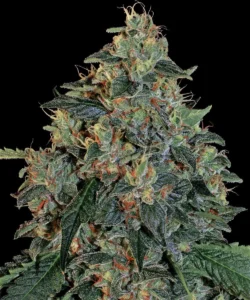
Forbidden Fruit Strain

|
THC | 24% - 25% (High) |

|
Lineage | Cherry Pie x Tangie |

|
Type | Feminized |

|
Height | 5.25 ft | 1.6 m |

|
Yield | High |

|
Yield Indoor | 1.47 - 1.64 oz/ft² | 450 - 500 g/m² |

|
Yield Outdoor | 17.64 - 19.4 oz/plant | 500 - 550 g/plant |

|
Flowering Time | 8 - 10 weeks |

|
Phenotype | 70% Indica / 30% Sativa |

|
Effects | Calming, Euphoric, Relaxed, Uplifted |

|
Flavors | Candy, Citrus, Earthy, Fruity, Pine |

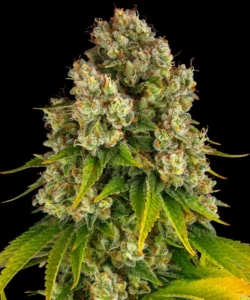
Auto Blackberry Kush
|
|
THC | 15% - 20% (Medium) |
|
|
Lineage | Blueberry X Dark hash plant |
|
|
Type | Autoflowering |
|
|
Height | 2.3 ft | 0.7 m |
|
|
Yield | Medium |
|
|
Yield Indoor | 1.31 - 1.47 oz/ft² | 400 - 450 g/m² |
|
|
Yield Outdoor | 7.05 oz/plant | 200 g/plant |
|
|
Life Cycle | 10 - 11 weeks |
|
|
Phenotype | 70% Indica / 30% Sativa |
|
|
Effects | Sedative, Powerful, Relaxed |
|
|
Flavors | Fruity, Kush, Earthy |
Nausea rarely shows up on its own, so it helps to look at the bigger picture. If yours arrives with a seasonal bug, our guide to using cannabis for a cold or flu is worth a read, and anyone dealing with recurring stomach discomfort often also benefits from our overview of cannabis and gastritis and how it may help.
Does Cannabis Help With Nausea?
Cannabinoids can have anti-nausea and anti-vomiting effects.
The clearest human evidence involves chemotherapy-induced nausea and vomiting, or CINV.
Two prescription cannabinoid medicines, dronabinol and nabilone are approved in the United States for chemotherapy-related nausea and vomiting in patients who have not responded adequately to conventional antiemetic treatment.
More recent oncology guidance also recognizes a possible role for cannabinoids when chemotherapy nausea or vomiting remains uncontrolled despite appropriate standard treatment.
That does not mean cannabis is a proven remedy for every type of nausea.
Evidence is much more limited for common stomach upset, motion sickness, gastrointestinal disorders and other everyday causes of nausea.
Cannabis for Nausea: Quick Guide
| Question | Evidence |
|---|---|
| Can cannabinoids reduce nausea? | Yes, in some clinical settings |
| Strongest evidence | Refractory chemotherapy-induced nausea and vomiting |
| Is THC involved? | Yes, THC has established antiemetic activity |
| Is CBD proven for nausea? | Human evidence is much more limited |
| Is one strain best? | No reliable clinical evidence |
| Does higher THC work better? | Not necessarily |
| Can cannabis cause nausea? | Yes |
| Can chronic cannabis cause severe vomiting? | Yes, through CHS |
The key distinction is between evidence for cannabinoid medicines and much broader claims about any cannabis product or strain.
How Cannabinoids Affect Nausea
The body’s endocannabinoid system participates in processes involved in nausea and vomiting.
THC activates cannabinoid receptors, particularly CB1 receptors in the central nervous system.
This is one reason THC and THC-like medicines have been studied as antiemetics.
The biology is more complicated than simply activating one receptor, however.
Serotonin signaling and other neural pathways involved in vomiting also interact with the endocannabinoid system.
This provides a plausible biological explanation for cannabinoid antiemetic effects, but biological plausibility alone does not establish that every cannabis product works for every cause of nausea.
Clinical evidence remains essential.
THC vs CBD for Nausea
THC and CBD should not be presented as interchangeable nausea treatments.
THC
THC has the stronger clinical evidence for antiemetic effects.
Prescription medicines based on THC or related synthetic cannabinoids have been used specifically for chemotherapy-induced nausea and vomiting.
However, THC is intoxicating and can cause adverse effects such as:
- Dizziness
- Drowsiness
- Anxiety
- Confusion
- Changes in coordination
- Changes in perception
The fact that THC can suppress nausea in some circumstances does not mean increasingly high THC concentrations produce increasingly effective relief.
CBD
CBD has interesting anti-nausea effects in preclinical research, but human clinical evidence is much more limited.
It should therefore not be described as a proven non-intoxicating substitute for THC in nausea treatment.
CBD can also interact with medications and can produce adverse effects of its own.
Claims that a CBD-dominant strain reliably treats nausea are stronger than the available evidence supports.
Cannabis and Chemotherapy-Induced Nausea
This is where the evidence is most clinically relevant.
Modern cancer care uses several effective classes of antiemetic medicines to prevent chemotherapy-induced nausea and vomiting.
Cannabinoids are generally not the first treatment used instead of those medicines.
The American Society of Clinical Oncology states that adults receiving moderately or highly nausea-producing cancer treatment who still experience nausea or vomiting despite guideline-based antiemetic therapy may consider adding:
- Dronabinol
- Nabilone
- A quality-controlled oral 1:1 THC:CBD extract
The evidence is strongest for dronabinol and nabilone.
This is an important nuance.
The recommendation concerns refractory symptoms despite standard antiemetic treatment, not routine substitution of cannabis for proven chemotherapy antiemetics.
Is Cannabis Better Than Standard Anti-Nausea Medicine?
Not generally.
Many early cannabinoid studies compared THC-derived medicines with antiemetics that are now relatively old.
Modern nausea prevention, particularly in oncology, can involve combinations of several effective medicines.
A 2025 meta-analysis found cannabinoids superior to placebo for chemotherapy-induced nausea and vomiting but did not find a clear advantage over active antiemetic treatments, many of which came from older trials.
The researchers emphasized that there is still limited evidence comparing cannabinoids with today’s more advanced multi-drug antiemetic regimens.
So cannabis should not be presented as universally more effective than conventional nausea medication.
What Is the Best Cannabis Strain for Nausea?
There is no clinically proven best cannabis strain for nausea.
Strain lists frequently recommend cultivars such as:
But controlled clinical trials have not established that these commercial strain names are reliably superior for nausea.
There are several problems with strain-based recommendations.
Commercial strain names do not guarantee identical genetics.
They do not guarantee identical THC or CBD concentrations.
They do not guarantee identical terpene profiles.
And they do not predict an individual’s clinical response.
For nausea, actual cannabinoid content and the medical context are more meaningful than whether a product is marketed as Sour Diesel or Northern Lights.

Is Indica or Sativa Better for Nausea?
There is no good evidence that indica is better than sativa, or vice versa, for nausea.
Modern commercial cannabis has undergone extensive hybridization, and indica/sativa labels do not consistently correspond with genetic or chemical differences.
More useful information includes:
- THC content
- CBD content
- Product formulation
- Route of administration
- Previous response
- Other medications
- Cause of the nausea
Growlantis covers this problem separately in its guide to whether cannabis strain names are scientifically reliable.
Does High-THC Cannabis Work Better for Severe Nausea?
Not necessarily.
The original idea that severe nausea should automatically be treated with high-THC strains is too simplistic.
THC can have antiemetic effects, but greater exposure also increases the possibility of unwanted psychoactive effects.
High THC can contribute to:
- Anxiety
- Dizziness
- Confusion
- Sedation
- Impaired coordination
And with frequent, prolonged cannabis use, cannabinoids can paradoxically become associated with recurrent severe nausea and vomiting.
The objective should therefore never be simply to find the highest-THC strain available.
Can Cannabis Actually Cause Nausea and Vomiting?
Yes.
This is one of the most important facts for anyone searching for cannabis for nausea.
Long-term cannabis use can be associated with cannabinoid hyperemesis syndrome, or CHS.
CHS causes recurrent episodes of:
- Severe nausea
- Repeated vomiting
- Abdominal pain
Many affected people report temporary symptom relief from very hot showers or baths.
The condition can be confusing because someone may initially use cannabis because they believe it improves nausea, while continued cannabis use eventually contributes to recurrent vomiting.
Recent medical reviews continue to identify sustained cannabis cessation as the key intervention for resolving CHS.
What Is Cannabinoid Hyperemesis Syndrome?
Cannabinoid hyperemesis syndrome is a disorder associated particularly with prolonged, frequent cannabis exposure.
People may experience cycles of severe nausea and vomiting separated by periods when symptoms improve.
A characteristic history can include:
Long-term cannabis use
Symptoms usually occur in people with an established pattern of frequent use.
Repeated vomiting episodes
Episodes can become severe enough to require emergency treatment.
Abdominal discomfort
Abdominal pain is common.
Hot bathing
Some people repeatedly take hot showers or baths because they temporarily reduce symptoms.
Improvement after stopping cannabis
Sustained cannabis cessation is a central feature of CHS management.
Someone who regularly uses cannabis and is experiencing unexplained recurrent vomiting should therefore not assume that taking more cannabis is the solution.
Does Cannabis Help Motion Sickness?
There is not enough strong human evidence to recommend cannabis as a reliable treatment for motion sickness.
The current Growlantis article presents cannabis as a natural alternative for nausea during car, boat or air travel.
That claim should be removed.
There is an additional practical problem:
THC can impair reaction time, coordination and judgment.
Using intoxicating cannabis in connection with driving is therefore particularly inappropriate.
Established treatments and behavioral strategies for motion sickness have much stronger clinical support.
What About Cannabis for IBS or Crohn’s-Related Nausea?
Evidence should also be treated cautiously here.
People with gastrointestinal disorders sometimes report improvements in symptoms when using cannabis.
However, symptom relief is not the same as treating the underlying disease.
Cannabis should not be presented as an established treatment for nausea caused by:
- Crohn’s disease
- Irritable bowel syndrome
- Other gastrointestinal disorders
without considering the underlying diagnosis and available medical treatment.
Persistent or recurrent nausea can have many causes, and masking the symptom does not identify the cause.
Smoking, Vaping or Edibles for Nausea?
There is no single route that is medically best for everyone.
Inhaled Cannabis
Inhaled cannabinoids generally take effect more quickly than swallowed cannabis.
But smoking exposes the lungs to combustion products, while vaping has its own pulmonary and product-quality risks.
It should therefore not simply be described as a “healthier” alternative to smoking.
Edible Cannabis
Edibles have slower and less predictable onset.
That can be inconvenient when someone already feels nauseated.
Their delayed effect can also make it easier to take additional THC before the first amount has fully taken effect.
Oral Prescription Cannabinoids
Prescription cannabinoid medications have standardized formulations and dosing.
This is very different from using cannabis flower of uncertain composition.
For medically significant nausea, product selection and route are questions to discuss with a qualified healthcare professional rather than solve through a generic strain recommendation.
Can Cannabis Prevent Nausea Before It Starts?
This depends entirely on the cause.
For chemotherapy, antiemetic prevention follows evidence-based treatment protocols.
Cannabis should not be substituted for those protocols.
For ordinary nausea or motion sickness, evidence is not strong enough to recommend cannabis as a general preventive strategy.
The current article’s recommendation to take cannabis before a known nausea trigger therefore overstates the evidence.
Preventive treatment should be matched to the actual cause of nausea.
Side Effects of Cannabis Used for Nausea
Cannabinoids can cause adverse effects even when they reduce nausea.
Clinical research has reported effects including:
- Dizziness
- Drowsiness
- Sedation
- Confusion
- Euphoria
- Changes in balance
- Anxiety
- Hallucinations
Cannabis can also interact with medications.
Those issues become particularly important for people receiving cancer treatment or managing other chronic illnesses.
A person experiencing persistent nausea should therefore discuss cannabis use with their healthcare team rather than assuming a natural product cannot interfere with treatment.
When Nausea Needs Medical Attention
Nausea is a symptom, not a diagnosis.
Seek medical care when nausea or vomiting is:
- Severe or persistent
- Associated with dehydration
- Accompanied by significant abdominal pain
- Associated with blood in vomit
- Associated with confusion or loss of consciousness
- Occurring repeatedly in a frequent cannabis user
- Interfering with cancer treatment or medication
- Occurring during pregnancy or another medically complex situation
Recurrent vomiting among frequent cannabis users deserves particular attention because CHS can be overlooked.
Cannabis for Nausea: Key Takeaway
Cannabis can have genuine anti-nausea effects, but the evidence is much narrower than many cannabis websites suggest.
The strongest clinical support involves cannabinoid medicines for persistent chemotherapy-induced nausea and vomiting when standard antiemetic treatment has not provided adequate control.
There is much less evidence for using cannabis to treat ordinary nausea, motion sickness or nausea from gastrointestinal conditions.
There is also no clinically proven “best strain for nausea.”
THC has stronger antiemetic evidence than CBD, but greater THC exposure is not necessarily better and can increase adverse effects.
Most importantly, prolonged cannabis use can itself cause severe recurrent nausea and vomiting through cannabinoid hyperemesis syndrome.
The cause of nausea should therefore be identified before assuming cannabis is an appropriate treatment.

FAQs About Cannabis for Nausea
Does cannabis help nausea?
Cannabis and cannabinoid medicines can reduce nausea in some circumstances, with the strongest clinical evidence involving chemotherapy-induced nausea and vomiting. Evidence for everyday nausea and many other causes is considerably weaker. Cannabis can also cause side effects, and frequent long-term use can paradoxically produce severe nausea and vomiting through cannabinoid hyperemesis syndrome.
Is THC or CBD better for nausea?
THC currently has stronger human clinical evidence for antiemetic effects, particularly through prescription cannabinoids used for chemotherapy-related nausea and vomiting. CBD has shown anti-nausea potential in laboratory and preclinical research, but human evidence is less established. Neither cannabinoid should be assumed to work equally well for every cause of nausea.
What is the best cannabis strain for nausea?
No cannabis strain has been clinically proven to be the best for nausea. Popular strain recommendations are largely based on anecdotal reports rather than comparative clinical trials. THC and CBD content, formulation, individual response and the cause of nausea provide more meaningful information than commercial names such as Sour Diesel, OG Kush or Northern Lights.
Can cannabis make nausea worse?
Yes. Cannabis can cause unwanted effects and, with prolonged frequent use, can contribute to cannabinoid hyperemesis syndrome. CHS causes recurrent severe nausea, vomiting and often abdominal pain. People may temporarily feel better after hot showers, but sustained cannabis cessation is considered central to resolving the syndrome.
Does cannabis help chemotherapy nausea?
Cannabinoids can have a role when chemotherapy-induced nausea or vomiting persists despite guideline-based antiemetic treatment. ASCO states that dronabinol, nabilone or a quality-controlled oral 1:1 THC:CBD extract may be considered in selected refractory cases. Cannabis should not replace standard preventive antiemetic treatment without guidance from the oncology team.
Is high-THC weed better for nausea?
Not necessarily. THC has recognized antiemetic activity, but increasing THC exposure also increases risks such as dizziness, anxiety, confusion and sedation. There is no evidence that choosing the highest-THC strain reliably provides the best nausea relief. Frequent heavy cannabis exposure can also contribute to cannabinoid hyperemesis syndrome and recurrent vomiting.