
CBD cream for hemorrhoids has not been shown in clinical trials to treat hemorrhoids, shrink swollen tissue, or reliably relieve hemorrhoid pain and itching. Small studies suggest topical CBD may affect pain or inflammatory symptoms in some other conditions, but the evidence is limited. Established hemorrhoid care focuses instead on fiber, bowel habits, and conventional symptom treatments.
Can CBD Cream Help Hemorrhoids?
At present, there is not enough clinical evidence to say that CBD cream is an effective treatment for hemorrhoids.
Recommended Strains
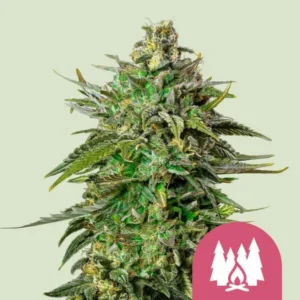
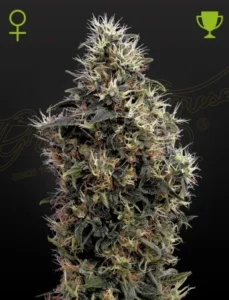
Larry OG

|
THC | 21% - 22% (Medium) |

|
Lineage | OG Kush x SFV OG Kush |

|
Type | Feminized |

|
Height | 5.25 ft | 1.6 m |

|
Yield | High |

|
Yield Indoor | 1.47 - 1.64 oz/ft² | 450 - 500 g/m² |

|
Yield Outdoor | 15.87 - 17.64 oz/plant | 450 - 500 g/plant |

|
Flowering Time | 8 - 10 weeks |

|
Phenotype | 50% Indica / 50% Sativa |

|
Effects | Relaxed |

|
Flavors | Citrus, Diesel, Earthy |
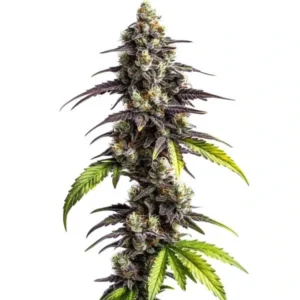
Northern Lights Automatic
|
|
THC | 10% - 14% (Low) |
|
|
Lineage | Thai x Afghani x Ruderalis |
|
|
Type | Feminized |
|
|
Height | 5.74 ft | 1.75 m |
|
|
Yield | Low |
|
|
Yield Indoor | 0.39 - 0.66 oz/ft² | 120 - 200 g/m² |
|
|
Flowering Time | 10 - 11 weeks |
|
|
Phenotype | 90% Indica / 10% Sativa |
|
|
Effects | Uplifted, Happy, Relaxed |
|
|
Flavors | Sweet, Pungent, Citrus, Pine |
Cannabidiol, or CBD, has attracted interest because laboratory, animal and some human studies have investigated potential effects on pain and inflammation. However, evidence from one condition cannot automatically be transferred to another.
A systematic review examining topical and transdermal CBD trials found only eight eligible published interventional studies. The formulations, doses and conditions studied varied considerably, and the authors identified substantial reporting limitations and risk of bias.
None establishes CBD cream as a clinically proven hemorrhoid treatment.
That means claims such as “CBD reduces hemorrhoid inflammation,” “shrinks hemorrhoids” or “provides fast hemorrhoid pain relief” go beyond the available evidence.
What Are Hemorrhoids?
Hemorrhoids are swollen vascular structures in the anus or lower rectum.
External hemorrhoids occur beneath the skin around the anus and may cause pain, itching, swelling or bleeding. Internal hemorrhoids occur inside the rectum and commonly cause painless bright-red bleeding, although prolapsed hemorrhoids can become uncomfortable.
Symptoms can vary depending on the type and severity.
Importantly, not every case of anal pain, itching or rectal bleeding is caused by hemorrhoids. Other gastrointestinal or anorectal disorders can produce similar symptoms, which is one reason persistent or unexplained rectal bleeding should be medically evaluated.
Why Do People Use CBD Cream for Hemorrhoids?
The idea is largely based on extrapolation.
CBD has been studied for possible effects on inflammatory signaling, pain pathways and skin conditions. Some small human studies of topical CBD have reported changes in symptoms for conditions unrelated to hemorrhoids.
That creates a plausible hypothesis that topical CBD might influence discomfort when applied locally.
But biological plausibility is not the same as demonstrated clinical effectiveness.
Hemorrhoids involve vascular swelling, mechanical pressure, bowel habits and sometimes thrombosis or prolapse. There are no good controlled trials showing that topical CBD changes these underlying processes.
So the most accurate conclusion is:
CBD cream is being used experimentally for hemorrhoid symptoms, not as an evidence-based hemorrhoid treatment.
Does CBD Cream Reduce Hemorrhoid Inflammation?
This has not been demonstrated in people with hemorrhoids.
CBD can influence inflammatory pathways in laboratory and animal research, and some human research has investigated topical CBD in inflammatory skin conditions. But hemorrhoidal inflammation occurs in a specific vascular and anorectal context.
The existing topical-CBD evidence does not establish that applying CBD to hemorrhoidal tissue reduces swelling or speeds resolution.
This distinction matters because the current article presents CBD’s anti-inflammatory action as though it directly translates into shrinking hemorrhoids.
That is not supported.
At most, current evidence provides a theoretical rationale for further research, not a proven therapeutic effect.
Can CBD Cream Relieve Hemorrhoid Pain?
There is insufficient evidence to know.
Research into CBD and pain is broader than hemorrhoid research, and reviews have identified some potentially promising findings. However, the clinical evidence remains heterogeneous and limited, particularly for isolated topical CBD.
No reliable evidence establishes that a CBD cream:
- relieves hemorrhoid pain within a specific number of minutes;
- works faster than oral analgesics;
- is superior to conventional hemorrhoid creams;
- or provides longer-lasting relief.
The current article’s claims of “near-instant relief” and faster action than oral medication should therefore be removed.
Does CBD Cream Shrink Hemorrhoids?
There is no clinical evidence that CBD cream shrinks hemorrhoids.
Hemorrhoids are enlarged vascular cushions, and their size is influenced by vascular pressure, prolapse, thrombosis and supporting tissue changes.
Even if a topical product temporarily changes sensations such as itching or discomfort, that would not demonstrate that it reduces the size of the hemorrhoid itself.
For that reason, “symptom relief” and “treating the hemorrhoid” should not be used interchangeably.
No CBD topical has been established as a treatment that reverses hemorrhoidal enlargement.
What Treatments Have Better Evidence?
Evidence-based hemorrhoid management begins with addressing the factors that contribute to symptoms.
The 2024 clinical practice guideline from the American Society of Colon and Rectal Surgeons recommends dietary and behavioral changes as first-line treatment. In particular, increased fiber and fluid intake can reduce persistent symptoms and rectal bleeding.
Reducing straining and limiting prolonged time on the toilet are also recommended.
For temporary symptom relief, conventional topical treatments may contain ingredients such as:
- hydrocortisone;
- pramoxine;
- phenylephrine;
- witch hazel.
Evidence for many topical hemorrhoid products is itself limited, but these agents have considerably more established clinical use than CBD for this condition.
Warm sitz baths and short-term oral analgesics may also help some people manage discomfort.
CBD Cream vs. Hydrocortisone for Hemorrhoids
CBD cream should not currently be described as a better alternative to hydrocortisone.
Hydrocortisone is commonly used for short-term relief of itching and inflammation around hemorrhoids, although prolonged use can produce local side effects such as skin thinning.
CBD does not have comparable clinical evidence for hemorrhoids.
The current article claims that CBD “addresses both pain and inflammation” while conventional creams merely mask symptoms and goes on to call CBD preferable to steroid treatments.
That comparison is unsupported.
A more accurate distinction is that hydrocortisone is an established anti-inflammatory medication used for temporary symptom management, whereas topical CBD remains inadequately studied for hemorrhoidal disease.
Can You Put CBD Cream Directly on Hemorrhoids?
Do not assume that every CBD cream is suitable for anal or rectal use.
Products marketed as ordinary body creams may contain fragrances, essential oils, cooling agents, preservatives or other ingredients that can irritate sensitive perianal tissue.
A product designed for intact skin elsewhere on the body is not automatically formulated for:
- the anal area;
- mucous membranes;
- broken or bleeding skin;
- internal hemorrhoids.
If a product’s labeling does not specifically permit application to that area, do not infer that it is appropriate.
The FDA also emphasizes that most CBD products have not been evaluated for effectiveness, dosage, drug interactions or broader safety, and product quality can vary.
Are CBD Hemorrhoid Creams Safe?
There is not enough evidence to label them universally safe.
Topical CBD may be tolerated by many users, but reactions can occur from CBD itself or, more commonly, from other ingredients in the formulation.
Potential problems include:
- irritation;
- burning;
- itching;
- allergic contact reactions;
- irritation from fragrances or essential oils.
The anal area is also particularly sensitive, making formulation important.
The FDA notes broader uncertainty around the safety, composition and labeling accuracy of non-approved CBD products. Some tested products have contained different cannabinoid concentrations than claimed or contaminants such as pesticides, heavy metals or THC.
“Natural” therefore should not be used as a synonym for safe.
What Should You Look for in a CBD Cream?
If someone still chooses to try a topical CBD product despite the lack of hemorrhoid-specific evidence, product quality matters more than marketing language.
Look for transparent labeling, an ingredient list and independent laboratory testing that confirms cannabinoid content and screens for relevant contaminants.
Avoid assuming that ingredients such as essential oils, menthol or botanical extracts make a product better. Sensitive perianal skin may react poorly to ingredients added primarily for fragrance, cooling or marketing appeal.
Most importantly, check whether the manufacturer actually states that the formulation is suitable for the intended application site.
Do not use an ordinary cosmetic product internally unless it is explicitly designed and labeled for that purpose.
What About Homemade CBD Cream?
A homemade CBD cream is not a good solution for treating hemorrhoids simply because you can control the ingredients.
Homemade formulations introduce additional uncertainty regarding cannabinoid concentration, microbial contamination, stability and whether the base is suitable for sensitive anorectal tissue.
The existing Growlantis CBD cream recipe may be relevant for understanding how generic topical CBD preparations are made, but it should not be presented as a medically validated hemorrhoid treatment.
A DIY product also does not become more effective because it contains more CBD.
No clinically established topical CBD dose exists for hemorrhoids.
When Should You See a Doctor?
Rectal bleeding deserves particular attention because hemorrhoids are not the only possible cause.
NIDDK recommends seeking medical advice if you have rectal bleeding or symptoms that remain after about one week of home treatment.
Seek urgent medical attention for substantial bleeding, dizziness, fainting or severe worsening pain. Mayo Clinic also advises prompt evaluation when anal pain becomes much worse, spreads or occurs with fever, chills or discharge.
A rapidly developing, very painful lump may represent a thrombosed external hemorrhoid and may require specific medical assessment.
CBD cream should never be used to delay evaluation of unexplained bleeding or severe symptoms.
The Bottom Line: Is CBD Cream Worth Trying for Hemorrhoids?
CBD cream is not an evidence-based treatment for hemorrhoids at present.
Research on topical CBD provides enough biological and preliminary clinical interest to justify further study, but it does not establish that CBD shrinks hemorrhoids, treats their underlying cause or reliably relieves hemorrhoidal pain, inflammation or itching.
If symptoms are mild, established approaches such as increasing fiber, improving bowel habits and using appropriate short-term symptom treatments have stronger clinical support.
For persistent symptoms, significant pain or rectal bleeding, obtaining the correct diagnosis is more important than experimenting with an unproven topical product.
FAQs
Does CBD cream work for hemorrhoids?
There is currently no good clinical evidence showing that CBD cream treats hemorrhoids. Topical CBD has been studied in small trials for other pain and skin conditions, but those findings cannot establish effectiveness for hemorrhoidal disease. CBD should therefore be considered experimental rather than a proven hemorrhoid treatment.
Can CBD cream shrink hemorrhoids?
No clinical studies have shown that CBD cream shrinks hemorrhoids. Hemorrhoids are enlarged vascular structures influenced by pressure, bowel habits, prolapse and sometimes thrombosis. Even if a topical product temporarily reduced discomfort, that would not demonstrate a reduction in hemorrhoid size or treatment of the underlying condition.
Can I put CBD cream directly on an external hemorrhoid?
Only use a product on the anal area if its labeling specifically indicates that the formulation is appropriate there. Ordinary CBD body creams may contain fragrances, essential oils or other ingredients that can irritate sensitive tissue. Do not apply products internally or onto damaged tissue unless specifically directed by an appropriate healthcare professional.
Is CBD cream better than hydrocortisone for hemorrhoids?
There is no evidence showing that CBD cream is better than hydrocortisone for hemorrhoids. Hydrocortisone has established short-term use for reducing local inflammation and itching, whereas CBD has not been adequately studied for hemorrhoidal disease. Neither should be used indefinitely without medical advice when symptoms persist.
How quickly does CBD cream work for hemorrhoids?
There is no established timeframe because controlled studies have not demonstrated that topical CBD reliably relieves hemorrhoid symptoms. Claims that relief begins within 15–30 minutes are based primarily on anecdotal or product-marketing reports rather than clinical evidence specific to hemorrhoids. Individual reports should not be treated as predictable treatment effects.
When should hemorrhoids be checked by a doctor?
Seek medical evaluation for rectal bleeding or symptoms that persist after roughly one week of home care. More urgent assessment is appropriate for heavy bleeding, dizziness, fainting, severe worsening pain, fever or discharge. Rectal bleeding should not automatically be assumed to come from hemorrhoids because other conditions can cause it.