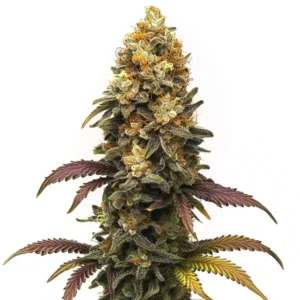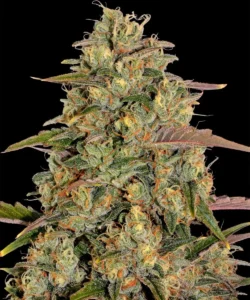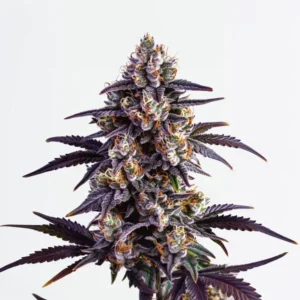


Great White Shark strain is an indica-dominant feminized cultivar from Green House Seed Co. created from Super Skunk, Brazilian, and South Indian genetics. The breeder explains the lineage more specifically as a selected Super Skunk crossed with its White Widow line, which contributes the Brazilian and South Indian genetics.
Great White Shark pairs White Widow and Super Skunk for a frosty, pungent classic. Nirvana’s Great White Shark delivers that sharp, earthy aroma and a strong, relaxing effect, producing dense, resin-caked buds that reward growers who enjoy a potent, trichome-heavy hybrid with real staying power.
Recommended Strains

Granddaddy Purple Seeds

|
THC | 19% - 20% (Medium) |

|
Lineage | Purple Urkle x Big Bud |

|
Type | Feminized |

|
Height | 4.43 ft | 1.35 m |

|
Yield | High |

|
Yield Indoor | 1.47 - 1.64 oz/ft² | 450 - 500 g/m² |

|
Yield Outdoor | 19.4 - 21.16 oz/plant | 550 - 600 g/plant |

|
Flowering Time | 8 - 10 weeks |

|
Phenotype | 75% Indica / 25% Sativa |

|
Effects | Euphoric, Relaxed, Sleepy |

|
Flavors | Blueberry, Candy, Fruity |
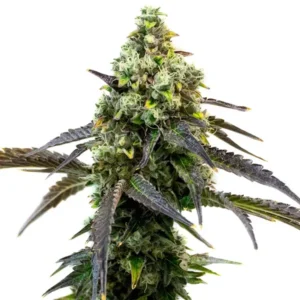
Cafe Racer
|
|
THC | 25% (High) |
|
|
Lineage | Grandaddy Purple x GSC |
|
|
Type | Feminized |
|
|
Height | 6.23 ft | 1.9 m |
|
|
Yield | Medium |
|
|
Yield Indoor | 1.15 - 1.47 oz/ft² | 350 - 450 g/m² |
|
|
Yield Outdoor | 24.69 - 28.22 oz/plant | 700 - 800 g/plant |
|
|
Flowering Time | 8 - 10 weeks |
|
|
Phenotype | 30% Indica / 70% Sativa |

|
Medical | Fatigue, Muscle Spasms, Stress |
|
|
Effects | Happy, Relaxed, Talkative |
|
|
Flavors | Citrus, Earthy, Grape |
Also searched as White Shark strain, White Shark weed, and Great White Shark weed strain, this old-school cultivar is known for its short, heavily branched structure, dense resinous flowers, and strong indica influence.
Green House Seed Co. lists Great White Shark at 80% Indica and 20% Sativa with 22.94% THC. Growers looking for the original Green House version can find the Great White Shark seeds available at Growlantis.
Great White Shark Quick Grow Profile
| Trait | Great White Shark |
|---|---|
| Breeder | Green House Seed Co. |
| Genetics | Super Skunk × Brazilian × South Indian |
| Seed type | Feminized photoperiod |
| Indica / Sativa | 80% Indica / 20% Sativa |
| THC | 22.94% |
| CBD | 0.18% |
| Indoor flowering | About 8–9 weeks |
| Indoor yield | Up to 700–800 g/m² in current breeder specifications |
| Outdoor height | About 150–190 cm |
| Outdoor yield | About 900–1,000 g/plant |
| Outdoor harvest | Late September to early October |
| Structure | Short, broad and heavily branched |
| Training | SoG and ScrOG recommended by breeder |
| Main terpenes | Myrcene, α-Humulene, β-Caryophyllene |
Great White Shark is one of the old-school cultivars still maintained by Green House Seed Co..
Great White Shark Genetics and Plant Structure
Great White Shark combines a selected Super Skunk plant with the Brazilian × South Indian genetics behind Green House Seed Co.’s White Widow line.
The resulting plant shows strong indica morphology. Green House describes it as short, broad and well branched rather than tall and narrow.
That structure has practical consequences for cultivation. Multiple branches can form a relatively dense canopy, making horizontal space, light distribution and airflow more important than simply controlling vertical stretch.
The flowers themselves are dense, light green and heavily covered in trichomes, with orange pistils developing as they mature.
Because the plant naturally produces numerous branches, the breeder specifically recommends both Sea of Green and Screen of Green systems.
Growing Great White Shark Indoors
Great White Shark’s relatively short stature makes it well suited to indoor environments where vertical space is limited.
During vegetative growth, allow enough branching to develop before initiating flowering, but remember that the length of this stage is controlled by the grower. There is no breeder-defined four-, six- or eight-week vegetative requirement.
Once the plant has reached an appropriate size for the available space, switching a photoperiod crop to a 12/12 light schedule initiates flowering.
Using SoG or ScrOG With Great White Shark
Green House Seed Co. specifically recommends both SoG and ScrOG for Great White Shark.
A Sea of Green setup can take advantage of its short stature and relatively fast flowering period, while ScrOG can help spread its numerous branches across a more even canopy.
Neither technique is mandatory. The useful point is that the cultivar’s natural branching gives growers several options for distributing productive growth horizontally.
Managing Dense Branching and Airflow
As the canopy becomes fuller, avoid allowing branches and foliage to become so congested that air movement is restricted.
This matters increasingly during flowering because Great White Shark produces dense flowers. A room-level humidity reading does not necessarily show what is happening inside a crowded canopy or within a mature flower.
Growing Great White Shark Outdoors
Outdoors, Great White Shark grows substantially larger and wider than it normally does indoors.
Green House Seed Co. gives an average outdoor height of approximately 150–190 cm and describes production of roughly 900–1,000 g per plant under favorable conditions.
The breeder places outdoor maturity around late September to early October in the Northern Hemisphere.
Because the plant can become broad and heavily branched, give outdoor specimens enough lateral room rather than spacing them solely according to expected height.
The dense flower structure also makes late-season airflow and prolonged wet weather more relevant as harvest approaches.
Outdoor yield figures are breeder potential, not guaranteed production. Sun exposure, root volume, climate, plant health, phenotype and the length of the vegetative season all affect the final harvest.

Great White Shark Flowering Time and Yield
Green House Seed Co.’s current information contains a small internal discrepancy.
Its technical specification lists:
- 9 weeks of indoor flowering
- up to 800 g/m²
The descriptive cultivation section on the same official page gives:
- approximately 8–9 weeks
- up to 700 g/m²
For cultivation planning, an 8–9 week flowering window is therefore a more useful representation than the broader 8–10 week range previously used throughout this guide.
Indoor production should likewise be presented as breeder potential in the 700–800 g/m² range, with the understanding that the breeder currently publishes both figures.
Outdoors, the official information is more consistent: approximately 900–1,000 g per plant at an average height of 150–190 cm.
For the broader changes that occur once flowering begins, see Growlantis’ guide to the cannabis flowering stage week by week.
Feeding Great White Shark
One of the most important corrections to the previous guide concerns nutrition.
The old article described Great White Shark as particularly sensitive to excessive nutrients. Green House Seed Co. currently states the opposite: this genetic can tolerate medium to high fertilizer levels.
That does not mean growers should automatically feed aggressively.
Nutrient requirements still depend on the growing medium, irrigation system, plant size and actual plant response. Increase feeding based on growth rather than assuming the breeder’s tolerance statement is an instruction to use maximum-strength fertilizer.
During vegetative growth, the plant needs sufficient nutrition to support its heavily branched structure. During flowering, use a balanced flowering program rather than assuming extremely high phosphorus or potassium will automatically increase yield.
If you are considering additional flowering supplements, Growlantis’ comparison of bloom boosters for cannabis explains why more phosphorus and potassium are not automatically better.
Germinating Great White Shark Seeds
Great White Shark does not require a unique strain-specific germination technique.
The previous guide devoted a large section to generic germination conditions, but that information is better handled by a dedicated technical resource.
Use a controlled germination method that maintains stable moisture and warmth without keeping the seed permanently waterlogged. Handle the emerging root carefully when transferring the seed into its growing medium.
For detailed timing and methods, see how long cannabis seeds take to germinate.
When to Harvest Great White Shark
Indoors, the breeder’s 8–9 week flowering range provides a useful starting point for estimating maturity.
It should not be treated as an automatic harvest deadline. Individual plants can mature at slightly different rates, so inspect actual flower development rather than harvesting solely because a calendar reaches a specific day.
Outdoors, Green House Seed Co. places harvest around late September to early October in the Northern Hemisphere.
The old 20-week seed-to-harvest schedule should not be retained. Great White Shark is a photoperiod cultivar, meaning the grower controls the length of vegetative growth before flowering begins.
Two plants can therefore share the same eight- to nine-week flowering period while having very different total lifecycles.
Is Great White Shark Strain Indica or Sativa?
Great White Shark is an indica-dominant hybrid containing 80% Indica and 20% Sativa genetics, according to Green House Seed Co.
This directly answers searches such as “Great White Shark strain indica or sativa”: the cultivar is strongly indica dominant rather than a balanced hybrid.
Its structure reflects that classification. Plants remain relatively short and broad with substantial branching, while the breeder describes the effects as strongly body-focused but accompanied by a clearer mental component.
The 80/20 figure is a breeder classification used to describe the cultivar’s lineage rather than an exact laboratory measurement of its genome.
Great White Shark Effects, THC, Flavor and Terpenes
Green House Seed Co. currently reports 22.94% THC, 0.18% CBD and 0.25% CBN for Great White Shark.
This makes the previous 15–20% THC FAQ outdated relative to the breeder’s current specification.
The breeder describes the Great White Shark strain effects as strong, body-centered and long lasting, with a clearer mental component alongside the pronounced indica influence.
Its flavor is described as earthy and sweet with fruity and herbal notes.
The most expressed terpenes listed by Green House Seed Co. are:
- Myrcene
- α-Humulene
- β-Caryophyllene
These compounds are useful for describing the cultivar’s verified aromatic profile. They should not be used to make unsupported claims that Great White Shark treats specific medical conditions.

Common Problems When Growing Great White Shark
Overcrowding the Canopy
Great White Shark produces numerous branches and dense flowers.
Allow enough space for light and air to move through the canopy rather than letting the plant develop into an excessively compact mass.
Assuming It Is Highly Sensitive to Fertilizer
The breeder says this genetic can tolerate medium to high fertilizer levels.
That does not justify overfeeding, but it means the cultivar should not be described as unusually nutrient-sensitive without supporting evidence.
Ignoring Flower Density During Late Bloom
Dense flowers can retain moisture differently from the surrounding room.
Pay particular attention to airflow and humidity trends as flowers mature, especially during dark periods when relative humidity may increase.
Following a Fixed 20-Week Grow Calendar
Great White Shark has a relatively defined flowering period, but its total lifecycle is not fixed.
The vegetative stage can be shortened or extended before the grower initiates flowering.
FAQs About Great White Shark Strain
Is Great White Shark strain indica or sativa?
Great White Shark from Green House Seed Co. is an indica-dominant hybrid listed as 80% Indica and 20% Sativa. Its structure is short, broad, and branchy, while the breeder describes a strong, long-lasting body effect with a clearer mental component from its smaller Sativa share.
How long does Great White Shark take to flower?
Green House Seed Co. lists Great White Shark at about eight to nine weeks of indoor flowering, with its structured technical specification giving nine weeks. Outdoors, the breeder describes plants finishing around late September to early October. Total seed-to-harvest time varies because the vegetative period is controlled by the grower.
What is the THC percentage of Great White Shark?
The current Green House Seed Co. product page reports 22.94% THC, alongside 0.18% CBD and 0.25% CBN. Finished cannabinoid levels can vary between individual plants and harvests, so the breeder figure should be treated as a reference specification rather than a guarantee for every Great White Shark plant.
What effects does Great White Shark strain produce?
Green House Seed Co. describes Great White Shark as producing a strong, long-lasting body effect together with a relatively clear mental high. The breeder characterizes the experience as heavily Indica-influenced and narcotic. Individual responses can differ with dose, tolerance, phenotype, cultivation conditions, and the cannabinoid profile of the finished flowers.
Is Great White Shark an autoflowering cannabis strain?
The Green House Seed Co. Great White Shark covered in this guide is a feminized photoperiod strain, not an autoflower. Indoor flowering is triggered by changing the light schedule. Other breeders may sell different lines under similar names, so growers should confirm the breeder and seed type before applying this cultivation information.
How much can Great White Shark yield indoors?
Green House Seed Co. publishes slightly different indoor yield figures on the same official page: its technical specification lists up to 800 g/m², while the descriptive cultivation section states up to 700 g/m². These should be treated as breeder potential under favorable conditions rather than guaranteed production from every indoor grow.