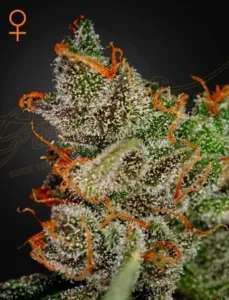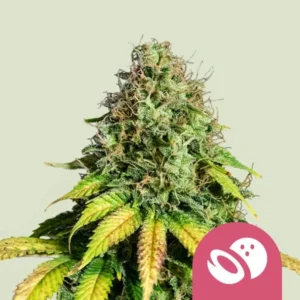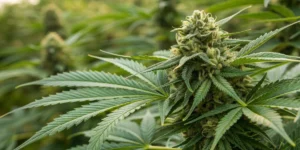

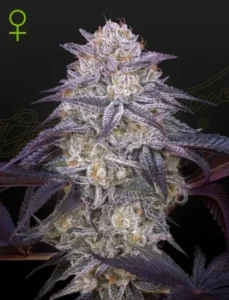
King’s Juice is a sativa-leaning feminized hybrid from Green House Seed Co., created by crossing a selected Mimosa from Symbiotic Genetics with King’s Kush. Also commonly searched as Kings Juice, King Juice, or King Juice strain, it combines a distinctive cone-shaped structure with a long central cola, vigorous flowering stretch, floral-citrus aromas, and high THC levels.
Green House Seed Co. lists King’s Juice at 60% Sativa and 40% Indica, with 26.87% THC and an indoor flowering cycle of 9–10 weeks. One of its most important growing traits is its stretch: the breeder notes that plants can at least double in size during the first weeks of flowering.
Recommended Strains
King's Juice

|
THC | 26% - 27% (High) |

|
Lineage | Mimosa x King's Kush |

|
Type | Feminized |

|
Height | 5.41 ft | 1.65 m |

|
Yield Outdoor | 28.22 oz/plant | 800 g/plant |

|
Flowering Time | 9 - 10 weeks |

|
Phenotype | 60% Indica / 40% Sativa |

|
Effects | Uplifted, Focused, Powerful, Balanced |

|
Flavors | Earthy, Citrus, Floral |
King's Juice Auto
|
|
THC | 22% - 23% (Medium) |
|
|
Lineage | Grape Ape x Mimosa Evolution x OG Kush x Ruderalis |
|
|
Type | Autoflowering |
|
|
Height | 2.95 ft | 0.9 m |
|
|
Yield Outdoor | 1.76 oz/plant | 50 g/plant |
|
|
Life Cycle | 9 - 10 weeks |
|
|
Phenotype | 80% Indica / 20% Sativa |
|
|
Effects | Balanced, Relaxed |
|
|
Flavors | Kush, Woody, Pine, Earthy |
Growers looking for the feminized photoperiod version can find King’s Juice seeds at Growlantis.
King’s Juice Quick Grow Profile
| Trait | King’s Juice |
|---|---|
| Breeder | Green House Seed Co. |
| Genetics | Mimosa × King’s Kush |
| Seed type | Feminized photoperiod |
| Sativa / Indica | 60% Sativa / 40% Indica |
| THC | 26.87% |
| Indoor flowering | 9–10 weeks |
| Indoor yield | Medium–High |
| Outdoor harvest | Mid-October |
| Outdoor height | 150–180 cm |
| Outdoor yield | Up to 700 g/plant |
| Structure | Cone-shaped with dominant main cola |
| Flowering stretch | Can at least double in size |
| Main terpenes | Myrcene, β-Humulene, Valencene |
King’s Juice was developed by Green House Seed Co. and combines two of the breeder’s selected terpene profiles rather than simply being another generic Kush hybrid.
King’s Juice Genetics and Plant Structure
King’s Juice combines a selected Mimosa from Symbiotic Genetics with King’s Kush.
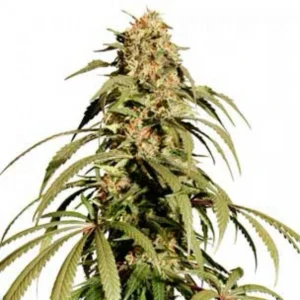
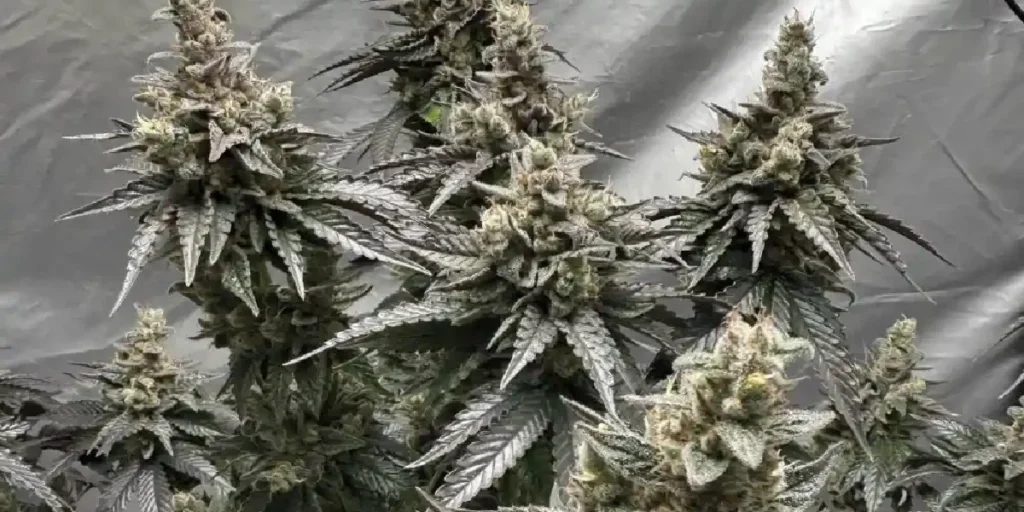
The breeder describes a distinctive cone- or pine-shaped growth pattern. A long central cola develops slightly above the rest of the canopy while the secondary branches form a crown around it.
That structure is more useful to a grower than simply describing the plant as “vigorous.” It tells you to expect a pronounced central leader rather than a naturally flat canopy.
The King’s Kush parent also has its own cultivation characteristics, which are covered separately in the King’s Kush grow guide.
Another defining trait appears after flowering begins: King’s Juice stretches considerably and can at least double its size during the first weeks of bloom. Its branches remain relatively sturdy as the plant elongates.
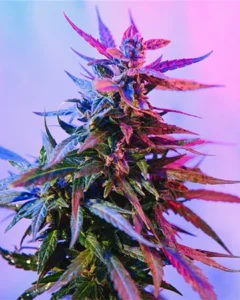
Toward the end of flowering, many plants can develop reddish or violet coloration while resin production becomes increasingly visible across the flowers.
How King’s Juice Grows Indoors
The most important consideration indoors is vertical planning.
King’s Juice is not a plant to flip into flower only after it has nearly filled the available height. Because the breeder reports that it can at least double in size during early flowering, growers should leave substantial headroom before changing the light cycle.
Planning for the Flowering Stretch
If vertical space is limited, begin shaping the plant before flowering rather than trying to correct excessive height after the stretch has already occurred.
The breeder’s description of a strong central cola with surrounding secondary branches also means canopy management should respond to the actual structure of each plant.
A grower who wants to preserve its natural architecture can allow the central leader to remain dominant while positioning side branches for better exposure. In lower grow spaces, earlier training can help prevent the main cola from getting too close to the light after the stretch.
Managing the Main Cola and Side Branches
King’s Juice naturally forms a main cola slightly above its secondary branches. That makes completely flattening the canopy optional rather than automatically necessary.
Instead, watch how much dominance the central stem develops and adjust the surrounding branches accordingly.
As flowers develop, avoid creating an excessively crowded canopy. Good air movement becomes more important around mature flowers and closely spaced branches. Growlantis’ guide to cannabis airflow and mold prevention explains how circulation and ventilation work together during flowering.
Growing King’s Juice Outdoors
Outdoors, Green House Seed Co. lists King’s Juice at an average height of approximately 150–180 cm.
The breeder places harvest around mid-October, so growers in the Northern Hemisphere should consider whether their local season normally remains suitable through that point.
Its strong flowering stretch also matters outdoors. Plants given a long vegetative period can become substantially larger once flowering begins, so spacing should account for both height and lateral branch development.
Under favorable outdoor conditions, Green House Seed Co. lists production of up to 700 g per plant.
These figures are breeder potential rather than guaranteed results. Final plant size and production still depend on phenotype, root space, light exposure, climate and the duration of vegetative growth.
King’s Juice Flowering Time, Height and Yield
King’s Juice has an official indoor flowering cycle of 9–10 weeks.
The breeder describes its indoor production as Medium–High rather than publishing a specific grams-per-square-meter figure. For that reason, a fixed claim such as 500–600 g/m² should not be presented as an official King’s Juice specification.
Outdoors, the breeder lists:
- Harvest: Mid-October
- Average height: 150–180 cm
- Yield: Up to 700 g/plant
The early flowering period deserves particular attention because plants can at least double in size.
For the general biological changes that occur after the light cycle is changed, see the Growlantis guide to the cannabis flowering stage week by week.
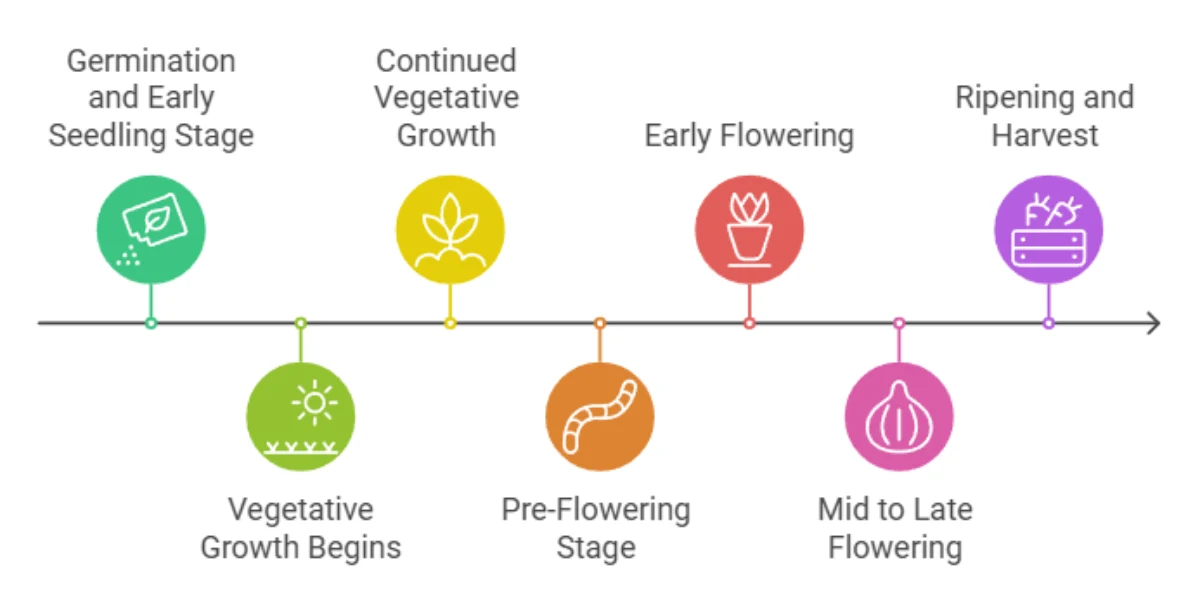
King’s Juice should not, however, be assigned a fixed 15-week seed-to-harvest schedule. It is a photoperiod cultivar, so the grower determines how long the vegetative phase lasts before flowering is initiated.
Feeding King’s Juice
Green House Seed Co. does not publish a unique nutrient schedule for King’s Juice.
That means there is little value in prescribing a strain-specific sequence of nitrogen, phosphorus and potassium concentrations without evidence.
Use the requirements of the growing medium and the plant’s actual response instead. During the rapid early-flower stretch, monitor the plant closely because both structural growth and flower initiation are occurring at the same time.
Avoid assuming that a high-THC or potentially productive cultivar automatically needs aggressive feeding. Leaf condition, substrate, irrigation and growth rate provide more useful information than the strain name alone.
Germinating King’s Juice Seeds
King’s Juice does not have a breeder-documented germination requirement that differs from other feminized photoperiod cannabis seeds.
For that reason, there is no need to repeat a full paper-towel germination tutorial in this strain guide.
Handle the seed and emerging root carefully and maintain stable moisture and temperature appropriate to the germination method being used.
For a dedicated explanation of timing and conditions, see how long cannabis seeds take to germinate.
When to Harvest King’s Juice
Indoors, use the breeder’s 9–10 week flowering period as the starting reference rather than treating a predetermined calendar date as automatic harvest day.
Outdoors, Green House Seed Co. lists maturity around mid-October.
As harvest approaches, evaluate actual flower maturity rather than relying only on the number of days since germination. Photoperiod plants can spend very different lengths of time in vegetative growth, so total seed-to-harvest duration is not fixed.
Late flowering is also when the cultivar can become especially distinctive visually. The breeder reports reddish and violet hues appearing in many plants as they mature, alongside increasing trichome coverage.
Is King’s Juice Strain Indica or Sativa?
King’s Juice is a sativa-leaning hybrid, officially listed as 60% Sativa and 40% Indica.
This is important because some Growlantis product data currently reverses those percentages. The breeder’s official classification should take priority.
Therefore, for searches such as “king juice strain indica or sativa,” the direct answer is: King’s Juice is slightly Sativa dominant, not Indica dominant.
The 60/40 figure is a breeder classification used to describe the cultivar’s genetic profile rather than a laboratory measurement of an exact genomic percentage.
King’s Juice Effects, Aroma and Reported Benefits
Green House Seed Co. lists King’s Juice at 26.87% THC.
The breeder describes its effects as balanced enough for daytime use, beginning with an uplifting head sensation while the body remains relatively light and active.
Its aroma is one of the cultivar’s more distinctive characteristics. The floral profile inherited from Mimosa combines with the citrus and earthy characteristics associated with the King’s Kush side.
The most expressed terpenes listed by Green House Seed Co. are:
- Myrcene
- β-Humulene
- Valencene
Rather than treating these terpenes as proof of specific medical effects, they are most useful here for describing the cultivar’s verified aromatic profile.
For searches around “King Juice benefits,” the documented appeal is primarily its combination of high THC, uplifting reported effects, lighter body feel and distinctive floral-citrus terpene profile. These are breeder-reported characteristics, not established medical benefits.
Common Problems When Growing King’s Juice
The strongest strain-specific issue is its flowering stretch.
A plant that is already close to the maximum available indoor height before flowering can become difficult to manage once King’s Juice begins doubling in size.
A second consideration is canopy structure. Its dominant central cola and surrounding side branches can produce uneven height if the grower expects a naturally flat canopy.
During later flowering, monitor airflow around developing flowers and overlapping branches rather than applying a universal humidity number without considering the actual canopy.
There is no breeder evidence that King’s Juice requires an unusually aggressive nutrient program or that it is inherently prone to a specific pest. Problems such as overwatering, nutrient imbalance or pests should therefore be diagnosed from symptoms and growing conditions rather than assumed from the cultivar name.
FAQs About King’s Juice Strain
Is King’s Juice strain more sativa or indica genetically?
King’s Juice is a sativa-leaning hybrid, officially listed by Green House Seed Co. as 60% Sativa and 40% Indica. That means it tends to show more sativa influence overall, although its King’s Kush parent contributes indica traits to its structure, flowering behavior, aroma, and reported effects.
How long does King’s Juice strain take to flower indoors?
Green House Seed Co. lists an indoor flowering time of 9–10 weeks for King’s Juice. Because it is a photoperiod cultivar, the total seed-to-harvest time is not fixed. Growers control the length of the vegetative stage, so overall cycle length depends on when flowering is initiated.
What is the THC percentage of King’s Juice strain?
Green House Seed Co. reports 26.87% THC for King’s Juice. Growlantis may round this figure commercially to about 26–27%. THC levels can still vary between individual plants and finished flowers because phenotype, cultivation conditions, harvest timing, drying, and curing can all influence the final measured cannabinoid content.
How tall can King’s Juice plants grow outdoors?
The breeder lists an average outdoor height of approximately 150–180 cm for King’s Juice. Final size can vary depending on climate, root space, sunlight, training, and the length of the vegetative period. Its strong flowering stretch is important to consider because plants can at least double in size after bloom begins.
What effects and benefits does King’s Juice offer?
Green House Seed Co. describes King’s Juice as producing an uplifting head effect while keeping the body relatively light and active. Its appeal comes from its high THC, balanced reported effects, and floral-citrus aroma. These are breeder-reported characteristics, not proven medical benefits, and individual responses can vary significantly.
Is King’s Juice Auto the same as feminized King’s Juice?
No. King’s Juice Auto and feminized King’s Juice are separate cultivars with different growth cycles. The feminized version covered in this guide is photoperiod-dependent, while King’s Juice Auto includes Ruderalis genetics and flowers automatically. This difference affects lifecycle, plant management, flowering timing, and how growers plan indoor or outdoor cultivation.