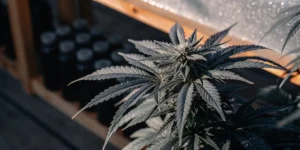
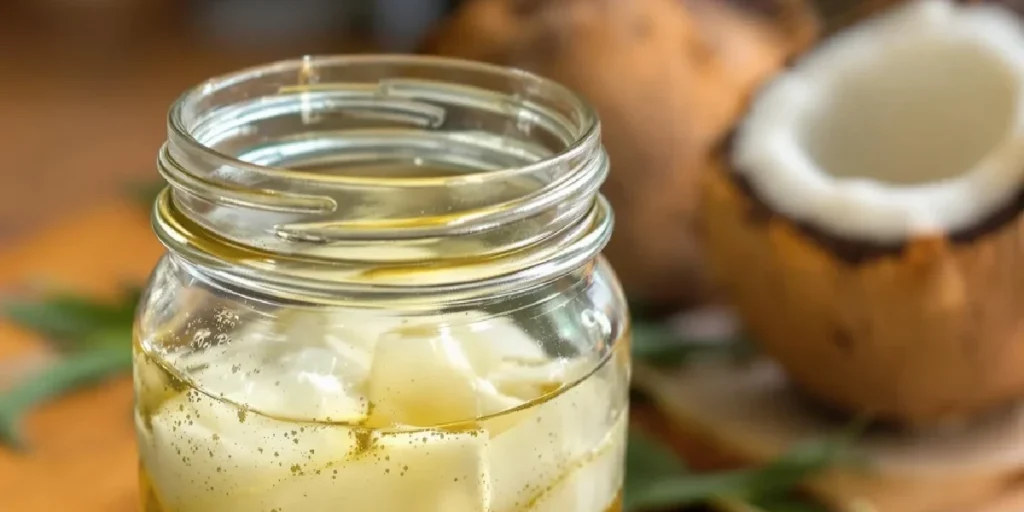

This coconut oil weed recipe combines decarboxylated cannabis with coconut oil to create a versatile base for brownies, cookies, sauces and other edibles. Decarboxylate the flower first, infuse it gently into melted coconut oil, strain and store it in a clearly labeled container. Homemade potency can vary considerably, so estimate conservatively and use small portions.
Cannabis coconut oil is one of the most versatile infusions you can make, and it is the perfect base for homemade topicals. To turn yours into a soothing balm, follow our step-by-step CBD cream recipe, which shows how to blend infused oil into a smooth, skin-friendly cream for gentle, targeted relief at home.
Recommended Strains
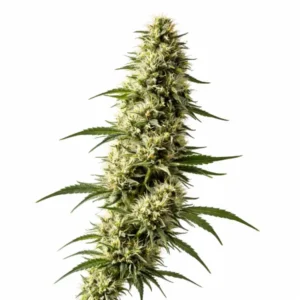
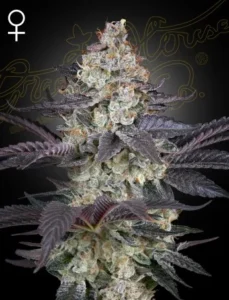
Lemon Skunk

|
THC | 23% - 25% (High) |

|
Lineage | Skunk x Citral |

|
Type | Feminized |

|
Height | 5.09 ft | 1.55 m |

|
Yield | High |

|
Yield Indoor | 2.62 oz/ft² | 800 g/m² |

|
Flowering Time | 8 - 9 weeks |

|
Phenotype | 50% Indica / 50% Sativa |

|
Effects | Relaxed, Calming |

|
Flavors | Earthy, Citrus, Sweet |
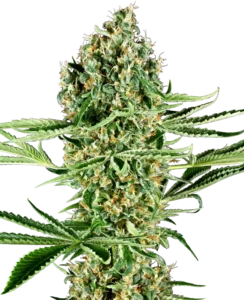
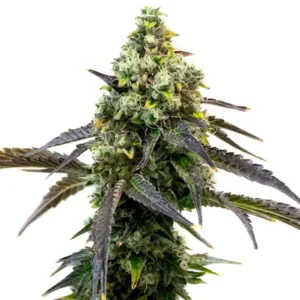
Critical Runtz
|
|
THC | 22% - 24% (High) |
|
|
Lineage | Critical x Runtz |
|
|
Type | Feminized |
|
|
Height | 5.74 ft | 1.75 m |
|
|
Yield | High |
|
|
Yield Indoor | 1.31 - 1.8 oz/ft² | 400 - 550 g/m² |
|
|
Flowering Time | 8 - 9 weeks |
|
|
Phenotype | 70% Indica / 30% Sativa |
|
|
Effects | Euphoric, Energetic, Relaxed |
|
|
Flavors | Sweet, Citrus, Berry, Tropical |
Coconut Oil Weed Recipe at a Glance
You will need:
- 1 cup coconut oil
- 3.5–7 grams dried cannabis flower
- Baking sheet and parchment paper
- Oven
- Small saucepan or double boiler
- Fine mesh strainer or cheesecloth
- Clean, sealable glass container
Using less cannabis creates a less concentrated starting mixture, while using more increases the potential cannabinoid content. Neither approach guarantees a specific number of milligrams because home extraction efficiency varies.
Step 1: Decarboxylate the Cannabis
Before making cannabis coconut oil for edibles, the flower is normally decarboxylated.
Fresh and dried cannabis contains much of its THC potential as THCA rather than THC. Heating removes a carboxyl group from THCA and converts it into THC.
Laboratory decarboxylation research found that THCA conversion was essentially complete after heating at approximately 110°C (230°F) for around 40 minutes under the tested conditions. The rate increases with temperature, but cannabinoid degradation also becomes a greater consideration as heat increases.
For a straightforward home method:
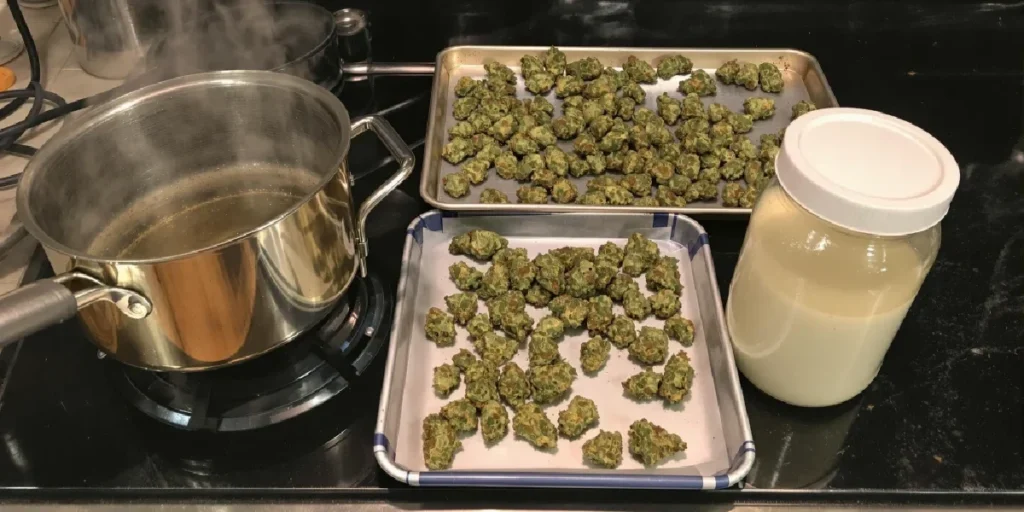
Preheat the oven to approximately 230°F (110°C).
Break the cannabis into small pieces rather than grinding it into a fine powder. Spread it in a thin, even layer on a baking sheet.
Heat for approximately 35–40 minutes, then remove it and let it cool.
Home ovens fluctuate in temperature, and cannabis material itself varies, so this should be treated as a practical method rather than a laboratory-standardized conversion.
Step 2: Melt the Coconut Oil
Place one cup of coconut oil into a small saucepan or double boiler and warm it gently until liquid.
There is no need to bring the oil to a boil.
THC and CBD are highly lipophilic compounds, meaning they have a strong affinity for fats and oils. Lipid-based preparations are therefore commonly used to formulate orally consumed cannabinoids.
Coconut oil is one possible carrier, but it should not be described as uniquely capable of “bonding” cannabinoids better than every other cooking oil.
Research has successfully extracted cannabinoids into coconut oil as well as other vegetable oils.
Step 3: Add the Decarboxylated Cannabis
Add the cooled decarboxylated cannabis to the melted coconut oil and stir thoroughly.
Keep the mixture at low, controlled heat rather than frying the plant material.
The goal is to allow cannabinoids to move from the plant material into the lipid phase without exposing the mixture to unnecessarily high temperatures.
Research on pharmaceutical cannabis oil preparations shows that pre-decarboxylation followed by heated oil extraction can recover substantial amounts of neutral cannabinoids, while also demonstrating that extraction is not perfectly efficient or completely reproducible.
For a simple kitchen preparation, keep the oil warm for approximately 1–2 hours, stirring occasionally.
Avoid a hard boil.
Longer cooking does not automatically mean stronger oil.
Step 4: Strain the Cannabis Coconut Oil
Remove the oil from the heat and allow it to cool enough to handle safely while remaining liquid.
Place a fine mesh strainer or cheesecloth over a clean container and slowly pour the mixture through it.
Let the oil drain naturally.
Avoid aggressively squeezing extremely hot oil through cheesecloth, both because of burn risk and because it can push additional fine plant material into the final product.
Discard the strained plant material.
The finished cannabis coconut oil should now be relatively clear, although its color can range from pale yellow to green or brown depending on the starting flower and preparation method.
Step 5: Label and Store It
Transfer the finished oil into a clean, airtight container.
Label it clearly with:
CANNABIS-INFUSED — CONTAINS THC
Also record the preparation date and, if known, the approximate amount and THC concentration of the cannabis used.
This is more important than it may seem.
Edible cannabis can resemble ordinary food, creating a particular risk of accidental ingestion. Health Canada recommends keeping cannabis edibles clearly labeled and securely stored away from ordinary food, children and pets.
Refrigeration is a simple option for routine storage. Coconut oil will become solid when cold; this does not mean it has spoiled.
For longer storage, divide it into smaller labeled portions and freeze them rather than repeatedly warming the entire batch.
Why Use Coconut Oil for Cannabis?
The main advantage is simple: cannabinoids are lipophilic, and coconut oil provides an edible lipid medium that can be incorporated easily into recipes.
It also works in both sweet and savory dishes and can often replace another cooking fat in recipes.
I would not claim that its saturated-fat content guarantees greater extraction, stronger effects or superior bioavailability compared with every alternative oil.
Food composition can influence oral cannabinoid absorption, and a controlled human study found that consuming THC with a high-fat meal substantially increased systemic THC exposure compared with fasting.
But that does not mean coconut oil specifically produces a faster or more predictable cannabis high.
Oral THC remains highly variable between individuals and formulations.
How Strong Is Homemade Cannabis Coconut Oil?
This is the most important part of the recipe to treat carefully.
You can calculate a theoretical maximum, but you cannot know the precise THC concentration of homemade oil without laboratory testing.
Suppose you use 3.5 grams of flower labeled at 15% total THC.
The flower theoretically contains approximately:
3.5 × 1,000 × 0.15 = 525 mg total potential THC
That does not mean your finished oil contains exactly 525 mg.
Some cannabinoids are lost during decarboxylation, extraction, filtration and handling. Research on prepared cannabis oils has found substantial batch-to-batch variability in final THC and CBD concentrations even when standardized procedures were used.
So treat the calculation as an approximate upper boundary rather than an exact dosage.
How to Estimate THC Per Serving
If you have an approximate estimate of the THC contained in the finished batch, divide it by the number of servings.
For example:
Estimated THC in entire oil batch ÷ number of portions = approximate THC per portion
The problem is that the first number is itself uncertain in a homemade preparation.
That is why homemade edibles are much harder to dose accurately than regulated products with verified cannabinoid testing.
Avoid assuming that cutting a brownie tray into ten pieces automatically creates ten precisely identical doses. Mixing, extraction and portion size introduce additional variation.
How Much Cannabis Coconut Oil Should You Use?
If the oil contains THC and you do not know its actual concentration, use it conservatively.
Health Canada advises new or occasional cannabis consumers to choose edible products containing 2.5 mg THC or less and to wait for the full effects before taking more.
That guidance is easier to follow with a lab-tested product than with homemade oil, which is another reason to avoid making an unnecessarily concentrated batch.
A small amount of highly concentrated homemade oil can contain considerably more THC than expected.
How Long Does Cannabis Coconut Oil Take to Work?
When cannabis coconut oil is swallowed in food, it behaves like an edible cannabis product.
Effects may begin within approximately 30 minutes to 2 hours, while the strongest effects can take considerably longer to develop. Health Canada notes that full effects may take up to four hours.
Effects from ingested cannabis can also last considerably longer than inhaled cannabis. Health Canada lists a typical duration around 4–8 hours, with lingering effects potentially lasting longer.
The delayed onset is one reason edible overconsumption happens.
Do not assume that “nothing happened after 45 minutes” means another serving is necessary.
Cannabis Coconut Oil vs Cannabutter
Cannabis coconut oil and cannabutter perform essentially the same culinary job: they provide a fat-based ingredient into which cannabinoids can be incorporated.
Coconut oil is useful when a recipe already calls for oil or when you want a dairy-free alternative.
Cannabutter makes more sense for recipes where butter contributes significant flavor or structure.
Neither is automatically more potent.
Final potency depends primarily on the cannabis material, the amount used, decarboxylation, extraction and the amount of infused fat in each portion.
Choose the ingredient that fits the recipe rather than assuming one produces inherently stronger edibles.
Easy Ways to Use Cannabis Coconut Oil
Once prepared, infused coconut oil can replace some or all of the regular coconut oil or fat in many recipes.
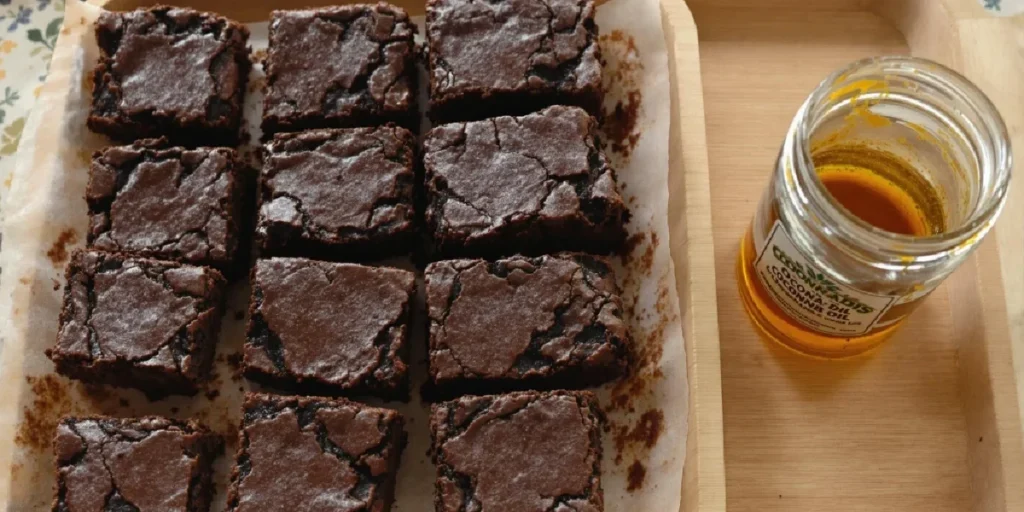
Cannabis Brownies
Use a measured amount of cannabis coconut oil as part of the fat in a standard brownie recipe.
For better control over potency, you do not need to replace all of the recipe’s butter or oil with infused oil. Combining a small measured amount of cannabis oil with ordinary cooking fat makes it easier to produce a lower-strength batch.
Mix the batter thoroughly before portioning.
Coconut Oil Weed Cookies
Cookies work particularly well because they naturally contain fat and can be divided into individual portions.
Again, calculate the approximate amount of infused oil going into the entire batch before baking.
If you are unsure of potency, smaller amounts of infused oil combined with ordinary butter or oil are easier to manage than an extremely concentrated cookie batch.
Cannabis Chocolate
Coconut oil can also be incorporated into homemade chocolate mixtures because it melts readily and solidifies when cooled.
Keep in mind that chocolate cannabis products can look exactly like ordinary sweets.
Store them separately in a clearly labeled, secure container rather than beside regular chocolate.
Savory Recipes
Cannabis coconut oil does not need to be limited to desserts.
A small measured amount can be incorporated into sauces, soups or dishes where coconut flavor already makes sense.
Avoid repeatedly heating the infused oil at unnecessarily high temperatures.
The objective is simply to incorporate a known portion into the finished food.
Does the Cannabis Strain Matter?
Not nearly as much as the current article suggests.
A strain name may give some indication of genetics, aroma or expected cannabinoid composition, but it does not determine whether coconut oil infusion will succeed.
You do not need Girl Scout Cookies for brownies, Lemon Haze for daytime recipes or Northern Lights for bedtime foods.
Those pairings are editorial inventions rather than requirements of cannabis chemistry.
If dosing matters, the most useful information is the measured cannabinoid content of the starting material, not whether its commercial name sounds appropriate for dessert.
Does Decarboxylation Really Matter?
Yes, if the goal is an oil containing substantial neutral THC rather than predominantly THCA.
Decarboxylation research demonstrates a clear time-and-temperature-dependent conversion of THCA into THC. At approximately 110°C, researchers observed essentially complete THCA conversion within the experimental timeframe.
Oil extraction studies similarly report a much larger proportion of neutral cannabinoids when the cannabis is decarboxylated before extraction.
That makes decarboxylation one of the few preparation steps that has a clear chemical rationale rather than being a piece of cannabis cooking folklore.
Can You Make Cannabis Coconut Oil Without Decarbing?
You can put raw cannabis into oil, but the chemical profile will be different.
Without sufficient heating, much more of the cannabinoid content remains in acidic forms such as THCA and CBDA rather than converting to THC and CBD.
Research comparing cannabis oil preparation methods has found exactly this difference: methods without a dedicated preheating step contained larger proportions of acidic cannabinoids.
For a conventional THC edible recipe, decarboxylation first is therefore the more predictable approach.
Common Coconut Oil Weed Recipe Mistakes
The first mistake is making the batch far too concentrated. More cannabis does not make a recipe inherently better, especially when the final THC level cannot be verified at home.
The second is skipping decarboxylation and expecting the same cannabinoid profile.
Another is applying excessive heat because of the assumption that harder boiling extracts cannabinoids faster. Controlled temperature is preferable.
Finally, do not forget labeling. Cannabis coconut oil can look almost identical to ordinary coconut oil once solidified.
Keep it clearly separated from normal food.
Coconut Oil Weed Recipe: Key Takeaway
A simple coconut oil weed recipe requires only three essential stages: decarboxylate the cannabis, gently infuse it into coconut oil and strain the finished mixture.
Coconut oil works because cannabinoids are highly lipophilic and can be incorporated into edible lipid preparations. It does not need exaggerated claims about “superior cannabinoid bonding” to be useful.
The biggest limitation is dosage.
Homemade cannabis oils can vary considerably in actual cannabinoid concentration, so theoretical THC calculations should be treated as estimates rather than verified doses.
Use small amounts, allow plenty of time for edible effects to develop, and store the finished oil clearly labeled and securely away from children, pets and ordinary food.
FAQs About Cannabis Coconut Oil
How do you make weed coconut oil?
Decarboxylate dried cannabis at approximately 230°F (110°C) for around 35–40 minutes, then combine it with melted coconut oil over gentle heat. Allow it to infuse, strain out the plant material and transfer the oil to a clearly labeled airtight container. Homemade cannabinoid concentration remains variable, so dosage should be estimated conservatively.
How much weed should I use for one cup of coconut oil?
About 3.5–7 grams per cup provides a practical range, but there is no universal ideal ratio. The appropriate amount depends heavily on the starting flower’s THC concentration and intended strength. Because home extraction efficiency varies, increasing the amount of cannabis can produce unexpectedly potent oil rather than simply improving recipe quality.
Do I need to decarb weed before putting it in coconut oil?
For a conventional THC edible, yes. Heating converts THCA into THC through decarboxylation. Laboratory research found substantial THCA-to-THC conversion around 110°C, while cannabis oil studies show that preparations made without pre-decarboxylation retain much larger proportions of acidic cannabinoids.
How long should cannabis infuse into coconut oil?
A practical home method is approximately one to two hours over gentle heat after decarboxylation. Longer is not necessarily stronger. Controlled pharmaceutical oil studies show that cannabinoid extraction occurs without requiring extremely long cooking, while extraction efficiency still varies considerably between preparations.
How strong is cannabis coconut oil?
Strength depends on the amount of cannabis used, its cannabinoid concentration and losses during decarboxylation, extraction and filtration. You can calculate the starting material’s theoretical THC content, but the final oil will not necessarily contain that entire amount. Precise potency requires laboratory analysis rather than a home calculation.
How long do cannabis coconut oil edibles take to work?
Ingested cannabis effects can begin within approximately 30 minutes to two hours, while full effects may take up to four hours. Effects commonly last several hours and can persist longer in some people. Because onset is delayed, consuming additional portions too quickly increases the risk of overconsumption.