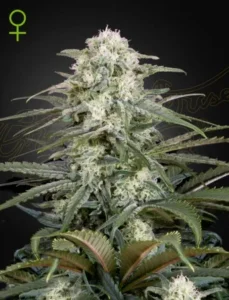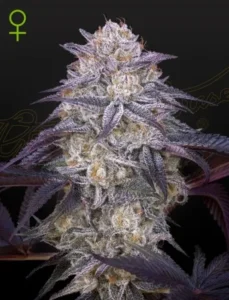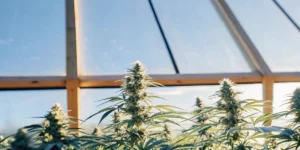


Guava Auto is a fast, resin-rich autoflowering hybrid from Fast Buds created from (Gorilla Cookies Auto F5 × Kosher Cake) × Tropicana Cookies Auto F5 genetics. Refined as an F3 feminized three-way polyhybrid autoflower, it combines a balanced 50% Indica and 50% Sativa profile with tropical flavors, high resin production, and a complete lifecycle of approximately 8–9 weeks from seed to harvest.
Current specifications place THC at up to 28%, height at approximately 70–120 cm, indoor yield at 450–550 g/m², and outdoor production at around 60–200 g per plant. The strain develops a dominant central cola with compact lateral branches and is suitable for indoor, outdoor, greenhouse, and mixed-light cultivation.
Recommended Strains

Guava Auto

|
THC | 27% - 28% (High) |

|
Lineage | Guava x Ruderalis |

|
Type | Autoflowering |

|
Height | 3.28 ft | 1 m |

|
Yield | High |

|
Yield Indoor | 1.47 - 1.8 oz/ft² | 450 - 550 g/m² |

|
Life Cycle | 8 - 9 weeks |

|
Phenotype | 50% Indica / 50% Sativa |

|
Effects | Relaxed, Happy, Uplifted |

|
Flavors | Fruity, Guava, Sweet |
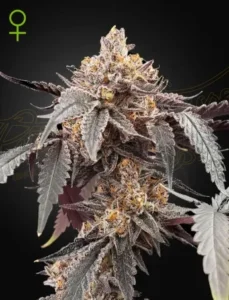
Guava X Gelato 41 Auto
|
|
THC | 20% - 21% (Medium) |
|
|
Lineage | Guava x Gelato 41 Auto |
|
|
Type | Autoflowering |
|
|
Height | 3.61 ft | 1.1 m |

|
Yield Outdoor | 2.82 oz/plant | 80 g/plant |
|
|
Life Cycle | 9 - 10 weeks |
|
|
Phenotype | 70% Indica / 30% Sativa |
|
|
Effects | Relaxed, Creative |
|
|
Flavors | Sweet, Fruity, Cream |
Guava Auto does not require a switch to 12/12 to flower. Its automatic genetics trigger flowering according to age, which means the plant can remain under a longer indoor light schedule throughout its entire rapid lifecycle.
You can find Guava Auto seeds and other autoflowering genetics from Fast Buds at Growlantis.
Guava Auto Grow Info
| Trait | Guava Auto |
|---|---|
| Genetics | (Gorilla Cookies Auto F5 × Kosher Cake) × Tropicana Cookies Auto F5 |
| Seed type | F3 feminized three-way polyhybrid autoflower |
| Indica / Sativa | 50% Indica / 50% Sativa |
| THC | Up to 28% |
| CBD | <1% |
| Full lifecycle | Approximately 8–9 weeks from seed to harvest |
| Height | 70–120 cm |
| Indoor yield | 450–550 g/m² |
| Outdoor yield | 60–200 g/plant |
| Size | XL autoflower |
| Structure | Dominant central cola with compact lateral branching |
| Flavor | Guava, sweet fruit, tropical fruit |
| Reported effects | Relaxed, happy, creative, uplifted |
These specifications describe the current Guava Auto line from Fast Buds. Actual height, cannabinoid concentration, yield, and finishing speed can still vary somewhat according to environment, phenotype, root health, lighting, cultivation method, and the amount of stress the plant experiences during its short lifecycle.
What Is Guava Auto?
Guava Auto is a high-resin autoflower developed from three different genetic components rather than a simple Guava × Ruderalis cross. Its current lineage combines Gorilla Cookies Auto F5 with Kosher Cake and Tropicana Cookies Auto F5, creating a balanced hybrid selected for tropical terpenes, resin production, and rapid automatic development.
The plant has been refined as an F3 feminized autoflowering line. This means growers receive female plants that begin flowering according to age rather than requiring a seasonal change in daylight or an indoor switch to a 12/12 light schedule.
Its defining cultivation characteristics are speed and resin production. Guava Auto completes its entire development in approximately 8–9 weeks while still reaching 70–120 cm and producing substantial indoor yields relative to such a short cycle.
Guava Auto Genetics
The current official Guava Auto genetics are (Gorilla Cookies Auto F5 × Kosher Cake) × Tropicana Cookies Auto F5.
This three-way polyhybrid structure is more specific than older descriptions that reduce the cultivar to Guava × Ruderalis. The current breeding line combines autoflowering genetics from Gorilla Cookies and Tropicana Cookies backgrounds with the Kush-and-Cookies influence associated with Kosher Cake.
Fast Buds classifies the resulting strain as an F3 feminized three-way polyhybrid autoflower. Its current genetic profile is approximately 50% Indica and 50% Sativa, making it a balanced hybrid rather than an Indica-dominant autoflower.
Is Guava Auto Indica or Sativa?
Guava Auto is a balanced hybrid containing approximately 50% Indica and 50% Sativa genetics.
Its plant structure combines characteristics associated with both sides of the hybrid. It develops a strong central cola and compact lateral branches while still reaching as much as 120 cm under favorable conditions, placing it in the XL size category for an autoflower.
The breeder-reported effect profile is similarly mixed. Relaxation and happiness are among the most frequently reported characteristics, while creativity and uplift also appear prominently. Individual experiences can still vary according to dose, tolerance, phenotype, cannabinoid concentration, and finished flower quality.
Guava Auto THC
Guava Auto reaches up to approximately 28% THC, making potency one of the strain’s defining characteristics.
This current breeder specification is substantially higher than older descriptions that place the cultivar around 16–23% THC. The up-to-28% figure should nevertheless be treated as genetic potential rather than a guaranteed laboratory result from every plant.
Light, plant health, environment, maturity at harvest, phenotype, drying, curing, and analytical methodology can all influence measured cannabinoid concentration. The most useful conclusion for growers is that Guava Auto is a high-THC autoflower rather than a moderate-potency cultivar.
Guava Auto Life Cycle: 8–9 Weeks From Seed to Harvest
Guava Auto completes its full lifecycle in approximately 8–9 weeks from seed to harvest.
This distinction is essential because the breeder’s 8–9 week figure does not describe flowering alone. It covers germination and establishment, vegetative development, the transition to bloom, flower production, and final maturation.
The plant therefore develops much faster than a typical photoperiod strain. Any major setback during the first few weeks consumes part of a lifecycle that cannot simply be extended by leaving the plant in vegetation for longer.
Stable root conditions, sensible watering, adequate light, and avoiding unnecessary stress during early development are particularly important for making good use of Guava Auto’s short biological clock.

Does Guava Auto Need a 12/12 Light Cycle?
Guava Auto does not need a switch to 12/12 to start flowering.
Its autoflowering genetics trigger reproductive development according to age rather than day length. Indoor growers can therefore maintain a longer light schedule throughout the entire cycle instead of reducing daily light exposure when flowers begin to appear.
An 18/6 or 20/4 schedule is a practical option for many indoor setups. The best choice depends on light intensity, energy use, environment, and the total amount of light the plant receives each day.
The important point is consistency: flowering will begin automatically regardless of whether the light schedule changes.
Guava Auto Grow Diary: What to Expect
Guava Auto develops too quickly for a twelve-week cultivation calendar. A more useful grow diary follows the breeder’s 8–9 week seed-to-harvest cycle and treats the stages as overlapping periods rather than rigid biological deadlines. Individual plants can move into flowering slightly earlier or later depending on environmental conditions and phenotype.
Weeks 1–2: Germination and Establishment
During the first two weeks, Guava Auto establishes its initial root system and develops the first true leaves. Because the plant has a short fixed lifecycle, avoiding unnecessary setbacks at this stage is more important than trying to force rapid development with strong fertilizer or excessive irrigation.
Water should reflect the small size of the root system. Keeping a large container permanently saturated can limit root-zone oxygen, while allowing the young plant to establish gradually creates a better foundation for the rapid growth that follows.
For more detailed information on early development, see the Growlantis guide on how long cannabis seeds take to germinate.
Weeks 3–4: Rapid Growth and Flowering Transition
During the next stage, Guava Auto can increase quickly in both height and branch development. Its central stem becomes more dominant while lateral branches expand around the lower and middle canopy.
This is the most practical period for gentle Low-Stress Training if canopy shaping is necessary. Flexible branches can be repositioned gradually to improve light exposure without creating the recovery period associated with more aggressive techniques.
Preflowers and early reproductive development can begin during this period because Guava Auto transitions according to age. Growers should not wait for a light-cycle change before expecting flowering signs.
Weeks 5–6: Main Flower Development
By the middle of the lifecycle, flower production becomes the plant’s main developmental priority. Bud sites increase in density and trichome production becomes increasingly visible across the flowers and surrounding leaves.
Guava Auto is particularly resinous, so its sticky flower structure and tropical aroma become more obvious as bloom advances. Major training is less useful at this stage because the plant has limited time left to recover before maturation.
The priorities should shift toward stable lighting, appropriate irrigation, moderate nutrition, branch spacing, and consistent airflow around the developing flowers.
Weeks 7–9: Maturation and Harvest
During the final portion of the 8–9 week cycle, Guava Auto focuses increasingly on flower maturation. Buds become denser, resin production reaches its later stages, and the sweet guava and fruit character becomes more pronounced.
The breeder’s timeframe should be treated as the expected harvest window rather than an automatic cutting date. Plant development, environment, and phenotype can cause small differences between individuals.
As the expected finish approaches, evaluate flower maturity and trichome development directly. Drying and curing begin after harvest and should not be counted as additional weeks in Guava Auto’s biological lifecycle.
Guava Auto Plant Height
Guava Auto generally reaches approximately 70–120 cm, making it an XL-sized autoflower rather than an extremely compact dwarf cultivar.
Final height varies according to light, root space, environment, plant health, and early stress. Plants receiving uninterrupted development and sufficient space can approach the upper end of the range, while more restricted specimens may remain considerably shorter.
Indoor growers should plan enough vertical room for the plant itself plus safe clearance from the light source. Gentle early training can also spread the canopy outward where vertical space is limited without relying on heavy pruning during such a short cycle.
Growing Guava Auto Indoors
Guava Auto performs well indoors because the grower can maintain a consistent environment throughout the complete 8–9 week cycle.
Its 70–120 cm height works well in many grow tents, but the plant should not be treated as exceptionally small. Guava Auto can develop a substantial main cola and productive side branches, so adequate canopy area and airflow remain important.
Indoor production is listed at approximately 450–550 g/m² under favorable conditions.
A longer autoflower light schedule can remain in place from establishment to harvest, which simplifies room management compared with photoperiod cultivation. There is no need to create a separate 12/12 flowering phase.
Growing Guava Auto Outdoors
Guava Auto can also perform successfully outdoors and is officially suitable for outdoor and greenhouse cultivation.
Its rapid 8–9 week lifecycle makes it useful in locations where the suitable growing season is relatively short. Once frost risk has passed and conditions are warm enough for healthy growth, the plant can complete a harvest without waiting for autumn day length to trigger flowering.
Outdoor production is listed at approximately 60–200 g per plant. The large range reflects differences in sunlight, root volume, weather, plant health, and general cultivation conditions.
The breeder also highlights elevated resistance to mold and pests, making Guava Auto particularly interesting for outdoor cultivation. That resistance lowers risk but does not make the plant immune to disease.
Guava Auto Yield
Guava Auto offers strong yield potential relative to its rapid lifecycle.
Indoors, current breeder specifications place production at approximately 450–550 g/m² under favorable conditions. Outdoors, individual plants can produce approximately 60–200 g each.
These figures represent genetic potential rather than guaranteed harvest weights. Indoor production depends heavily on usable canopy area, lighting, plant density, root health, irrigation, nutrition, environment, and early plant development.
Outdoor yield varies additionally with direct sunlight, container or soil volume, seasonal temperatures, weather, and the amount of uninterrupted growth the plant achieves during its short lifecycle.
Training Guava Auto
Guava Auto develops a strong central cola with compact lateral branching, so it does not require complicated training to produce a productive structure.
Where growers need to spread the canopy, gentle Low-Stress Training during early development can gradually move branches outward and expose more flowering sites to direct light. Leaf positioning can also improve light distribution without creating significant recovery stress.
Aggressive training should be considered carefully because Guava Auto only has 8–9 weeks from seed to harvest. Any technique that substantially slows growth can consume a meaningful portion of the available development window.
For a general grow, minimal stress and sensible canopy organization are safer priorities than applying multiple high-stress techniques.
Feeding Guava Auto
Guava Auto does not require one universal strain-specific NPK formula or a rigid week-by-week nutrient schedule.
Young plants should receive nutrition appropriate to their size and growing medium rather than full-strength feeding immediately after establishment. As roots and canopy development increase, nutrient supply can gradually follow the actual demand of the plant.
Flowering begins automatically, so there is no need to make an abrupt feeding change simply because the calendar reaches a specific week.
Monitor leaf color, leaf tips, growth rate, root-zone conditions, and the behavior of the chosen substrate. A high-yielding autoflower can still be negatively affected by excessive nutrient concentration.
Watering Guava Auto
Guava Auto should be watered according to root-zone moisture rather than a fixed daily schedule.
Early in the cycle, the plant has a small root system even if it is already growing in a relatively large final container. Saturating the entire medium repeatedly can leave the roots surrounded by excess moisture for too long.
As the root system and canopy expand, water consumption increases quickly. Container size, substrate, light intensity, temperature, humidity, and airflow all influence how often irrigation becomes necessary.
The objective is to maintain enough moisture for continuous growth while allowing sufficient oxygen to return to the root zone between irrigations.
Guava Auto Mold and Pest Resistance
Fast Buds specifically highlights Guava Auto for its elevated resistance to mold and pests, which is one reason the strain can perform well in different cultivation environments.
Resistance should not be interpreted as immunity. Guava Auto can still develop problems if dense flowers remain wet, pests are allowed to establish large populations, or environmental conditions consistently favor fungal growth.
Good spacing, regular observation, and adequate circulation remain useful even with resilient genetics. Indoor ventilation should remove excess moisture, while outdoor growers should pay particular attention after prolonged rain or during humid flowering conditions.
Guava Auto Flavor and Aroma
Guava Auto has a strongly fruit-driven flavor profile centered around ripe guava, sweet tropical fruit, and mixed fruity notes.
Fast Buds also describes a subtle creamy-cookie background that adds depth beneath the brighter tropical character. This combination becomes especially noticeable as flower maturation and resin production advance.
The exact aromatic expression can still vary between individual plants and environments. Harvest maturity, drying, curing, and storage all influence how much of the fresh tropical profile remains noticeable in the final flowers.
Because the current official description is strongly centered on guava, fruit, sweetness, and creaminess, these notes are more representative than older generic descriptions built around citrus and herbs.
Guava Auto Effects
Guava Auto is most commonly associated with relaxation and happiness, while creativity and uplift are also frequently reported.
This combination fits its balanced 50% Indica and 50% Sativa genetic profile. The experience can contain both physical relaxation and a more positive or mentally engaging component rather than being described purely as sedating or purely stimulating.
Individual responses can still vary substantially according to dose, tolerance, cannabinoid concentration, phenotype, and finished flower quality.
These descriptions should therefore be treated as general breeder and user-reported characteristics rather than guaranteed outcomes or claims that Guava Auto treats any medical condition.
Guava Auto Resin Production
High resin production is one of Guava Auto’s defining characteristics.
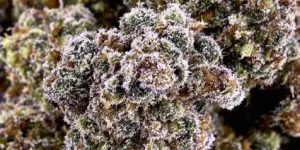
Fast Buds specifically developed the line with extraction quality in mind, and mature flowers can develop heavy trichome coverage across dense, compact buds. This resin production contributes both to the strain’s potency and to the intensity of its tropical aromatic profile.
For growers interested primarily in flower production, the same resin-rich characteristics remain valuable because they contribute to the appearance and aroma of the harvest.
The amount and quality of resin still depend on genetics interacting with light, environment, plant health, maturity, and post-harvest handling.
Guava Auto vs Guava X Gelato 41 Auto
Guava Auto and Guava X Gelato 41 Auto are separate autoflowering cultivars and should not share the same cultivation specifications simply because both contain “Guava” in their names.
The Guava Auto covered in this guide is the Fast Buds three-way polyhybrid created from Gorilla Cookies Auto F5, Kosher Cake, and Tropicana Cookies Auto F5.
Guava X Gelato 41 Auto has a different lineage and its own cannabinoid level, plant structure, yield, effects, and lifecycle specifications.
Growers should therefore confirm the exact seed product before applying height, flowering, yield, or potency figures to a Guava-named autoflower.
Guava Auto Strain Review
From a cultivation perspective, Guava Auto combines three especially useful characteristics: a very fast lifecycle, strong resin production, and respectable yield potential.
Its 8–9 week seed-to-harvest timeline allows a complete crop in considerably less time than most photoperiod plants, while the 70–120 cm height remains manageable in many indoor environments. Indoor production can reach approximately 450–550 g/m², with outdoor plants capable of around 60–200 g each.
Its elevated resistance to pests and mold also makes the strain relatively forgiving, although good watering and airflow remain important. The main cultivation challenge is making the most of such a short lifecycle without losing early growth to unnecessary stress.

Common Problems When Growing Guava Auto
Confusing Life Cycle With Flowering Time
Guava Auto’s official 8–9 week figure describes the complete period from seed to harvest rather than flowering alone. Treating it as eight or nine weeks of bloom after a separate vegetative period creates a completely inaccurate calendar and can cause growers to expect the plant to continue developing long after normal maturity.
Switching to 12/12
Guava Auto is an autoflower and does not require a 12/12 trigger. Reducing the light schedule because flowers begin appearing is unnecessary and can significantly reduce daily light exposure. Indoor growers can maintain a longer schedule such as 18/6 or 20/4 throughout the entire cycle.
Overwatering During Early Growth
A young Guava Auto plant has a small root system even when planted in a large container. Repeatedly saturating the entire medium can restrict root-zone oxygen and slow growth during a lifecycle with very little spare recovery time. Irrigation volume should increase progressively as root development and plant size increase.
Using the Wrong Genetics
Current Guava Auto genetics are (Gorilla Cookies Auto F5 × Kosher Cake) × Tropicana Cookies Auto F5. Older descriptions such as Guava × Ruderalis no longer represent the current detailed breeder specification. Accurate lineage matters when separating this cultivar from other Guava-named autoflowers and newer Guava breeding projects.
Assuming Mold Resistance Means Immunity
Guava Auto has elevated resistance to mold and pests, but resistant genetics can still develop problems under unfavorable conditions. Dense flowers, persistent humidity, stagnant air, or established pest populations can affect any plant. The advantage is reduced susceptibility, not complete immunity to biological or environmental pressure.
FAQs About Guava Auto
How long does Guava Auto take from seed to harvest?
Guava Auto completes its full lifecycle in approximately 8–9 weeks from seed to harvest. This timeframe includes establishment, vegetative development, automatic flowering, and final maturation rather than describing flowering alone. Individual plants can finish slightly earlier or later depending on phenotype, environment, root health, lighting, and cultivation stress.
Does Guava Auto need a 12/12 light cycle?
No. Guava Auto flowers automatically according to age and does not require a switch to 12/12. Indoor growers can maintain a longer autoflower schedule such as 18/6 or 20/4 throughout the cycle. Reducing the photoperiod is unnecessary for triggering bloom and also reduces the plant’s daily light exposure.
How much does Guava Auto yield?
Guava Auto can produce approximately 450–550 g/m² indoors and 60–200 g per plant outdoors under favorable conditions. These values represent breeder-listed potential rather than guaranteed harvests. Lighting, sunlight, root space, irrigation, nutrition, plant density, environment, early development, and phenotype all influence the final amount harvested.
How tall does Guava Auto grow?
Guava Auto generally reaches approximately 70–120 cm, placing it in the XL size category for an autoflower. Final height depends on root space, light, environment, early plant health, and phenotype. Indoor growers should provide enough vertical clearance while using gentle early training if they need to spread growth horizontally.
Is Guava Auto indica or sativa?
Guava Auto is a balanced hybrid containing approximately 50% Indica and 50% Sativa genetics. Its structure combines a dominant central cola with compact lateral branching, while reported effects include relaxation, happiness, creativity, and uplift. The balanced classification is more accurate than older descriptions that label the cultivar Indica dominant.
What is the THC level of Guava Auto?
Guava Auto reaches up to approximately 28% THC according to the current breeder specification. This figure represents genetic potential rather than a guaranteed result from every plant. Phenotype, light, environmental conditions, plant health, harvest maturity, drying, curing, and laboratory methodology can all influence the measured cannabinoid concentration.