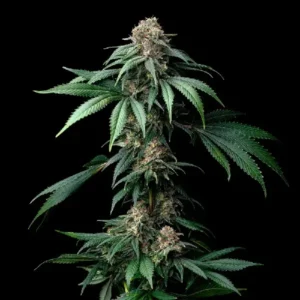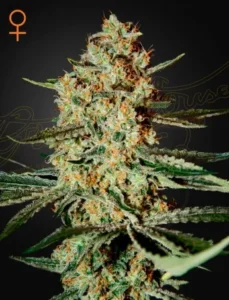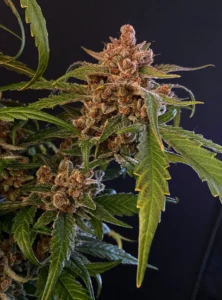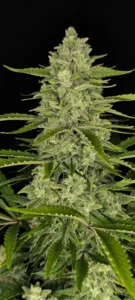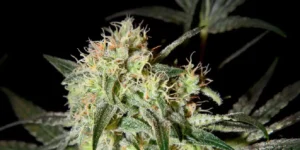
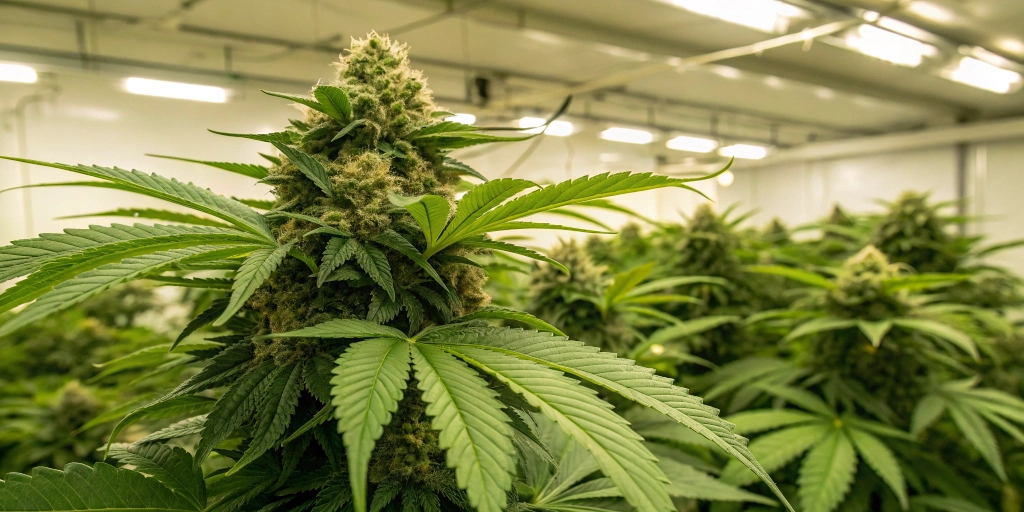

Orion F1 Auto is a fast, compact autoflowering F1 hybrid from Royal Queen Seeds created from Blue Mammoth Auto × Blue Dream × Amnesia genetics. Officially sold as Orion F1, this cultivar combines true F1 hybrid vigor with automatic flowering, a compact Indica-style structure, very high potency, and a complete seed-to-harvest cycle of approximately 65–70 days.
Unlike photoperiod cannabis, Orion F1 does not need a change to 12/12 to begin flowering. It starts blooming according to its internal genetic clock and completes its flowering phase in approximately 35–40 days. Plants remain compact at around 65–80 cm, while the breeder classifies overall yield potential as XXL.
Recommended Strains

Orion F1 Auto

|
THC | 23% - 24% (High) |

|
Lineage | Blue Mammoth Auto x Blue Dream x Amnesia |

|
Type | Autoflowering |

|
Height | 2.62 ft | 0.8 m |

|
Yield | Low |

|
Yield Indoor | 0.9 - 1.15 oz/ft² | 275 - 350 g/m² |

|
Yield Outdoor | 5.29 - 8.82 oz/plant | 150 - 250 g/plant |

|
Life Cycle | 9 - 10 weeks |

|
Phenotype | 45% Indica / 45% Sativa / 10% Ruderalis |

|
Effects | Calming, Relaxed |

|
Flavors | Candy, Fruity, Pine |
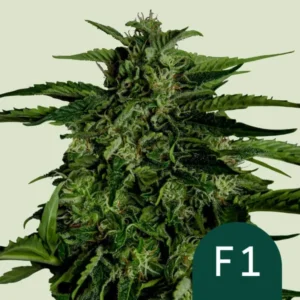
Apollo F1 Auto
|
|
THC | 23% - 24% (High) |
|
|
Lineage | Lemon x Black Domina x Sugar Magnolia |
|
|
Type | Autoflowering |
|
|
Height | 3.28 ft | 1 m |
|
|
Yield | Medium |
|
|
Yield Indoor | 1.15 - 1.31 oz/ft² | 350 - 400 g/m² |
|
|
Yield Outdoor | 5.29 - 7.05 oz/plant | 150 - 200 g/plant |
|
|
Life Cycle | 10 - 11 weeks |
|
|
Phenotype | 60% Indica / 10% Sativa / 30% Ruderalis |
|
|
Effects | Calming, Creative, Uplifted, Relaxed |
|
|
Flavors | Citrus, Herbal, Lavender, Pine, Vanilla |
Orion F1 performs indoors and outdoors and is particularly useful where space or seasonal length is limited. Royal Queen Seeds specifically lists it for short summers, making its rapid lifecycle one of the cultivar’s most important growing advantages.
You can find Orion F1 Auto seeds and other genetics from Royal Queen Seeds at Growlantis.
Orion F1 Auto Grow Info
| Trait | Orion F1 Auto |
|---|---|
| Genetics | Blue Mammoth Auto × Blue Dream × Amnesia |
| Type | F1 Hybrid auto |
| THC | Very high |
| Flowering time | 35–40 days |
| Full life cycle | 65–70 days after germination |
| Height | 65–80 cm |
| Yield | XXL |
| Morphology | Indica-style |
| Climate | Suitable for short summers |
| Flavor | Candy, fruity, pine |
| Major terpenes | Caryophyllene, Farnesene, Myrcene, Ocimene |
| Reported effects | Calming, physically relaxing, stoned |
Royal Queen Seeds currently describes Orion F1 using qualitative potency and yield categories rather than a fixed THC percentage or one standard grams-per-square-meter figure. This guide therefore uses the current breeder specifications instead of treating older catalog numbers as universal guarantees.
What Is Orion F1 Auto?
Orion F1 is an autoflowering F1 hybrid designed to combine rapid growth with the uniformity associated with true first-generation hybrid breeding. Its genetic background combines Blue Mammoth Auto, Blue Dream, and Amnesia, bringing together automatic flowering with vigorous growth and a strong cannabinoid and terpene profile.
The most important cultivation characteristic is speed. Orion F1 can complete its entire cycle in approximately 65–70 days after germination, including seedling development, vegetative growth, flowering, and final maturation.
That timeline is very different from a photoperiod plant. Growers do not decide when Orion F1 begins flowering by changing the light schedule. Instead, the plant progresses automatically according to age, which makes uninterrupted early growth particularly important.
What Makes Orion F1 an F1 Hybrid?
Orion F1 belongs to Royal Queen Seeds’ F1 hybrid program, which was developed to produce more uniform plants with strong hybrid vigor.
In practical cultivation terms, hybrid vigor can appear as rapid development, consistent plant architecture, vigorous root and shoot growth, and improved resilience. Orion F1 has also been tested in professional greenhouse and controlled-environment trials, where growers reported strong uniformity and rapid growth across large plant populations.
F1 status does not mean every plant becomes completely identical under every environment. Light, root conditions, nutrition, water, temperature, and plant density still influence final size and yield.
However, Orion F1 is specifically bred to reduce some of the variability growers commonly encounter with less stabilized seed populations.
Orion F1 Genetics
The official Orion F1 genetic background is Blue Mammoth Auto × Blue Dream × Amnesia.
This combination produces an autoflowering F1 hybrid with compact dimensions and an Indica-style growth pattern, despite genetics associated with several different cannabis families.
The breeder does not currently publish a precise Indica/Sativa/Ruderalis percentage in the Orion F1 technical data sheet. For that reason, the plant is better described according to the current official terminology: an F1 Hybrid auto with Indica morphology.
This also avoids presenting old catalog ratios as if they were part of the current official specification.
Is Orion F1 Indica or Sativa?
Royal Queen Seeds describes Orion F1 as having an Indica-style morphology, but the current technical sheet does not assign a fixed Indica/Sativa percentage.
In the grow room, this morphology appears as compact vertical growth and a final height of only around 65–80 cm. That makes the cultivar considerably easier to fit into restricted spaces than many taller hybrids.
Its effect profile also leans strongly toward physical relaxation. The breeder describes Orion F1 as calming, physically relaxing, and stoning, with an additional euphoric element mentioned in its longer strain description.
For cultivation purposes, the plant’s compact Indica-style structure is more useful than trying to force it into an unsupported percentage ratio.
Orion F1 Life Cycle: 65–70 Days From Germination
Orion F1 completes its full lifecycle in approximately 65–70 days after germination, or roughly nine to ten weeks.
This number describes the entire development of the plant. It includes establishment, vegetative growth, the transition into flowering, approximately 35–40 days of bloom, and final maturation.
It should not be confused with flowering time alone. Orion F1 does not flower for nine or ten weeks after a separate vegetative stage.
Because its biological clock continues regardless of mistakes or delays, early stress can reduce the amount of productive development available later in the cycle. Stable root conditions, sensible watering, adequate light, and minimal unnecessary stress are therefore particularly important during the first few weeks.
Orion F1 Flowering Time
The official Orion F1 flowering period is approximately 35–40 days.
Flowering begins automatically and does not require a 12/12 light schedule. Growers can continue using a longer autoflowering photoperiod while the plant enters bloom naturally.
The 35–40 day figure covers flower development rather than the entire grow. When combined with the earlier establishment and vegetative stages, total time from germination to harvest reaches approximately 65–70 days.
As the breeder window approaches its end, growers should still inspect actual flower and trichome development instead of harvesting automatically on Day 65 or Day 70.
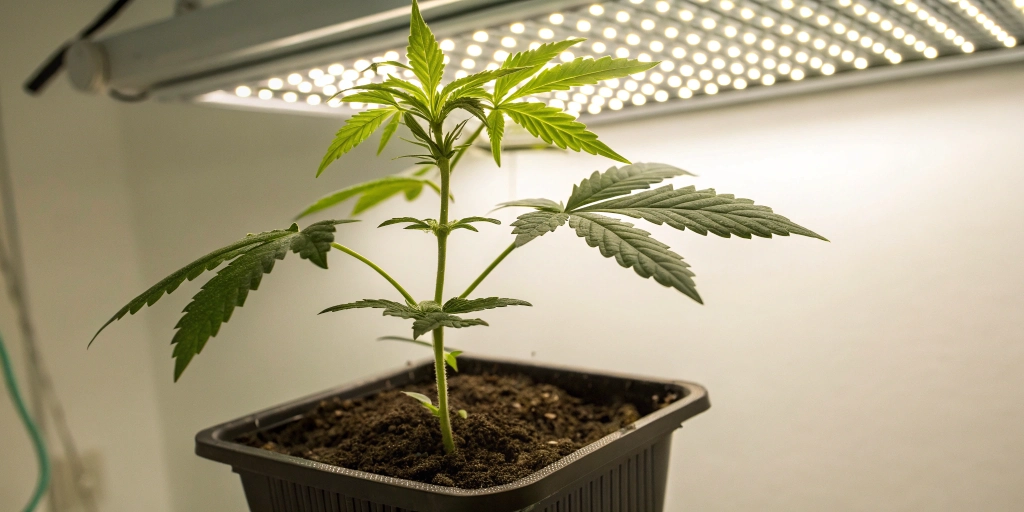
Orion F1 Auto Grow Timeline
Orion F1 develops very quickly, so its cultivation timeline is best viewed as overlapping stages rather than a long vegetative period followed by a separate flowering phase. The approximate schedule below reflects the official 65–70 day lifecycle while allowing for normal variation between plants and environments.
Days 1–7: Germination and Establishment
During the first week, the priority is establishing healthy roots and the first true leaves. Orion F1’s later speed depends heavily on avoiding unnecessary setbacks at this stage, so the root zone should remain moist but well aerated rather than permanently saturated.
Young seedlings require only modest water volumes because their root systems initially occupy a small area. Strong but appropriate lighting and stable conditions allow the plant to begin expressing the rapid development associated with its F1 genetics without forcing growth through heavy feeding.
Weeks 2–3: Rapid Vegetative Development
During the second and third weeks, Orion F1 begins producing a much more substantial canopy while its roots expand quickly through the growing medium.
This is the most useful period for gentle canopy management. Branch positioning or light Low-Stress Training can help spread growth outward where necessary, but the objective should be maintaining uninterrupted development rather than repeatedly stressing the plant.
Because the cultivar is autoflowering, growers should already be prepared for the transition toward reproductive growth by the end of this period.
Weeks 4–5: Transition and Early Flowering
Orion F1 normally transitions into flowering rapidly as the plant approaches the middle of its lifecycle. Early flowers become increasingly visible while some additional vertical growth can continue.
At this point, major structural interventions become less useful. The plant only has a limited amount of time remaining before maturation, so maintaining healthy roots, stable lighting, appropriate nutrition, and good airflow becomes more important than continued canopy manipulation.
Flowering progresses automatically regardless of whether the light schedule is changed.
Weeks 6–8: Main Flower Development
During the central part of bloom, Orion F1 focuses increasingly on flower mass and resin production. The breeder’s candy, fruity, and pine aroma becomes more noticeable as flowers mature and trichome coverage develops.
Water and nutrient demand can increase compared with the seedling stage, but feeding should still reflect the growing medium and actual plant response rather than an aggressive fixed schedule.
Canopy airflow also becomes more important as flower density increases. The plant’s compact dimensions make crowding easy if several specimens are grown too closely together.
Weeks 9–10: Final Maturation and Harvest
During the final portion of the 65–70 day lifecycle, Orion F1 shifts toward final flower maturation.
Growers should use the breeder timeline to identify when close maturity checks become important, then inspect the actual flowers and trichomes before harvesting. Individual growing conditions can move the exact finishing date slightly.
Drying and curing begin only after harvest and should not be counted as additional weeks in Orion F1’s biological lifecycle.
Orion F1 Plant Height
Orion F1 is a compact autoflower that generally reaches approximately 65–80 cm.
This small final size is one of its defining cultivation characteristics and makes the plant suitable for restricted indoor spaces, balconies, discreet outdoor locations, and higher-density setups where plants still receive enough light and airflow.
Final height is not completely fixed. Controlled trials with Orion F1 have demonstrated that factors such as plant density and daily light integral can significantly change vertical development.
For a home grower, the important practical point is that Orion F1 normally remains compact but still needs enough room around each plant for its branches and flowers to develop without excessive crowding.
Growing Orion F1 Indoors
Orion F1 is particularly well suited to indoor cultivation because its small dimensions make environmental and canopy management relatively straightforward.
An indoor setup allows growers to provide a consistent photoperiod, stable air movement, and predictable root-zone conditions throughout the rapid 65–70 day cycle. Because the plant flowers automatically, there is no need to maintain separate vegetative and flowering rooms based on different light schedules.
Plant spacing deserves particular attention. Research using Orion F1 has demonstrated that simply increasing the number of plants per square meter does not automatically increase production. Excessive density can increase vertical stretch and reduce the light available to each plant.
For home cultivation, give each Orion F1 enough room to receive direct light across the canopy while maintaining circulation between neighboring plants.
Best Light Cycle for Orion F1
Orion F1 does not require a 12/12 flowering trigger.
A practical indoor schedule is 18/6 or 20/4 throughout the lifecycle, allowing the plant to receive a long photosynthetic period while still maintaining several hours of darkness.
The most important factor is not switching to 12/12 because the plant has reached a particular age. Doing so is unnecessary for an autoflower and would substantially reduce its daily light exposure.
Lighting intensity should also be considered alongside photoperiod. More hours of light are only useful when the total daily light delivered remains appropriate for the plant and the environment can support the resulting growth.
Growing Orion F1 Outdoors
Orion F1’s short lifecycle makes it particularly useful outdoors where the frost-free season is limited.
Royal Queen Seeds specifically classifies the cultivar for short summers, and its 65–70 day seed-to-harvest cycle means growers do not need to wait for the natural autumn photoperiod that controls traditional feminized strains.
Outdoor growing should begin when conditions are reliably free from frost and the plant can receive strong direct sunlight. Because the complete cycle lasts around ten weeks, growers in favorable climates may be able to fit more than one succession into the same outdoor season.
The compact 65–80 cm structure also makes Orion F1 useful where discretion or limited outdoor space is important.
Orion F1 and Disease Resistance
Strong resilience is one of the advantages associated with Orion F1’s F1 hybrid vigor.
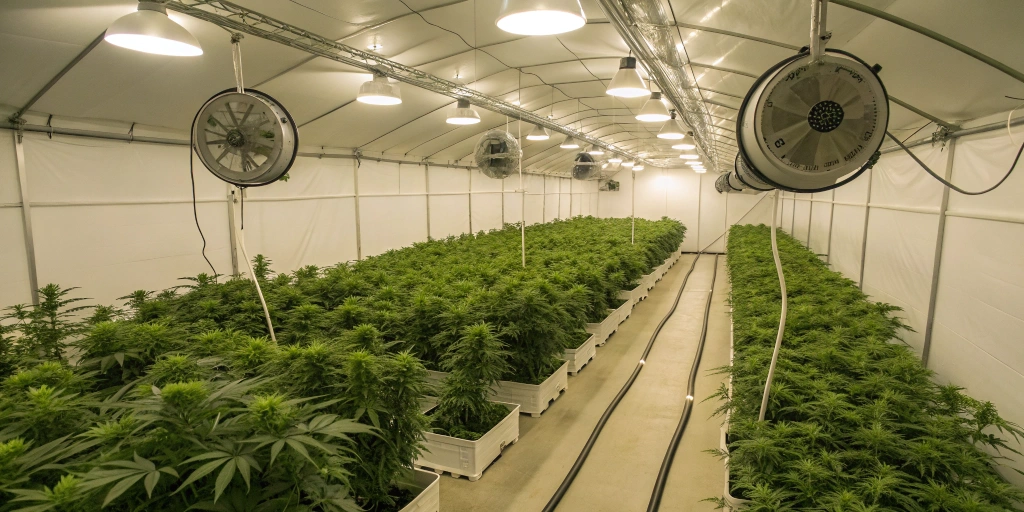
Large-scale greenhouse cultivation has provided particularly useful evidence. In a professional trial involving approximately 1,600 Orion F1 plants under difficult humidity conditions, growers reported virtually no powdery mildew and only a very small number of plants showing limited botrytis symptoms.
This does not make Orion F1 immune to fungal disease. Dense flowers can still develop problems where humidity remains high and air becomes stagnant.
Good spacing, ventilation, and airflow should therefore remain part of the cultivation strategy even when working with genetics that have demonstrated strong resilience.
Orion F1 Yield
Royal Queen Seeds currently classifies Orion F1 as an XXL-yielding F1 hybrid rather than publishing one universal home-grow grams-per-square-meter figure.
This approach makes sense because production changes dramatically according to cultivation system. Controlled research with Orion F1 has produced very different results depending on root-zone configuration, light intensity, plant density, irrigation strategy, and supplemental environmental controls.
For a home grower, XXL should be understood as strong production potential relative to the cultivar’s very compact 65–80 cm structure and short lifecycle.
Yield still depends on light, root health, plant spacing, watering, nutrition, growing medium, environmental stability, and the amount of stress the plant experiences during its rapid development.
Research Trials With Orion F1
Orion F1 has been used in professional cultivation trials, making it one of the more extensively documented modern autoflowering F1 hybrids.
Controlled rockwool experiments have demonstrated that relatively small changes in root-zone configuration and irrigation can alter plant height, node development, cannabinoid ranking, and final yield. Other controlled studies have shown a strong interaction between plant density and daily light integral.
These results are valuable because they show that genetics establish potential, while cultivation strategy determines how much of that potential is expressed.
Growers should not use the highest experimental figures as guaranteed home-grow yields. Research environments can include supplemental CO₂, extremely high light levels, optimized irrigation, precise plant density, and other conditions that differ substantially from a conventional grow tent.
Germinating Orion F1 Seeds
Orion F1 can be germinated using the same basic principles that apply to other high-quality cannabis seeds.
The seed needs stable moisture, oxygen, appropriate warmth, and careful handling once the first root emerges. A controlled paper-towel method or germination directly in a suitable propagation medium can both work.
Because Orion F1 progresses rapidly after emergence, minimizing early root disruption is useful. Some growers therefore choose to establish autoflowers directly in or very close to their intended final growing environment.
Whatever method is used, avoid keeping the root zone permanently saturated during early establishment.
For additional guidance, see how long cannabis seeds take to germinate.
Training Orion F1
Orion F1’s compact and rapid structure does not require aggressive training to remain manageable.
Where growers want to spread the canopy, gentle Low-Stress Training can redirect flexible branches outward and improve light distribution without imposing a long recovery period.
More aggressive techniques can be used experimentally on vigorous autoflowers, and Orion F1 has been subjected to topping in controlled research. However, that does not make high-stress training necessary for every home grow.
Because the complete lifecycle lasts only 65–70 days, any technique that significantly interrupts growth can consume a meaningful part of the available development window.
For most growers, gentle canopy organization and sensible spacing are more important than forcing the plant through multiple training interventions.
Feeding Orion F1
Orion F1 does not require one universal strain-specific NPK formula.
Young plants should receive nutrition appropriate to their root development and growing medium rather than being pushed immediately with concentrated fertilizer. As plant size and flower production increase, nutrient supply can be adjusted according to actual demand.
The rapid lifecycle makes overfeeding particularly undesirable because the plant has little time to recover from severe nutrient stress.
Use leaf color, development rate, root-zone conditions, water quality, and the behavior of the growing medium to guide feeding adjustments.
High yield potential does not mean that continuously increasing fertilizer concentration will produce a larger harvest.
Watering Orion F1
Watering Orion F1 should follow actual root-zone moisture rather than a fixed daily timetable.
Seedlings initially have very small root systems, so saturating a large container repeatedly can leave the medium excessively wet for long periods. As roots and foliage expand, water consumption increases quickly.
The correct irrigation frequency depends on container size, substrate, temperature, humidity, airflow, and light intensity.
Allowing the medium to cycle through appropriate wet and dry conditions helps maintain oxygen around the roots.
In professional cultivation systems, irrigation can be controlled with exceptional precision. Home growers do not need to replicate laboratory-style fertigation, but they can apply the same principle: water according to what the root zone actually needs.
Airflow During Orion F1 Flowering
Orion F1 has demonstrated strong disease resilience, but airflow remains important as its compact canopy fills with mature flowers.
Indoor fans should create gentle movement through and around the plants while ventilation removes accumulated moisture and heat from the room. Growers using several Orion F1 plants should avoid packing them so tightly that neighboring canopies remain in constant contact.
Outdoor plants benefit from naturally moving air, but enclosed balconies, greenhouses, and sheltered corners can still accumulate humidity.
Disease resistance reduces risk; it does not eliminate the environmental conditions that allow fungal problems to develop.
When to Harvest Orion F1
Orion F1 generally reaches harvest maturity approximately 65–70 days after germination.
Use this range as the primary planning reference rather than the 12-week timeline found in older descriptions. As the end of the breeder window approaches, evaluate actual flower development and trichome maturity to determine whether the individual plant is ready.
Environmental stress, light, roots, and other cultivation variables can shift maturation slightly.
Harvest should therefore combine the official timeline with direct observation rather than relying exclusively on the calendar.
Drying and curing occur after the plant has been harvested and should be treated as post-harvest processing rather than additional weeks of the grow cycle.
Orion F1 THC
Royal Queen Seeds currently classifies Orion F1 as having very high THC but does not provide one fixed percentage in the official technical data sheet.
This makes “very high” the most appropriate current breeder specification.
Growers should be cautious about treating older or retailer-specific THC percentages as guaranteed values. Even when a seed line has strong cannabinoid potential, measured results depend on phenotype, environment, light, plant health, harvest maturity, drying, curing, and laboratory methodology.
The important distinction is that Orion F1 is positioned as a high-potency F1 cultivar rather than a mild or moderate-THC autoflower.
Orion F1 Effects
Royal Queen Seeds describes Orion F1 as calming, physically relaxing, and stoning, with euphoria also appearing in the breeder’s longer description.
This profile differs from older descriptions that characterize the strain as primarily clear-headed, focusing, or stimulating. The current official material places much more emphasis on physical relaxation and a heavier overall experience.
Individual responses can still vary according to dose, tolerance, cannabinoid composition, and finished flower quality.
These effects should be presented as breeder-reported characteristics rather than guaranteed experiences or claims that Orion F1 treats stress, pain, anxiety, insomnia, or other medical conditions.
Orion F1 Flavor and Terpenes
Orion F1’s official flavor profile combines candy, fruit, and pine.
Royal Queen Seeds also identifies Caryophyllene, Farnesene, Myrcene, and Ocimene among the cultivar’s major terpenes. Together, these compounds contribute to a profile that can move between sweetness, ripe fruit, pine, herbal notes, spice, and more pungent undertones.
Commercial greenhouse growers have also reported very fruity and sweet aromas alongside floral, gas, and diesel characteristics in large Orion F1 populations.
Expression can still vary with environment, maturity, drying, and curing, so individual plants may emphasize different parts of this broader aromatic profile.
Common Problems When Growing Orion F1
Using a 12-Week Grow Calendar
Orion F1 is officially listed at approximately 65–70 days from germination to harvest, equivalent to roughly nine to ten weeks. A 12-week pre-harvest calendar unnecessarily extends the expected lifecycle and can cause growers to misinterpret normal maturation. Drying and curing should be tracked separately after the plant has been harvested.
Waiting for a 12/12 Flowering Trigger
Orion F1 is an autoflowering F1 hybrid and does not need a switch to 12/12. Flowering begins according to age, with the breeder listing approximately 35–40 days of bloom. Indoor growers can maintain a longer autoflower photoperiod such as 18/6 or 20/4 throughout the cycle.
Treating Old THC Percentages as Current Official Data
Royal Queen Seeds currently classifies Orion F1 as “very high THC” without publishing one fixed percentage. Retailer figures such as 23–24% should therefore not automatically be presented as the breeder’s current laboratory specification unless the underlying test data can be verified.
Overcrowding Compact Plants
Orion F1 stays short, which can tempt growers to place too many plants into the same area. Controlled trials have shown that greater plant density can alter height and productivity. Each plant still needs adequate light, root space, and airflow despite its compact 65–80 cm structure.
Overfeeding a Fast Autoflower
Orion F1 develops quickly, but rapid growth does not mean young plants require aggressive feeding. Excess nutrient concentration can stress roots and foliage during a lifecycle with little spare recovery time. Increase nutrition according to plant development and growing-medium behavior rather than following a rigid high-strength schedule.
FAQs About Orion F1 Auto
How long does Orion F1 take from seed to harvest?
Orion F1 completes its full lifecycle in approximately 65–70 days after germination, or roughly nine to ten weeks. This includes early growth, flowering, and maturation. The breeder lists flowering itself at only 35–40 days, so the full lifecycle should not be confused with the length of the flowering stage.
What is the flowering time of Orion F1 Auto?
Orion F1 flowers for approximately 35–40 days. Because it is an autoflowering F1 hybrid, bloom begins automatically according to age rather than after switching the lights to 12/12. Indoor growers can maintain a longer autoflower photoperiod throughout the cycle while the plant naturally transitions into flowering.
How tall does Orion F1 grow?
Orion F1 generally reaches approximately 65–80 cm, making it one of the more compact F1 autoflowers. Final height can still change with light intensity, plant density, root conditions, and environment. Its small structure makes it particularly practical for grow tents, balconies, discreet gardens, and other space-limited setups.
How much does Orion F1 yield?
Royal Queen Seeds currently classifies Orion F1 as an XXL-yielding cultivar rather than publishing one universal home-grow grams-per-square-meter figure. Controlled trials show that yield changes substantially with plant density, lighting, irrigation, root-zone configuration, and environmental control, so experimental production figures should not be treated as guaranteed home-grow results.
Is Orion F1 indica or sativa?
Royal Queen Seeds currently describes Orion F1 as an autoflowering F1 hybrid with an Indica-style morphology rather than publishing a fixed Indica/Sativa percentage. Plants remain compact at approximately 65–80 cm, while the breeder describes the effects as calming, physically relaxing, and stoning, with an additional euphoric component.
Does Orion F1 need a 12/12 light cycle?
No. Orion F1 is an autoflowering F1 hybrid and does not need 12/12 to trigger flowering. Indoor growers can use a longer schedule such as 18/6 or 20/4 throughout the grow. Flowering begins according to the plant’s genetic clock, with harvest generally occurring around 65–70 days after germination.